Launch & Growth
Best Directories for Mobile Apps in 2026: Android, iOS & Cross-Platform (35+ Verified Sites)
Beyond Google Play and the App Store, dozens of directories drive real installs and backlinks. Here are 35+ verified Android, cross-platform, and review sites that actually work in 2026.

Contents (8)
- Key Takeaways
- Why Mobile App Directories Matter More Than the Stores Will Tell You
- What Makes a Good Mobile App Directory in 2026?
- The Best Mobile App Directories in 2026
- What Mobile App Builders Are Actually Saying on X
- Submission Strategy for Mobile Apps
- Common Mistakes When Submitting Mobile Apps to Directories
- Ready to Get Listed?
Quick answer: Beyond Google Play and the App Store, mobile app distribution in 2026 runs through three layers. Android stores and repositories: APKPure (~55M monthly visits), Aptoide (~35M+), APKMirror, F-Droid, Samsung Galaxy Store, Huawei AppGallery, and Aurora Store. Cross-platform directories: AlternativeTo, SaaSHub, G2, Product Hunt, and SaaSCity, which give the dofollow links to your own site that neither store provides. Review sites: MobileAppDaily, AppAdvice, 148Apps, AppBrain, and PreApps. Most indie teams should target 20 to 30 submissions.
Mobile app discovery is broken in 2026, and everyone knows it.
Google Play and the App Store between them serve roughly 6 million apps to roughly four billion people. Their algorithms reward apps that already have downloads, reviews, and engagement, which is exactly what a brand-new app does not have. The "build it and they will come" era ended around 2017. Today, an app launched into the stores with no external signals will see roughly the same number of organic installs as a tree falling in a forest with no one around.
That's why the directory layer exists. Third-party app stores, alternative repositories, review blogs, and cross-platform discovery sites collectively send millions of installs and tens of thousands of high-authority backlinks every month. Some, like F-Droid, can outperform Google Play for niche open-source apps. Others, like AlternativeTo or SaaSHub, won't drive a single install today but will quietly build the SEO authority that gets your landing page ranking six months from now.
This guide is the 2026 playbook. We focused this edition on Android-specific stores, cross-platform directories, and review sites that accept submissions, the surfaces most app marketing guides under-cover. (For the iOS-specific deep dive, read Best Directories for iOS Apps in 2026.) Every entry below was verified against current 2025–2026 traffic data and developer sentiment from X.
Key Takeaways
- Stores and directories do different jobs: Stores distribute the binary, directories list and rank your app and send traffic to it. Successful indie apps sit on 4 to 6 stores and 15 to 25 directories.
- Google Play is restricted for a lot of Android users: Roughly 30% of global Android users are in markets where Play is blocked, restricted, or less popular than alternatives.
- Android-only surfaces add real installs: APKMirror, APKPure, Aptoide, F-Droid, Galaxy Store, Huawei AppGallery, and Aurora Store can add 5 to 30% on top of Google Play volume.
- Only directories give you dofollow links to your own site: The stores give one nofollow link to a store listing; 20 directory submissions typically show a measurable DR bump within 60 days.
- Review listicles decide installs: MobileAppDaily, AppAdvice, 148Apps, AppBrain, and PCMag write the "best [category] app 2026" pages people actually land on.
- Sideload users are higher quality: APKMirror and F-Droid installs skew more technically engaged, leave more reviews, and churn less than the average Play Store install.
- Pace the submissions: 20 to 30 spread over 2 to 3 weeks; 100+ low-quality sites in one week looks unnatural to Google.
Why Mobile App Directories Matter More Than the Stores Will Tell You
Google Play and the App Store want you to believe their algorithms are enough. They are not. Here's what directories add that stores cannot:
Reach beyond the official walled gardens. Roughly 30% of global Android users live in markets where Google Play is restricted, blocked, or simply less popular than alternatives. APKPure pulls ~55 million monthly visits. Aptoide does ~35M+ with a historical user base over 200 million. Samsung Galaxy Store is the default on every Galaxy device shipped this year, and Galaxy ships more Android handsets than any other OEM. Ignoring these surfaces is leaving a meaningful percentage of your TAM on the table.
Backlinks that actually compound. Google Play and the App Store give you a single nofollow link to your store listing. A directory like AlternativeTo, SaaSHub, or MobileAppDaily gives you a dofollow link to your own website, which is the link that builds your domain authority and pushes your marketing pages up the SERPs. After 20 directory submissions you typically see a measurable DR bump within 60 days.
Review sites are the new search engine. When someone Googles "best [your category] app 2026," they don't land on the App Store. They land on a review blog. MobileAppDaily, AppAdvice, 148Apps, AppBrain, and PCMag write the listicles that decide which apps the next 100,000 people install. If you're not in those listicles, you're invisible at exactly the moment people are deciding what to install.
Sideload-curious users convert better. Users who install via APKMirror or F-Droid are, on average, more technically engaged, leave more reviews, and churn less than the average Play Store install. Lower volume, higher quality.
What Makes a Good Mobile App Directory in 2026?
Before you start submitting, evaluate each platform against these five criteria:
1. Real install volume vs. vanity traffic. A directory with 50M monthly visits and zero install attribution is worse than one with 500K monthly visits that surfaces in the right Google searches. Check whether the platform tracks outbound clicks and shows you the data.
2. Link type and DR. Dofollow links from DR 70+ directories (Product Hunt, SaaSHub, AlternativeTo, G2) directly improve your site's ranking. Nofollow links still send traffic but do nothing for SEO. Always prefer dofollow when both exist.
3. Audience platform fit. F-Droid's audience is hyper-technical and privacy-focused. That's perfect for an open-source utility and terrible for a casual game. APKPure's audience is global, install-hungry, and tolerant of region-locked apps, which makes it ideal for productivity and games. Match the directory to the type of user who actually wants your app.
4. Submission cost and review speed. Free is great until it means a six-month review queue. Some paid tiers ($49–$497) get you in front of users in 24–72 hours, which matters if you're timing a launch.
5. Editorial vs. open submission. Editorial directories (AppAdvice, MobileAppDaily, PreApps) are selective. Getting in is harder, but the credibility is much higher. Open-submission directories (Aptoide, APKPure, AlternativeTo) accept almost anyone: easier wins, less editorial value.
The Best Mobile App Directories in 2026
Tier 1: Android App Stores & Repositories Beyond Google Play
These are the directories most iOS-focused guides completely ignore, and where Android developers in 2026 are quietly racking up extra installs.
1. APKPure: ~55M monthly visits | Free submission | Paid promotion
The largest non-Google Android distribution platform by traffic. APKPure serves users worldwide who can't access Google Play, want older versions, or prefer a lighter client. The platform offers a verified developer program and direct upload tools.
Pricing: Free to submit and list. Paid featured placements and promotion campaigns available for high-volume apps.
Submission: Apply for the developer program at apkpure.com. APKs and AAB files supported. Verification takes 3–7 days for new developers.
Verdict: If your app has any region-restricted users or any chance of viral overseas growth, APKPure is non-negotiable. Several indie devs on X reported 5–15% extra installs simply from being listed, with zero ongoing maintenance after upload.
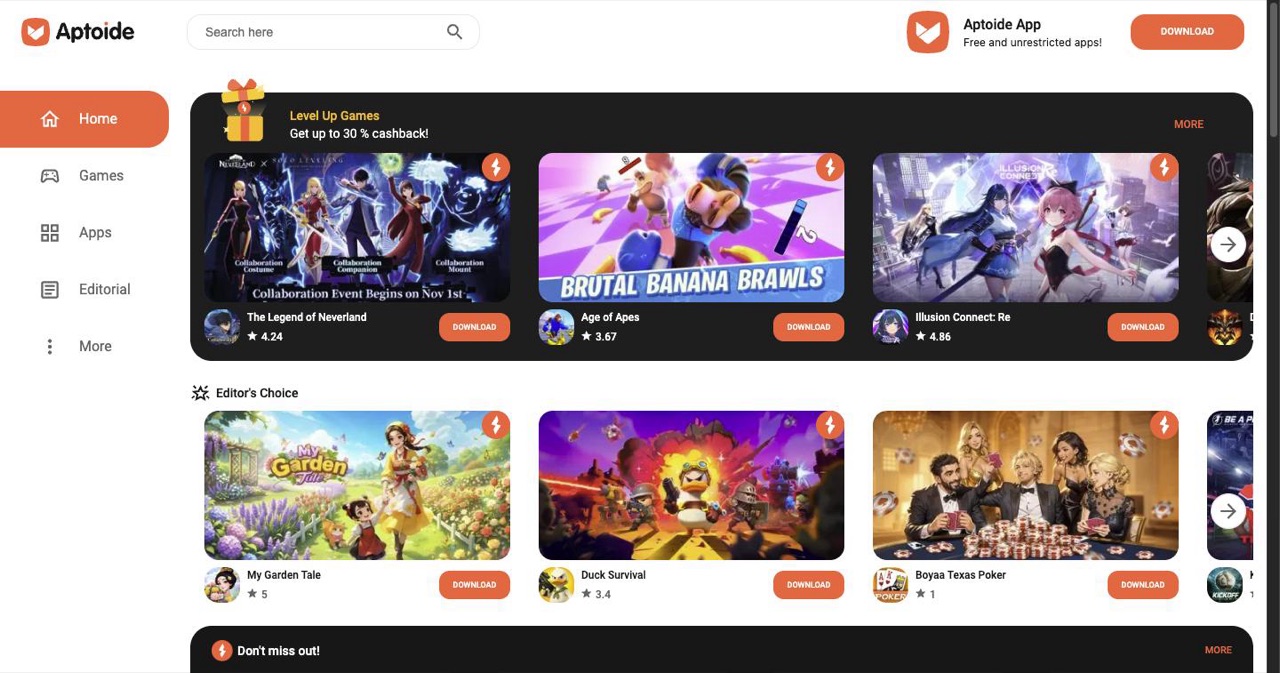
2. Aptoide: ~35M+ monthly visits | Free | Paid promotion available
Aptoide is the original "alternative app store." It lets users create and share their own app stores. Strong in Europe and Latin America, with a long history (200M+ historical users, billions of cumulative downloads).
Pricing: Free upload and listing. Paid promotion and featured placement available.
Submission: Sign up for an Aptoide developer account, upload your APK, set your category and screenshots. Listed within 24–48 hours.
Verdict: Best for apps with strong appeal in Europe and Latin America. The "many curated stores" model means your app can get featured by community curators in addition to the main store, which is a discovery vector that doesn't exist anywhere else.
3. APKMirror: Globally ranked ~#1980 site | Free (repository, not store)
APKMirror is technically a repository rather than a full store. It specializes in trusted, verified APK files of apps that already exist on Google Play, plus older versions for compatibility. Loved by power users for safety (every APK is hash-verified).
Pricing: Free. Not a self-serve submission platform. Developer outreach is via direct contact with the editorial team.
Submission: Email the team via the site contact form. They prioritize verified, popular apps and version archives.
Verdict: Less about getting listed and more about earning trust. If you ship frequent updates, APKMirror's archive becomes a discovery vector for users who want to roll back to specific versions. The verified badge carries weight in the Android power-user community.
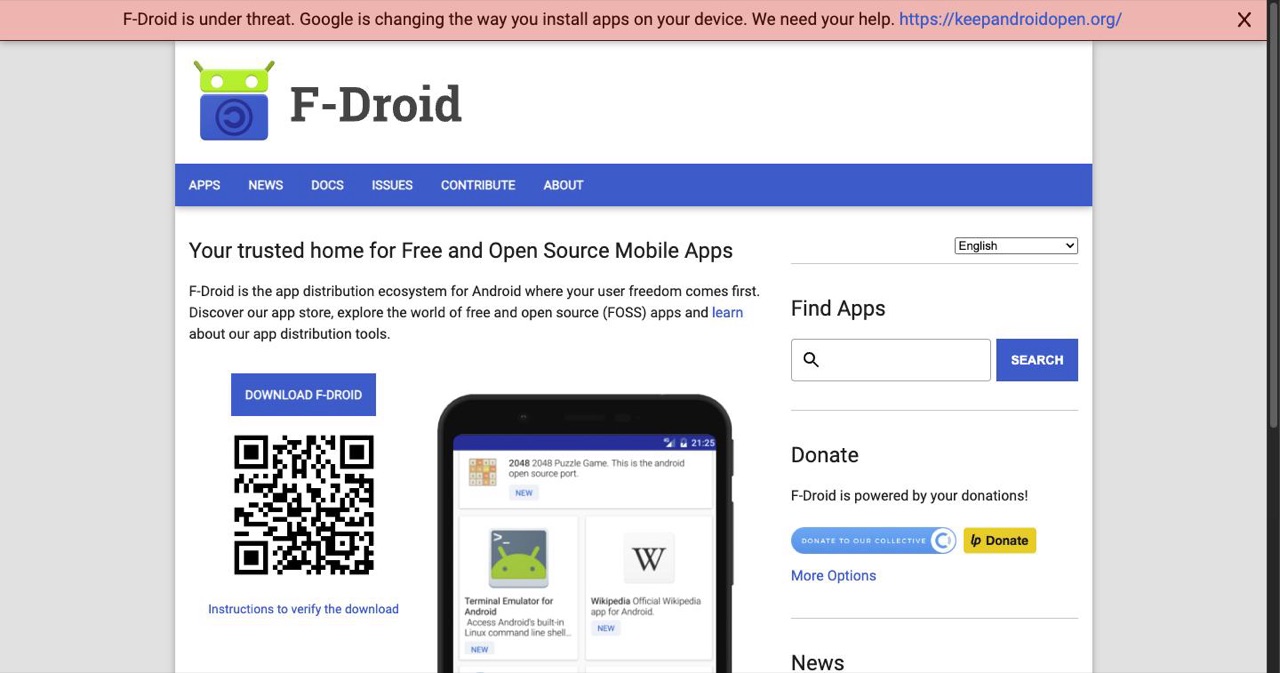
4. F-Droid: ~4,000 apps in repo | 18M+ updates in 2025 | 100% free, FOSS-only
The home of open-source Android. F-Droid only accepts apps with FOSS licenses and reproducible builds. Smaller audience than APKPure, but devout, privacy-conscious, and high-converting.
Pricing: Completely free. Submission is via Git merge request to their public repo.
Submission: Open a metadata pull request on the F-Droid Data repository. The build server handles compilation. First merges typically take 2–6 weeks and require working with maintainers.
Verdict: If your app is open source, this is mandatory. Multiple privacy-focused indie devs on X report F-Droid outperforming Google Play for niche utility apps. The audience actively browses and installs based on principle, not algorithm. The dofollow link from f-droid.org carries serious authority.
5. Samsung Galaxy Store: Pre-installed on every Galaxy device | Free to publish
The official second app store on every Samsung Android device shipped in 2026. Smaller than Google Play (devs typically report ~0.5% of Play-scale installs), but for high-volume apps that translates to thousands of extra downloads at zero marginal cost.
Pricing: Free to publish through the Samsung Seller Portal. Same revenue share as Google Play (15–30%).
Submission: Register at the Samsung Seller Portal, upload your APK/AAB, complete content rating and metadata. Review takes 3–10 business days.
Verdict: The effort-to-reward ratio is excellent. Spend an hour repackaging your app for Galaxy Store, then forget about it. Installs trickle in for years. Particularly strong if your app uses Samsung-specific features (S Pen, DeX, Galaxy Watch).
6. Huawei AppGallery: 580M+ monthly active users | Free
Huawei's app store, mandatory if you want to reach the ~700M+ users of Huawei devices, especially in China, Southeast Asia, the Middle East, and parts of Europe.
Pricing: Free to publish. Compliance and HMS (Huawei Mobile Services) integration may require dev time if you currently use GMS APIs.
Submission: Register as a Huawei developer, upload through the AppGallery Connect portal. Review typically 2–5 days.
Verdict: The integration work is non-trivial if you use Google Play Services (location, push, in-app purchases). For apps that don't, AppGallery is a low-effort win for serious global reach.
7. Uptodown: 130M+ monthly visits | Free
A Spain-based alternative store with global reach, especially strong in Latin America and Southern Europe. Hosts both Android and Windows software.
Pricing: Free upload and listing. Optional promoted placement.
Submission: Free developer account → app upload → review in 24–72 hours.
Verdict: Underrated. The traffic numbers rival APKPure but English-speaking developers often miss it. If any of your audience is Spanish, Portuguese, or Italian-speaking, this is a must-submit.
8. Aurora Store: Privacy-focused front-end for Google Play
Aurora is technically a Play Store client rather than a store of its own. It lets users install Play Store apps anonymously, without a Google account. There's no "submission" per se, but if your app is well-rated on Play, Aurora users will find it via the same metadata.
Pricing: N/A.
Verdict: Worth knowing about because Aurora users are a growing privacy-conscious cohort. Make sure your Play Store listing is optimized. That's literally what they see.
9. QooApp: Asia-focused | ~5M+ monthly users | Free for indie
The go-to alternative store for anime games, JRPGs, and Asia-region releases. If you ship a mobile game with any anime, manga, or Japanese aesthetic, QooApp is mandatory.
Pricing: Free for indie publisher submissions. Paid promotion available.
Submission: Apply via the QooApp Publisher Portal. Editorial team reviews fit.
Verdict: Niche but extremely high-converting for the right vertical. Competitive in Japan, Taiwan, Hong Kong, Korea.
10. Itch.io: Indie game marketplace | Free + revenue share
Primarily known for desktop indie games, Itch also distributes mobile builds. Loved by indie devs for the freedom and the revenue model (you choose the cut Itch takes, even 0%).
Pricing: Free. You set the platform's revenue share (default 10%, adjustable to 0%).
Submission: Self-serve in minutes. Upload APK, write description, set price (or "name your own price").
Verdict: If your mobile app is a game, Itch is a no-brainer second home. The audience overlaps heavily with itch.io's PC indie crowd, a group that genuinely seeks out small, weird, original work.
Tier 2: Cross-Platform Directories & Discovery Sites
These directories accept iOS, Android, and hybrid apps. They aren't app stores. They're listing, discovery, and review platforms that drive traffic, backlinks, and credibility.
11. AlternativeTo: ~2.5M monthly visits | DR ~79 | Free
The crowd-sourced "alternatives to" directory. When someone searches "WhatsApp alternative" or "Notion alternative for mobile," this is what they find.
Pricing: Free. Optional paid upgrades for verified profile and analytics.
Submission: Free account → "Submit Software" → list your app as an alternative to existing products. Approved in 24–72 hours.
Verdict: The discovery value is enormous because users arrive with intent ("I'm unhappy with X, find me something better"). The links are nofollow, but the referral traffic is some of the best-converting in the directory ecosystem.
12. SaaSHub: DR ~78 | Free | Dofollow
A software marketplace focused on objective comparisons. Mobile and hybrid apps fit cleanly into their relevant categories.
Pricing: Free listing. Paid upgrades for featured placement.
Submission: Create a management page for your app, fill in the details, submit for review. Approval in 2–7 days.
Verdict: One of the best free dofollow backlinks available for mobile apps. The "alternative to" angle drives steady, intent-driven referrals.
13. G2: DR 90+ | Free presence + paid tiers | Mobile category
G2 is the de facto B2B software review platform. They have a mobile/business apps section that any productivity, communications, or workplace mobile app should be in.
Pricing: Free basic listing. Paid vendor tiers for enhanced visibility, response tools, and lead capture (typically $1K+/month, only worth it for B2B mobile apps with real revenue).
Submission: Vendor registration → claim or create your product profile.
Verdict: Worth the free listing for the DR 90+ backlink alone. The paid tier only makes sense if you're selling to enterprise buyers who actively shortlist on G2.
14. Product Hunt: DR 90+ | Free | Mobile launches
Not specific to mobile, but the largest launch platform on the internet. Mobile apps consistently land in the daily top 5, particularly utilities, AI tools, and productivity apps.
Pricing: Free.
Submission: Self-submit. Time for Tuesday–Thursday, mobilize early supporters in the first four hours.
Verdict: Essential for the launch-day spike and the permanent high-DR backlink. For deeper context, read our Product Hunt Alternatives guide.
15. Capterra: DR 90+ | Free + paid | Business/SaaS mobile apps
Gartner-owned business software directory. Accepts mobile-first SaaS and productivity apps in the relevant categories.
Pricing: Free profile. Paid PPC/lead-gen models available.
Verdict: High SEO value for any B2B-adjacent mobile app. The directory ranks for thousands of category keywords.
16. BetaList: Free + paid fast-track
Pre-launch and early-launch directory. Excellent for getting beta testers, early signups, and a high-DR launch backlink before you hit the stores.
Pricing: Free (slow queue, weeks). Paid fast-track for launch in days.
Verdict: Ideal for mobile apps with a waitlist or invite-only beta. The audience self-identifies as "willing to try unfinished things," which makes them perfect early users.
17. SaaSCity: DR 66 | Free | Dofollow | Gamified 3D directory
Full disclosure: this is us. A general launch directory where every paid listing is a building on a city map. It has a Mobile Apps category, so iOS, Android and hybrid apps all fit. You get a permanent dofollow backlink, community upvotes, and a visual presence that stands out from every text-list directory on this page.
18. Peerlist: Free | Growing dev community
A LinkedIn-meets-Product-Hunt for tech makers. Growing fast in 2025–2026, particularly with indie developers shipping side projects.
Pricing: Free.
Verdict: Underrated. The audience is high-quality (other makers and early adopters), and listings get genuine engagement.
19. Uneed: Free + paid
Curated launch platform with weekly featured tools. Mobile apps qualify.
Pricing: Free submission, paid for guaranteed featuring.
Verdict: Good for an extra launch-week boost and a backlink.
20. TinyLaunch: Free | Indie-focused
Small, focused launch platform popular with indie developers in 2025–2026.
Pricing: Free.
Verdict: Quick win. Five minutes, one more dofollow link.
💡 Building for iOS specifically? This guide focused on Android and cross-platform directories where the audiences barely overlap with iOS-only sites. For the iOS-specific list (PreApps, AppAdvice, 148Apps, AppRaven, and 25+ more), read Best Directories for iOS Apps in 2026.
Tier 3: Mobile App Review Sites & Editorial Directories
These sites accept developer submissions and publish actual editorial reviews. Getting featured here is harder than auto-submission directories, but the credibility, traffic, and SEO value are an order of magnitude higher.
21. MobileAppDaily: Free + paid review tiers
Curated mobile app reviews, rankings, and founder interviews. One of the most active mobile-app editorial sites in 2026.
Submission: Apply via their submission form. Editorial review takes 1–4 weeks. Paid expedited and featured options available.
Verdict: A feature here can drive thousands of installs and is frequently cited by other listicles, multiplying the SEO compound effect.
22. PreApps: Paid tiers | Pre- and post-launch
Dedicated app review and submission platform serving both pre-launch (beta tester recruitment) and post-launch (reviews, ASO services).
Submission: Form-based with multiple package tiers ($49–$499+).
Verdict: Strong for early-stage apps that need beta testers and a review to seed credibility.
23. AppAdvice: iOS-focused but accepts cross-platform
Long-running iOS-leaning editorial site. Detailed, hand-written reviews with substantial reach.
Submission: Email pitch with press kit + screenshots.
Verdict: Selective, but a feature carries enormous credibility.
24. 148Apps: Free editorial review submissions
iOS/Mac app reviews and directory-style category listings. Long-standing reputation.
Submission: Email pitch. Selective editorial calendar.
25. AppBrain: Android-focused | Free
Android app discovery and analytics platform. Listings are auto-generated from Google Play but enhanced metadata improves visibility.
Submission: Claim your existing listing via developer verification.
Verdict: Free, automatic, worth the 10 minutes to claim and enhance.
26. AppReviewSubmit: Submission-focused
Streamlined platform for mobile app review submissions across multiple sites.
Submission: Form submission with package options.
Verdict: Useful as an aggregator if you want to batch-submit to many smaller review blogs.
27. Mashable: DR 92+ | Tip submissions
Mainstream tech publication. They cover apps regularly via the tips email.
Submission: Email pitch via their tips contact. Highly selective.
Verdict: Long shot, huge reward. Send a pitch once with a strong press kit; one feature can pay off for years.
28. PCMag: DR 90+ | Editorial pitch
In-depth app reviews across platforms.
Submission: Email pitch to the relevant section editor.
Verdict: Hard to crack but DR-90+ backlinks and credibility worth the attempt.
29. 9to5Google / 9to5Mac: Platform-specific tech press
9to5Google for Android, 9to5Mac for iOS. Both cover indie apps when the pitch is right.
Submission: Tip email. Lead with what's new about your app.
30. XDA Developers: Power-user community + editorial
Forum and editorial coverage for Android power users and ROM modders. Particularly receptive to apps that respect user freedom (root-friendly, FOSS, ad-free).
Submission: Forum threads + editorial pitch via tip line.
31–35. Other directories worth submitting to:
| Directory | URL | Cost | Notes |
|---|---|---|---|
| Android Central | androidcentral.com | Free | Editorial pitches via tip line; Android-only |
| Appnoodle | Various Android review networks | Free | Niche Android editorial sites |
| Indie Hackers | indiehackers.com | Free | Build-in-public posts double as launches |
| Hacker News (Show HN) | news.ycombinator.com | Free | Self-post; technical audience only |
| DevHunt | devhunt.org | Free | If your mobile app has a dev-tool angle |
What Mobile App Builders Are Actually Saying on X
We searched X for 2025–2026 sentiment from Android, Flutter, and React Native developers about app promotion. The pattern is clear and a little surprising:
Most developers under-invest in third-party Android stores. Devs assume Google Play is "enough" and only realize too late that APKPure, Aptoide, and Samsung Galaxy Store add a meaningful 5–30% to their installs at near-zero marginal effort. The "submit once, get installs forever" math on these is excellent.
F-Droid quietly outperforms expectations. Multiple privacy-conscious indie devs in 2025 reported F-Droid sending more committed, lower-churn users than Google Play for niche utility apps. The audience is small but devout.
Launch directories ≠ traffic engines, but they are credibility engines. The consensus on X is that SaaSHub, AlternativeTo, Peerlist, BetaList, Uneed, DevHunt, TinyLaunch, Product Hunt, Indie Hackers, and Hacker News are best understood as backlink + credibility plays rather than primary traffic sources. Builders post launch threads like "shipped my app to 20 directories, here's what happened" and the unanimous answer is: modest direct traffic, real long-term SEO compounding, and a few unexpected wins.
Cross-platform devs use directories as part of a stack. Flutter and React Native developers in particular treat directories as one tactic among many. App Store Optimization, Reddit posts, paid social ads (TikTok and Instagram are the new acquisition kings for consumer mobile), and organic content all run in parallel. No single directory is the answer; the combination is.
No big shifts in 2025–2026. Despite the AI hype cycle, the list of mobile directories has barely changed. Same names, same playbook. The opportunity is still: most apps don't bother, so the apps that do bother win disproportionately.
Submission Strategy for Mobile Apps
Day 1 (Launch Day)
- Google Play + App Store: Obviously. Polish your ASO before you submit anywhere else.
- Product Hunt: Tuesday–Thursday launch. Mobilize first-hour upvotes.
- AlternativeTo + SaaSHub: Set-and-forget dofollow + nofollow combo.
Week 1
- APKPure + Aptoide + Samsung Galaxy Store (if Android): Bulk Android distribution. Repackage once, install forever.
- F-Droid (if open source): Open the merge request now; it takes weeks to land.
- Uptodown + Huawei AppGallery: Global Android reach.
- BetaList + Peerlist + Uneed + TinyLaunch: Indie launch circuit.
- SaaSCity: Free listing. Five minutes, one more dofollow.
Week 2
- MobileAppDaily + PreApps + AppReviewSubmit: Editorial review pitches.
- AppAdvice + 148Apps + 9to5: Email editorial pitches with press kit.
- G2 + Capterra (if B2B): Claim free profiles.
Week 3+
- Mashable + PCMag + XDA + Android Central: Long-shot editorial pitches.
- Indie Hackers + Hacker News Show HN: Build-story posts.
- All Tier 3 directories: Batch submissions.
- General SaaS directories: Work through our full SaaS directory list: 1,669 sites ranked by DR.
What to Prepare
Mobile-app directories ask for a fairly consistent asset bundle. Have these ready before you start submitting:
- App store URLs (Google Play and/or App Store links, the canonical install destinations)
- Direct APK file (for APKPure, Aptoide, F-Droid, Samsung Galaxy Store)
- App icon (high-res PNG, at least 512×512)
- Screenshots (5–8 per platform; 1080×1920 portrait works almost everywhere)
- 30-second demo video (mandatory for editorial reviews; vertical or 16:9)
- Short description (1–2 sentences, under 155 characters, leading with the user benefit)
- Long description (2–3 paragraphs with specific outcomes, like "tracks 10K steps in <1% battery")
- Press kit (PDF or notion page with logos, screenshots, founder bio, and one-line pitch)
- Category tags (be specific: "fitness tracker" beats "health")
- Privacy policy URL (required by most directories and all Android stores)
Common Mistakes When Submitting Mobile Apps to Directories
1. Treating every directory like Google Play.
Each platform has different review criteria, screenshot specs, and audience expectations. A description that converts on the App Store reads as marketing fluff on F-Droid (where the audience wants technical specs and FOSS credentials). Customize your assets per platform.
2. Ignoring Android-only stores when you're cross-platform.
If you ship Android, APKPure + Aptoide + Samsung Galaxy Store + Huawei AppGallery + Uptodown collectively reach hundreds of millions of users. Re-uploading the same APK to five stores takes one afternoon and pays dividends for years.
3. Submitting to 100 directories in one week.
Stagger submissions over 2–3 weeks. A burst of 100 backlinks in 24 hours looks unnatural to Google. Plus you'll burn out and submit broken metadata to the directories that actually matter.
4. Forgetting to refresh listings.
Most directories let you update your listing at any time. Refreshing screenshots, descriptions, and demo videos every 6 months keeps your listing visible. Stale listings with 2024 screenshots get buried.
5. Skipping editorial review sites because they're "hard."
One MobileAppDaily or PCMag feature is worth more than 50 auto-submission directory listings combined. The pitch takes an hour and the feature compounds for years. Worth every minute.
Ready to Get Listed?
Mobile app discovery in 2026 is fundamentally a directory problem masquerading as a stores problem. Google Play and the App Store are necessary but not sufficient. The apps that win are the ones whose makers spent two weeks systematically working through the third-party stores, cross-platform directories, and review sites, and then refreshed the listings every six months thereafter.
Start with the top four today: Google Play, App Store, AlternativeTo, and either APKPure (if Android) or Product Hunt (if hybrid). That gets you onto the canonical install surfaces, into the highest-DR directories, and into your first review-site pipeline, all for $0 and roughly two hours of work.
Then work through Tier 1, Tier 2, and Tier 3 over the following two weeks. By the end of the month, you'll have 25+ directory and store listings sending steady installs and quietly compounding your SEO.
Short on time for the web directories? Our directory submission service is the done-for-you option. We submit your product to 100 to 370 directories, depending on the package, and email you a report of every submission, its status and a screenshot.
Keep Reading
- Best Directories for iOS Apps in 2026: 30+ verified sites for iOS-specific submission
- Best Directories for AI Tools in 2026: 374 AI tool directories ranked by DR
- Best SaaS Directories, Ranked by DR: all 1,669, filterable by pricing and link type
- Free Dofollow SaaS Directories for Backlinks: sorted by Domain Rating
- Product Hunt Alternatives for SaaS in 2026: 20+ launch platforms beyond PH
Get your SaaS in front of founders
List your product on the SaaSCity live city map - a permanent listing, real discovery, and a backlink from a high-DR directory. Free to start; upgrade for a dofollow link and a building on the map.