Launch & Growth
Mastering SaaS Marketing: The 2026 Playbook for Growing and Scaling Your Startup
A battle-tested guide to SaaS marketing in 2026. Learn how to validate ideas, position your product, and scale to $100K ARR using organic, paid, and AI-driven strategies.

Contents (12)
- Key Takeaways
- Pre-Launch: Start Marketing Before You Write a Single Line of Code
- Positioning: Make a Child Understand What You Do
- Launch Strategy: Ugly Beats Perfect, But Not Sloppy
- Acquisition Channels: Fish Where Your Fish Are
- Content and Social: Consistency Beats Perfection
- Retention: Where Real Money Gets Made
- Pricing: Charge From Day One
- Scaling Without Burning Out
- AI and Automation: Your Marketing Leverage
- The System That Actually Works
- What's Next
Quick answer: SaaS marketing in 2026 is a distribution system you run from day zero, not a phase after shipping. It has six parts: validate the problem with 10 to 15 operator interviews before you code, position the product in one sentence a 12-year-old understands, launch to 10 to 20 power users first, pick two acquisition channels and go deep, retain with activation and cohort churn tracking toward 120% Net Revenue Retention, and charge real money immediately.
Your product is live. You've poured months into building features your users will love. Now comes the part most founders dread: getting people to actually use it.
Here's the truth nobody posts in their LinkedIn celebration threads: building isn't the hard part anymore. Distribution is. Around 42% of startups fail because nobody wants what they built, and another chunk dies because they couldn't figure out how to reach the people who do want it.
Marketing isn't the thing you do after shipping. It's the oxygen your startup breathes from day zero. And in 2026, the rules have shifted in ways that make old playbooks obsolete but create massive opportunities for founders who adapt.
This guide pulls from real founder experiences: people who've bootstrapped to $5K+ MRR, scaled past six figures ARR, and learned what actually works versus what sounds good in threads. No theory. Just battle-tested tactics you can implement this week.
Key Takeaways
- Distribution is the hard part: around 42% of startups fail because nobody wants what they built, and more die because they never reached the people who did.
- Validate with conversations, not surveys: talk to 10 to 15 people doing the job you are targeting and record the calls, because their exact phrases become your landing page copy.
- Buyers decide before they talk to you: 81% of B2B buyers pick a vendor before contacting sales, and SaaS buyers spend under 20% of their time speaking with vendors.
- Organic compounds: 53% of web traffic comes from organic search and the top result takes nearly 28% of clicks, and in 2026 you rank for Google and for AI tools.
- Start paid at $5 to $10 a day: test messaging cheaply, and model LTV first, since a $50 a month customer staying 18 months supports $300 or more in acquisition cost.
- Retention is where the margin is: top SaaS brands exceed 120% Net Revenue Retention, so track activation, time to value, feature adoption, cohort churn and expansion revenue weekly.
- Charge from day one: free users are research subjects, price on value delivered, and run a pricing model at least 90 days before changing it.
Pre-Launch: Start Marketing Before You Write a Single Line of Code
Most startups die in silence. They build in private, launch to crickets, then scramble to figure out distribution after burning through savings.
Smart founders flip this sequence.
Research beats assumptions every time. Before touching your code editor, validate that people will pay for what you're building. Not surveys asking "would you use this?" Those lie. Actual conversations with people experiencing the pain you claim to solve.
The framework is simple:
Identify one expensive workflow problem. "Expensive" means it's costing your target users time, money, or sleep. Not a minor inconvenience. A genuine pain that disrupts their day.
Talk to real operators. Find 10-15 people doing the job you're targeting. Ask about their current workflow, where it breaks down, what they've tried, what they'd pay to fix it. Record these calls. The exact phrases they use become your landing page copy.
Start marketing activities immediately:
- Research SEO keywords people use when searching for solutions to this problem (see our SEO guide)
- Write targeted content addressing these searches (even before your product exists)
- Run small test ads ($5-10 daily) to validate which messaging resonates
- Build a simple free tool related to your core problem to start gathering an audience
- Join communities where your target users hang out and contribute genuinely helpful answers
A 15-day pre-launch sprint looks like this: Days 1-3, engage in founder communities and identify where your target users congregate. Days 4-7, interview users and document their exact pain points. Days 8-12, ship a minimal but functional solution. Days 13-15, launch and start charging immediately.
The goal isn't perfection. It's learning whether people will pull out their credit cards when you solve their problem. Note that validation is critical before you scale.
Positioning: Make a Child Understand What You Do
If you can't explain your value in one sentence a 12-year-old would understand, your positioning is broken.
Tech founders love complex explanations. "We're a cloud-native, AI-powered collaborative workspace that uses machine learning to optimize cross-functional workflows." Cool. What does it do?
Sell the outcome, not the implementation. Nobody cares about your architecture. They care about getting home for dinner, hitting their quota, or not dealing with angry customers.
Your positioning sentence should follow this structure: "We help [specific people] [achieve specific outcome] by [unique approach]."
Examples:
- "We reduce customer churn by 15% in 30 days for SaaS companies with our retention automation."
- "We cut your sales team's admin time in half so they can focus on closing deals."
- "We turn website visitors into qualified leads without forms or friction."
Notice what's missing? Jargon. Buzzwords. Anything that requires translation.
Test your positioning on actual humans. If they ask follow-up questions about what you mean, your message isn't clear enough. Keep simplifying until the "aha" moment happens immediately.
Package your offer with three components:
- Deliverable: What specific outcome the customer gets (tie it to metrics when possible)
- Timeline: How quickly they'll see results
- Pricing: Clear, transparent tiers based on usage or value delivered
Launch Strategy: Ugly Beats Perfect, But Not Sloppy
There's a difference between launching an MVP and launching garbage. Users forgive rough edges if the core value works. They don't forgive broken fundamentals.
Product-led growth is table stakes in 2026, not a differentiator. Your product needs to deliver value within the first five minutes of someone signing up, or they're gone.
The soft launch approach:
Start with 10-20 power users. People who intimately understand the problem. Give them early access in exchange for brutal feedback. These become your case studies.
Polish the core flow: the one thing users must accomplish to get value. Everything else can be rough. But that one critical path? It needs to work flawlessly.
Launch publicly once you have:
- 3-5 case studies showing real results
- A landing page that converts at least 2-3% of cold traffic
- A basic onboarding flow that gets users to their "aha moment" quickly
- Confidence you can handle 10x your current user volume
Where to launch:
- Product Hunt (prep your community in advance)
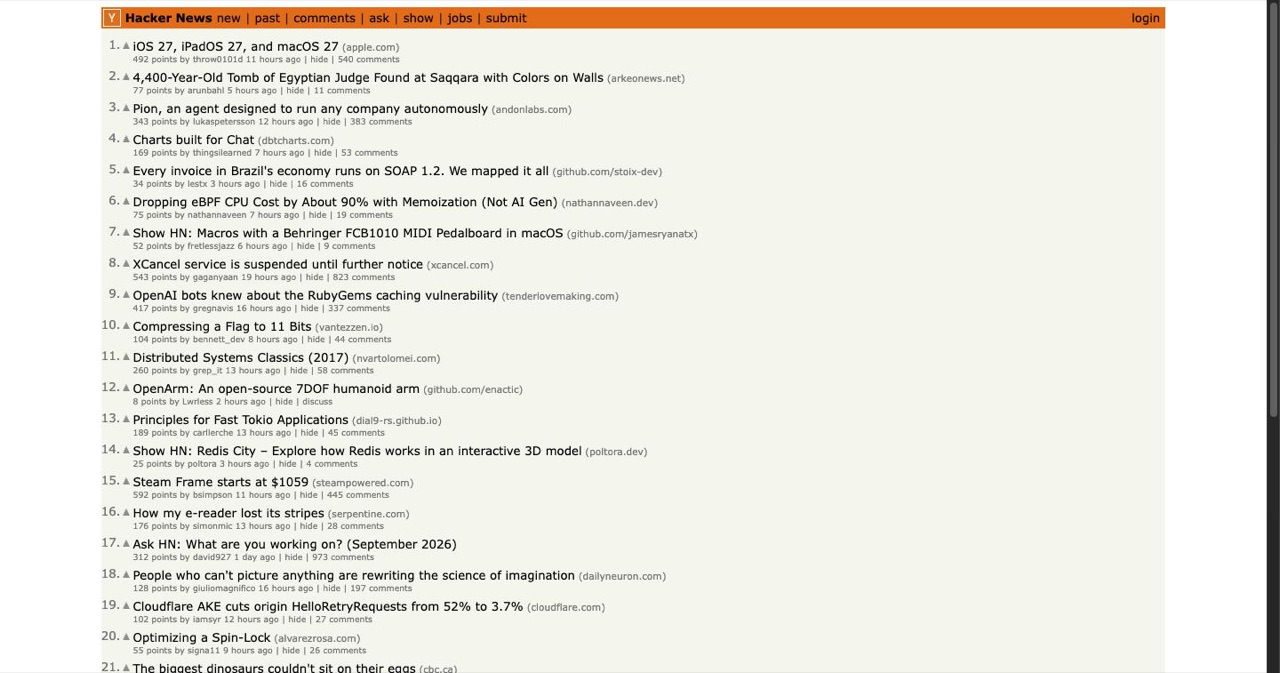
- Hacker News (if genuinely interesting to developers)
- Reddit communities where your users hang out (be genuinely helpful, not spammy)
- MicroLaunch, BetaList, and indie hacker communities
- LinkedIn and X with your existing network
Post-launch reality check: 80% of your time goes to marketing now. Building consumed your pre-launch months. Growing consumes everything after. Check out our guide on launching in 2026 for a deeper dive.
Acquisition Channels: Fish Where Your Fish Are
81% of B2B buyers choose their vendor before ever talking to sales. They're researching, comparing, and deciding while you're unaware they exist.
Your job is being present in those research moments.
Organic channels that compound:
Content marketing targeting buyer-intent keywords. Not thought leadership for thought leadership's sake. Tactical content answering questions your ideal customers are actively searching.
The pattern: "how to [solve problem]," "[competitor] alternative," "best [solution category] for [use case]," "[tool] vs [tool]."
53% of all web traffic comes from organic search, and the top result captures nearly 28% of clicks. Rankings don't just build awareness. They drive purchase decisions.
In 2026, you're optimizing for two search engines: Google and AI. ChatGPT's adoption accelerates AI-driven discovery, and if your brand isn't getting recommended by AI tools, you'll quietly lose high-quality leads.
Community marketing that provides genuine value:
- Join relevant Slack groups, Discord servers, Reddit communities, and LinkedIn groups
- Answer questions thoroughly without pitching (your expertise sells, not your features)
- Share insights from your unique perspective
- Mention your product only when directly relevant to someone's question
People trust recommendations from community members infinitely more than ads.
Paid channels that scale:
Start tiny. $5-10 daily on Facebook or Google ads testing different messages and audiences. Don't compare paid CAC to organic. They serve different functions. Organic builds long-term moats. Paid tests hypotheses quickly and scales proven channels.
Model your unit economics: If your average customer pays $50/month and stays 18 months, your LTV is $900. You can afford to spend $300+ acquiring them profitably (assuming 3:1 LTV:CAC minimum).
Cold outreach works if you do it right:
- Personalize beyond first name mail merge
- Lead with the problem, not your solution
- Reference something specific about their situation
- Keep it under 100 words
- Have one clear call-to-action
Bad: "Hi [name], I noticed your company. We help companies like yours with [generic benefit]. Want to chat?"
Good: "Saw your team posting about struggling with [specific problem] on [platform]. We solved this for [similar company] by [brief approach]. Worth a 10-minute call to see if relevant?"
Content and Social: Consistency Beats Perfection
You don't need a content team. You need a system.
Start ridiculously small: 2-3 posts weekly answering your customers' most common questions. Film yourself explaining solutions. Write short breakdowns of interesting approaches you've tried. Share behind-the-scenes of building.
Social platforms now prioritize role-relevant content, meaning your posts reach people based on their actual job function and interests. One-size-fits-all content performs poorly.
Platform strategy:
LinkedIn for B2B SaaS: Share insights, lessons learned, customer results. Post 3-5x weekly. Founder presence matters. People trust humans over corporate accounts.
X (Twitter) for reaching other founders and tech folks: Daily posts mixing tips, observations, and genuine conversation. Threads explaining complex concepts simply. Engagement in relevant discussions.
Reddit, Quora, and community forums: Answer questions thoroughly. Your profile becomes a resource people reference. Don't drop links unless genuinely helpful.
YouTube Shorts and LinkedIn video: Short-form video continues driving the most engagement across platforms. Expert clips, product walkthroughs, and quick how-tos teach without overtly selling.
The meta-strategy: Show your face. Humans trust humans. Your founder story, your perspective and your lessons are what set you apart when products feel interchangeable.
Retention: Where Real Money Gets Made
New customer acquisition is expensive. Keeping customers is profitable.
Top SaaS brands exceed 120% Net Revenue Retention through expansion-first models. Your existing customers paying more over time beats churning and replacing them.
Retention tactics that matter:
Talk to every user. Especially the ones canceling. Their feedback is worth its weight in gold. Most founders avoid these conversations. Smart ones record them and iterate based on patterns.
Personal onboarding for early customers. Hop on calls, answer questions in real-time, help them succeed. This doesn't scale, but it teaches you what scalable onboarding should look like.
Set up failure and recovery flows immediately:
- Users who don't complete onboarding get targeted help
- Inactive users get re-engagement campaigns
- Users hitting limits get upgrade prompts at the right moment
- Canceling users get asked why and potentially get win-back offers
Make sharing effortless. Buttons in-app and emails encouraging users to refer colleagues. Incentivize if needed, but often the product being genuinely useful is enough.
Use your own product religiously. If something annoys you, it annoys users ten times worse. Fix your own pain points.
Respect people who leave. When someone unsubscribes, thank them and ask what could've been better. Some will come back when their situation changes. None will if you guilt-trip or ignore them.
Metrics that matter:
- Activation rate: Percentage of signups reaching their first value moment
- Time to value: How quickly new users achieve their goal
- Feature adoption: Which capabilities drive retention
- Churn rate by cohort: When and why people leave
- Expansion revenue: How much existing customers increase spend
Track these weekly. Iterate campaigns and product based on what moves the numbers.
Pricing: Charge From Day One
Free users are research subjects, not customers. Give away free trials or free tiers strategically, but make people pay to validate they actually value your solution.
Price on value delivered, not cost to build or what competitors charge. If you save customers $10,000 monthly, charging $1,000 is a steal for them and profitable for you. Choosing the best payment processor is crucial here.
2026 pricing trends:
Subscription fatigue is real. Consider alternatives:
- Lifetime deals for early adopters (limited slots at founder's pricing, e.g. $199 one-time)
- Usage-based pricing that scales with customer success
- Outcome-based pricing tied to results delivered
38% of companies base billing on actual software usage, while pricing strategies are dominated by competitor pricing (38%), value-based pricing (33%), and cost-plus pricing (30%).
Remove friction everywhere:
- One-click Google/Microsoft login
- Transparent pricing on your site (no "contact sales" for basic plans)
- Simple signup forms: every field you add kills conversions
- Clear upgrade paths when users hit limits
Test pricing, but not constantly. Pick a model, run it for at least 90 days, measure properly, then adjust based on data.
Scaling Without Burning Out
SaaS buyers now spend less than 20% of their time speaking with vendors. Most of your sales process happens before anyone reaches out.
This means your marketing needs to educate, build trust, and overcome objections without human involvement.
Delegation and systems:
When growth stalls, it's usually a bottleneck in your process. Document everything using:
The IPO delegation framework:
- Information: What does this person need to know?
- Permission: What can they decide independently?
- Outcome: What result are we measuring?
This lets you hand off work without micromanaging.
What to avoid:
Random directory submissions hoping for traffic (unless they are high-DR directories). Most drive zero qualified visitors.
Over-relying on Product Hunt or Hacker News for sustainable growth. They're launch moments, not channels.
Hiding behind your product. Users want to see the humans building it. Founder presence builds trust when products feel commoditized.
Giving up early. Most startups fail within two years, often right before breakthrough. The difference between failure and success is frequently just pushing through one more iteration.
AI and Automation: Your Marketing Leverage
In 2026, advanced SaaS teams deploy AI agents (see our guide on free AI agents) managing entire workflows: onboarding campaigns, lifecycle emails, pipeline scoring, even partner activation.
This isn't about AI writing your content (which still feels robotic). It's about AI handling repetitive tasks that free you to focus on strategy and relationships.
Smart automation:
- Lead scoring and routing based on behavior
- Personalized email sequences triggered by user actions
- Content repurposing across platforms
- Competitive intelligence monitoring
- Performance optimization for ads and pages
The key: Keep humans in the loop for anything customer-facing. AI assists; humans decide and review.
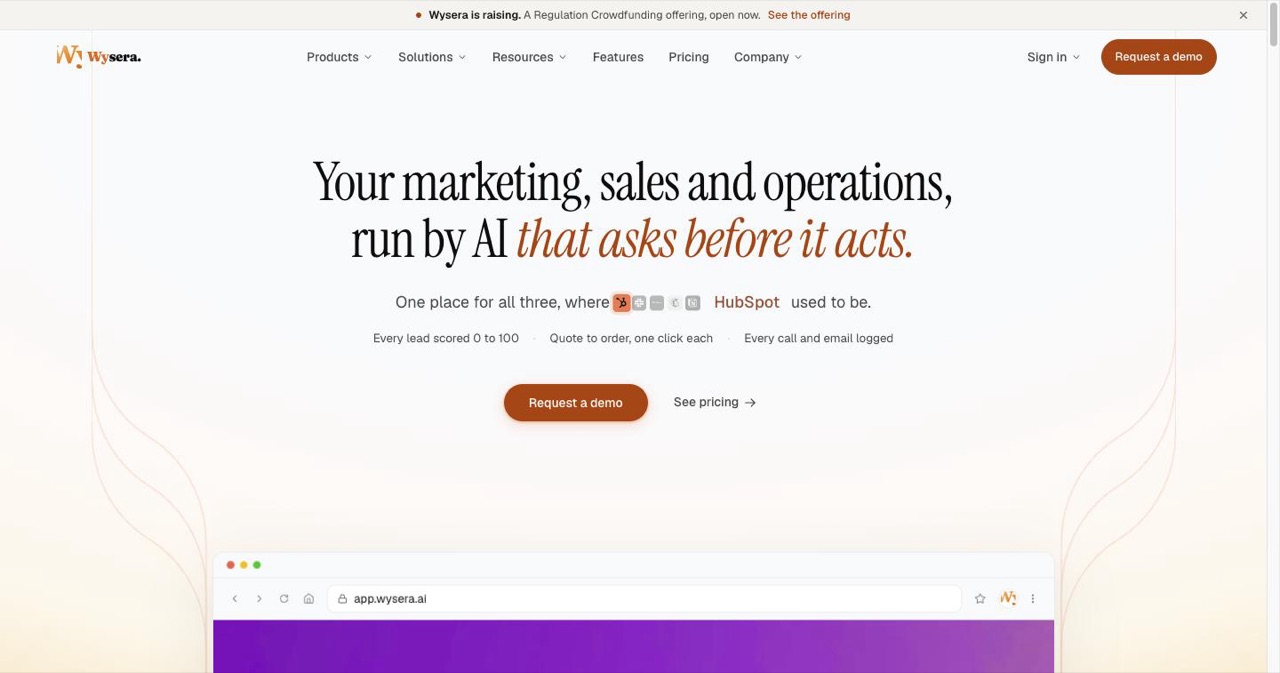
That review step is also what separates a usable AI stack from a pile of disconnected bots. Tools like Wysera build the approval gate into the workflow itself: the agent drafts the post, the sequence, the pipeline update, and nothing ships until you sign off. For a small team, that model is usually cheaper than paying for a separate tool per function, and it keeps one brand voice across everything the agent touches.
The trap to avoid is buying automation before you have a process worth automating. Get the manual version working first, then hand the repetitive part to an agent.
The System That Actually Works
Marketing isn't a checklist of tactics you execute once. It's a system you refine constantly.
Week one priorities:
- Validate positioning with 5-10 customer conversations
- Set up basic analytics (signups, activation, revenue)
- Choose your top 2 acquisition channels and go deep on them
Month one priorities:
- Ship content consistently (3x weekly minimum)
- Talk to every user who signs up
- Build case studies from early wins
Quarter one priorities:
- Optimize your funnel based on data
- Test one new channel
- Automate repetitive tasks
The founders who scale past $10K MRR share common patterns:
They pick channels where their ideal customers actually spend time and dominate those before expanding.
They talk to users obsessively, about the entire problem context as well as feature requests.
They charge real money early to validate value, then iterate based on who pays and stays.
They build in public, sharing lessons and progress, which compounds into distribution.
They treat marketing as product development: systematic experimentation, measurement, and iteration.
What's Next
The SaaS market is simultaneously more competitive and more accessible than ever. The market was valued at $197 billion in 2023 and is projected to reach $299 billion by 2026.
Competition is fierce. But distribution channels are democratized. You don't need a massive budget. You need clarity, consistency, and customer obsession.
The question isn't whether to do marketing. It's whether you'll treat it as seriously as you treat building your product.
Pick three tactics from this guide. Implement them this week. Track what happens. Iterate.
Your product deserves to reach the people it can help. Marketing is how you make that happen.
Now go build something people want to pay for, then make sure they know it exists.
Get your SaaS in front of founders
List your product on the SaaSCity live city map - a permanent listing, real discovery, and a backlink from a high-DR directory. Free to start; upgrade for a dofollow link and a building on the map.