News
MaxClaw vs. KimiClaw: The No-Code AI Agents Rewriting What's Possible in 2026
Setting up an AI agent used to mean renting a VPS, wrestling with Docker, and hoping your server didn't crash at 3 AM. That era is over. Discover the definitive comparison between MaxClaw from MiniMax and KimiClaw from Moonshot AI.

Contents (8)
Quick answer: MaxClaw and KimiClaw are managed cloud versions of OpenClaw, the open-source AI agent gateway. MaxClaw launched February 24, 2026 from MiniMax, runs on MiniMax M2.5 (230B parameters, 10B active) and targets Telegram, WhatsApp, Slack and Discord with pre-built office, finance and coding experts. KimiClaw launched February 15, 2026 from Moonshot AI, runs Kimi K2.5 (1T parameters, 32B active) in a browser tab, and adds 5,000+ ClawHub skills plus 40GB of cloud storage.
Setting up an AI agent used to mean renting a VPS, wrestling with Docker, and hoping your server didn't crash at 3 AM. That era is over.
Two tools announced within 10 days of each other, MaxClaw from MiniMax and KimiClaw from Moonshot AI, are both built on the same open-source framework, OpenClaw. Both promise 24/7 agents with persistent memory, no servers, no deployment headaches, and real productivity out of the box. They're similar on the surface. But once you get into the specifics, the differences matter, and they'll determine which one you should actually use when building your AI SaaS.
This is a straight-up breakdown.
Key Takeaways
- Same foundation, different shape: both are managed versions of OpenClaw, the open-source agent gateway that has passed 100,000 GitHub stars.
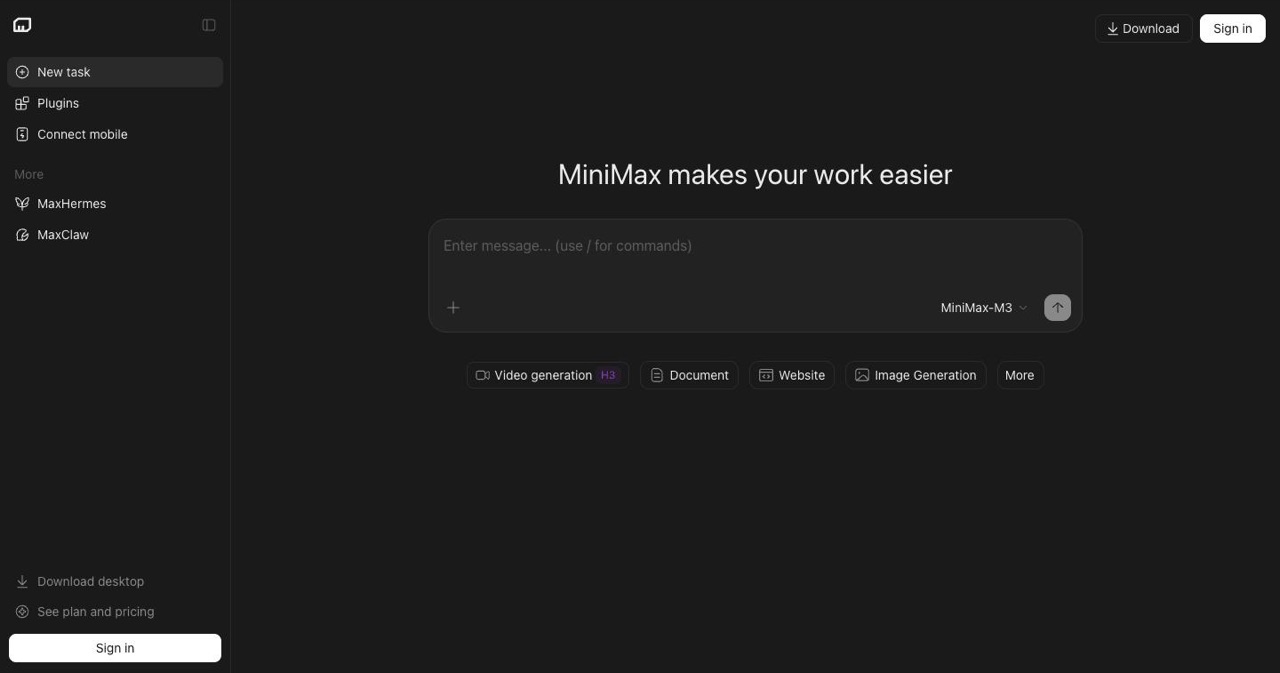
- MaxClaw is messaging-first: one-click setup at agent.minimax.io, live in about 10 seconds, connecting Telegram, WhatsApp, Slack and Discord.
- KimiClaw is browser-native: open kimi.com/bot and you are in, with no install, no local server and no Docker.
- Skills depth favors KimiClaw: over 5,000 community skills on ClawHub against roughly 700 in standard self-hosted OpenClaw.
- Memory and files favor KimiClaw too: 40GB of cloud storage for files, persistent memory and long-term context, plus K2.5's 200,000-token context window.
- Pricing differs in structure: MaxClaw charges no extra API layer fees on top of an existing MiniMax subscription, while KimiClaw's beta is limited to Allegretto plan members and above.
- Data jurisdiction is the shared caveat: MiniMax and Moonshot AI are both Chinese companies operating under Chinese data law.
What Is OpenClaw, and Why Does It Matter?
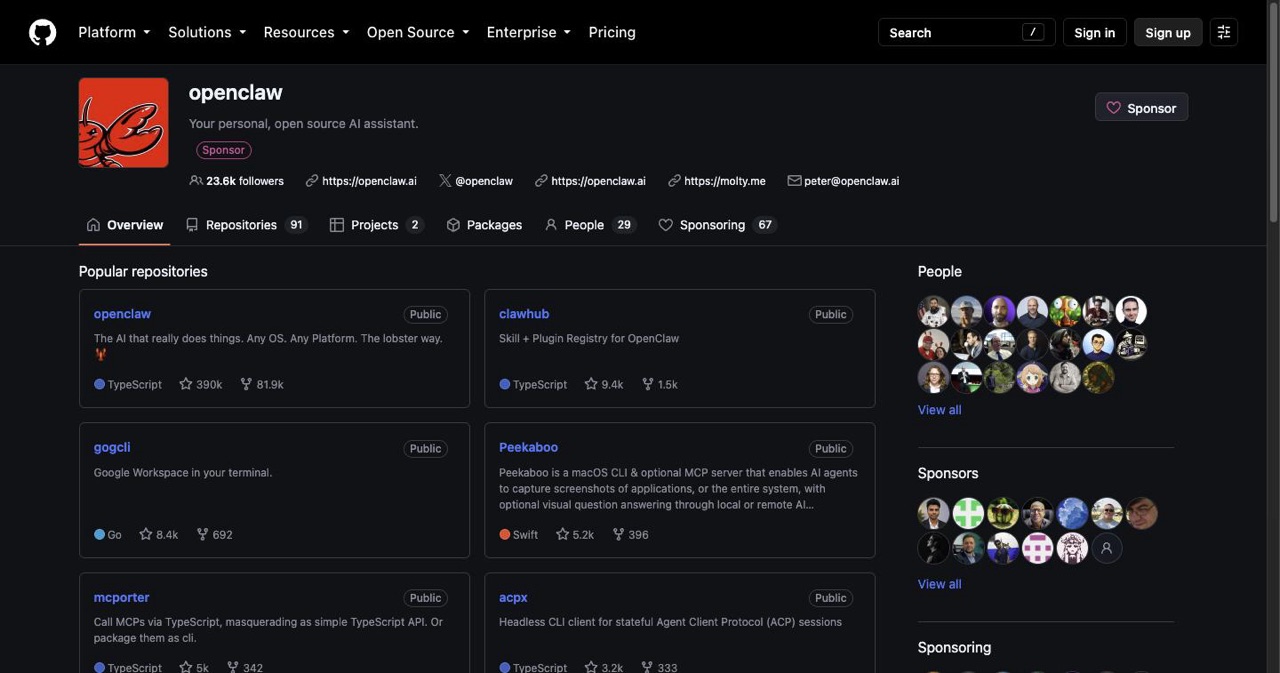
Before diving in, it's worth a quick line on OpenClaw itself. Originally called ClawdBot, then MoltBot, OpenClaw is an open-source AI agent gateway that connects frontier LLMs to messaging apps and gives them tools, memory, and personality. It amassed over 100,000 GitHub stars and caught the attention of Sam Altman, Mark Zuckerberg, and Satya Nadella, which tells you something about the trajectory.
The catch? Running it properly required self-hosting on a Mac Mini, a VPS, or some cloud instance you'd babysit. MaxClaw and KimiClaw both solve that problem, just in different ways.
MaxClaw: MiniMax Brings Its Own Model Into the Mix
MaxClaw launched on February 24, 2026, via a post from the official MiniMax Agent account on X. The pitch was direct: OpenClaw × MiniMax Agent × M2.5, fully unlocked, zero deployment, no extra API fees.
What Powers It
MaxClaw runs on MiniMax M2.5, a 230-billion-parameter mixture-of-experts model with 10 billion parameters active at inference. MiniMax built M2.5 specifically for coding-heavy and agentic use cases: real-world tasks that involve multi-step logic, tool-calling, and structured workflows rather than single-turn conversations.
Two speed modes are baked in: Lightning Mode for fast responses when you need iteration speed, and Pro Mode when the task is complex enough to warrant more compute.
The MiniMax Expert Ecosystem
The model is only part of what distinguishes MaxClaw. The other part is the ready-made expert layer sitting on top. MiniMax has pre-built a set of specialized agents for office workflows, financial analysis, and coding tasks. Instead of building your agent from scratch, you pick an expert, configure it, and deploy. For people who need something working in minutes rather than hours, this matters.
Where It Runs
MaxClaw connects to Telegram, WhatsApp, Slack, and Discord. Built-in tools cover scheduling, research, website building, AI-generated presentations, and full file handling: documents, Excel, PDFs, images, videos, audio. According to MiniMax, you can go live in 10 seconds via a one-click OpenClaw setup at agent.minimax.io.
The pricing model is tied to MiniMax's existing subscription structure with no extra API layer charges on top. That is a meaningful cost advantage for teams already in that ecosystem.
Real Talk
Early replies on the X announcement were mostly positive about ease of setup, but some users flagged bugs with cron job scheduling. It's fresh software. Worth knowing going in.
KimiClaw: The Browser-Native Agent from Moonshot AI
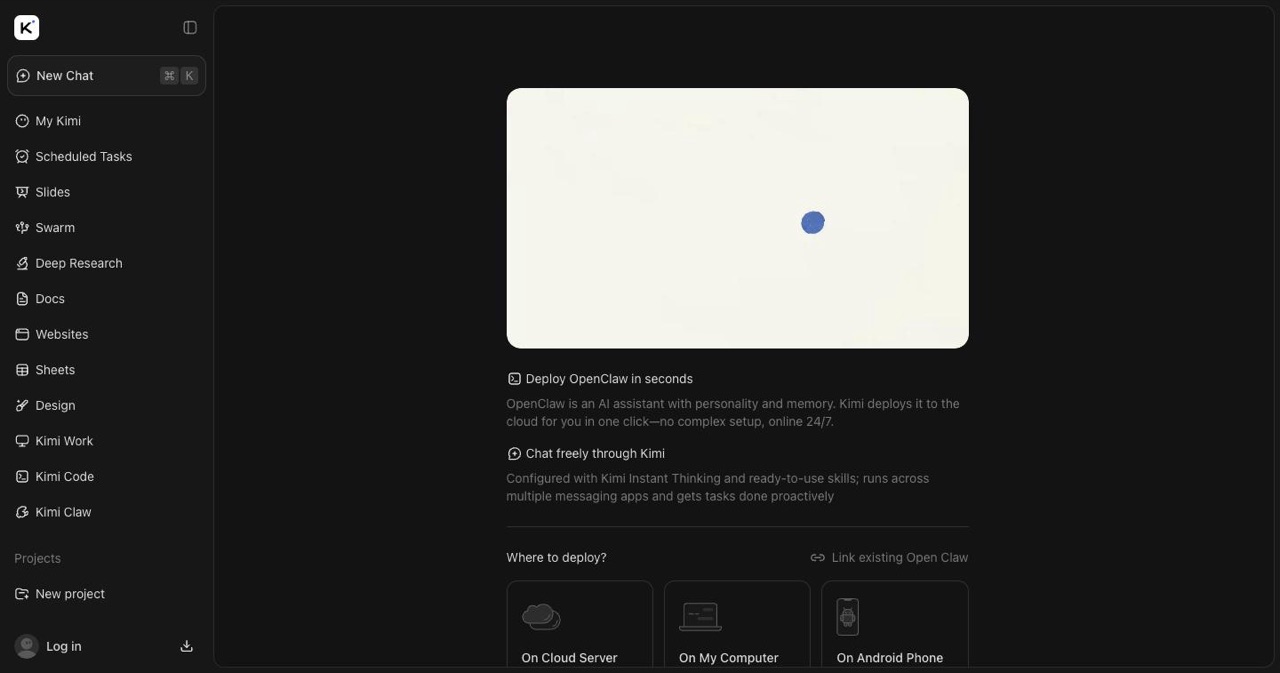
KimiClaw launched 10 days earlier, on February 15, 2026. Moonshot AI, backed by Alibaba and behind the Kimi chatbot, announced it as a cloud-native OpenClaw integration running directly in a browser tab. No installation. No local server. No Docker. You open kimi.com/bot and you're in.
What Powers It
KimiClaw is built on Kimi K2.5, a 1-trillion-parameter MoE model with 32 billion parameters active at inference. Released in January 2026, K2.5 is designed for long-context processing, up to 200,000 tokens, and handles multimodal input including text, images, and video. It consistently places among the top-ranked models on multimodal and reasoning benchmarks.
The ClawHub Skills Library
This is where KimiClaw has a clear edge in raw depth. Through ClawHub, users get access to over 5,000 community-contributed skills. Each skill is a modular extension: a function that lets the agent interact with external tools, APIs, or data sources. Compare that to the roughly 700 skills in standard self-hosted OpenClaw. The gap is significant.
That library covers everything from data analysis and workflow automation to live financial data via Yahoo Finance integration. Agents can chain skills together, run them autonomously, and trigger actions across messaging apps without any prompting from the user.
Storage and Memory
KimiClaw includes 40GB of cloud storage for files, persistent memory data, and long-term context. For anyone building agents that need to actually remember things, such as customer details, project history or accumulated research, this isn't a footnote. It's infrastructure.
The BYOC Option
One smart move Moonshot made: a "Bring Your Own Claw" feature. If you already run your own self-hosted OpenClaw instance, you can connect it to kimi.com and bridge it to the platform's cloud interface and Telegram integration. This means existing power users don't have to choose: they keep local control and gain the cloud layer on top.
Availability and Pricing
KimiClaw beta is currently available to Allegretto plan members and above on Kimi's platform. Pricing details for broader tiers haven't been disclosed yet, but the beta positioning suggests a subscription model is coming.
Head-to-Head: MaxClaw vs. KimiClaw
| Aspect | MaxClaw | KimiClaw |
|---|---|---|
| Launch Date | February 24, 2026 | February 15, 2026 |
| Underlying Model | MiniMax M2.5 (230B params, coding-focused) | Kimi K2.5 (1T params, multimodal) |
| Deployment | Messaging-app focused, one-click setup | Browser-native, runs in a tab |
| Skills/Ecosystem | MiniMax Expert ecosystem (office, finance, code) | 5,000+ ClawHub community skills |
| Storage | Not specified | 40GB cloud storage |
| Integrations | Telegram, WhatsApp, Slack, Discord | Telegram, WhatsApp + BYOC bridging |
| Data Jurisdiction | MiniMax (Chinese AI company) | Moonshot AI / Alibaba (Chinese AI company) |
| Pricing | No extra API fees; tied to MiniMax subscription | Beta: Allegretto plan+ on Kimi.ai |
| Known Issues | Early cron job bugs reported | Beta-stage; broader availability TBD |
| Best For | Coding, finance, office automation | Multimodal tasks, research, skills depth |
Both are built on OpenClaw. Both are Chinese AI companies. Both eliminate the need to manage your own infrastructure. After that, the decision points get more specific.
Which One Should You Actually Use?
Go with MaxClaw if: You spend most of your time in Slack or Discord and want pre-built agents for coding review, financial reports, or office document workflows. MiniMax M2.5 is genuinely strong at structured, multi-step tasks, and the Expert ecosystem means less configuration. If your team lives in messaging apps and you want something running fast, MaxClaw is the path of least resistance.
Go with KimiClaw if: You need depth. The 5,000+ ClawHub skills library is a serious advantage. It means there's almost certainly a pre-built capability for your use case rather than you having to build from scratch. The 40GB storage and K2.5's long-context architecture make KimiClaw the better pick for agents doing sustained research, managing large files, or handling multimodal content like images alongside text.
One thing both require: Thinking about data jurisdiction. Both Moonshot AI and MiniMax operate as Chinese companies under Chinese data law. For personal productivity workflows or solo developers, this is probably irrelevant. For teams automating workflows that involve sensitive credentials, customer data, or proprietary business information, it's a decision point worth making explicitly rather than defaulting to.
The Bigger Picture
What's happening here isn't really about two products competing. It's about OpenClaw becoming the standard layer for deploying personal AI agents, with multiple well-resourced labs racing to own the managed cloud version of that standard.
OpenClaw's creator, Peter Steinberger, recently joined OpenAI. That move suggests a future where this kind of agent infrastructure gets deeply embedded into mainstream AI products. KimiClaw and MaxClaw are, in some ways, the preview of what personal AI agents look like when the friction is gone.
The tools are real. The agents are usable today. The only question left is which set of trade-offs fits your workflow.
Try Them
- MaxClaw: agent.minimax.io
- KimiClaw: kimi.com/bot
Both are worth spending 20 minutes with before you commit to either. The setup times are short enough that you don't have to guess. You can just test.
If you've already run either of these in production, the comments are the right place to share what you found. Real-world feedback on AI agents is still sparse enough that it's worth putting in the open.
Get your SaaS in front of founders
List your product on the SaaSCity live city map - a permanent listing, real discovery, and a backlink from a high-DR directory. Free to start; upgrade for a dofollow link and a building on the map.