SaaS Business
Your Vercel + Supabase Bill Is About to Make You Angry — Here's the Fix
One developer. 965,000 users. $136/month. That's not a flex — that's what self-hosting actually looks like in 2026 when you stop paying a 'convenience tax' to managed platforms.


Contents (7)
Quick answer: The practical 2026 replacement for Vercel plus Supabase is Coolify on a Hetzner VPS with Appwrite or PocketBase behind it. Coolify gives you Git deployments, preview URLs and automatic SSL. Appwrite covers auth, database, storage and functions in one Docker deployment. At 1,000 monthly active users this runs $7 to $20 a month against $45 to $75 on the managed stack, and at 10,000 MAU it is $40 to $150 against $200 to $500 or more.
One developer. 965,000 users. $136/month. That's not a flex — that's what self-hosting actually looks like in 2026 when you stop paying a "convenience tax" to managed platforms.
If you're still on Vercel + Supabase at any meaningful scale, you're almost certainly paying 4-5x more than you need to. And the worst part? The tools to escape are now genuinely good.
This isn't a "ditch managed hosting and suffer" post. It's a practical breakdown of how indie devs and small teams are cutting infrastructure costs without sacrificing their sanity or their weekends.
Key Takeaways
- The flip point is 1k to 10k MAU: Below that, managed platforms are the right call. Above it, the pricing models stop matching high-traffic apps with thin margins.
- Coolify replaces the Vercel workflow: Open-source PaaS on your own VPS with Git deployments, preview URLs, Traefik SSL, monitoring and database backups.
- Appwrite replaces Supabase: Auth, database, storage and functions in one Docker deployment, with SDKs and migration tooling from Supabase.
- PocketBase is the low-effort option: A single executable on SQLite with real-time database, auth and file storage. No Docker, no config maze.
- Hetzner is the price floor: A 4GB RAM VPS runs $5 to $7 a month, and developers report running several apps and databases on a $7 box.
- Savings are 50 to 70%: Teams report that range after switching, with the 10k MAU gap running from $200 to $500 or more down to $40 to $150.
- Migration is hours, not weeks: pg_dump and import the data. Auth users are the tricky part, handled with Appwrite tooling or forced password resets.
Why the Managed Platform Math Breaks Down
Managed platforms like Vercel and Supabase make perfect sense at zero to a few hundred users. You ship fast, the free tiers are generous enough, and you don't want to think about servers. Totally valid.
But somewhere between 1,000 and 10,000 monthly active users, the economics quietly flip. Vercel charges per team member ($20/user/month on Pro), stacks on bandwidth costs, and penalizes you for building anything that isn't a Next.js frontend. Supabase's Pro plan starts at $25/month but escalates quickly with storage, compute, and egress fees baked in.
Teams often report saving 50-70% by switching to alternatives or self-hosting once their apps gain traction. The problem isn't that these platforms are bad — it's that their pricing models were never designed for high-traffic apps with thin margins.
There's also the lock-in problem. Relying on Vercel-specific features like proprietary Edge Functions or Next.js ISR behavior creates hosting lock-in, making it harder to move away in the future. You don't notice this on day one. You notice it the day you want to leave.
The Self-Hosting Stack That Actually Works in 2026
The open-source ecosystem has matured enough that you can replicate almost everything Vercel and Supabase offer — auth, database, storage, deployments, previews — on a $10-20/month VPS. Here's what that looks like in practice.
For Your Backend: Three Serious Supabase Replacements
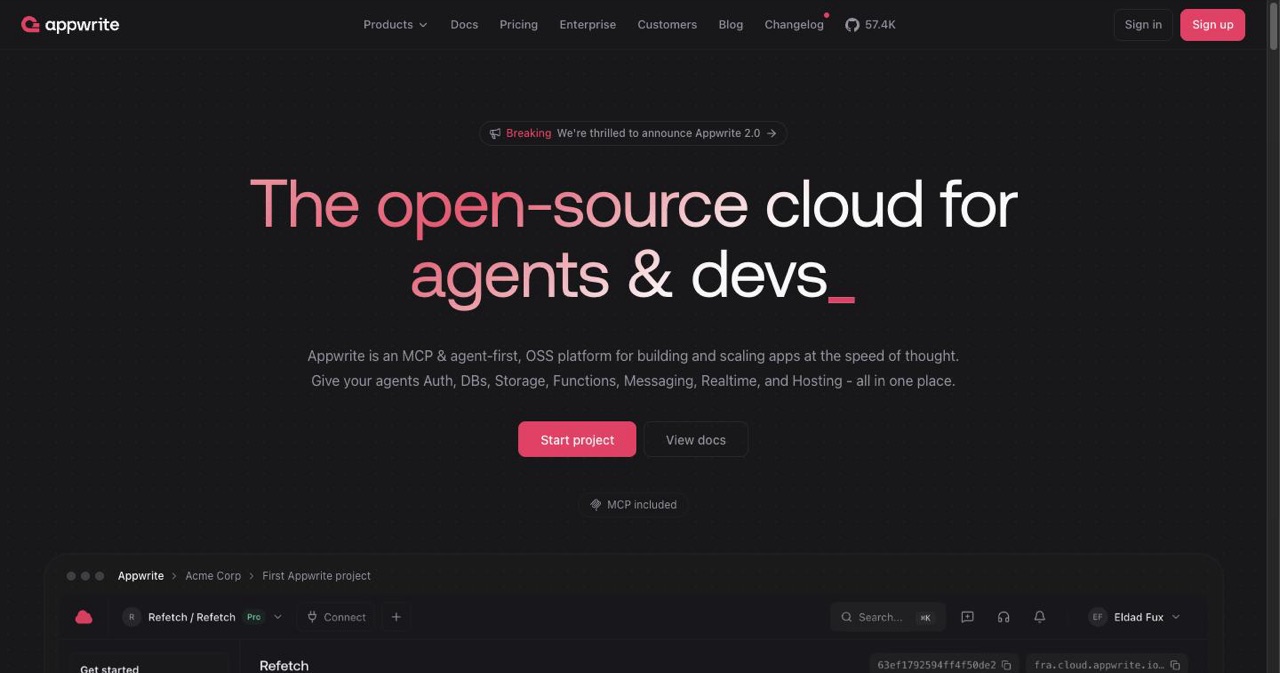
Appwrite is the closest thing to a drop-in Supabase replacement. It's a full backend-as-a-service suite — auth, database, file storage, functions — packaged into a single Docker deployment. It has SDKs for every major platform and language, an active community, and migration tooling from Supabase. If you need everything Supabase offers but want to own your data, Appwrite is the move.
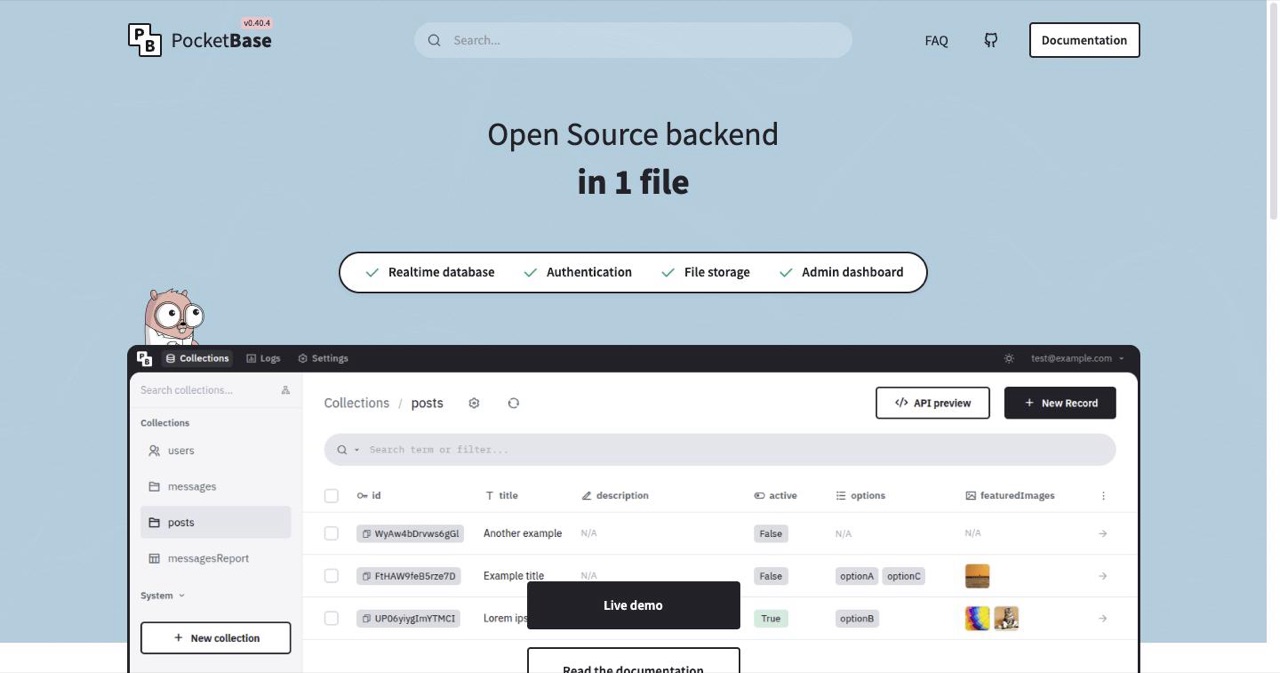
PocketBase is the wild card. It's a single executable file. You drop it on a server, it runs, and suddenly you have a real-time database with built-in auth and file storage. No Docker required, no configuration maze. It uses SQLite under the hood, which sounds limiting until you realize SQLite handles serious read workloads surprisingly well. For MVPs, side projects, and internal tools, PocketBase is almost unfairly good.
Nhost sits between the two — Postgres-based like Supabase but with GraphQL baked in and smoother migration paths. Smaller community than Appwrite but worth a look if your team is GraphQL-first.
For the truly data-hungry: Hasura gives you instant GraphQL on top of any Postgres database and is fully self-hostable. It's not a BaaS replacement but a powerful layer to put on top of your own database.
For Your Frontend Deployments: Coolify and the New Guard
Vercel's real value isn't the CDN — it's the developer experience. Git push, get a preview URL, deploy to production. You want that workflow without the pricing model.
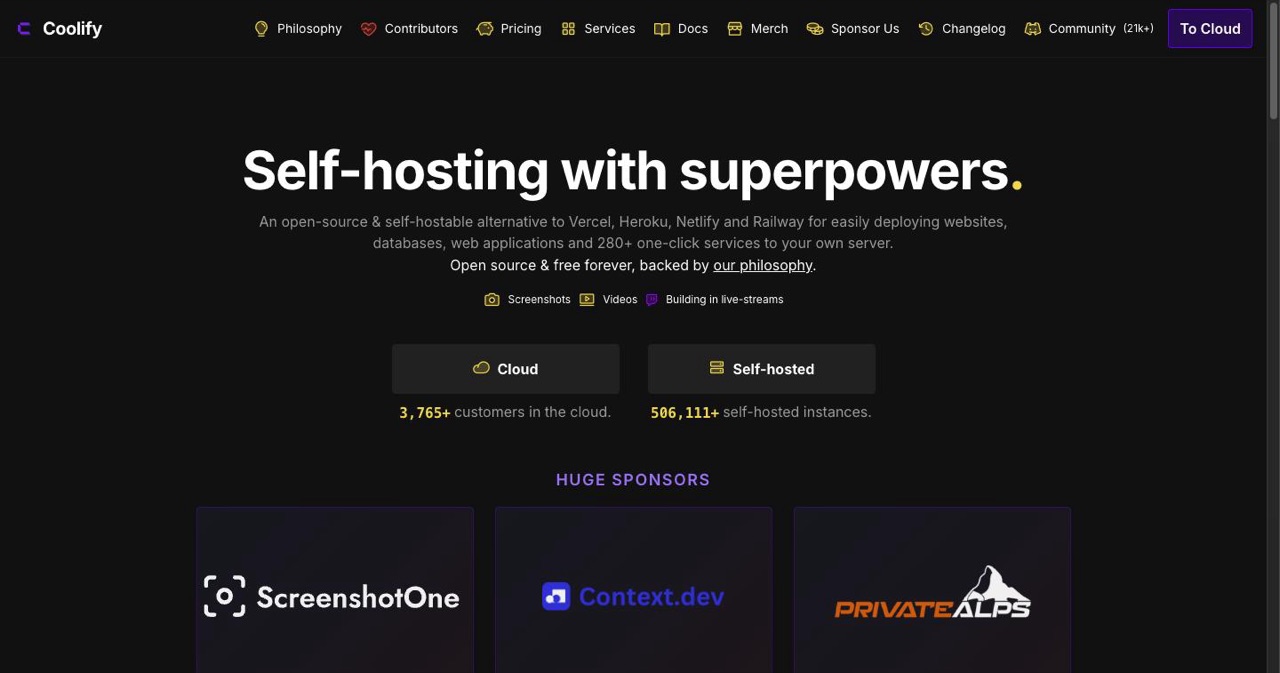
Coolify has become the go-to answer here. It's an open-source PaaS that runs on your own VPS and gives you Git-based deployments, automatic SSL via Traefik, built-in monitoring, and database backups. It even has a one-click template for self-hosting Supabase if you want the full stack on your own hardware. The UI is polished enough that you won't miss Vercel's dashboard much. Multiple devs have reported running multiple apps, analytics stacks, and databases on a $7 Hetzner VPS with zero downtime.
Dokploy is Coolify's scrappier sibling. It offers native Docker Compose support, multi-server deployment, real-time log monitoring, and a template library for open-source tools including Supabase, PocketBase, and Grafana. If you're managing a more complex multi-server setup, Dokploy's architecture fits better.
Dokku is the OG — a self-hosted Heroku clone that deploys via Git push. Minimal, stable, battle-tested. If your app is simple and you want something that stays out of the way, Dokku is underrated.
The Real Cost Comparison
Here's what the numbers actually look like:
| Setup | 1k MAU | 10k MAU |
|---|---|---|
| Vercel Pro + Supabase Pro | $45–75/month | $200–500+/month |
| Coolify + Appwrite on Hetzner | $7–20/month | $40–150/month |
The gap widens fast. At 10k MAU on managed platforms, you're looking at costs that could fund a part-time contractor. On a self-hosted VPS stack, you're paying roughly what you'd spend on a cheap gym membership.
How to Actually Set This Up (The Short Version)
You don't need a DevOps background. You need a VPS, Docker, and an afternoon.
Step 1: Get a server. Hetzner and DigitalOcean are the defaults. A 4GB RAM VPS from Hetzner runs $5-7/month. That's enough to start.
Step 2: Install Coolify. One curl command, a few minutes, and you have a deployment dashboard. Point your domain at it.
Step 3: Deploy your backend. For Appwrite: one Docker command and you're running. For PocketBase: download the binary, run it, done. Configure your auth settings, create your first collection.
Step 4: Connect your frontend. Add your GitHub repo to Coolify, set your environment variables, push. Preview deployments work too.
Step 5: Add SSL and backups. Coolify handles SSL automatically through Let's Encrypt. Configure automated database backups to S3 or Backblaze B2. Sleep soundly.
Migrating from Supabase? Export your Postgres data with pg_dump, import it to your new instance. Auth users are trickier — Appwrite has migration tooling, or you can force password resets on first login. It's a few hours of work, not a weeks-long project.
When Self-Hosting Is the Wrong Call
This isn't for everyone, and being honest about that matters.
If you're pre-launch and validating an idea, stay on managed platforms. Vercel's free tier and Supabase's free tier are genuinely good for getting to first users. The time you save shipping beats the money you'd save on hosting.
If you have zero DevOps comfort and no one on your team does either, the operational overhead is real. You own incidents. You own upgrades. You own the 2am alerts when something goes sideways. For small teams of one to two developers, Vercel's Pro plan at $20/month is reasonable, and the time savings may outweigh the cost.
The right time to make the switch is post-PMF, when your infrastructure costs are becoming a genuine line item, and when your product's needs are stable enough that you're not rebuilding the backend every two weeks. You can follow our Startup Launch Checklist to make sure you're ready.
The One Thing Most Posts Get Wrong
Self-hosting isn't about being anti-cloud or allergic to convenience. The developers doing this successfully aren't ideology-driven — they're pragmatic. They used managed platforms when it made sense, watched the costs, and made the switch when the math changed.
The tools have caught up. A $10 VPS running Coolify and Appwrite in 2026 is genuinely competitive with what you're paying $500/month for. The learning curve is shallower than it's ever been.
Pick a weekend, spin up a Hetzner VPS, install Coolify, and deploy something small. If it feels manageable — and it probably will — you'll know exactly when to make the full switch.
The bill will thank you.
Get your SaaS in front of founders
List your product on the SaaSCity live city map - a permanent listing, real discovery, and a backlink from a high-DR directory. Free to start; upgrade for a dofollow link and a building on the map.