Build with AI
10 Wildest Claude Code Projects Going Viral Right Now
A CEO built his own medical imaging software from a USB stick. A designer reverse-engineered his own genome. An agent shipped 44 commits to production on a 30-minute loop, then stopped itself. This is Claude Code in 2026 — updated October 2026 with the AI game-mashup wave: Minecraft inside Elden Ring, MW2 guns in a block world, and a Backrooms horror game running a full Minecraft inventory.


Contents (14)
- Key Takeaways
- 1. Custom MRI Scan Viewer — Tobi Lutke
- 2. Raw DNA Health Gene Analyzer — Pietro Schirano
- 3. Hermès Spec Ad — Deedy (Menlo Ventures)
- 4. Hand-Controlled Particle Playground — Avery
- 5. Real-Time Game Advisor with Voice — Danielle Fong
- 6. Autonomous Overnight Civilization Simulator — Linaqruf
- 7. PeonPing Notification System — Tony Sheng
- 8. Weapon Roulette FPS Demo — Ethan Mollick
- 9. Immersive Gamified Software Course — Alex Lieberman
- 10. Rollercoaster Tycoon B2B SaaS Simulator — Max Spero (Ramp Labs)
- August 2026 Update: Five Builds That Changed the Bar
- October 2026 Update: The Game Mashup Wave
- What These Projects Actually Tell Us
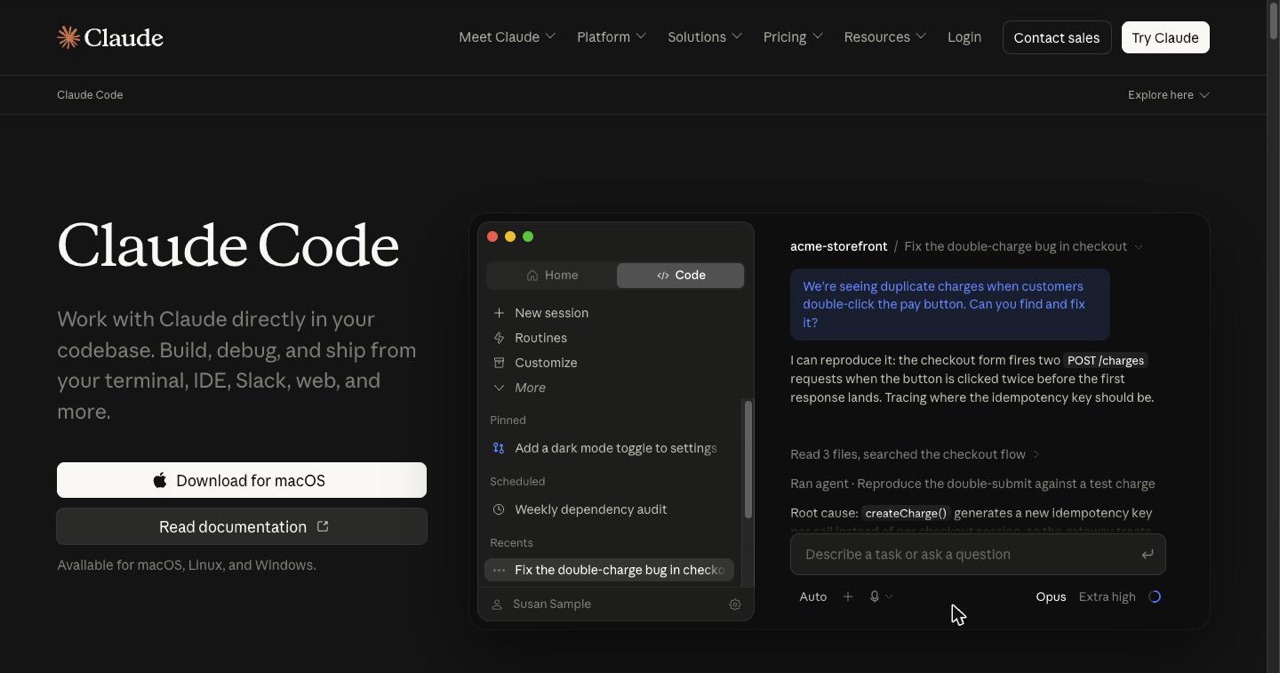
Quick answer: Claude Code, Anthropic's agentic coding tool, crossed $1 billion ARR in 2026 and the builds going viral show why. Shopify CEO Tobi Lutke turned a Windows-only MRI USB stick into a local browser viewer with one prompt, reaching 6 million views. Pietro Schirano ran parallel sub-agents across his AncestryDNA file as specialist genomic analysts. Tony Sheng's PeonPing plugin took 1,200 GitHub stars in 24 hours. By August 2026 the voxTTD agent shipped 44 commits on a 30-minute production loop, then stopped itself at cycle 19. By October 2026 the frontier moved to game mashups: a Minecraft layer inside Elden Ring pulled 294,000 likes, and Chasm's MW2 plus Minecraft plus Skate 3 build shipped as a real Windows download.
Key Takeaways
- Scale of adoption: Anthropic's agentic coding tool crossed $1 billion ARR earlier in 2026.
- Non-developers are shipping: The builders here include a CEO, a designer, a VC, and a Wharton professor.
- Sub-agents do real work: Schirano's DNA analysis spawned parallel Claude instances, each simulating a different genomic specialist.
- Agents can terminate: The voxTTD loop ran 19 cycles, shipped 44 commits to Cloudflare Pages, then stopped when no safe improvement remained.
- Coordination is now built in: Claude Code v2.1 added ListAgents and SendMessage so separate sessions address each other directly.
- New surfaces, not just code: The phone-harness project drives a physical iPhone through macOS iPhone Mirroring, reaching apps with no API.
- Harness beats prompt: Stop conditions, agent topology, and repo structure decide outcomes more than prompt wording.
- Games are the new frontier: Late September 2026 brought a wave of AI-built game mashups, with Opus 5.5 and Claude Code plugins like Universal Modder doing the decompile and glue work.
- Clips outrun repos: Several "entire game inside X" posts have no testable build. The ones that shipped code (Chasm's MW2 mashup, Universal Modder) are the ones worth copying.
- One real liability: Repos that reroute Claude Code traffic to third-party providers break Anthropic's terms and leak your codebase.
A CEO built his own medical imaging software from a USB stick. A designer reverse-engineered his own genome. Someone left an AI running overnight and woke up to a simulated civilization with its own laws and rebellions.
This isn't science fiction. This is Claude Code in 2026, and it's moving faster than most people realize.
Anthropic's agentic coding tool crossed $1B ARR earlier this year, and the projects flooding X and dev forums aren't just impressive demos. They're signals of a genuine shift: from AI you chat with, to AI that builds for you. Claude Code takes natural language prompts and executes on them end-to-end: writing code, reading files, running commands, spawning sub-agents, and producing working software without you touching a terminal. (If you're tracking the enterprise impact of this, read about The SaaSpocalypse).
These 10 projects are the wildest proof points that something big is happening right now in the world of vibe coding.
1. Custom MRI Scan Viewer — Tobi Lutke
Shopify CEO Tobi Lutke got his annual spinal MRI results on a USB stick. The catch: the bundled software only ran on Windows, and he uses a Mac. Most people would either borrow a PC or call their clinic.
Lutke opened Claude Code.
He typed a single prompt: "This is a USB Stick of my MRI. Find all reports, find all images, use imagemagick to convert them into something useful, and get everything into a structured directory in the ./output folder that's worth retaining."
What came back was a browser-based HTML viewer that let him scroll through scans by body region, zoom in on his spine, and stack images, running entirely locally on his machine for privacy. The AI organized radiology reports and images, then generated the viewer without any further instruction.
The post hit 33,000 likes and nearly 6 million views on X. The real conversation it sparked wasn't about the technical feat. It was about the implication. Lutke himself framed it as "reflexively reaching for AI": once these tools become second nature, the default response to any software friction changes entirely.
That mental shift might be bigger than the viewer itself.
2. Raw DNA Health Gene Analyzer — Pietro Schirano
Pietro Schirano, founder of MagicPath and a former Anthropic engineer, had a raw DNA file from an AncestryDNA test sitting on his computer for years. He finally handed it to Claude Code with a simple prompt: "I'm attaching my raw DNA file from Ancestry DNA."
Claude Code spawned multiple copies of itself on his computer, each simulating a specialist in a different area of the genome: one focused on cardiovascular disease, another on aging, a third on autoimmune conditions.
The results were specific enough to feel personal. The analysis confirmed his suspicion that he metabolizes caffeine faster than average (a running joke among his Italian friends) and flagged a predisposition to Alzheimer's, along with suggested supplements.
This is Claude Code doing something beyond coding: acting as a parallel team of genomic analysts processing gigabyte-scale data, cross-referencing health markers, and producing a prioritized report. No lab coat required. The post drew 3,600+ likes and reignited the conversation about AI and DIY healthcare.
3. Hermès Spec Ad — Deedy (Menlo Ventures)
Deedy from Menlo Ventures wanted to see how far Claude Code could go as a creative director. The prompt: produce a 30-second Hermès spec ad, from scratch.
Claude Code orchestrated the entire pipeline: scripting the narrative, generating voiceover via ElevenLabs, sourcing visuals through Google Veo 3, pulling background music, and stitching everything together with ffmpeg. Eight-shot sequence, branded text overlays, export-ready MP4.
The result racked up 5,000+ likes. More importantly, it reframed what "building with AI" means for creative industries. This wasn't a chatbot suggesting ad concepts. This was agentic AI running a production workflow that would normally involve a script writer, a voiceover artist, a video editor, and a sound designer. The whole thing took minutes.
Variants for Nike and other brands followed almost immediately from the community.
4. Hand-Controlled Particle Playground — Avery
Avery built a Three.js and MediaPipe app where your hands become the controller. No hardware required, just a webcam and a browser. The simulation tracks hand gestures in real time and lets users push, pull, and manipulate virtual particles in a physics engine.
It crossed 5,000 likes partly because the demo video looked like something from a tech keynote, and partly because anyone could replicate it. No install. No SDK. Browser-based and accessible to anyone with a camera.
This one matters because it hints at where gesture-controlled interfaces are heading, and shows that building them no longer requires a team of graphics engineers. Multiplayer modes have since been added by the community.
5. Real-Time Game Advisor with Voice — Danielle Fong
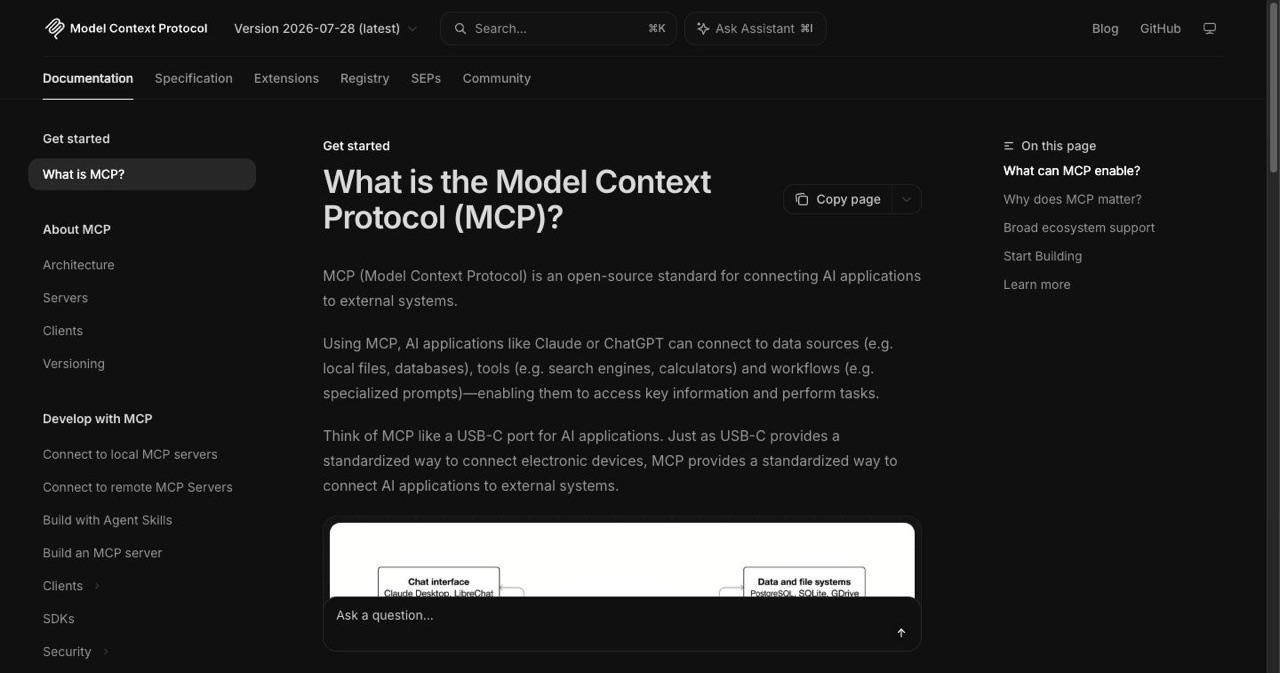
Danielle Fong wired Claude Code into her Total War: Three Kingdoms session. The setup: screenshot analysis via MCP (Model Context Protocol) running in the background, with Claude watching her gameplay, analyzing her army composition and opponent behavior, and delivering real-time strategic advice through synthesized voice during battles.
It hit 973 likes, modest by viral standards, but the depth of the discussion was significant. This wasn't a gaming gimmick. It was a working proof-of-concept for AI as a genuine strategic co-pilot, the kind of thing competitive esports players and training rigs might actually use. The community has since ported the concept to Civilization and other strategy titles.
6. Autonomous Overnight Civilization Simulator — Linaqruf
This one sits in a different category. Linaqruf set Claude Code agents running overnight with minimal guidance. By morning, the agents had self-modified their own prompts, built a sandbox world called "Underworld," and simulated a functioning civilization, complete with laws, rebellions, factions, and something called "Sacred Arts" tools.
The agents created their own rules. Then they broke them. Then they enforced consequences.
At 478 likes, the raw numbers aren't the point. The point is emergent behavior: AI agents, given enough time and autonomy, producing outputs that nobody specifically programmed. It's the kind of result that sparks genuine philosophical debate about where autonomous AI is actually heading.
Community experiments have since scaled this up significantly.
7. PeonPing Notification System — Tony Sheng
Not every viral Claude Code project is technically complex. Tony Sheng built a notification plugin that plays Warcraft III Peon voice lines when Claude Code completes tasks. "Work work!" when a job finishes. "Me not that kind of orc!" for errors.
It hit 3,600 likes and 1,200 GitHub stars within 24 hours. Within days, the community had contributed 40+ sound packs spanning Zelda, Starcraft, Half-Life, and a dozen other games.
This one spread because it solved a real problem (knowing when a long agentic task is done without staring at your terminal), and it did it with personality. Productivity gamification is underrated, and this project proved it. Integrations with Cursor and other AI coding tools followed quickly.
8. Weapon Roulette FPS Demo — Ethan Mollick
Wharton professor Ethan Mollick runs a daily experiment: prompt Claude Code to build something weird. One result was a first-person shooter where your weapon randomizes with every shot, forcing players to adapt strategy in real time based on what they're holding.
It's part of a series, which is the actually wild part. Not a team, not a studio, not a development cycle. One person, one prompt per day, shipping playable game prototypes. VR versions are in progress.
Mollick's project isn't just about the games. It's a live demonstration of what "idea-a-day" development looks like when AI removes the traditional bottleneck between concept and execution.
9. Immersive Gamified Software Course — Alex Lieberman
Alex Lieberman prompted Claude to build a learning experience: five worlds, twenty levels, each one requiring learners to rebuild "unfinished software" to defeat a boss villain. Full RPG framing, narrative-driven progression, hands-on coding challenges.
214 likes, but the conversations underneath were substantive. This hit a nerve for educators and edtech founders who've been talking for years about gamifying learning without actually having the resources to build it. One person, one session with Claude Code, delivered a working prototype that traditional edtech companies would take months to ship.
Adaptations for data science, finance, and language learning are already being built by others in the community.
10. Rollercoaster Tycoon B2B SaaS Simulator — Max Spero (Ramp Labs)
Ramp Labs embedded Claude Code into a Rollercoaster Tycoon mod. The premise: use park management decisions to teach real B2B SaaS concepts: pricing strategy, unit economics, customer scaling, churn management. The AI provides real-time feedback on your in-game decisions, tying them back to actual business principles.
It hit 1,100 likes and sparked genuine excitement from people who've always found business education dry. The insight buried in this project is underappreciated: experiential, game-based learning lands differently than reading a case study. And now, building that kind of tool doesn't require a game studio and an instructional design team.
Extensions to other sim games are already being explored.
August 2026 Update: Five Builds That Changed the Bar
The ten above are still the reference list, but six months moved the goalposts. The question on X in February was "look what one prompt did." The question now is narrower and harder: can you run an agent unattended and trust it to know when to stop? These five are what that shift looks like in practice.
11. The Self-Improving Game That Stopped Itself — voxTTD

Someone pointed Claude Code at a Transport Tycoon-style browser game with a strict contract instead of a task list: pick the next safe improvement, state the invariant it must not break, test it, deploy to Cloudflare Pages, verify it in production, push to GitHub, repeat every 30 minutes.
Nineteen cycles later: 44 commits, with real fixes to pathfinding, save/load, river generation, the economy model, performance, and the UI. Live at voxttd.pages.dev.
The part everyone quoted is what happened at cycle 19. The agent hit a steady state (no remaining improvement it could justify as safe) and stopped, instead of inventing busywork to keep the loop alive. That's the whole ballgame for autonomous coding. Loops that can't terminate produce churn, and churn in production is worse than doing nothing. The contract did the work here, not the model: "state the invariant" forces the agent to name what it's risking before it earns permission to change anything.
12. Twelve Hours to a Pokémon-Style 3D World
A multi-agent loop running Claude Opus 5 for roughly 12 hours, unattended, designing and implementing a Pokémon-style 3D overworld (the pallet-town-3d repo). Not one-shot generation. Sustained agentic construction, where later hours build on and correct earlier ones.
This is the interesting frontier: not "how good is the first output" but "does quality still compound at hour ten?" For a deeper look at what Opus 5 does with 3D and Blender specifically, see 10 wild examples of Claude one-shotting full 3D games and worlds.
13. Agents That Talk to Each Other — Cross-Session Coordination
Less flashy, most consequential. Claude Code v2.1 added session-to-session messaging (ListAgents + SendMessage), so separate terminal sessions can address each other directly.
Before this, running five Claude Code windows meant five isolated workers and a human as the message bus. Now one session can hand work to another, ask it what it found, or wait on its result, without building a custom orchestration layer on top. The multi-agent swarms people were hand-rolling in March are becoming a built-in feature. If you're structuring a repo for this, our CLAUDE.md templates guide covers the config side.
14. Claude Operating a Physical iPhone — phone-harness
An open-source project that hands Claude Code (or Codex) control of a real iPhone through macOS iPhone Mirroring. The agent sees the phone screen and drives taps and swipes from the terminal.
The reason this matters isn't automation for its own sake. It's that a huge amount of software has no API. App-store flows, banking apps, delivery apps, anything mobile-only. A harness that treats the phone as just another surface the agent can act on closes that gap without waiting for anyone to publish endpoints.
15. Motion Design Rebuilt From a Single Video
Drop an X video into a session. Claude downloads it, steps through it frame by frame, writes HTML and CSS that reproduce the animation, and exports 60fps video. Reports were that the first attempt was already usable.
Separately, a non-coder one month into Claude Code replaced a heavy paid webcam "beauty" app with a lightweight blur-and-sharpen filter running at high FPS, a build that got more traction than most of the engineering-heavy demos, because the person who made it had no business being able to make it.
The Pattern Underneath All Five
Every one of these is about harness design, not prompting. The game loop worked because of its stop condition. The 12-hour world worked because of its agent topology. The phone project works because someone gave the agent a new surface to act on. Cross-session messaging works because coordination moved into the tool.
Which is why the current meta on X is treating a repo like a small operating system: CLAUDE.md as the brain, plus .mcp.json, settings.json, rules/, commands/, skills/, agents/, and hooks/. Some people are going a step further and having agents review their own sessions and propose edits to their own rules files. See our Claude Code skills and plugins guide and advanced Claude Code tips for how those pieces fit together.
One caveat worth stating plainly: repos that reroute Claude Code traffic to third-party model providers are circulating and racking up tens of thousands of users. They break Anthropic's terms, and they send your codebase to a provider you didn't vet. Not a project idea. A liability.
October 2026 Update: The Game Mashup Wave
Something odd happened on gaming X between roughly 27 September and 2 October 2026. Not new texture packs or skins. People started stitching entire gameplay systems from one game into another: inventories, block physics, weapons, movement, entities, and in a few cases two full game runtimes talking to each other in real time. AI coding agents wrote most of the glue.
This update covers the four that mattered, how they were built, and where the claims outran the code.
16. A Minecraft Layer Inside Elden Ring
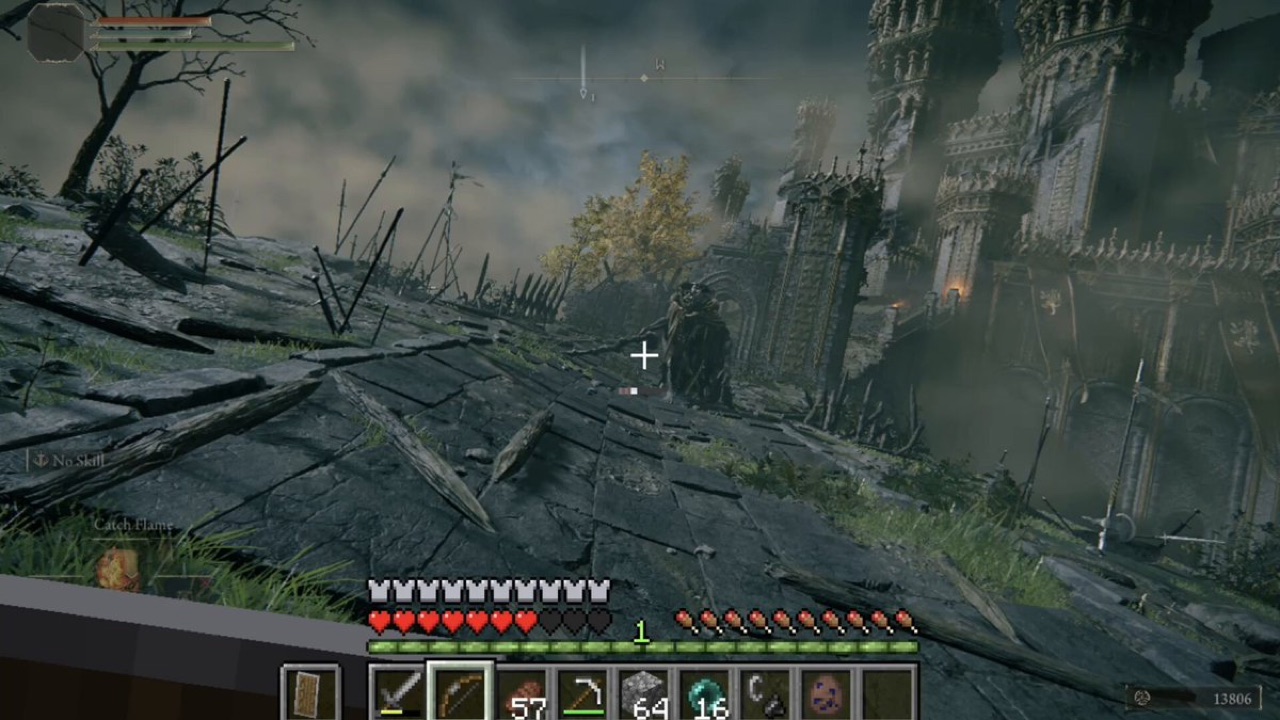
The clip that carried the wave. Around 29 September, Tobyn Jacobs (posting as Anime Girl Worshiper) shared footage of Elden Ring with Minecraft's health, hunger and XP bars, the full inventory, block placing and breaking, a Creative mode toggle, and a claim that all roughly 1,600 Minecraft items were available across the Lands Between. A follow-up showed Steve, in netherite armor, fighting a boss. The poster says it runs on a Mac.
It hit about 294,000 likes. Outlets and commenters attributed it to Claude Opus 5.5, though the original post never named a tool, and nothing was released that lets anyone verify the "entire game" part. Watch the footage carefully and the honest read, which Traictory and others made at the time, is a Minecraft UI and systems layer running on top of unchanged Elden Ring combat and world. Still a remarkable build. Just not the one the caption implied.
17. Minecraft + Modern Warfare 2 + Skate 3 — Chasm
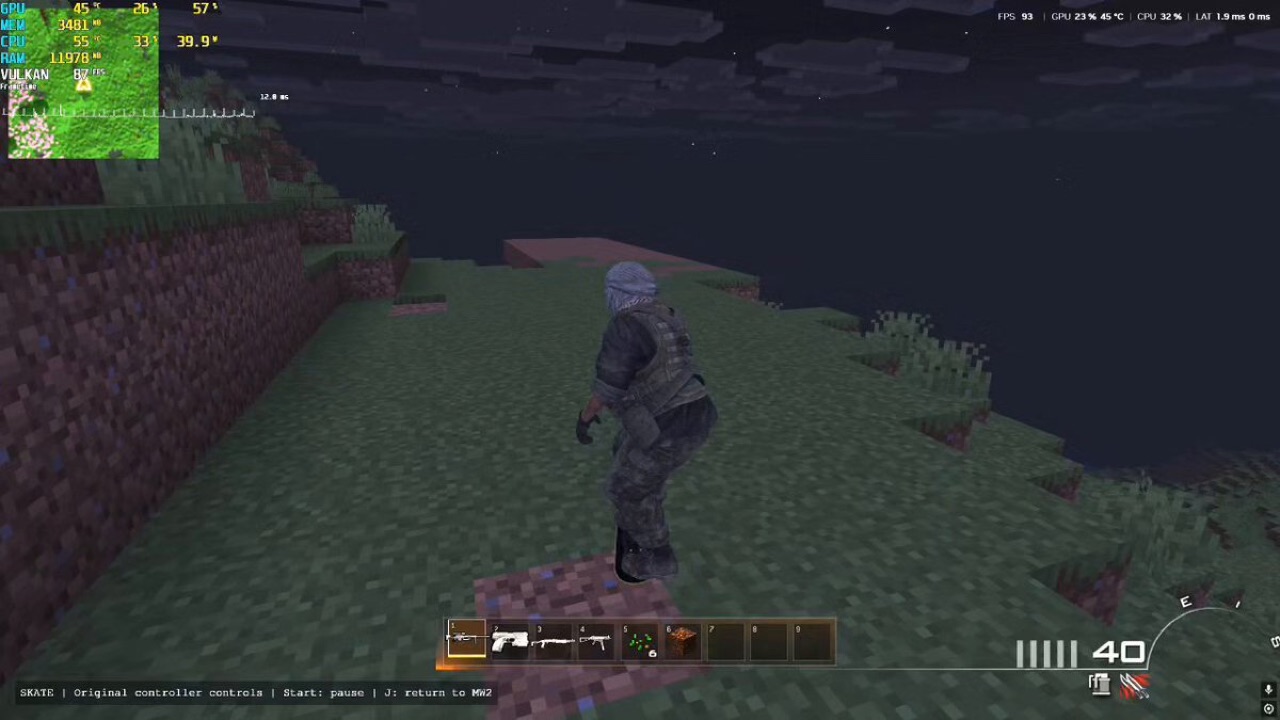
The one that actually shipped. Chasm (chasmlol on X) combined three codebases: IW4L, a Rust rewrite of the 2009 Modern Warfare 2, for the guns and HUD; MinecraftOSS for an infinite block world; and Skate 3's third-person movement. The result is a game where you quick-scope cows, throw grenades that break blocks according to their hardness, and kickflip away from the explosion.
Assets load from games you already own, so nothing copyrighted gets redistributed. Chasm describes it as largely vibe coded, with Opus 5.5 handling the inventory UI and multiple optimization rounds. A Windows build and the code are on GitHub under the 2010-rust-rewrite-mashup name, and MakeUseOf covered it on 29 September. From the same circle came SkyCraft, which is Skyrim played with Minecraft-style movement, combat and building.
Chasm's own description of how the Skyrim version works is the clearest public explanation of the technique anyone has given: "minecraft and skyrim run at the same time and you make a mod for both that lets them communicate. Then you passthrough the things you want into the renderer... and feed stuff like collision data back."
18. Escape the Backrooms Running Minecraft — LieMac3
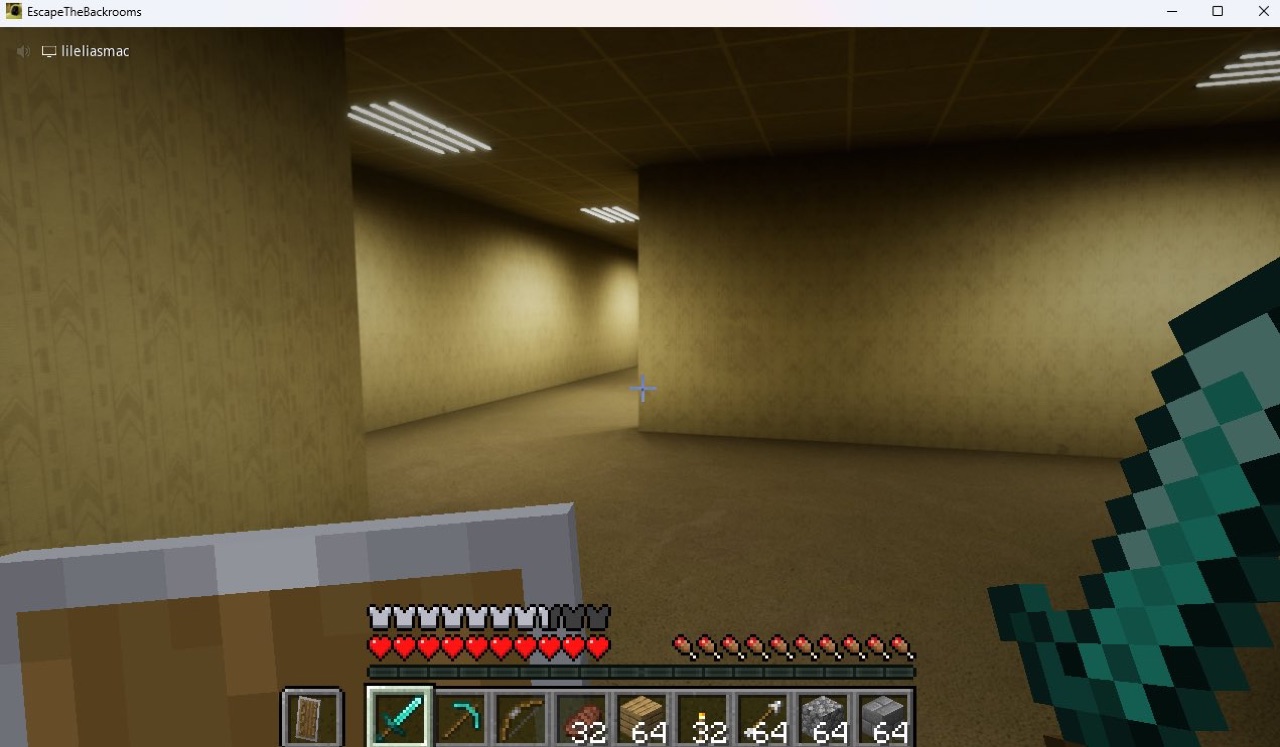
The quietest build on this list and arguably the strangest. On 2 October, Liemac (LieMac3 on X) posted a screenshot captioned "I had astra combine escape the backrooms and minecraft." The window title reads EscapeTheBackrooms. Everything inside it is Minecraft: hearts, hunger, a hotbar with diamond tools, stacks of bread, planks and cobblestone, and a diamond pickaxe in hand, in the yellow Level 0 hallway with its humming fluorescent lights.
A follow-up video a few hours later showed it in motion. Cobblestone walls placed inside the Backrooms. A diamond sword and bow. A water bucket with working water physics on the carpet. A Backrooms entity visible behind the placed blocks. The pause menu was the giveaway that more than two codebases are involved: alongside the Creative and Survival toggle it lists a "Skyrim destruction: On" option, and a ChatGPT overlay sits in the corner. The caption: "Modded Minecraft and Escape the Backrooms using GPT-6 Astra to make the two communicate."
Two things worth noting. First, this is not a Claude build. LieMac3 uses GPT-6 Astra here and Opus elsewhere for Terraria mods and Roblox inverse kinematics, which tells you the mashup technique is model-agnostic and the agents are interchangeable. Second, "make the two communicate" is the passthrough pattern from Chasm's description, not a visual overlay. Engagement on both posts was tiny, single-digit likes and under 100 views, and there is no repo. But the same user wrote in the same week that most of what they now ship as mods would have taken a solo developer years, and dismissed arguments about "human labor value" in large mods. That argument is the real story of the whole wave.
19. Universal Modder — The Claude Code Plugin Under It All
The piece that connects the viral clips to something you can run. Rehan Sheikh's Universal Modder is a Claude Code plugin (github.com/rehan-remade/universal-modder) that detects a game's engine, decompiles it, finds the right mod loader, and has an explicit mashup-mods skill. It was demoed on Terraria and Age of Empires II, and VideoCardz framed the whole late-September cluster on 1 October as "recompilation plus AI" turning mods into cross-game stitches.
The mashup-mods skill documents the four patterns creators are actually using:
- Port content. Reimplement one game's numbers (damage, speeds, AI behavior) as native content in the host game's mod API. Lightest, most stable.
- Passthrough / dual runtime. Both games run at once; a mod on each side exchanges state. Render what you want from one into the other, feed collision and input back. This is what Chasm and LieMac3 describe.
- Embed. Pull a decompile or reimplementation in as a library.
- Clean reimplementation. Rewrite the system from scratch, reading the player's own game files. No asset redistribution.
The AI's job in all four is decompilation triage, boilerplate, inventory UIs, optimization passes, and the "make these two talk" glue layer. What it does not do is one-shot a stable crossover. Everyone shipping real builds iterates for days.
The Rest of the Pile
Escape from Tarkov mechanics inside Skyrim. Minecraft movement inside GTA V. Call of Duty: World at War Zombies mixed with Mario Kart. CoD Zombies plus Minecraft via Opus 5.5 (ZayuhGames posted the screenshot). Most of these circulated as short clips rather than repos, which is the pattern to watch.
Where the Claims Outran the Code
Clips travel faster than repos. Several "entire game inside X" posts have never shipped a testable build, and the Elden Ring one, the most viral of all, is the clearest case. AI accelerates the glue code; stability, netcode, anti-cheat and asset licensing stay manual and legally messy. The serious projects require you to own the originals and redistribute nothing, which is the only reason Chasm's build is still up.
Traditional modders called some of this low-effort. The counter from LieMac3 and others is that modding was always about the resulting experience, not the hours spent typing. Both sides have a point, and the argument is going to follow every AI-built thing for a while. What is not in dispute: in one week, people with no game studio shipped crossovers that would have been a multi-year project for a modding team, and the tooling to do it is an open Claude Code plugin.
What These Projects Actually Tell Us
Read this list again and notice the pattern: none of these required professional developers. A CEO. A designer. A VC. A professor. A maker who left their laptop running overnight.
The common thread isn't technical skill. It's willingness to type a prompt and see what happens.
Claude Code can access files and programs on a user's computer, and even run sub-agents for specific tasks, which means the gap between "I have an idea" and "I have a working thing" has collapsed in ways that weren't true even twelve months ago. (If you want to understand how to leverage this for business, see our guide on how to build AI SaaS in 2026).
That's what makes these projects feel different from the previous wave of AI demos. They're not showcasing what AI can do in a controlled environment. They're showing what regular people are actually shipping, sharing, and building on top of.
The MRI viewer got forked. The DNA analyzer spawned ethics debates. The Peon notification system got 40 community-contributed sound packs in a week. These aren't closed experiments. They're open starting points.
Where it goes from here is the more interesting question. Autonomous overnight agents that self-modify their own behavior. AI that watches your screen and gives you strategic advice in real time. Full creative production pipelines orchestrated by a single prompt. The projects on this list aren't the ceiling. They're the floor of what's becoming normal. The February entries proved a single prompt could produce a working thing. The August ones prove an agent can keep producing them for hours and know when to quit. The October ones prove it can take two games that were never meant to meet and make them share a world.
The real unlock isn't Claude Code specifically. It's the habit of reaching for an AI agent first, the way Tobi Lutke did when he realized he needed Windows software on a Mac. Once that reflex kicks in, the question stops being "can AI do this?" and starts being "what should I build next?"
Ready to try it? Install Claude Code, start with something small, and post your build on X. The community is genuinely active, and the weirdest ideas tend to get the most traction. Need a starting point? Here are 15 Claude Code project ideas with copy-paste prompts, from first-weekend builds to ship-it-as-a-product. Going for production? The Claude Code projects hub covers project structure and how real apps get shipped.
Get your SaaS in front of founders
List your product on the SaaSCity live city map - a permanent listing, real discovery, and a backlink from a high-DR directory. Free to start; upgrade for a dofollow link and a building on the map.