Build with AI
Ultimate Guide to Vibe Coding: How to Get Started in 2026
Vibe coding was Collins Dictionary's Word of the Year for 2025. This complete guide covers what vibe coding is, the best tools to use, step-by-step tutorials, and how to turn your vibe-coded creations into real products.


Contents (13)
- Key Takeaways
- What Actually Is Vibe Coding?
- Why Everyone's Talking About It Right Now
- How Vibe Coding Actually Works
- The Brutal Truth: Pros and Cons
- Your Step-by-Step Getting Started Guide
- The Best Tools in 2026 (Actually Tested)
- Real Example: Building a Money-Making App
- Latest Trends Reshaping Development
- The Uncomfortable Questions Nobody Asks
- Should You Actually Learn This?
- What's Next: Predictions for Late 2026
- Start Today—And Get Your Creation Discovered
Quick answer: Vibe coding is describing software in plain language and letting an AI generate the implementation while you judge the result. Andrej Karpathy coined the term in February 2025, and Collins Dictionary made it Word of the Year for 2025. In 2026, 92% of US developers use AI coding tools daily and 41% of global code is AI-generated. Start on Replit or Bolt.new, move to Lovable or Cursor for backends, and use v0 by Vercel for frontend speed.
Linus Torvalds just vibe coded part of his audio generator. Let that sink in.
The creator of Linux—a guy who's written millions of lines of kernel code—used Google Antigravity to build a component by talking to an AI. If that doesn't tell you where software development is headed, nothing will.
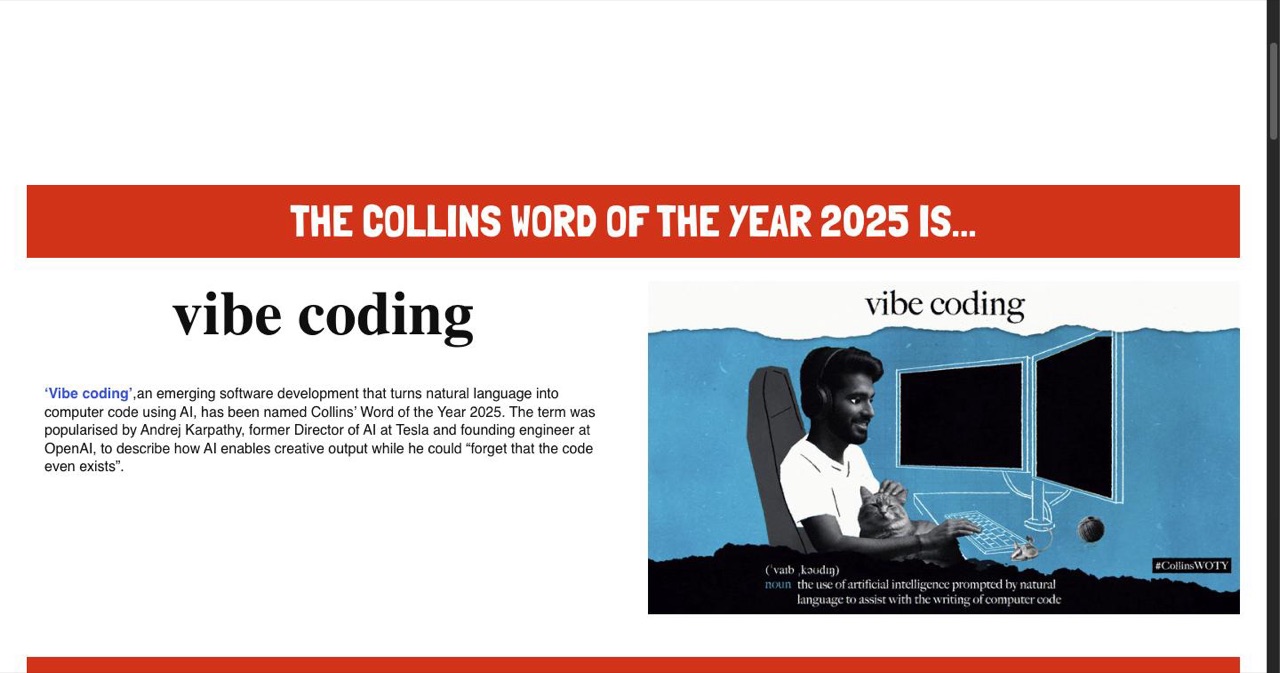
Vibe coding was named Collins Dictionary's Word of the Year for 2025, and it's not slowing down. What started as Andrej Karpathy's weekend experiment has become the mainstream way developers (and non-developers) build software in 2026. 92% of US developers now use AI coding tools daily, and 41% of all global code is AI-generated.
This isn't a fad. It's a complete reset of how we think about building things.
Key Takeaways
- Intent-first replaces code-first: You describe the outcome and evaluate results rather than reviewing implementation, which cuts cognitive load sharply.
- Adoption is already mainstream: 92% of US developers use AI coding tools daily, 41% of global code is AI-generated, and 87% of the Fortune 500 run at least one vibe coding platform.
- Tool choice follows the job: Replit and Bolt.new for first apps, Cursor for repository-aware work, Lovable for non-technical founders, v0 for frontend, Windsurf for complex full-stack.
- Debugging is the hidden cost: 63% of developers have spent more time fixing AI-generated code than writing it themselves would have taken.
- Security failures are documented: Lovable had vulnerabilities in 170 of 1,645 generated apps in May 2025.
- Learn backwards: Build three apps, then ask Claude or ChatGPT to explain what you shipped, because motivation stays high when the code is already yours.
- Karpathy has moved the goalposts: He now describes agentic engineering, orchestrating AI agents with oversight, as the successor to accepting output blindly.
What Actually Is Vibe Coding?
Picture this: you want to build an app. Instead of opening VS Code and writing React components, configuring webpack, setting up state management, and debugging CSS for three hours, you just... tell an AI what you want.
"Build me a task manager with dark mode, drag-and-drop, and cloud sync."
The AI builds it. You test it. You say "make the sidebar narrower." It does. You deploy.
That's vibe coding.
Andrej Karpathy, who coined the term in February 2025, described it as "fully giving in to the vibes, embracing exponentials, and forgetting that the code even exists." He'd paste error messages to the AI with zero explanation. Hit "Accept All" on every change. Never read the diffs. The code grew beyond what he could comprehend without serious study.
His point? For throwaway weekend projects, who cares? The app works. Ship it.
The approach flipped traditional development upside down. Instead of code-first thinking (how do I implement this?), it's intent-first thinking (what do I want this to do?). You're not a developer anymore. You're an orchestrator.
Why Everyone's Talking About It Right Now
February 2026 marks exactly one year since Karpathy's viral post. The timing matters because the tools have matured from "fun experiment" to "actual production capability."
GlobalData predicts that in 2026, mainstream business tools will gain quick-start app development functionalities, making vibe coding accessible beyond tech teams. Marketing folks building lead magnets. HR departments creating onboarding tools. Finance teams automating reports. All without touching JavaScript.
The speed is what breaks people's brains. In 2021, a minimum viable product took three months and $50k. In 2026, you can build, test, and deploy a functional SaaS over a long weekend for the cost of an API subscription. For more on launching a SaaS in 2026, we've covered the modern playbook in detail.
But it's not all sunshine. 63% of developers have spent more time debugging AI-generated code than they would have spent writing it themselves. And in May 2025, Lovable had security vulnerabilities in 170 out of 1,645 apps it generated.
The tech works. The question is whether we're ready for what happens when everyone can build software.
How Vibe Coding Actually Works
The workflow is deceptively simple:
Step 1: Describe what you want
Not in technical terms. In human terms. "I need a website that shows my portfolio projects with a contact form."
Step 2: The AI generates everything
Frontend, backend, database schema, API endpoints. The whole stack. It picks frameworks, installs dependencies, configures deployment.
Step 3: You test by running it
Click around. Find what's broken or ugly. You're not reading code—you're evaluating outcomes.
Step 4: Iterate with natural language
"The button should be blue." "Add user authentication." "Fix the mobile layout." Each request spawns new code.
Step 5: Deploy with one click
Most tools handle hosting. Your app goes live while you're still describing features.
The key difference from traditional coding: you never touch the implementation. You're judging results, not reviewing syntax.
Compare this to how coding worked three years ago:
- Traditional: Learn React → Set up project → Install packages → Write components → Style with CSS → Configure build → Debug → Deploy → Maintain
- Vibe coding: Describe app → Test → Tweak → Deploy
The cognitive load drops by 80%. You're thinking about product, not implementation.
But here's the catch: while AI generates code, true creativity, goal alignment, and out-of-the-box thinking remain uniquely human. You're not replaced. You're elevated to a higher level of decision-making.
The Brutal Truth: Pros and Cons
Let's not pretend this is perfect.
Why It's Revolutionary
Speed that feels like cheating
Build in hours what used to take weeks. Senior developers with 10+ years experience report 81% productivity gains. They use AI for boilerplate and focus on architecture.
Zero barrier to entry
Your 14-year-old cousin can build a functional web app. Your non-technical co-founder can prototype the MVP. The gatekeeping is over.
Creative freedom
When you're not debugging CSS Grid for the fifth time, you can focus on user experience, features, and strategy. The boring stuff gets automated.
Iteration speed
Test ten versions of a feature in the time it used to take to build one. Fail faster. Learn faster.
Why It's Dangerous
Quality is a gamble
AI doesn't understand edge cases. It doesn't stress-test. Security vulnerabilities, bugs, and inefficient code slip through when developers don't review what they're shipping.
Skill atrophy
40% of junior developers admit deploying code they don't fully understand. When the AI stops working, they're stuck. No debugging skills. No fundamental knowledge.
The "vibe coding hangover"
In September 2025, Fast Company reported senior engineers citing "development hell" working with AI-generated code. Technical debt at scale. Codebases that nobody understands.
Not for complex systems
Vibe coding excels at CRUD apps, dashboards, and simple tools. Try building a distributed database or a game engine this way, and you'll hit walls fast.
The sweet spot? Prototypes. Internal tools. MVPs. Personal projects. Anything where "good enough fast" beats "perfect eventually."
Your Step-by-Step Getting Started Guide
Prerequisites: A computer. Internet. An idea. That's it.
Week 1: Build Something Stupid Simple
Pick the most boring app possible. A to-do list. A calculator. A countdown timer. Something with one page and zero database.
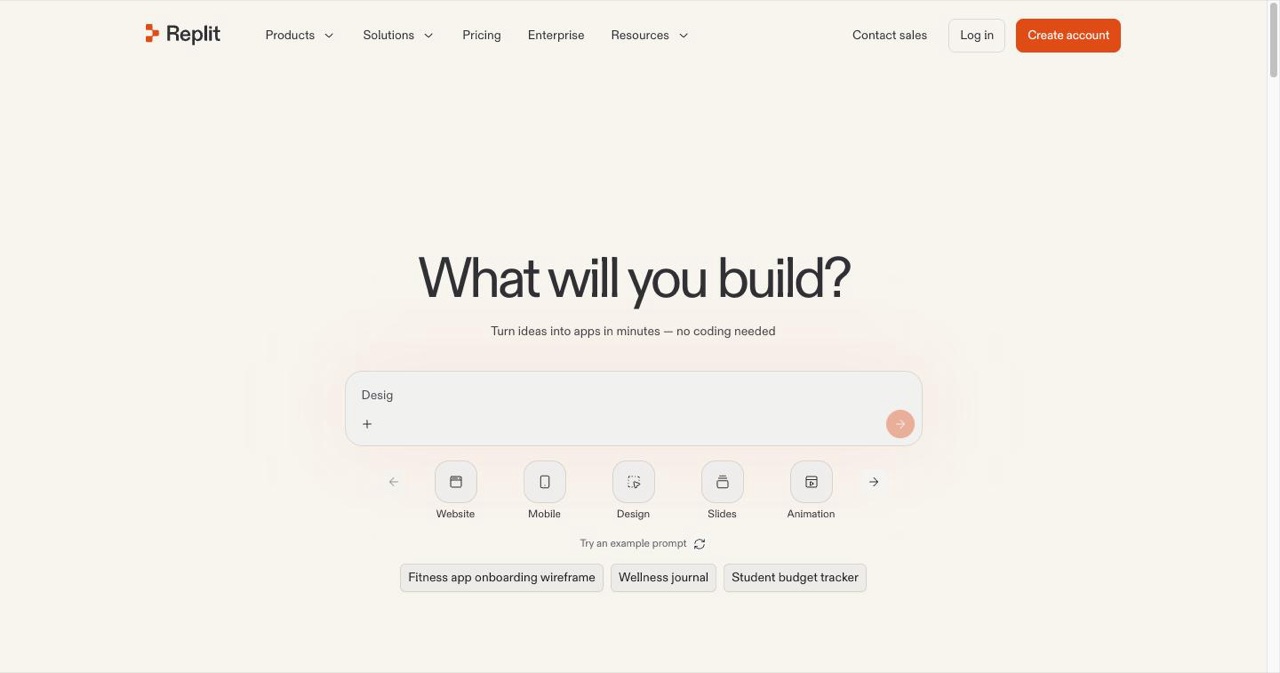
Tool recommendation: Start with Replit or Bolt.new. Browser-based. Zero setup. Free tier.
Your first prompt: "Build a to-do list app with a clean, minimal design. Users can add tasks, mark them complete, and delete them. Make it look professional."
Watch it build. Test it. Notice what sucks. Iterate.
"Make the completed tasks gray and crossed out."
"Add a counter showing how many tasks are left."
"Change the font to something modern."
Spend 30 minutes. Deploy it. Show your friend. You just built an app.
Week 2: Add Complexity
Now pick something with a backend. A workout tracker. An expense logger. A recipe organizer.
Tool upgrade: Try Lovable or Cursor. These handle databases and deployment better.
Your prompt gets more detailed:
"Build a workout tracking app. Users should log exercises with sets, reps, and weight. Show a weekly calendar view. Track personal records. Use a dark theme with blue accents. Make it mobile-responsive."
The AI builds everything. Database schema. API routes. Frontend. Authentication.
Test it daily. Break it. Fix it by describing problems.
"The calendar shows the wrong week."
"Add a graph showing progress over time."
"Let users share workouts with friends."
Each iteration teaches you what works and what doesn't.
Week 3: Deploy Something Real
Pick a problem you actually have. Build something you'll use.
Maybe you need a tool to track client invoices. Or a system to manage your side project tasks. Or a simple CRM for your freelance work.
This is where vibe coding shines. Custom software for your exact needs. No compromise. No paying for features you don't use.
Pro tips:
- Make one change at a time (easier to debug)
- Use multiple AI tools to cross-check (Claude, ChatGPT, Cursor)
- Test on mobile and desktop
- Ask for security best practices in your prompts
Week 4: Learn the Basics (Backwards)
Now that you've built three apps, learn what you actually built.
Use Claude or ChatGPT: "Explain this code to me like I'm five."
Learn Git basics. Understand how APIs work. Read about databases. Not to become an expert—just to understand what's happening under the hood.
This backward approach works. Build first, learn second. Motivation stays high because you're learning to improve something you already made.
The Best Tools in 2026 (Actually Tested)
The landscape changes monthly. Here's what actually works right now.
For Complete Beginners: Replit
Replit's Autonomous AI Agent 3 writes, tests, and deploys applications end-to-end with Azure integration for enterprise reliability. Zero installation. Browser-based. Built-in database. One-click deploy.
Free tier is generous. Paid starts at $20/month for serious projects.
Best for: First app. Learning. Prototypes.
For Serious Builders: Cursor
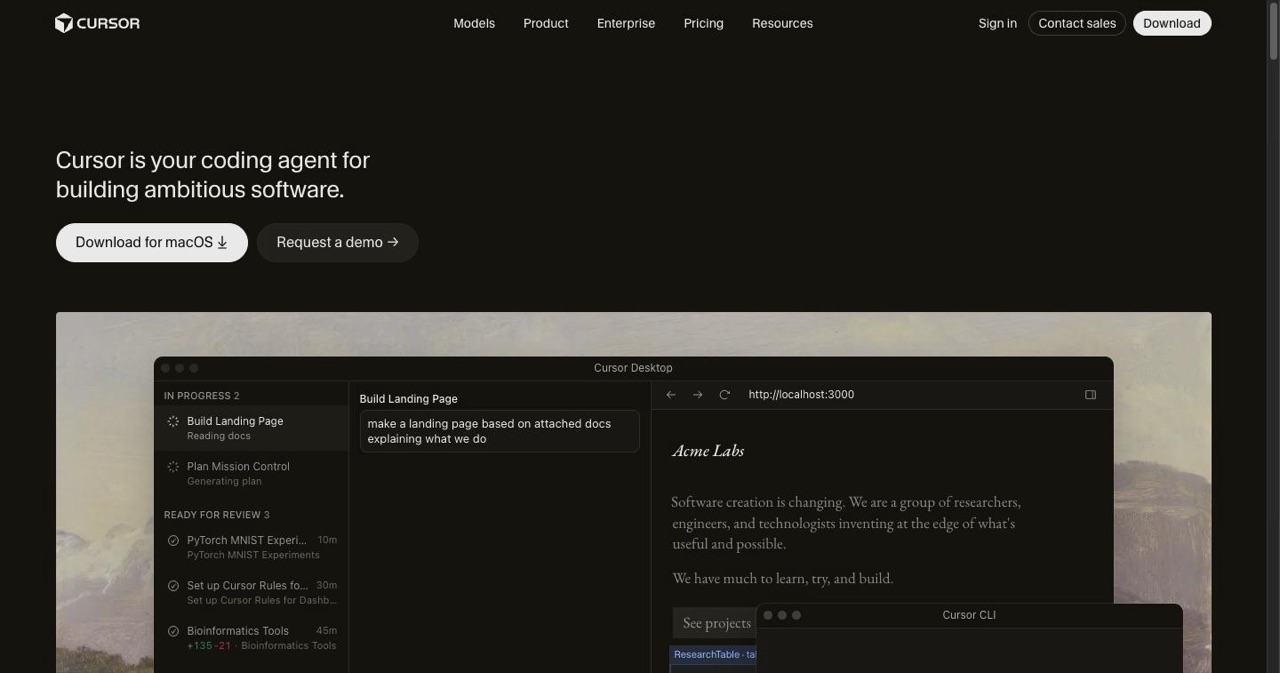
The tool Karpathy used. Cursor is a full IDE with AI baked in. Works with your local files. Git integration. Multiple AI models.
Cursor excels for developers needing repository-aware agents, multi-file refactors, and pull request reviews.
Free tier exists. Pro is $20/month.
Best for: Real projects. Production apps. Developers transitioning to vibe coding.
For Non-Technical Founders: Lovable
Lovable uses a chat-driven interface. Describe your app in conversation. The AI builds everything. One-click deploy to production.
Controversy around security issues in 2025, but they've hardened significantly.
Best for: MVP validation. Quick launches. Non-coders who need real apps.
For UI/Frontend Speed: v0 by Vercel
v0 rapidly scaffolds polished React/Tailwind UIs for Next.js projects. Component-level generation. Beautiful defaults. Vercel deployment built-in.
Free with limits.
Best for: Landing pages. Marketing sites. Component libraries.
For Full-Stack Power: Windsurf
Windsurf is popular among developers for agentic IDE capabilities with fast AI pair programming. Handles complex applications. Enterprise-ready.
Pricing varies by team size.
Best for: Startups scaling. Complex applications. Technical teams.
For Mobile Apps: Emergent
Full-stack platform specializing in native mobile development. iOS and Android from natural language.
Best for: App entrepreneurs. Mobile-first products.
The Dark Horse: Claude (Anthropic)
Claude is not technically a "vibe coding platform" but incredibly powerful for generating code in artifacts. Pro mode lets you build complex applications through conversation.
$20/month for Pro. Free tier available.
Best for: Cross-referencing other tools. Code review. Learning.
Real Example: Building a Money-Making App
Let's get concrete. Here's how someone made $800 building custom landing pages with vibe coding.
The Setup
- Tool: Lovable + v0
- Time investment: 6-10 hours per project
- Skill level: Beginner (3 weeks of vibe coding experience)
The Process
- Client says "I need a landing page for my coaching business"
- First prompt to v0: "Build a professional coaching landing page. Hero section with compelling headline. Three-column benefits section. Testimonials. Pricing table with three tiers. Contact form. Mobile-responsive. Professional color scheme with blue and white."
- v0 generates it in 30 seconds
- Show client. Get feedback.
- Iterate: "Make the headline bigger. Add my photo to the hero. Change the CTA button to 'Start Your Journey'."
- Deploy to Vercel (one click)
- Collect $500-800
The AI does 95% of the work. You supply:
- Understanding of what converts
- Client communication
- Design taste
- Quality control
Beginners can build and monetize vibe-coded projects by using AI to scaffold apps while focusing on narrow, money-adjacent problems and supplying product judgment.
Latest Trends Reshaping Development
Agentic Engineering Is the New Vibe Coding
Karpathy recently stated that "agentic engineering" is replacing vibe coding, where developers orchestrate AI agents who write code rather than writing it directly 99% of the time.
The shift: from accepting AI output blindly to managing intelligent agents with oversight. Want to see what agentic AI can really do? Check out free AI agents powered by OpenClaw.
Multimodal Development
Voice-driven coding, visual programming interfaces, and hybrid development environments are emerging trends in 2026. Draw a UI. Speak your requirements. Upload a screenshot and say "build this."
Enterprise Adoption
87% of Fortune 500 companies have adopted at least one vibe coding platform. Not for core products—for internal tools, prototypes, and automation.
The Tribal Knowledge Problem
GlobalData predicts enterprises will use natural language to document valuable expertise from departing employees. When your senior engineer retires, their knowledge gets encoded into AI-accessible formats.
Web3 Integration
Blockchain-verified code. Smart contract generation from natural language. Proof-of-work for AI contributions. The wild west is getting weirder.
The Uncomfortable Questions Nobody Asks
Will junior developers become unemployable?
Possibly. Junior developers with 0-3 years experience see mixed results with vibe coding, with 40% deploying code without full understanding. The entry-level job market is already brutal.
What happens when everyone builds software?
We're about to find out. 10 million new apps? 100 million? The App Store flooded with AI-generated garbage? Or genuine innovation democratized?
Who's liable when AI code causes damage?
Legal frameworks haven't caught up. If an AI-generated app leaks user data, who's responsible? The developer who deployed it? The AI company? The user who prompted it?
Are we creating a generation that can't code?
Critics warn about the "Shadow Bug Problem" where AI code looks perfect but contains deep structural security vulnerabilities, and "Technical Debt at Scale" where teams can't fix systems they don't understand.
The answers matter. We're not just changing tools. We're changing who gets to build the future.
Should You Actually Learn This?
Depends on what you're trying to do.
Skip vibe coding if:
- You want to become a serious software engineer (learn fundamentals first)
- You're building security-critical systems
- You need deeply optimized performance
- You're working on complex algorithms or low-level code
Go all-in on vibe coding if:
- You have ideas but lack coding skills
- You need to prototype fast
- You're building internal tools or simple apps
- You want to test business ideas cheap
- You're a non-technical founder who needs an MVP
Use it strategically if:
- You're an experienced developer who wants 3x productivity
- You handle boilerplate with AI, write complex logic yourself
- You review everything before deploying
- You understand what the AI is doing
The smartest approach? Hybrid. Use AI for speed. Understand the fundamentals. Review the critical parts. Deploy with confidence.
What's Next: Predictions for Late 2026
Based on current trajectories:
Repo-level AI agents will understand entire codebases and make coordinated changes across dozens of files. Already happening with tools like Claude Code.
Natural language commits will replace Git commands. "Save my work with a description of what I changed" instead of memorizing Git syntax.
Real-time collaboration with AI will feel like pair programming with someone who never gets tired, never judges, and has read every Stack Overflow answer.
Quality gaps will widen between people who use AI thoughtfully and people who blindly ship whatever it generates. The latter will learn the hard way.
New specializations emerge. AI Engineer. Prompt Architect. Agent Orchestrator. These weren't jobs two years ago. They'll be common by 2027.
Educational institutions will scramble to figure out what to teach. Should CS students learn Python or prompt engineering? Both? Neither?
Start Today—And Get Your Creation Discovered
Here's your homework:
- Pick a simple app idea (seriously, keep it simple)
- Sign up for Replit or Bolt.new (free tier)
- Spend 30 minutes describing what you want
- Test it. Break it. Fix it.
- Deploy it.
- Show someone.
That's it. You just became a builder. Once it's live, list it on SaaSCity and work through our directories ranked by live DR so people can find it.
Vibe coding in 2026 isn't about replacing developers. It's about expanding who gets to create. The barrier between idea and execution has collapsed to nearly zero. What you do with that matters more than the tool you use.
The vibes are immaculate. The code is real. The future is weird.
Now go build something.
Get your SaaS in front of founders
List your product on the SaaSCity live city map - a permanent listing, real discovery, and a backlink from a high-DR directory. Free to start; upgrade for a dofollow link and a building on the map.