News
So, Are We All Getting Fired by Robots? The Hilarious Horror of AI's Job Takeover in 2026
We're barely two months into 2026, and AI isn't quietly creeping into the workforce—it's showing up with a moving van. Explore the hilarious horror of AI's job takeover and what it means for you.


Contents (6)
- Key Takeaways
- Why AI Growth in 2026 Feels Like a Job Apocalypse (Even If the Numbers Say Otherwise)
- Claude's Security Shenanigans: When AI Becomes the Bug Bounty Hunter
- Google's Pomelli Photoshoot: The $5,000 Studio Session Now Costs Zero Dollars
- The Breakneck Pace of It All: Why This Moment Feels Different
- The Real Takeaway (That Nobody Wants to Say Out Loud)
Quick answer: AI is not producing mass unemployment in 2026, but it is compressing a generational transition into a few years. Anthropic's Claude Code Security found over 500 vulnerabilities in production open-source codebases that experts missed for decades, and the announcement knocked 6.8% off CrowdStrike and 9.2% off Okta in an afternoon. Google Labs' free Pomelli Photoshoot replaces a $500 to $5,000 product photography session. The World Economic Forum still projects roughly 78 million net new jobs by 2030, while young workers in exposed roles see employment drop about 13%.
Key Takeaways
- The macro and micro stories differ: aggregate job creation looks positive while specific roles lose income immediately.
- Claude Code Security reasons rather than pattern-matches: Opus 4.6 traces data flows across a codebase instead of checking a vulnerability dictionary.
- Markets reacted hard and maybe wrongly: Barclays called the CrowdStrike, Cloudflare and Okta selloff illogical.
- Humans stay in the loop: every Claude patch suggestion requires human approval before deployment.
- Pomelli removes a cost line, not a profession: entry and mid-market commercial photography shrinks while creative direction does not.
- Skills are moving fast: competencies in high-exposure jobs evolve roughly 66% faster, with up to a 56% premium for working alongside AI.
- Entry level is the weak point: roles that traditionally trained the next generation are automating first.
- Pace is the real difference: electricity took decades, the internet 15 to 20 years, AI is running 12 to 18 month cycles.
Picture this: You arrive at your desk on a Monday morning, coffee in hand, only to find an email from your boss that reads, "Meet your new coworker, Claude. He already patched the vulnerability you've been ignoring since Q3. P.S. He doesn't need lunch breaks. Or health insurance. Thought you should know."
Dramatic? Sure. Entirely implausible? Increasingly not.
We're barely two months into 2026, and AI isn't quietly creeping into the workforce—it's showing up with a moving van. This week alone, Anthropic launched an AI tool that found over 500 security bugs that human experts had missed for decades, and Google released a free product photography platform that renders professional studio shoots from a blurry smartphone photo. Meanwhile, AI spending is projected to hit $2.5 trillion this year, a figure so large it makes the Apollo program look like a Kickstarter campaign.
Here's the tension nobody wants to sit with: AI is almost certainly creating more jobs than it eliminates in the aggregate. But try explaining "net gains" to the product photographer who just lost three clients to a free Google app. The macro story and the micro story are two very different things right now—and in 2026, the gap between them is growing fast.
Why AI Growth in 2026 Feels Like a Job Apocalypse (Even If the Numbers Say Otherwise)

The growth curve isn't gradual anymore. Enterprise AI adoption has gone from boardroom talking point to operational infrastructure in under 18 months. Agentic AI—systems that don't just answer questions but take independent action across workflows—emerged as the defining theme of late 2025 and is now moving from pilot programs into full deployment. PwC's latest workforce analysis describes the emergence of the "AI generalist," a role that didn't exist three years ago and is now one of the fastest-growing categories in tech hiring.
The skills shift is measurable and jarring. Jobs with high AI exposure are seeing required competencies evolve roughly 66% faster than non-exposed roles. There's a growing premium—some estimates put it at 56%—for workers who can operate effectively alongside AI systems. That sounds like opportunity. It is, for some. For others, particularly mid-skill workers in administrative, customer support, and routine analytical roles, it looks more like a skills cliff.
| AI Trend | What It Actually Does | Job Impact |
|---|---|---|
| Agentic AI | Acts independently across software and workflows | Net ~4% reduction in exposed admin sectors |
| Autonomous Systems | AI-driven robots and logistics tools | Productivity gains in manufacturing; displacement for drivers |
| Enterprise AI Adoption | AI embedded in ops, finance, legal, support | Skills premium of up to 56%; middle-skill polarization |
The World Economic Forum projects roughly 78 million net new jobs globally by 2030 from AI. Comforting. Less comforting is the timeline mismatch—displaced workers in 2026 can't immediately step into AI specialist roles that require retraining, credential-building, and often relocation. The creation is slow. The disruption is fast.
AI growth is like that "helpful" friend who redecorates your apartment while you're at work. You come home to something objectively better—and somehow, you're sleeping on the couch.
Claude's Security Shenanigans: When AI Becomes the Bug Bounty Hunter
On February 20, 2026, Anthropic quietly detonated a bomb in the cybersecurity industry. Not a metaphorical one—CrowdStrike shares dropped 6.8%, Cloudflare fell 8.1%, and Okta lost 9.2% in a single afternoon.
The cause: Claude Code Security, a new capability built into Claude Code on the web, now available in limited research preview for Enterprise and Team customers.
What it does is genuinely impressive. Traditional static analysis tools work by checking code against a database of known vulnerability patterns—think of it like a spell checker that only catches words that are already in the dictionary. Claude Code Security, powered by the Opus 4.6 model, reasons through codebases the way a human security researcher would: understanding how components interact, tracing data flows across an entire application, and flagging the subtle, context-dependent vulnerabilities that rule-based tools routinely miss.
The numbers that made Wall Street nervous: Anthropic's Frontier Red Team found over 500 vulnerabilities in production open-source codebases—bugs that had gone undetected for decades, despite years of expert review. These weren't edge-case obscure projects. They were codebases running across enterprise systems and critical infrastructure.
The human-in-the-loop design is worth noting. Every patch suggestion still requires human approval before deployment. The tool scans codebases for security vulnerabilities and suggests targeted software patches for human review, allowing teams to find and fix security issues that traditional methods often miss. Anthropic is explicit that this is a tool for defenders, not a replacement for security teams—and analysts at Barclays called the stock selloff "illogical," arguing Claude Code Security doesn't directly compete with established enterprise security businesses.
Still, the market reaction tells you something real: investors understand what it means when AI starts doing in seconds what junior security analysts spend weeks on.
For security professionals: The honest read is that this compresses timelines dramatically, which raises workload intensity even as it improves output. Being the human who reviews and approves AI-generated patches is a different job than manually hunting for vulnerabilities—and a job that requires different, arguably higher-order skills.
For open-source developers: Anthropic is offering expedited free access to open-source maintainers. Given that many critical open-source projects run on the volunteer time of a handful of overextended engineers, this is genuinely useful rather than just good PR.
Claude: The AI that fixes your code so efficiently it might accidentally fix you out of a paycheck. On the bright side—your codebase has never been more secure. Your job security? Different question.
Google's Pomelli Photoshoot: The $5,000 Studio Session Now Costs Zero Dollars
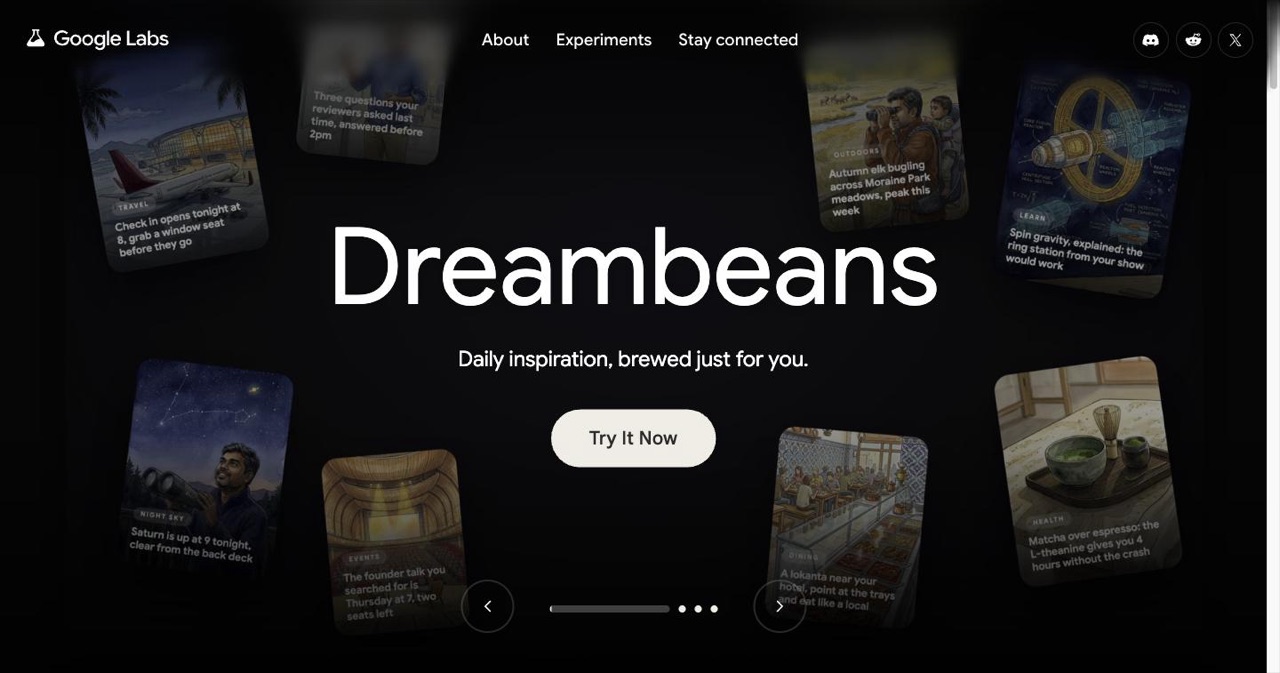
The week's second gut-punch to a specific category of creative worker came from Google Labs on February 19, 2026.
Pomelli by Google Labs is a free AI-powered marketing tool designed to help small to medium-sized businesses with their marketing campaigns, and its new Photoshoot feature uses Google's generative AI tools, including Nano Banana, to create professional images of a product from any user-uploaded photo—no matter how basic.
The workflow is almost insultingly simple. Upload a phone photo of your product. Choose a template—Studio, Floating, Ingredient, In Use, or Lifestyle. The Nano Banana model handles background replacement, lighting correction, composition, and brand-consistent styling automatically, pulling from a "Business DNA" profile that Pomelli builds by analyzing a business's website. The tool turns product images into professional-grade studio shots using business context and Nano Banana image generation.
It's free. Currently available in the US, Canada, Australia, and New Zealand.
Professional product photography typically costs between $500 and $5,000 per product, depending on complexity. That's not a trivial expense for a small business selling handmade goods on Etsy or direct-to-consumer skincare. Pomelli's Photoshoot removes that entire cost line. For small businesses, this is genuinely democratizing.
For product photographers who built their client base serving those small businesses? This is a direct, no-ambiguity threat to a meaningful chunk of their revenue. High-end brands will still demand custom creative direction—a human art director thinking through brand storytelling isn't replaceable by template selection. But the entry-level and mid-market commercial photography work? That market is smaller today than it was last week.
The broader pattern: AI doesn't always eliminate job categories wholesale. It tends to eliminate the bottom tier of a market, raise the floor of what clients expect, and force practitioners to move upmarket or specialize. That's cold comfort in the short term, but it's the honest trajectory. If you are launching your SaaS in 2026, you need to be aware of this dynamic.
Google: democratizing studio photography one free app at a time. Next step: an AI that actually shows up to your product launch and pretends to care about the brand.
The Breakneck Pace of It All: Why This Moment Feels Different
It's worth stepping back and asking: is this actually faster than previous technology transitions?
The evidence suggests yes. The electricity revolution took decades to fully restructure industrial labor. The internet transition played out over roughly 15-20 years. AI is restructuring job skill requirements and market dynamics in cycles of 12-18 months. The launch of Claude Code Security caused a multi-billion dollar market cap movement within hours of the announcement. Pomelli's Photoshoot created a measurable market conversation about creative job displacement within 48 hours of launch.
Workers with AI skills are seeing 8-15% higher interview callback rates versus equally qualified candidates without them, according to recent labor market analyses. At the same time, young workers in highly AI-exposed roles are seeing employment rates drop by roughly 13% as entry-level positions—traditionally the training ground for careers—get automated before the next generation can fill them.
| Who's Winning | Who's Losing | The Underlying Logic |
|---|---|---|
| AI Specialists & Prompt Engineers | Routine Admin & Data Entry | Skills premium vs. pattern automation |
| Senior Security Researchers | Junior Vulnerability Analysts | AI handles discovery; humans handle strategy |
| Creative Directors & Brand Strategists | Mid-market Commercial Photographers | AI handles execution; humans handle vision |
| AI Ethicists & Governance Roles | Mid-skill Back-office Workers | New regulation creates new demand |
The IMF has warned of an "AI polarization" effect: highly skilled workers get powerful new tools that multiply their output; low-to-mid-skill workers face direct competition from those same tools. The result isn't mass unemployment—the historical track record of technology transitions supports net job creation—but it is a painful, uneven, and poorly-timed redistribution. Understanding SaaS compliance 2026 means understanding these labor shifts.
Upskilling is the answer everyone gives, and it's not wrong. But the pace of required upskilling is unprecedented. Committing to a retraining program today doesn't guarantee that the skill you're training for isn't itself partially automated by the time you finish.
It's less like running to keep up and more like sprinting toward a finish line that keeps moving. At least the AI can write your resignation letter for you.
The Real Takeaway (That Nobody Wants to Say Out Loud)
The 2026 AI moment isn't an apocalypse. It isn't a utopia. It's a compression event—one where transitions that historically played out across a generation are now playing out across a few years.
Claude Code Security is a genuine defensive tool that will make software more secure. The same capabilities in adversarial hands will make attacks more sophisticated. Pomelli Photoshoot gives a small business in Ohio the visual marketing quality previously available only to companies with real creative budgets. It also chips away at the income floor for commercial photographers.
Both things are true simultaneously. The net is probably positive. The distribution is definitely uneven. And the timeline for adaptation is shorter than any previous major technology transition has demanded.
The workers who come out ahead will be the ones who treat AI as a capability multiplier rather than a threat—and who move quickly enough to stay ahead of the compression curve. That's not a comfortable message, but it's the accurate one. Building AI SaaS tools is one way to stay ahead.
So, are we losing our jobs to robots? Some of us, partially, yes. But if AI really does take over, at least it'll write better excuses for why the project is behind schedule.
What's your read on the AI job impact? Are you seeing it in your industry, or does it still feel abstract? Drop your take in the comments—the good, the terrified, and the "actually this saved me 12 hours this week."
Follow along for weekly analysis on AI's real-world impact—without the hype, and with a slightly unhealthy amount of satire.
Once you build your AI-powered tools, finding your first users is the next major hurdle. To maximize your reach and secure valuable backlinks, make sure to list your startup on SaaSCity.io—the ultimate directory for 2026 web and mobile applications.
Get your SaaS in front of founders
List your product on the SaaSCity live city map - a permanent listing, real discovery, and a backlink from a high-DR directory. Free to start; upgrade for a dofollow link and a building on the map.