SaaS Business
SaaS Compliance Checklist 2026: SOC 2, GDPR, EU AI Act – Get Certified in 30 Days
SaaS compliance 2026: Full checklist for SOC 2, GDPR, and EU AI Act. 30-day certification guide with fresh benchmarks, case studies, and free templates to close enterprise deals.

Quick answer: SaaS compliance in 2026 comes down to three frameworks. SOC 2 proves your security controls and is required by 70% of enterprise RFPs. GDPR governs EU data processing, with fines up to 4% of turnover. The EU AI Act starts enforcing high-risk AI systems on August 2, 2026, with fines up to 35 million euros or 7% of turnover. A 30-day sprint gets you scoped, gap-fixed, documented and into a Type 1 audit.
In 2026, 92% of SaaS products now include AI features—yet only 35% are EU AI Act-ready.
The result isn't just a slap on the wrist. It’s $35M+ fines (7% of global turnover) or, worse, lost enterprise deals because your procurement champion can't get you past legal.
SOC 2 is now table stakes (80% of Series B+ startups require it). GDPR breaches are hitting 4% turnover. And the EU AI Act enforcement kicks in for high-risk systems on August 2, 2026.
If you’re building AI agents, you are accumulating "compliance debt" faster than technical debt. Extraterritorial regulations mean if you have one user in Berlin, the AI Act applies to your San Francisco codebase.
But here’s the flip side: Compliance isn't a cost center anymore; it’s a revenue accelerant. Top performers with clean audits close deals 3x faster and lower CAC by 20%.
This isn't a law review. This is a 30-day sprint checklist to distill SOC 2 (security), GDPR (privacy), and the EU AI Act (safety) into a roadmap you can execute before Q3.
Grab the Audit-Ready Docs & Risk Matrices below. Let’s get you certified.
Key Takeaways
- Three frameworks, one sprint: SOC 2 for security, GDPR for privacy, EU AI Act for AI safety, run as three sprints inside 30 days.
- August 2, 2026 is the AI Act date: High-risk systems need CE marking and an EU database entry by then.
- SOC 2 gates the demo: 70% of enterprise RFPs require a Type 2 report and 80% of Series B and later startups require it.
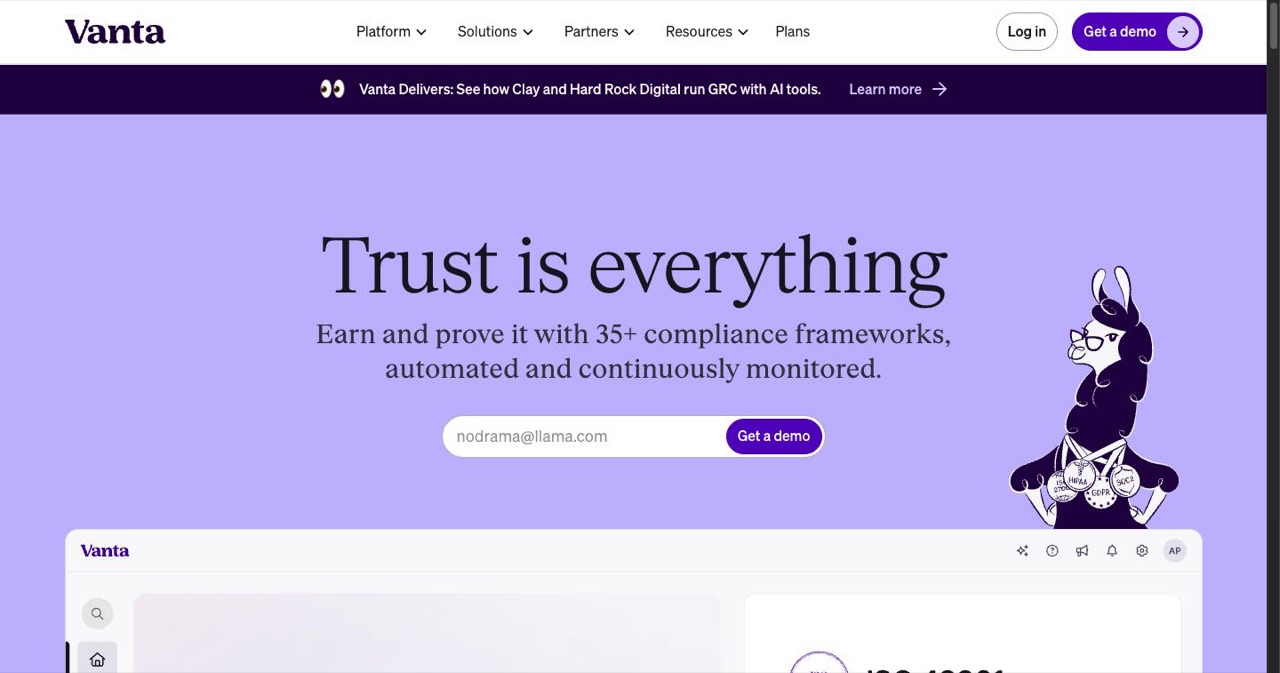
- Automation halves the bill: Founders using Vanta or Drata report 50% lower audit costs than traditional consulting.
- Overlap saves money: Roughly 40% of SOC 2 and GDPR controls overlap, and Accorian cut audit time and fees 40% by collecting evidence once.
- Outcome churn is the real risk: Customers leave because their own compliance team bans a non-compliant vendor, not because the product failed.
- Clean audits sell: Top performers report closing deals three times faster and 20% lower CAC.
SaaS Compliance in 2026: Benchmarks, Risks & The ROI
If you think you can fly under the radar, look at the data. Enterprise procurement has weaponized compliance. They aren't just asking "Is it secure?"; they are asking "Is your model biased?" and "Where is the training data?"
Key Regs at a Glance
| Framework | Scope for SaaS | 2026 Deadline | Avg. Cost | Fines |
|---|---|---|---|---|
| SOC 2 | Security controls (TSCs) | Ongoing (Type 2: 3–6 mo) | $30k–$80k | Reputational / Lost Deals |
| GDPR | EU data processing | Immediate | $20k–$50k (tools) | €20M or 4% turnover |
| EU AI Act | High-risk AI (e.g., HR, Scoring) | Aug 2, 2026 | $25k–$50k | €35M or 7% turnover |
2026 Benchmarks
- SOC 2: 70% of enterprise RFPs now explicitly require a Type 2 report. If you don't have it, you don't get the demo.
- Automation: Founders using automation platforms (Vanta, Drata) cut audit costs by 50% compared to traditional consulting.
- The New Hotspot: AI data flows. GDPR regulators are now targeting how personal data is fed into LLMs.
- High-Risk AI: If your tool impacts employment, credit scoring, or critical infra, you need CE marking and entry into the EU database by August.
Hidden Risks: "Outcome Churn"
The biggest risk isn't the fine. It's "Outcome Churn." This happens when customers leave—not because the product failed—but because their own compliance teams forced them to rip out non-compliant vendors.
Quick Self-Audit: Do you have AI systems? Do you serve EU users? Do you have a data map? If you answered "Yes, Yes, No," you are in the danger zone.
The 15-Step Compliance Playbook
We’ve broken this down into three sprints: Security, Privacy, and AI Safety.
Section 1: SOC 2 Foundations (Steps 1–5)
Step 1: Scope Your TSCs
- Why: You don't need all 5 Trust Services Criteria. Security is mandatory. Availability and Confidentiality are common add-ons. Processing Integrity and Privacy are niche.
- How:
- Founder Insight: Amberoon’s CEO noted that having SOC 2 ready "changed the conversation from security vetting to feature discussion," closing deals months faster.
- Template: TSC Selector Sheet provided in our toolkit.
Step 2: Automate Evidence Collection
- Why: Manual screenshots are a 60% time waste. You will forget, and the auditor will ding you.
- How:
- Integrate your compliance tool with Slack, GitHub, and Jira.
- Set up daily scans to flag non-compliant laptops or open S3 buckets.
- Tool: ComplyIQ or Vanta.
- Template: Evidence Log Notion Dashboard provided in our toolkit.
Step 3: Readiness Assessment
- Why: Finding a gap during the audit costs $10k+ in remediation and delays.
- How: Run a 2-week internal audit. Be brutal. If a policy exists but isn't followed, it’s a fail.
- Template: Gap Analysis Checklist provided in our toolkit.
Step 4: Type 1 Audit Sprint
- Why: Type 1 is a "point-in-time" snapshot. It proves your design is sound. It’s the quickest win (1–3 months) to show prospects.
- How: Hire a mid-tier CPA firm (approx. $12k). Big 4 firms are overkill for Seed/Series A.
- Example: Startups using automation tools report getting Type 1 ready in "hours, not months."
- Template: Auditor RFP Template provided in our toolkit.
Step 5: Maintain for Type 2
- Why: Type 2 observes you over 3–12 months. This is what the big enterprises actually want.
- How: Continuous monitoring. Do not turn off the agent on your laptop.
- Cost: Budget $10k–$40k annually for renewal.
Section 2: GDPR Mastery (Steps 6–10)
Step 6: Lawful Basis & Data Mapping (ROPA)
- Why: You must know why you have data and where it lives. AI processing makes this messy.
- How:
- Create a Record of Processing Activities (ROPA).
- Tag every data field: "Consent," "Contract," or "Legitimate Interest."
- Tool: Vanta’s data discovery features.
- Template: Data Flow Diagram via Draw.io provided in our toolkit.
Step 7: Privacy by Design
- Why: It’s illegal to bury privacy settings. They must be high-bar by default.
- How: Ensure "Marketing Emails" and "Data Sharing" are unchecked by default during onboarding.
- Template: DPIA (Data Protection Impact Assessment) Form provided in our toolkit.
Step 8: Data Subject Rights Automation
- Why: You have one month to respond to a "Delete my data" request. Doing this manually involves querying 15 databases.
- How: Create a privacy portal. Connect it to your backend to automate deletion scripts.
- Template: Rights Request Workflow via Zapier provided in our toolkit.
Step 9: International Transfers
- Why: Moving data from the EU to the US is tricky. You need Standard Contractual Clauses (SCCs) and Transfer Impact Assessments (TIAs).
- How: Update your DPA (Data Processing Agreement) to include the latest SCCs.
- Template: TIA Checklist provided in our toolkit.
Step 10: Breach Response Plan
- Why: You have 72 hours to notify authorities after a breach. Panic is not a strategy.
- How: Draft a "Playbook" that defines who calls legal, who emails users, and who patches the hole.
- Template: Incident Response Playbook provided in our toolkit.
Section 3: EU AI Act Survival (Steps 11–15)
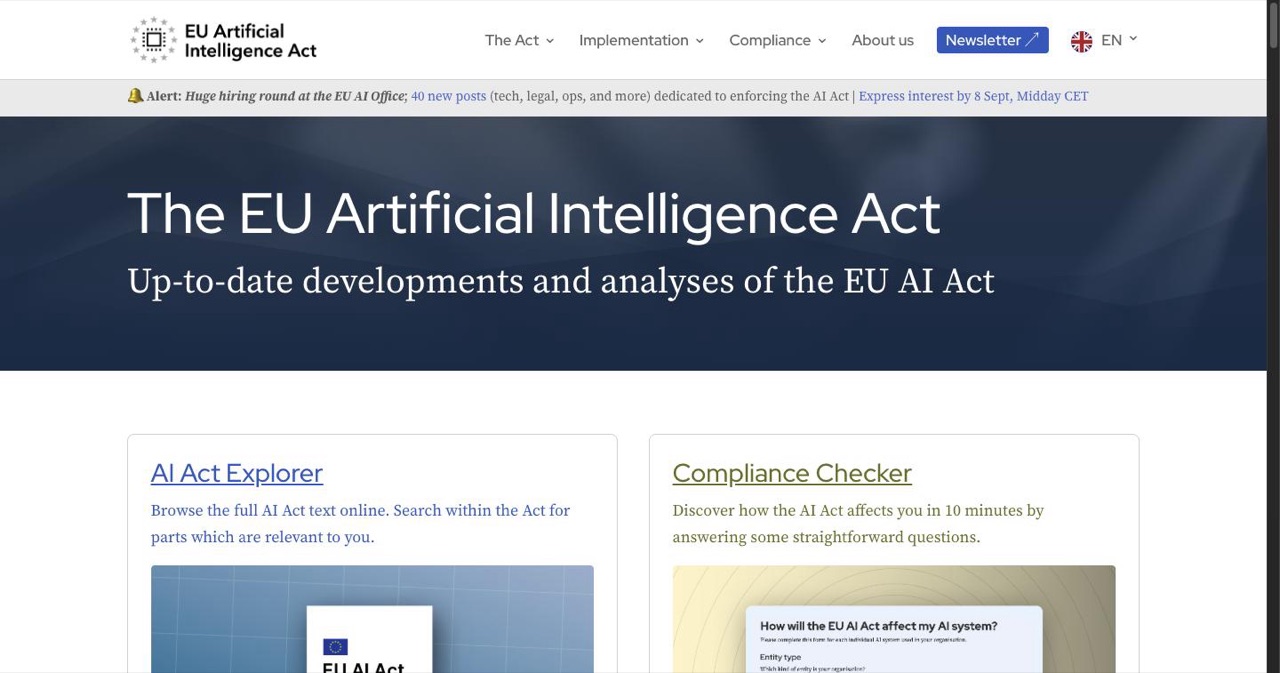
Step 11: AI System Inventory & Risk Classification
- Why: Not all AI is equal. Spam filters are low risk. Resume scanners are high risk. You must know your tier by Aug 2026.
- How: Use the 14-point provider checklist. If you fall into "High Risk," you have serious work to do.
- Tool: Brickware AI Test.
- Template: AI Risk Matrix Excel provided in our toolkit.
Step 12: Risk Management System
- Why: You must document known risks (hallucinations, bias) and your mitigation strategies.
- How: Quarterly review of model performance against safety benchmarks.
- Template: Risk Log Notion provided in our toolkit.
Step 13: Technical Documentation & Logging
- Why: You need a paper trail for the "black box."
- How: Implement Model Cards. Log training data sources, model architecture, and validation metrics.
- Example: "AI Act audit trails = trust." Show your customers you aren't training on their IP.
- Template: Annex IV Doc Kit provided in our toolkit.
Step 14: Human Oversight & Transparency
- Why: Users must know they are talking to a machine.
- How: Add clear UI labels: "AI-Generated." Ensure a human can intervene or override the AI's decision.
- Template: User Notice Generator provided in our toolkit.
Step 15: Post-Market Monitoring
- Why: Compliance doesn't end at launch. You must report serious incidents to national authorities.
- How: Set up automated alerts for model drift or safety violations.
- Template: FRIA Assessment provided in our toolkit.
30-Day Compliance Sprint Roadmap
Don't let the list overwhelm you. Here is how you eat the elephant.
-
Week 1: Audit & Inventory.
- Define SOC 2 scope.
- Classify AI risk level.
- Start ROPA.
-
Week 2: Gap Fixes.
- Turn on MFA everywhere.
- Encrypt databases.
- Update DPAs and Terms.
-
Week 3: Docs & Tools.
- Install Vanta/Drata agents.
- Write the policies (use templates).
- Set up the Privacy Portal.
-
Week 4: Mock Audit + Cert.
- Run the readiness assessment.
- Engage the auditor for Type 1.
- Goal: 100% ROPA complete, 90% controls passing.
Top Tools for 2026 Automation
Manual compliance is a death sentence for your roadmap.
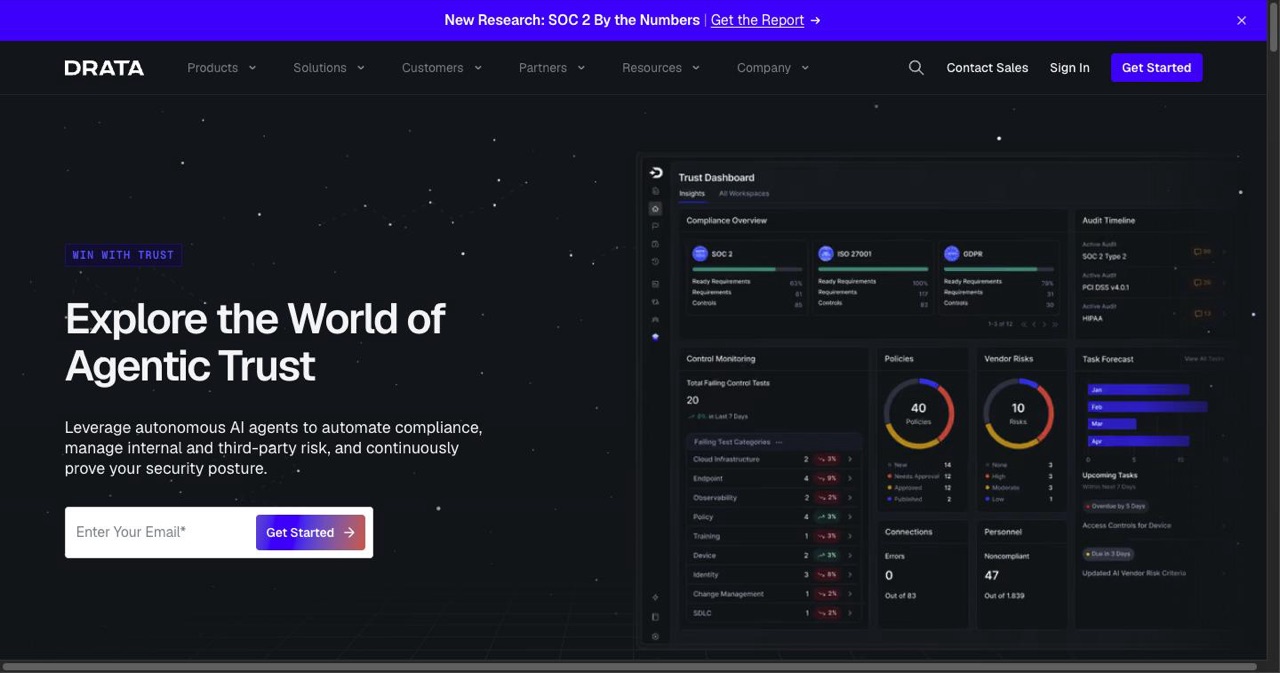
- SOC 2: Vanta and Drata are the leaders. They cost ~$8k to start but save hundreds of engineering hours.
- GDPR: Formbricks (open source surveys/data) and Sprinto.
- AI Act: Credo AI for governance; Wegic for documentation; Comp AI for an all-in-one suite.
Pro Tip: Look for tools offering "Agentic AI" for compliance—agents that auto-remediate issues (e.g., closing a port) rather than just flagging them.
Real 2026 Case Studies
Case 1: Amberoon (FinTech SaaS) They used Akitra to automate SOC 2. Result? They moved upmarket to banks, closing deals that were previously stalled by security questionnaires. The CEO credited the certification for "closing business faster."
Case 2: The AI Pre-Emptor A specialized AI marketing SaaS (Series A) prepped their inventory and documentation before the August deadline. When a major EU media conglomerate sent an RFP, they were the only vendor with a draft "Declaration of Conformity." They won the contract.
Case 3: Accorian (Finance) Integrated SOC 2 and GDPR workflows simultaneously. By overlapping the evidence collection (since 40% of controls overlap), they saved 40% on audit time and fees.
Conclusion
2026 is the year compliance stops being a "nice-to-have" and becomes your ticket to revenue.
The EU AI Act is coming in August. SOC 2 is the gatekeeper for US Enterprise. GDPR is still the law of the land in Europe.
You have two choices:
- Scramble in July, pay expedited fees, and risk fines.
- Run this 30-day sprint now, get your badge, and use it to bludgeon your competitors in the sales cycle.
Get your SaaS in front of founders
List your product on the SaaSCity live city map - a permanent listing, real discovery, and a backlink from a high-DR directory. Free to start; upgrade for a dofollow link and a building on the map.