Launch & Growth
Best Directories for Developer Tools & DevOps Software in 2026 (20+ Verified Platforms)
Where do developers actually discover new tools in 2026? Not Google. Not LinkedIn. Here are the 20+ dev-specific directories, awesome lists, and launch platforms that actually send qualified developer traffic, with real DA scores and submission steps.


Contents (9)
- Key Takeaways
- Why Dev-Specific Directories Beat Generic SaaS Listings
- What Makes a Good Developer Tool Directory?
- The Best Developer Tool Directories in 2026
- What DevTool Founders Are Actually Saying on X
- DevRel Strategies for Directory Promotion
- Submission Strategy for Developer Tools
- Common Mistakes When Submitting Developer Tools
- Ready to Get Listed?
Quick answer: The directories that move developer tools in 2026 are dev-specific, not general SaaS listings. The Tier 1 set is GitHub Marketplace (DA 96), GitHub Awesome lists, StackShare (DA ~75, 10M+ developer profiles), DevHunt, Hacker News Show HN (DA 93), Console.dev, and the Product Hunt Developer Tools category (DA 91). Below that sit Dev.to, LibHunt, daily.dev, Free for Dev, SaaSHub, AlternativeTo, and the package registries npm, PyPI, Crates.io, pkg.go.dev, and RubyGems.
Developers don't browse SaaS directories. They don't read Capterra reviews. Half of them have an ad blocker tuned strictly enough that your Google Ads campaign is yelling into the void.
So where do they actually find new tools? They scroll daily.dev between meetings. They open the Console.dev newsletter on Saturday mornings. They search GitHub for "awesome-X" repos when they hit a wall on a project. They check LibHunt to find the maintained alternative to that abandoned npm package. And once a week, they argue about whether the new thing on DevHunt is actually better than what they already use.
This is a completely different distribution game than B2B SaaS. The directories that matter are dev-specific, often community-curated, and reward open-source involvement more than marketing budget. A single PR into the right Awesome list can outperform a paid Product Hunt launch.
We pulled real DA scores, submission steps, and X sentiment from devtool founders to map every directory that's actually worth your time in 2026. Whether you're shipping a CLI, an API, a developer-facing SaaS, or a DevOps platform, this is the playbook.
If you've already got a tool in production, pair this guide with the zero-cost developer toolkit to keep your launch budget close to zero, and read the complete SaaS directory submissions guide for the broader long-tail SEO play.
Key Takeaways
- Audience match beats traffic volume: A 50K-visitor dev directory out-converts a 5M-visitor general directory for a developer-facing product.
- Awesome lists are the highest ROI per minute: A one-line PR into the right
awesome-Xrepo sits on github.com (DA 96) and keeps sending traffic for years. - GitHub Marketplace is mandatory for integrations: If your tool ships an Action, App, or webhook, list it; free listings are open to all, paid ones need org verification.
- DevHunt first, Product Hunt later: Launch on DevHunt to build dev credibility, post a Show HN the same day, then run Product Hunt a few weeks after for broader reach.
- Package registries count as directories: npm, PyPI, Crates.io, pkg.go.dev, and RubyGems give instant developer search visibility for CLIs and libraries.
- Check the link type before you spend time: AlternativeTo (DA ~82) is nofollow, while StackShare, SaaSHub, and SaaSCity give dofollow listings.
- Editorial curation converts higher: Console.dev has smaller volume than DevHunt or HN, but its readers are senior devs and CTOs, and features there have turned into enterprise pilot calls.
Why Dev-Specific Directories Beat Generic SaaS Listings
The case for dev-specific directories is audience match. Traffic volume matters less.
Developers self-select for these platforms. Someone on Console.dev is a developer who explicitly asked for a weekly email about new dev tools. Someone Googling "best CRM" on Capterra is, well, looking for a CRM. Audience intent matters more than raw visitor count. A 50K-visitor dev directory will out-convert a 5M-visitor general directory every time for a developer-facing product.
The signal is technical, not marketing-y. GitHub stars, npm downloads, language-specific filtering, framework tags: dev directories speak the same language as your users. Your tool gets evaluated on what it does, not on which logo carousel you can afford.
Backlinks are deeper. Awesome lists, GitHub Marketplace, and StackShare profiles all sit on extremely high-DA domains (github.com is DA 96, stackshare.io ~75). One inclusion can outpace a dozen DR 30 SaaS directories for SEO weight.
Open-source has compounding advantages. Founders on X are unanimous: open-sourcing a component, publishing to npm/PyPI, and submitting PRs to relevant Awesome lists creates a flywheel. Every star, every download, every list inclusion feeds into discovery for the next dev.
What Makes a Good Developer Tool Directory?
Before you start submitting, score each option on these criteria:
Audience composition. Are the visitors actual developers, or are they tech-curious recruiters and PMs? Check the directory's Twitter/X engagement and recent posts. If the comments are full of devs asking technical questions, you're in the right place.
Curation strength. Auto-listed databases dilute fast. Hand-curated lists (Console.dev, FutureTools-style, Matt Wolfe-style) confer implicit endorsement. The trade-off: harder to get in.
Link type & DA. Always check whether the listing gives a dofollow link. A dofollow from GitHub or StackShare is worth ten nofollow links from a no-name aggregator. Use a free DR/DA checker. Anything DA 50+ is meaningful.
Submission friction. A 5-minute form is fine. A 90-day waitlist with a $497 fee for a category that 80 of your competitors already dominate is not.
Refresh rhythm. Open the directory's homepage. If the "trending" section hasn't updated in a year, the audience has moved on. Move on with them.
The Best Developer Tool Directories in 2026
Tier 1: High-Authority Dev Platforms (The Essentials)
These are the ones every devtool founder should hit. Skip nothing in this tier.
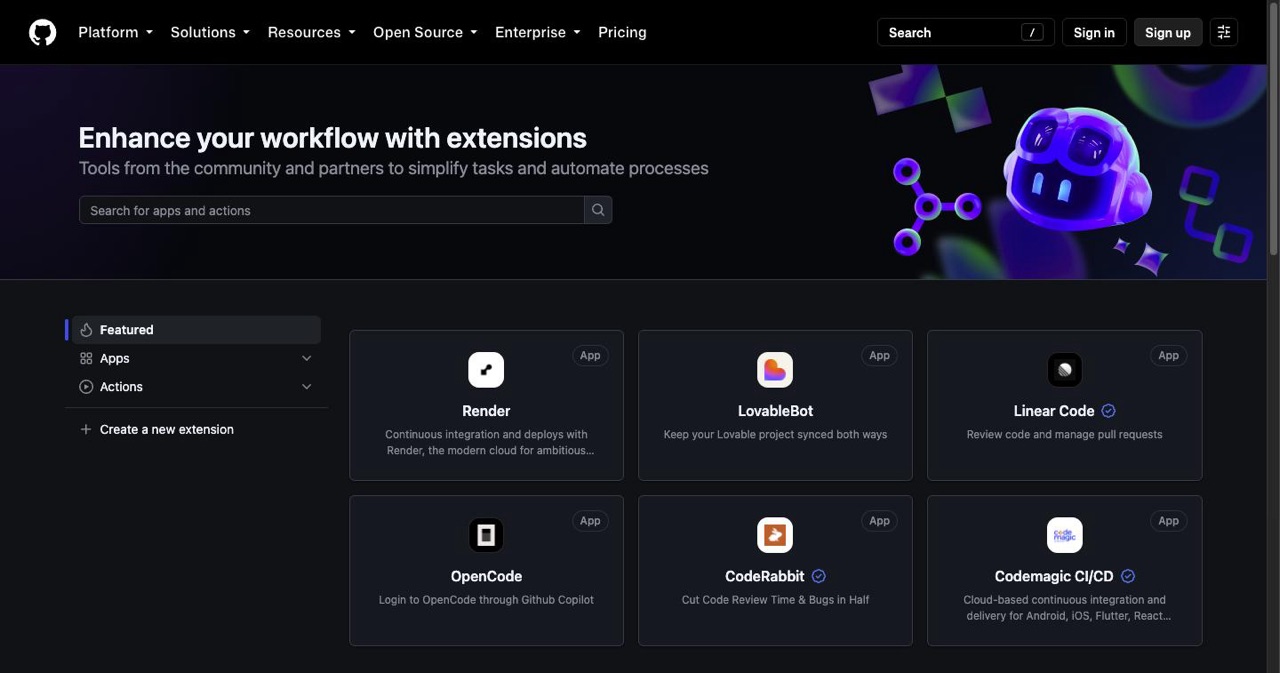
1. GitHub Marketplace: DA 96 | Free + Paid tiers
If your tool integrates with GitHub in any way (Action, App, webhook), this is mandatory. The DA is the highest of any platform on this list, and the audience is 100% developers. Free listings are open to all; paid (subscription billing through GitHub) requires org verification.
Submission: Build a GitHub App or Action, then submit at the Marketplace listing form. Approval takes a few days for free listings, longer for paid.
Verdict: Non-negotiable for GitHub-integrated products. Even if your tool only ships an Action for CI, list it. The organic search traffic from inside GitHub itself is huge.
2. Awesome Lists (GitHub): DA 96 (via github.com) | Free
The "awesome-X" repos (awesome-devtools, awesome-go, awesome-react, awesome-self-hosted, awesome-ci, etc.) are the longest-lasting SEO play in dev marketing. A single one-line PR to a popular list can drive traffic for years.
Submission: Find the relevant lists by searching awesome <your category> on GitHub. Read the CONTRIBUTING.md (every list has rules). Fork, add a single concise entry following the existing format, open a clean PR with no marketing language. Maintainers reject sales pitches instantly.
Verdict: Highest ROI per minute of any tactic in this guide. The compounding backlinks alone justify the effort. Do not skip this.
3. StackShare: DA ~75 | Free | 1–2 day approval
The de facto "what tech does company X use" platform. 10M+ developer profiles, deep integration with engineering blogs, and your listing surfaces every time someone searches a comparable tool's stack.
Submission: Create a tool profile at stackshare.io/submit. Add use-case tags, link your GitHub, and request reviews from existing users.
Verdict: Best for B2B dev tools, observability, infrastructure, databases, and SaaS APIs. The "alternatives" comparison pages rank well in Google for "X vs Y" queries. That's free SEO.
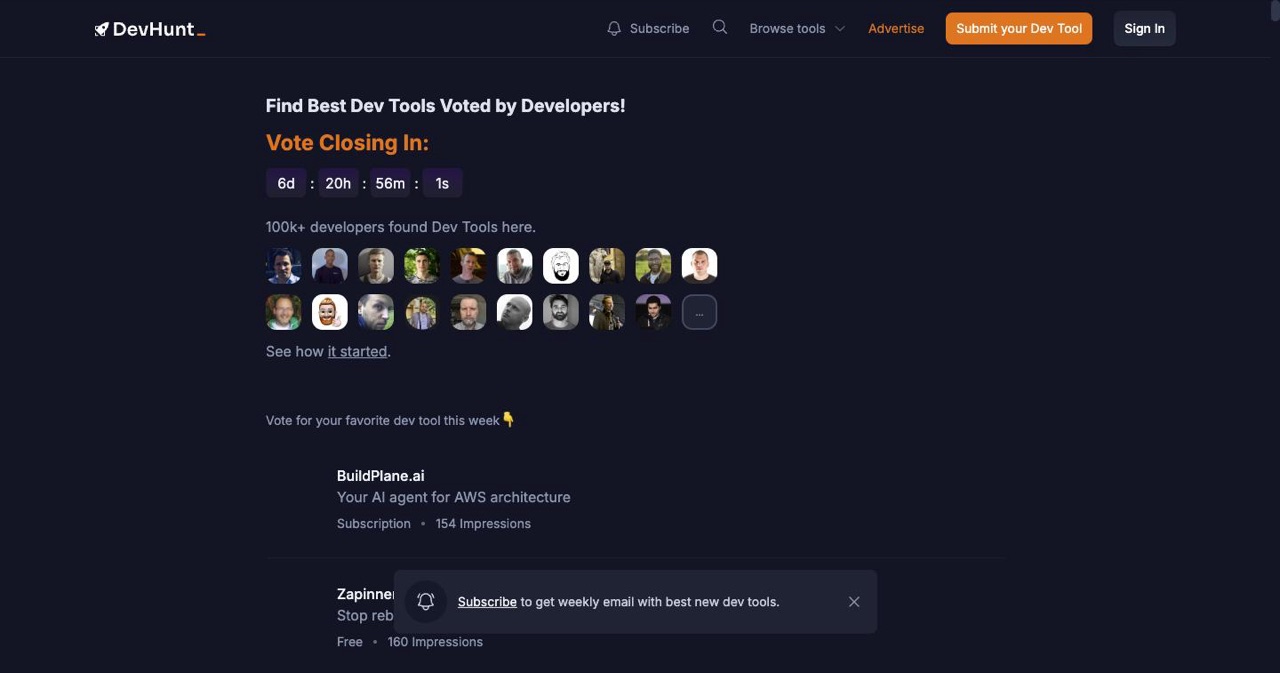
4. DevHunt: DA ~40–58 | Free | Fast approval
Open-source, transparent ranking, weekly launches. DevHunt is "Product Hunt for devs" and the audience is exactly who you want. Voting is dev-only, and the discussion threads are technical.
Submission: Submit at devhunt.org/submit. Pick a launch week, prep a punchy headline and screenshots/GIF, and rally your dev network in the first 4 hours.
Verdict: The single best launch platform for pure devtools in 2026. Founders consistently report quality signups over vanity metrics. Pair with a Show HN the same day for compounding effect.
5. Hacker News Show HN: DA 93 | Free | Instant if accepted
A frontpage Show HN can drive 50K+ visitors in 24 hours. The audience is hyper-technical, the feedback is brutal but useful, and the resulting backlinks are some of the highest-authority you can get.
Submission: Post under "Show HN: [Your tool] – [one-line description]" on news.ycombinator.com/submit. Time it for early Tuesday/Wednesday US morning. Be ready to answer every comment honestly.
Verdict: No marketing fluff. No upvote rings. Bring something genuinely interesting and the community rewards you. Bring hype and they bury you in seconds.
6. Console.dev: DA ~48 | Free | 1–2 week review
A weekly newsletter and curated directory of the best dev tools, run by editors with serious credibility. Inclusion is editorial, which means the implicit endorsement is real.
Submission: Submit via console.dev/submit. Include what makes your tool genuinely interesting. Bonus points for novel architecture, open-source angles, or solving a real engineering pain point.
Verdict: Smaller volume than DevHunt or HN, but the audience is senior devs and CTOs. One Console.dev feature has converted into enterprise pilot calls for multiple founders.
7. Product Hunt: Developer Tools category: DA 91 | Free
Not dev-only, but the Developer Tools category consistently produces top daily winners. The traffic spike is real, and the permanent backlink from a DA 91 page is gold.
Submission: Self-submit at producthunt.com/launch. Tuesday–Thursday is the sweet spot. Mobilize early support in the first 4 hours.
Verdict: Worth doing once, properly. Full launch playbook in our Product Hunt alternatives guide.
Tier 2: Free, High-Signal Dev Discovery
These won't cost you anything and consistently get cited by founders as actually sending users.
8. Dev.to: DA 82 | Free
Not a directory in the strict sense, but Dev.to combines a writing platform with a community that finds tools through technical posts. Write a "How I built X" or "Why we replaced Y with Z" post, and your tool becomes a permanent organic asset.
Submission: Create an account, publish a technical article about your tool. Cross-post existing blog content with canonical_url set correctly to avoid SEO duplication.
Verdict: Best content-led discovery channel for dev tools. The community is supportive and the SEO compounds.
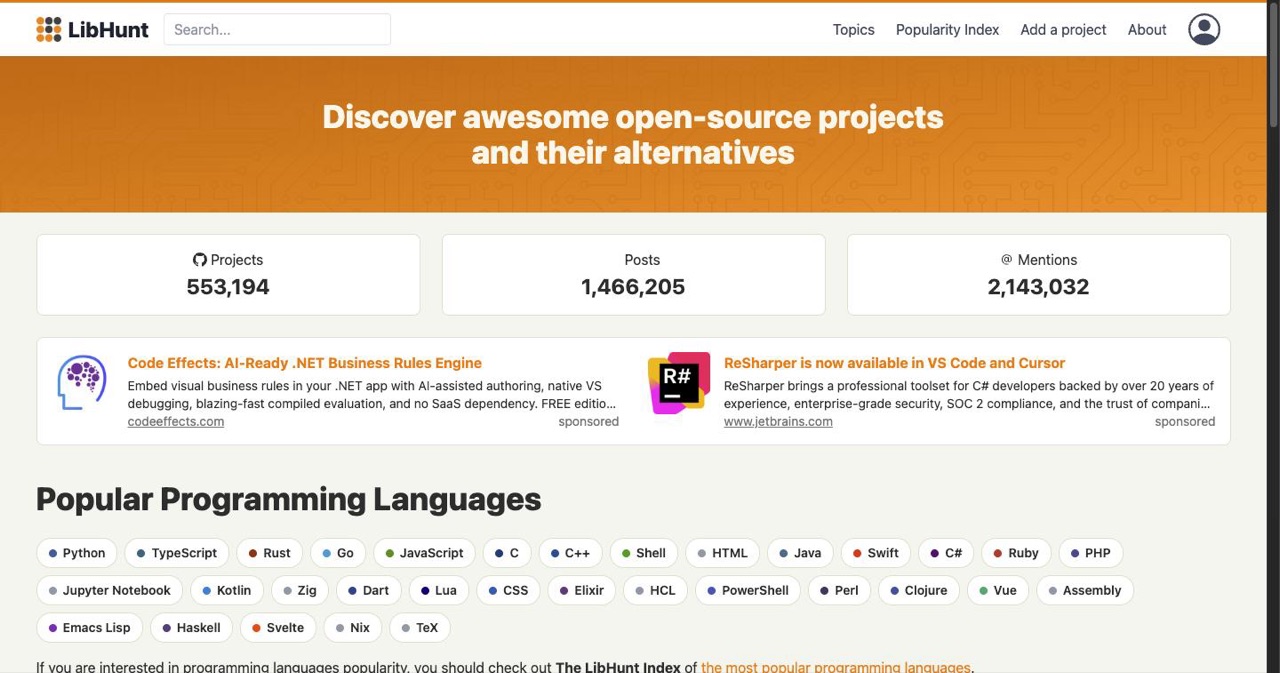
9. LibHunt: DA ~55 | Free | 2–5 day approval
Library and tool discovery organized by programming language. Every page is structured around "alternatives to X in language Y," which suits open-source tools and language-specific libraries.
Submission: Submit your project at the relevant language category. GitHub-linked projects auto-pull stars and activity.
Verdict: Strong for open-source devtools. The "alternatives" structure ranks well in Google for "best X library [language]" searches.
10. daily.dev: High dev engagement | Free
A dev news aggregator with a Chrome extension that millions of developers use as their default new tab. Articles about your tool can land in front of these devs every morning.
Submission: daily.dev pulls from RSS and partner feeds. Get your blog approved as a source, then publish technical content about your tool. Posts that hit the front page can drive thousands of devs in hours.
Verdict: The best content-distribution channel for devtool blogs. Pair with Dev.to for double coverage.
11. Free for Dev: DA 96 (via github.com) | Free | PR-based
A massively popular GitHub list of services with free tiers for developers. If your devtool has any free tier (most should), get on this list.
Submission: Fork the repo, add your tool to the appropriate category in alphabetical order, open a PR with a clear description of the free tier limits.
Verdict: Constant trickle of qualified traffic from devs who specifically search "free X for development." The GitHub backlink is bonus.
12. SaaSHub: Developer Tools: DA ~68 | Free | Dofollow
Software alternatives platform with a strong dev tools section. Submit and get listed as an alternative to established tools, and every "X alternatives" search becomes a discovery opportunity.
Submission: Create a profile, claim/create your tool page, link to comparable tools.
Verdict: Easy free dofollow link with steady SEO referrals.
13. AlternativeTo: DA ~82 | Free
Community-ranked alternatives platform. Position your tool as the better/cheaper alternative to a popular incumbent and ride their search traffic.
Submission: Add your tool as an alternative to an existing entry. Free account required.
Verdict: High-traffic, well-targeted, but links are nofollow. Worth it for discovery.
14. Slant: DA ~60 | Free
Community votes on the best tools per use case. Each "best X for Y" page ranks well in Google.
Submission: Add your tool as an option to relevant questions, support pros/cons with real reasoning.
Verdict: Niche but persistent. Long-tail SEO from "best X for Y" queries.
15. SaaSCity: DR 66 | Free | Dofollow
A general launch directory where every paid listing is a building on a city map. Developer tools go in its Developer Tools category, which founders and indie hackers browse. You get a permanent dofollow backlink and a visual presence that stands out from grid-of-cards directories.
Tier 3: Package Registries & Niche Hubs
These aren't directories in the marketing sense, but they're where developers actively search for tools at the moment of intent.
16. Package Registries: npm, PyPI, Crates.io, pkg.go.dev, RubyGems: Free
Free, instant developer search visibility at install-time intent. If your tool ships any kind of SDK, library, or CLI, publish it. Use clear keywords, complete README content, and link to your marketing site from the package page.
Verdict: Free distribution channel that operates at the highest possible intent moment, when a dev is actively running npm install. Don't skip.
17. DevTools Directory (devtools.directory): Free
Hand-curated collection across CLI tools, DevOps, databases, API tools, and more. Browseable with pricing/details.
Verdict: Smaller traffic but solid niche curation.
18. WebCurate (webcurate.co): Free
Hand-curated dev tools with pricing and feature breakdowns, 400+ tools listed.
19. Dev Resources (devresourc.es): Free
800+ resources (tools, APIs, learning) with a community-driven model and newsletter distribution.
20. DevSuite (devsuite.co): Free
Tool discovery with filters, integrations, and project-fit recommendations.
21. OpenAlternative (openalternative.co): Free
Open-source alternatives to popular tools. Star ratings, activity metrics, community-driven. Strong fit if your tool is open-source.
22. Other notable: DevToolset, Developers Index, Built At Lightspeed (templates/UI kits), TinyLaunch, SideProjectors, Uneed. These are general launch pads with dev-friendly audiences. Worth batch-submitting for compounding SEO.
SaaSCity is our own site, so it sits at #15 by the same test as every other entry here: how directly it reaches developers.
What DevTool Founders Are Actually Saying on X
We searched X for current sentiment from devtool founders and developer advocates. Here's the unfiltered version.
Directories deliver compounding traffic. Founder @johnrushx publicly reported 300+ waitlist signups overnight from a single directory listing (shno-co), and now automates listings across thousands of sites because directory traffic is consistent and scalable. He credits the combination of directories + Dev.to + Hacker News for multiple projects hitting $10K–$20K MRR.
Dev-specific platforms convert better. Founders consistently report that DevHunt, Console.dev, and Awesome list inclusions drive higher-quality signups than generic SaaS directories. The audience is already technical, already evaluating tools.
Automation is real but selective. Tools like ListingBOTT exist because manual listing across 100+ sites is tedious. Founders use them for the long tail but always submit personally to the top 5–10 dev-focused directories. Quality of pitch matters at the top.
ProductHunt gives the biggest single DR boost. Even devs who launch on DevHunt first agree that PH still moves the SEO needle hardest in a single day, thanks to the DA 91 backlink.
X consensus from @AntonioEscudero and others: TinyLaunch (DR 71), SideProjectors (DR 70), Future Tools (DR 69) round out the high-DR pump-list for general directories. Use them as supplements, not substitutes for the dev-specific platforms.
The bottom line on directories from X: They aren't magic, but consistent listing across the right ones (especially dev-specific) plus content (Dev.to blogs, HN posts) reliably drives users and signups for months after launch.
DevRel Strategies for Directory Promotion
Developer relations professionals consistently emphasize targeted, relationship-driven promotion over paid ads. From their shared playbooks:
Prioritize high-signal platforms over volume. DevHunt, StackShare, Console.dev, Awesome lists, GitHub Marketplace, PH (devtools), HN Show HN, and Dev.to drive qualified developer traffic. Generic SaaS directories barely move the needle for a devtool.
Lead with education, not pitch. Tanner Linsley and other DevRel veterans repeat the same advice: be kind, be practical, show early prototypes, iterate on feedback, white-glove your first 100 users. Dev tools sell through deeply understanding the pain point. Hype doesn't sell them.
Scale through content + listings + community. Nader Dabit's playbook: dedicated dev-focused X account, contractors for content/events, virtual hackathons, in-person where it matters, OKRs around developer support. Directories slot into the broader "meet developers where they are" strategy.
Automate the long tail, hand-craft the top. Bulk submission services for the long tail (cheap SEO + backlinks). Manual, well-pitched submissions for top-10 platforms (real signups). Pair with consistent technical blogging for compounding effect.
Submission Strategy for Developer Tools
Launch Day (Day 1)
- DevHunt: Free, dev-only audience. Mobilize your dev network in first 4 hours.
- Hacker News Show HN: Same day. Time for early Tuesday/Wednesday US morning.
- Package registries (npm/PyPI/Crates): Publish if not already.
Week 1
- Awesome lists: Identify 3–5 relevant lists, submit clean PRs.
- StackShare: Create your tool profile, request reviews.
- GitHub Marketplace: If you have any GitHub integration, list it.
- Console.dev: Submit, expect 1–2 weeks for editorial review.
- Free for Dev: PR if you have a free tier.
Week 2
- Product Hunt: Time properly, prep launch page, mobilize. See PH alternatives guide for the full strategy.
- LibHunt + Dev.to: LibHunt submission, first technical post on Dev.to.
- SaaSHub + AlternativeTo + Slant + SaaSCity: Set-and-forget SEO links.
- daily.dev: Get your blog approved as a source.
Week 3+
- Tier 3 batch: DevTools Directory, WebCurate, Dev Resources, DevSuite, OpenAlternative.
- General launch pads: TinyLaunch, SideProjectors, Uneed.
- Long tail / automation: Optional: bulk submission services for compounding SEO.
What to Prepare
Every dev directory wants roughly the same assets:
- Website URL (where the dofollow backlink lands)
- GitHub repo (where applicable; devs check this before clicking "try")
- Short description (1–2 sentences, problem-first, under 155 characters)
- Long description (technical detail, language/framework support, real use case)
- Logo (high-res PNG, 512×512+)
- Demo GIF or 30-second video (CLI in action, dashboard walkthrough; devs want to see it work)
- Pricing (free tier? OSS? what does paid cost?)
- Tech stack tags (be specific: language, framework, integrations)
Common Mistakes When Submitting Developer Tools
1. Treating a dev directory like a B2B landing page.
Devs scroll past marketing speak. "AI-powered next-gen developer experience platform" is invisible. "CLI that diffs Postgres schemas in 200ms" is a click. Lead with what it does, in technical language, in the first sentence.
2. Submitting to Awesome lists with a sales pitch.
Maintainers reject these instantly. Read the CONTRIBUTING.md. Match the existing entry style exactly: usually one line, neutral description, no superlatives. The reward for following the rules is permanent inclusion.
3. Skipping package registries because "it's just a CLI."
Publishing to npm/PyPI/Crates is free distribution at the moment of highest intent. Even a CLI with a single npx my-tool install command should be on npm. Devs find tools at install-time, not at search-time.
4. Launching on PH without doing DevHunt first.
For pure dev tools, DevHunt builds dev-community credibility that carries into your PH launch. Going PH-first risks a vanity-only spike. DevHunt-first builds compounding signal.
5. Never updating your listings.
Stale screenshots and outdated feature lists kill conversions. Every 6 months, refresh your top-10 directory listings with current screenshots, updated pricing, and new features.
Ready to Get Listed?
Developer tools live or die on distribution, and distribution for devtools is a different game from B2B SaaS. The directories that matter are dev-specific, often community-curated, and reward open-source involvement and technical content.
Start this week with the top four: DevHunt, Hacker News Show HN, GitHub Marketplace (if applicable), and Awesome lists. Total cost: $0. Total time: a long afternoon. Sustained traffic: months.
Then work through Tier 2 and Tier 3 over the next two weeks. By the end of the month, you'll have 20+ permanent listings driving qualified developer traffic without spending a dollar on paid acquisition.
The dev-specific platforms above are worth doing yourself. For the general startup and SaaS directories in the long tail, our directory submission service is the done-for-you option: we submit your tool to 100 to 370 directories, depending on the package, and email you a report of every submission, its status and a screenshot.
Keep Reading
- Best Directories for No-Code & Low-Code Tools in 2026: sister guide for the no-code side of the dev spectrum
- Best Directories for AI Tools in 2026: 374 AI tool directories ranked by DR
- Best SaaS Directories, Ranked by DR: all 1,669, filterable by pricing and link type
- Free Dofollow SaaS Directories for Backlinks: sorted by Domain Rating
- Zero-Cost Developer Toolkit: ship production apps for $0
- Product Hunt Alternatives for SaaS in 2026: 20+ launch platforms beyond PH
Get your SaaS in front of founders
List your product on the SaaSCity live city map - a permanent listing, real discovery, and a backlink from a high-DR directory. Free to start; upgrade for a dofollow link and a building on the map.