Launch & Growth
Best Directories for No-Code & Low-Code Tools in 2026 (20+ Platforms + Communities)
No-code is exploding in 2026. AI agents, automation builders, and vibe-coded apps are everywhere. Here are the 20+ no-code-specific directories, community hubs, and curated lists that actually send users to your tool.

Contents (10)
- Key Takeaways
- Why No-Code Directories Are an Underrated Channel
- What Makes a Good No-Code Directory?
- The Best No-Code & Low-Code Directories in 2026
- Community Platforms That Double as Discovery Channels
- What No-Code Builders Are Actually Saying on X
- Trends: What's Moving in No-Code in 2026
- Submission Strategy for No-Code Tools
- Common Mistakes When Submitting No-Code Tools
- Ready to Get Listed?
Quick answer: The no-code-specific directories worth submitting to in 2026 are OnlyNoCode, NoCodeFinder, NoCodeList, MakerPad, NoCodeDevs, NoCodeFounders (37K+ members), NocodeHQ, NoCode.Tech, and NoCode.mba, plus the platform marketplaces Bubble Plugin Marketplace (7,000+ plugins and templates) and the Zapier App Directory. Pair those with the general directories G2, Capterra, SaaSHub, AlternativeTo, and Product Hunt, since the two audiences barely overlap. Mendios bulk-submits to 200+ directories for a flat $49.
The no-code space in 2026 is borderline overwhelming. AI agent builders launch every week. Vibe-coded apps from Lovable, bolt.new, and Replit Agent are everywhere. The line between "no-code tool" and "AI tool" and "developer tool" has dissolved entirely. Bubble apps embed GPT-5 calls, Zapier runs autonomous AI workflows, and Airtable's new "AI base" feature ships agents in spreadsheets.
For tool founders, this is both opportunity and problem. Opportunity: more potential users than ever. Problem: standing out in a market where every Twitter feed has 40 new no-code launches per week.
Directories solve the discovery problem in a way social posts can't. They're permanent, searchable, and build SEO over years instead of dying in 24 hours. The no-code community in particular leans heavily on community-driven directories (MakerPad, NoCodeList, NoCodeFounders), and founders consistently report real waitlist signups and SEO wins from listings.
We pulled every active no-code/low-code directory worth your time in 2026, plus the community hubs (Slack, Discord, forums) that double as discovery channels. Whether you're shipping a Bubble plugin, an automation platform, an AI agent builder, or a full no-code app builder, this is the playbook.
Pair this with our full list of 1,669 SaaS directories for the broader picture, and our AI tool directories guide if your no-code tool has any AI features.
Key Takeaways
- Directory competition is lower than founders assume: Most no-code founders stop at Twitter/X, Slack, Discord, and Product Hunt, leaving directory listings underused.
- The intent is higher: Someone browsing NoCodeFinder or NoCodeList has already moved past "what is no-code" to "which tool fits my use case."
- Submit to both general and niche directories: G2, Capterra, SaaSHub, AlternativeTo, Product Hunt, and SaaSCity all accept no-code tools, and their audiences barely overlap with the no-code-specific lists.
- Platform marketplaces count: The Bubble Plugin Marketplace carries 7,000+ plugins and templates, and the Zapier App Directory has massive reach.
- Bulk submission is cheap: Mendios submits to 200+ directories for a flat $49, covering Product Hunt, G2, NoCodeList, MakerPad, and AlternativeTo.
- Backlinks stack: 15 to 20 dofollow links from DR 50+ no-code directories start moving your site on "no-code [category]" queries.
- Check the pulse before submitting: If a directory's trending section has not updated in months, its audience has already left.
Why No-Code Directories Are an Underrated Channel
Most no-code founders default to Twitter/X, the major Slack and Discord communities, and Product Hunt, and stop there. This is a mistake. Here's why directories deserve a real slice of your launch attention:
The audience is hyper-targeted. Someone browsing NoCodeFinder or NoCodeList already self-identified as a no-code buyer. They're past the "what is no-code" stage and into "which tool fits my use case." This is the highest-intent audience you can reach for a no-code tool.
The competitive moat is low. Most no-code founders skip directory submissions because they assume "everyone's already there." The opposite is true. Many established directories have surprisingly small "submitted in the last month" sections. Submit and you immediately get prime placement.
Backlinks compound. A dofollow link from a DR 50+ no-code directory permanently raises your site's authority. Stack 15–20 of these and your marketing site starts ranking for "no-code [your category]" terms you couldn't touch otherwise.
Bulk submission is cheap and effective. Services like Mendios submit your tool to 200+ directories for a flat $49, including Product Hunt, G2, NoCodeList, MakerPad, and AlternativeTo. For most founders, this is the best ROI launch spend possible.
What Makes a Good No-Code Directory?
Score each directory on these criteria before spending time on submissions:
Audience match. Is the directory built for no-code buyers, or is it a general SaaS list with a "no-code" tag? Niche-focused directories like MakerPad and NoCodeFinder convert better for no-code-specific products.
Curation vs. open submission. Hand-curated lists (MakerPad, NoCodeDevs) signal quality. Auto-listed databases dilute fast. The trade-off: harder to get into curated ones.
Community attached. Some directories double as community hubs (NoCodeFounders, NoCodeHQ). Listing there gets you SEO plus access to active builders who try new tools.
Submission cost vs. reach. Most no-code directories are free. The Mendios bulk service ($49) handles the long tail. Save paid budget for Product Hunt + G2.
Activity rhythm. Open the homepage. If "trending tools" hasn't updated in months, the audience moved on. Move on with them.
The Best No-Code & Low-Code Directories in 2026
Tier 1: Major No-Code-Specific Directories
If you submit to nothing else, submit to these.
1. OnlyNoCode.com: Free | 350+ tools
One of the largest no-code-specific directories. Curated categories include website builders, mobile app builders, CRM, e-commerce, databases, automation, chatbots, and more. Top picks featured include Bubble, Framer, Softr, Adalo, Make, Xano, Zapier, and Airtable.
Submission: Reach out via the site's contact form. There's no public submission button as of April 2026, so check back periodically, since they sometimes open submissions.
Verdict: Largest catalog, decent traffic, broad category coverage. Worth pursuing inclusion even if it takes outreach.
2. NoCodeFinder.com: Free
Clean, modern directory focused on helping builders find tools to launch products fast or automate work. Categories: app builders, prototyping, automation, payments, CMS, etc. Includes skill-level tags and GDPR info.
Submission: "Submit a tool" button on the site. Quick form, fast review.
Verdict: Strong signal, growing traffic, easy submission. Tier-1 must-do.
3. NoCodeList (nocodelist.co): Free + sponsor options
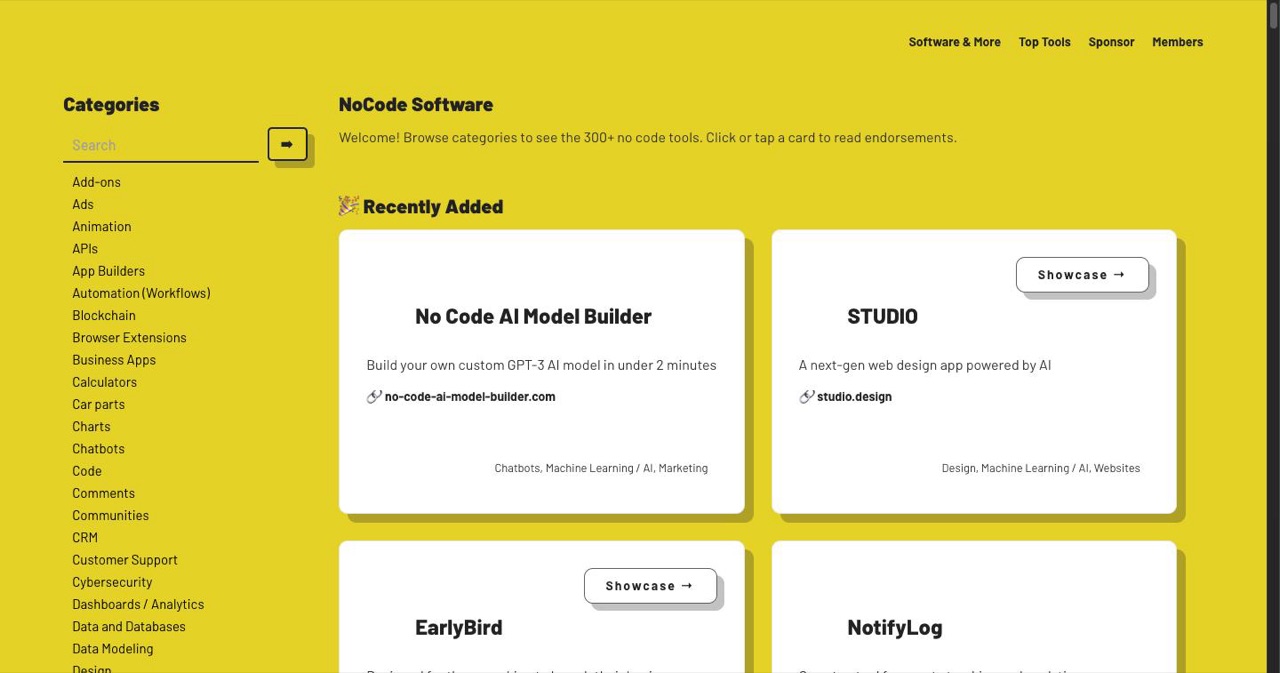
Long-running directory with 300+ no-code tools, software reviews, and agency listings. "Top Tools" feature and sponsor placement available. Frequently referenced in no-code Twitter discussions.
Submission: Submit via the site form. Sponsor tier available for premium placement.
Verdict: Established credibility, active maintenance, real audience. Submit free; consider sponsor only if you can attribute conversions.
4. MakerPad (makerpad.co): Free | Tools marketplace + community
Tools marketplace and community hub, owned by Zapier. Heavy on AI/no-code-built apps. Categories: Productivity, AI, Marketing, Web3, etc. Tutorials, case studies, and featured listings round out the discovery surface.
Submission: Submit at makerpad.co/submit. Quick form, manual review.
Verdict: High-trust, Zapier-backed, big audience. The community side multiplies the value of being listed.
5. NoCodeDevs (nocodedevs.com): Free | Community-focused
Community-focused directory and resource hub with tutorials, tools, founder interviews. Often cited alongside MakerPad and NoCodeFounders as the holy trinity of no-code community discovery.
Submission: Submit via site form.
Verdict: Strong community signal, real builder audience, easy submission. Don't skip.
6. NoCodeFounders.com: Free | 37K+ members
The #1 no-code founder community by member count. Has a tools section, courses, member directory, and active discussion channels. Listing your tool here puts it in front of people actively building no-code businesses.
Submission: Join the community, then submit via the tools section.
Verdict: Highest community-traffic potential of any no-code platform. Worth being an active member, not just a listee.
7. NocodeHQ (nocodehq.com): Free
Community/platform with a dedicated "Directories" collection (templates and tools for building your own directories/marketplaces, often Bubble-powered). Broader tool discovery and tutorials. Strong on product-building resources.
Submission: Submit via site form.
Verdict: Niche but high-quality. Great fit for tools targeting Bubble/Webflow/Softr builders.
8. Bubble Plugin Marketplace + Bubble Marketplace: Free | 7,000+ plugins/templates
Official Bubble ecosystem with plugins, templates, agencies, and experts. If your tool integrates with Bubble (or is a Bubble plugin/template), this is mandatory.
Submission: Build a plugin or template, publish via the Bubble dev tools.
Verdict: Captive Bubble audience (one of the largest no-code platforms). Direct revenue potential for paid plugins/templates.
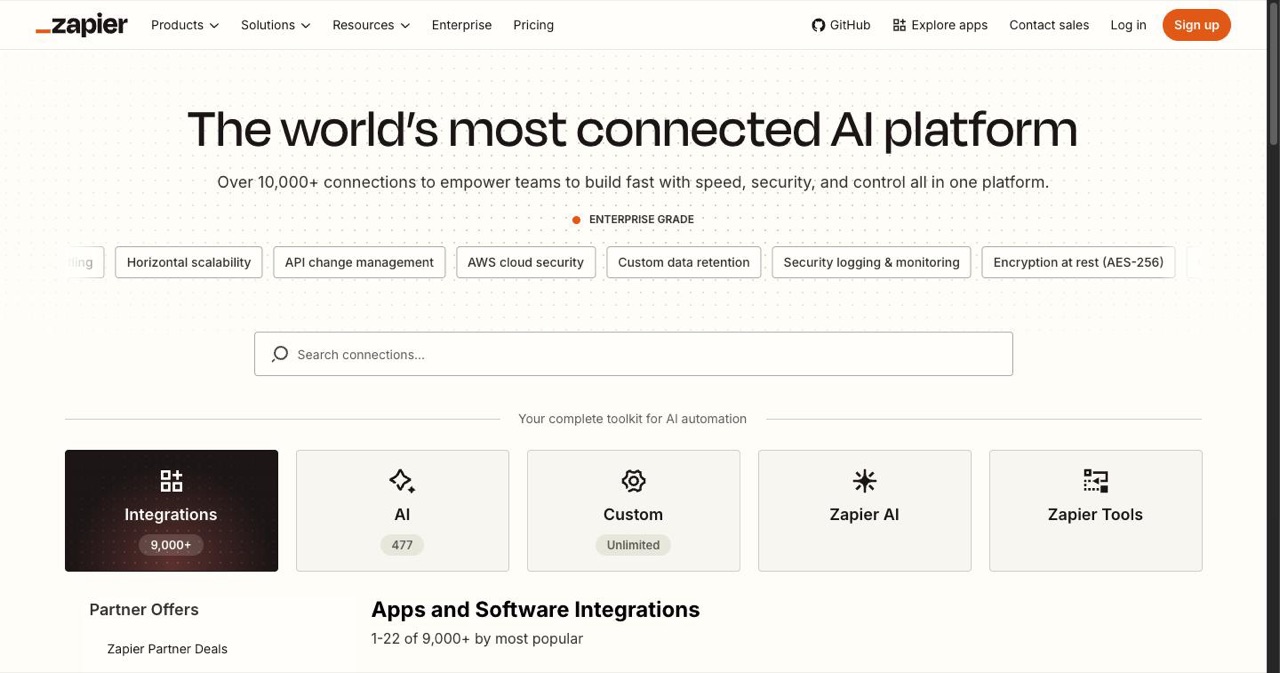
9. Zapier App Directory: Free | Massive reach
The largest automation app directory. Listing here = your tool is integratable into 6M+ Zapier users' workflows. Automation-focused no-code tools especially benefit.
Submission: Build a Zapier integration via the Zapier Platform and submit for review.
Verdict: Long-term play (integration build effort) but huge discovery payoff. Mandatory for any no-code tool that benefits from automation tie-ins.
10. NoCode.Tech (nocode.tech): Free
Tools hub plus a "matching quiz" that recommends a no-code tool in 30 seconds based on user goals. Curated directory with reviews and tutorials.
Submission: Submit via site form.
Verdict: Quiz-based recommendations are a unique discovery surface, so being well-categorized matters.
Tier 2: Free, Smaller, Still Worth It
11. NoCode.mba/tools: Free
Category-based directory of top no-code tools per project type. Pairs with NoCode.mba's popular courses.
12. Discover-Nocode.com: Free
Tools + communities directory. Broad coverage, simple submission.
13. Yo.directory: Free
No-code tools and resources list. Lightweight, easy submit.
14. AlternativeTo: No-Code Category: DA ~82 | Free
Community-ranked alternatives platform with a dedicated no-code category. High-traffic, well-targeted, nofollow links.
Submission: Add your tool as an alternative to existing entries.
Verdict: Big audience, modest SEO juice, decent direct traffic.
15. Product Hunt: No-Code category: DA 91 | Free
Not no-code-specific, but the no-code topic is one of the most active on PH. A top-5 finish drives massive traffic and a permanent DA 91 backlink.
Submission: Self-submit at producthunt.com/launch. Tuesday–Thursday, mobilize early. Full strategy in our PH alternatives guide.
16. G2: No-Code Categories: DA 90+ | Free + paid
The biggest software review platform. Listing is free; reviews drive long-term SEO and procurement-stage discovery (especially if you sell to teams).
Submission: Claim/create your G2 profile, then drive review collection from existing customers.
17. SaaSHub: No-Code: DA ~68 | Free | Dofollow
Software alternatives platform with a no-code section. Easy free dofollow link.
18. SaaSCity: DR 66 | Free | Dofollow
A general launch directory where every paid listing is a building on a city map. It has no no-code category, so no-code tools go in the Productivity category, or Developer Tools for low-code builders. You get a permanent dofollow backlink and a visual presence that's memorable.
19. Slant: No-Code: DA ~60 | Free
Community votes on best no-code platforms per use case. Long-tail SEO from "best no-code for X" queries.
20. Bulk submission via Mendios: $49 flat | 200+ directories
Mendios submits your no-code tool to 200+ directories, including Product Hunt, G2, NoCodeList, MakerPad, and AlternativeTo, for a flat $49 fee. By far the most efficient way to cover the long tail.
Verdict: No-brainer if your launch budget is over $0. $49 buys you 200+ listings worth of compounding SEO.
💡 Building an AI-powered no-code tool? You should also be on AI-specific directories. We have a separate guide: Best Directories for AI Tools in 2026. The audiences barely overlap, so submit to both.
SaaSCity is our own site. It sits at #18 with the other general directories, below every no-code-specific one, by the same test as the rest of this list.
Community Platforms That Double as Discovery Channels
Beyond the dedicated directories, these communities have tool-sharing features and active discussion that drive real users:
Slack communities:
- MakerThrive: Curated tool directory + tutorials inside Slack.
- No-Code Life: Active tool sharing + feedback channel.
- Platform-specific Slacks (Bubble, Webflow, Softr, Glide).
Discord servers:
- NoCodeX: Large no-code Discord with tool-share channels.
- NoCode.Tech: Active community tied to the directory.
- Platform-specific Discords (Bubble, Webflow, Framer).
Forums:
- Bubble Forum: Massive activity, plugin/tool discussions, official marketplace ties.
- IndieHackers no-code section: Founder discussions, tool launches, feedback.
Reddit:
- r/nocode: Largest no-code subreddit. Directory posts and tool shares.
- r/NoCodeSaaS: More SaaS-focused, very active in 2026.
Facebook groups:
- Bubble.io Community: One of the largest no-code FB groups.
- No Code Community: Cross-platform discussion.
Built-in directory + community combos:
- NoCodeFounders.com: 37K+ members, tools + courses + community.
- MakerPad community features: community discussion alongside tool listings.
- Disco.co no-code learning communities: emerging in 2026.
These channels send users, and they also generate the kind of word-of-mouth signal that compounds. A single recommendation in r/nocode or NoCodeFounders' tools channel can outperform a dozen passive directory listings.
What No-Code Builders Are Actually Saying on X
We searched X for current sentiment from no-code tool builders. The unfiltered version:
Directories drive real, measurable traffic. One founder reported overnight waitlist spikes from a single directory listing. Many builders now automate submissions with tools like ListingBOTT because manual listing across hundreds of sites is tedious, but consistently effective.
Favorite discovery platforms: MakerPad, NoCodeDevs, NoCodeFounders, NoCodeList come up repeatedly as high-signal spots for promotion, feedback, and users. Reddit (r/nocode, r/NoCodeSaaS) is praised for genuine referral traffic. Slack/Discord communities matter for early-user acquisition.
Compounding beats virality. Builders consistently say directories "actually send users" more reliably than viral X posts, and the SEO compounds for years instead of dying in 24 hours. The mantra from the community: list everywhere possible, then write content, then engage in communities. In that order.
Mendios specifically gets called out as the easiest way to cover 200+ directories at once for $49, a launch-day no-brainer for most no-code founders.
Trends: What's Moving in No-Code in 2026
The no-code space in 2026 is dominated by AI integration. Position your tool around these trends and your directory submissions will land harder:
1. AI agents and AI-powered no-code tools. Massive category. BlackRock launched an internal no-code AI agent builder (RockAI). Builders love one-click AI agent studios, AI workflows, and agent templates. If your tool ships AI agents, lead with that in every listing.
2. Workflow automation with AI decision-making. n8n clones and scalable no-code automation tools that go beyond basic Zapier, with AI decision branches, cost tracking, and ROI dashboards.
3. Fast AI prototyping / vibe coding. bolt.new, Lovable, v0, Cursor, Replit Agent, Claude Artifacts: describe in English → working app in seconds. The market is hot but crowded; differentiation matters. See our vibe coding guide for context.
4. Internal tools, client portals, directories, data apps. Airtable/Softr/Stacker-powered apps are still huge in business contexts. Steady, less-hype, real-revenue category.
5. Web3 / no-code dApp launchers. Niche but active: no-code token forging, prediction markets, on-chain apps.
What people are searching for: AI agents that actually make money (not just chatbots), automation systems with measurable ROI, beautiful AI-generated UIs, no-code tools that scale to production without vendor lock-in. Pure "basic" no-code builders get less attention now. AI augmentation is the differentiator.
Positioning advice for your directory listings:
- Lead with AI features if you have them.
- Focus on agents/automation ROI ("saves 8 hours/week," "replaces $200/mo Zapier bill").
- Niche down. "No-code for X" beats "no-code for everyone" every time.
- Avoid generic "build apps without code" messaging. That's table stakes in 2026.
Submission Strategy for No-Code Tools
Launch Day (Day 1)
- Mendios bulk submission ($49): Buys you 200+ directory listings instantly. Best money you'll spend on launch day.
- Product Hunt: Time for Tuesday–Thursday. Mobilize community early.
- NoCodeFinder, NoCodeList, MakerPad: Manual submissions to top community-curated lists.
Week 1
- NoCodeDevs, NoCodeFounders, NocodeHQ, NoCode.Tech: Round out the no-code-specific tier.
- OnlyNoCode: Outreach for inclusion if no public submission.
- Reddit launch posts: r/nocode, r/NoCodeSaaS, r/SaaS. Honest "I built this, here's why" tone.
- Slack/Discord launches: MakerThrive, No-Code Life, NoCodeX, platform-specific (Bubble/Webflow/Softr).
Week 2
- G2 + SaaSHub + AlternativeTo + Slant + SaaSCity: Set-and-forget SEO links.
- Bubble Plugin Marketplace if applicable.
- Zapier integration: start the build if not already.
- NoCodeFounders community engagement: beyond just listing, become active.
Week 3+
- NoCode.mba, Discover-Nocode, Yo.directory: long-tail no-code lists.
- Content angle: Publish "how I built X with [no-code stack]" posts on Dev.to, Medium, Substack. Cross-post in Bubble forum and IndieHackers.
- Refresh top listings every 6 months with new screenshots, features, pricing.
What to Prepare
- Website URL (where the dofollow backlink lands)
- Short description (1–2 sentences, problem-first, under 155 chars)
- Long description (2–3 paragraphs with specific outcomes/metrics)
- Logo (high-res PNG, 512×512+)
- 30-second demo video or GIF (no-code tools especially benefit from showing the build experience)
- Pricing (free tier? freemium? what does paid cost?)
- Stack/integrations (Bubble, Webflow, Airtable, Zapier, OpenAI, etc.)
- Category tags (be specific: "no-code AI agents," not just "no-code")
Common Mistakes When Submitting No-Code Tools
1. Generic "build apps without code" positioning.
In 2026 this is invisible. Be specific: "internal admin panels for Stripe data" beats "no-code app builder." Niche down or get drowned.
2. Skipping the bulk submission service.
$49 for Mendios buys you 200+ listings worth of compounding SEO. If you're spending any money on launch, this is the highest-ROI line item. Founders who skip it lose months of long-tail backlink growth.
3. Listing on directories but ignoring communities.
NoCodeFounders, MakerPad community, r/nocode, Bubble forum: these are where buyers actually live. A directory listing without community presence converts much worse. Be active for at least a few weeks before and after launch.
4. Forgetting the AI angle.
In 2026, almost every successful no-code launch leads with AI integration. If your tool has any AI features, surface them prominently in every listing. The AI tag changes which categories you appear in across most directories.
5. Never updating listings.
Refresh every 6 months. New screenshots, current pricing, new features. Stale listings get buried, particularly on directories that sort by "recently updated."
Ready to Get Listed?
The no-code space is the most discovery-fragmented market in software. Twitter virality dies fast. Reddit posts get buried. The community channels matter, but they're crowded. Directories are the one channel where consistent listing creates lasting, compounding traffic, and most founders skip them entirely.
That's your opportunity. Start this week with the top four: Mendios bulk submission ($49), Product Hunt, NoCodeFinder, and MakerPad. Total cost under $100. Total time: an afternoon. Sustained traffic: months and months.
Then work through Tier 2 plus the community channels over the next two weeks. By the end of the month, you'll have 220+ listings (200 from Mendios + 20 hand-picked) plus active community presence, without spending a dollar on paid acquisition beyond that initial $49.
Our own directory submission service is another done-for-you option. We submit your tool to 100 to 370 directories, depending on the package, from $99 one-time, and email you a report of every submission, its status and a screenshot.
Keep Reading
- Best Directories for Developer Tools & DevOps Software in 2026: sister guide for the dev side of the no-code spectrum
- Best Directories for AI Tools in 2026: 374 AI tool directories ranked by DR (essential if your no-code tool has AI features)
- Best SaaS Directories, Ranked by DR: all 1,669, filterable by pricing and link type
- Free Dofollow SaaS Directories for Backlinks: sorted by Domain Rating
- Product Hunt Alternatives for SaaS in 2026: 20+ launch platforms beyond PH
- The Ultimate Guide to Vibe Coding in 2026: how AI-assisted no-code is reshaping the market
Get your SaaS in front of founders
List your product on the SaaSCity live city map - a permanent listing, real discovery, and a backlink from a high-DR directory. Free to start; upgrade for a dofollow link and a building on the map.