SaaS Business
Your Cheap Domain Is Quietly Killing Your SaaS — Here's What to Register Instead (2026 Guide)
Most developers treat the domain extension as an afterthought. It's not. This guide breaks down exactly which domains you should avoid in 2026 (like .top, .xyz, .cc), what the data says about phishing and abuse scores, and what to register instead for better SEO and trust.

Contents (8)
Quick answer: Cheap top-level domains carry the abuse reputation of everyone else who bought them. Interisle's Phishing Landscape 2025 counted over 1.5 million phishing domains, 77% deliberately registered by criminals. Phishing scores put .xin at 10,810, .icu at 499.46, .cc at 113.04 and .top at 62.93 against .com at 30. Avoid those plus .xyz, .info, .online, .zip and .mov, and register .com, .io, .ai, .app, .dev, .net or .org instead.
You spent three months building your product. You validated the idea, wrote the landing page copy, set up Stripe. Then you registered yourapp.top because it was $1.49 and sounded clean.
Six weeks later, your emails hit spam folders by default. Google shows you at position 94. A user tweets that their antivirus flagged your site. You have no idea why.
Here's why: your TLD is the problem.
This guide breaks down exactly which domains you should avoid in 2026, what the data says, and what to register instead, whether you're an indie hacker, a solo founder, or a dev shipping your first B2B tool.
Key Takeaways
- Guilt by association is real: 77% of the 1.5 million-plus phishing domains Interisle counted in 2025 were maliciously registered, mostly in the same cheap gTLD pool.
- The scores are not close: .xin at 10,810, .icu at 499.46, .cc at 113.04 and .top at 62.93, against .com at 30.
- Firewalls act before humans do: Enterprise blocklists cover whole TLD ranges, so a legitimate product on .cc can be unreachable inside corporate networks.
- Criminals migrate, and reputation follows: Phishers moved into .info up 54%, .sbs up 61% and .online up 33% as other extensions got blocked.
- .zip and .mov exploit visual parsing: People read them as file attachments rather than URLs, which is exactly the trick.
- Safe picks are unglamorous: .com for trust, .io for dev tools, .ai for AI products, .app and .dev for HTTPS-only policy, .net and .org for infrastructure.
- Check before you buy: Spamhaus lookup, SURBL, Cloudflare Radar and a plain search take minutes and surface bad neighbors.
Why Your TLD Is an SEO and Trust Signal, Not Just an Address
Most developers treat the domain extension as an afterthought. It's not.
Google doesn't publicly penalize TLDs by name, but it absolutely factors in site quality signals, and when 77% of all phishing domains are maliciously registered in the same pool of cheap gTLDs you're shopping from, the guilt-by-association is real. Security tools like Cloudflare, Netcraft, and enterprise firewalls blocklist entire TLD ranges when abuse gets bad enough. That means a legitimate SaaS on .cc could get silently blocked from corporate networks before a single human ever reads your pricing page.
According to Interisle's Phishing Landscape 2025 report, which analyzed nearly four million phishing reports, the total number of domain names used in phishing attacks rose 38% to over 1.5 million, the highest ever recorded. 77% of those domains were deliberately registered by cybercriminals.
The pattern is consistent and data-backed: cheap TLDs attract bulk registrations, bulk registrations attract criminals, criminals wreck reputation, and reputation damage bleeds onto every legitimate domain sharing that extension with them.
For SaaS builders specifically, there's a second-order trust problem. Users have pattern-matched. They know .top and .xyz feel sketchy. Conversion rates on those extensions are measurably worse, not because of some algorithm, but because real humans hesitate before entering their credit card on yourapp.xyz.
If you are just starting out, check out our startup launch checklist to make sure you have everything else covered.
The TLDs You Should Actively Avoid in 2026
Here's the data. This isn't vibes-based. It's pulled from Spamhaus, Interisle, and APWG reports covering 2024–2026 activity.
.top: The Phishing King
.top is the single most consistently abused new gTLD in recent years. Spamhaus flagged .top as a persistent hotspot for abuse, with a notable spike in toll road scams in their Oct 2024–Mar 2025 report. The extension ranks #2 globally for absolute phishing domain counts with roughly 36,000 malicious domains detected. Its phishing score is 62.93. For reference, .com sits at 30 despite having orders of magnitude more registrations.
For SaaS, this is a death sentence for email deliverability. If you're sending transactional emails from a .top domain, expect them to fail spam filters at major providers.
.xin: The Worst Per-Capita Abuser
Interisle assigned .xin a phishing score of 10,810, compared to 1,759 for .bond and just 30 for .com. Nearly all .xin phishing domains were registered through Dominet, an Alibaba company, and the extension was heavily used in unpaid toll scams.
.xin isn't even on most developers' radar, which is exactly why someone might stumble into it chasing a brandable name. Don't.
.xyz: The "Hacker-Friendly" Extension That Isn't
.xyz got a legitimacy boost when Alphabet used abc.xyz. That was 2015. In 2025, it sits in the top 5 for phishing domain counts, with ~24,000 malicious domains and a phishing score of 30.65. Developers report indexing issues and VPN/firewall blocks with concerning frequency. The extension isn't evil. It's just been poisoned by volume abuse, and you'll pay the price for others' behavior.
.cc: High Malicious Rate, Low Developer Awareness
.cc is deceptive because it looks clean. It's actually the Cocos Islands ccTLD that got commercialized, which means anyone can register it. The result: it ranks #3 for phishing domain counts (~25,000 malicious domains) with a jaw-dropping abuse score of 113.04. Spamhaus notes that abuse of these domains damages the reputation of legitimate users, as trust in resources hosted on problematic TLDs decreases over time. Enterprise firewalls increasingly block .cc traffic entirely. If you're selling to B2B customers, this is where deals die silently.
.icu: Bulk Abuse, High Density
.icu sits at #4 for phishing counts (~24,000 malicious domains) with a phishing score of 499.46, extremely high for a mid-volume extension. It's a pure value trap: cheap to register, brutal to operate on legitimately because spam detection systems treat it as guilty until proven innocent.
.info, .online, .shop, .bond: The Rising Abusers
These aren't new villains, but they're getting worse. Interisle's November 2025–January 2026 phishing trends report shows phishers migrating to .info (+54%), .sbs (+61%), and .online (+33%) as other TLDs became synonymous with abuse and security tools blocked them. When criminals leave one TLD, they don't stop phishing. They move. .info and .online are currently absorbing that migration.
.zip and .mov: The File Extension Trap
Google launched these in 2023 as vanity TLDs. Security researchers immediately raised alarms. The issue is simple: .zip and .mov are also file extensions, and people visually parse them as file references rather than URLs. Phishers use this to craft links like invoice-2025.zip that look like file attachments in text-based communications. These TLDs have low registration volume but disproportionately high malicious use rates. Never build a product on them.
ccTLD Wildcards: .ru, .us, .co
.ru carries obvious geopolitical baggage with ~82% malicious email rates in some measurements. More surprising is .us, which shows ~74% malicious rates, despite being the US country code. The .us zone has weak verification requirements (you just have to claim US presence), making it easy to abuse. .co is in a similar position: legitimate in Latin America, but used heavily in typosquatting and phishing globally.
Quick Reference Table
| TLD | Phishing Score | Key Risk | Verdict |
|---|---|---|---|
| .top | 62.93 | Toll scams, email blocks | Avoid |
| .xin | 10,810 | Highest per-capita abuse | Hard avoid |
| .xyz | 30.65 | Indexing issues, firewall blocks | Avoid |
| .cc | 113.04 | Malware hosting, B2B blocks | Avoid |
| .icu | 499.46 | Bulk abuse density | Avoid |
| .info | Surging | Post-migration abuse spike | Currently risky |
| .online | Surging | Phisher migration target | Currently risky |
| .zip/.mov | Low vol., high rate | File extension confusion | Never |
| .com | 30 | Baseline comparison | Safe |
What You Should Actually Register
Good news: the options are solid.
.com is still king. It handles roughly 60% of all DNS queries globally. There's no substitute for trust, and .com has 30+ years of it baked in. Yes, it's harder to find good names. That's the point: scarcity is a feature, not a bug.
.io remains the standard for dev tools and SaaS despite technically being the British Indian Ocean Territory ccTLD. It's well understood by the tech community, carries no abuse stigma, and Google treats it as a generic TLD for international ranking purposes.
.ai is having a genuine moment. Registrations hit 598K in 2025 and are still climbing. If your product has any AI component, the extension makes sense, since it signals what you do before users even read your headline. It's pricier ($60–100/year), but for an AI-adjacent product, the positioning value is real.
.app and .dev are HTTPS-only by policy: you literally cannot serve an HTTP site on them. For developers building security-conscious products, that's a trust signal worth mentioning. Both are owned by Google and benefit from clean reputation management.
.net and .org aren't exciting, but they're reliable. For tools, infrastructure products, or open-source projects, .org especially carries credibility with technical audiences.
Practical Checklist Before You Register Anything
Before you buy a domain, run it through these checks:
-
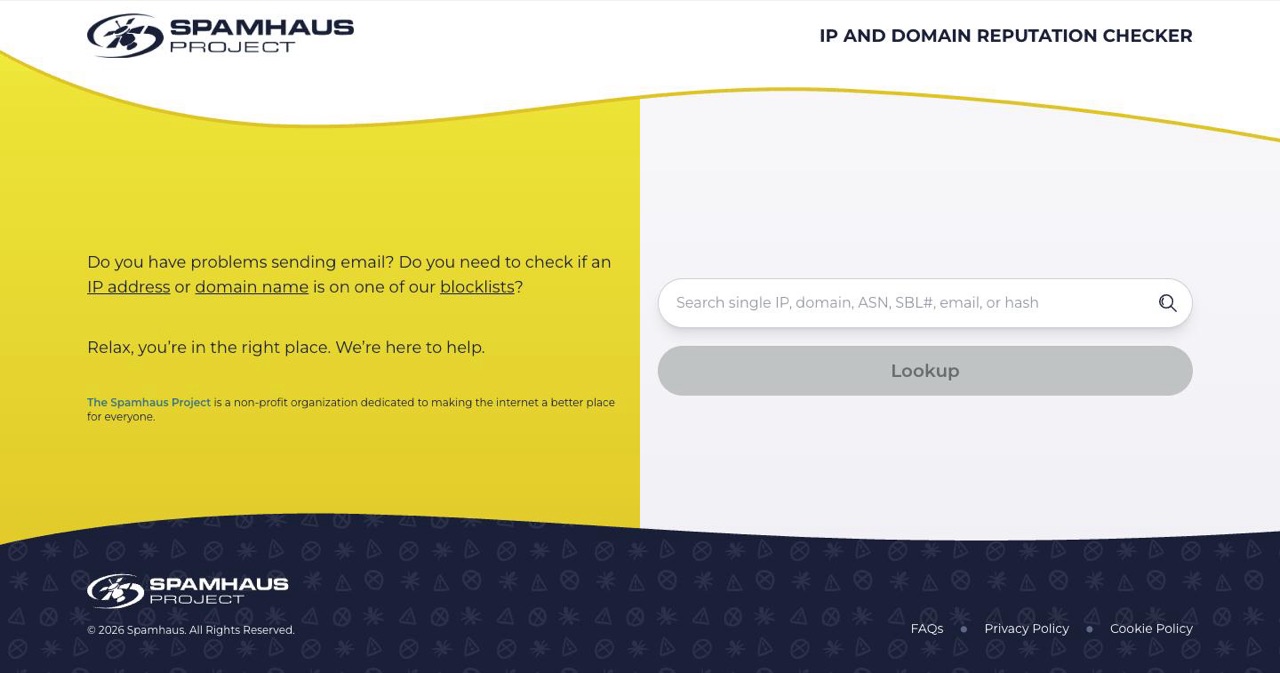
Spamhaus Domain Check: paste the domain or TLD and check its current reputation score. Takes 30 seconds.
-
SURBL: another reputation database, particularly strong for email-related abuse signals.
-
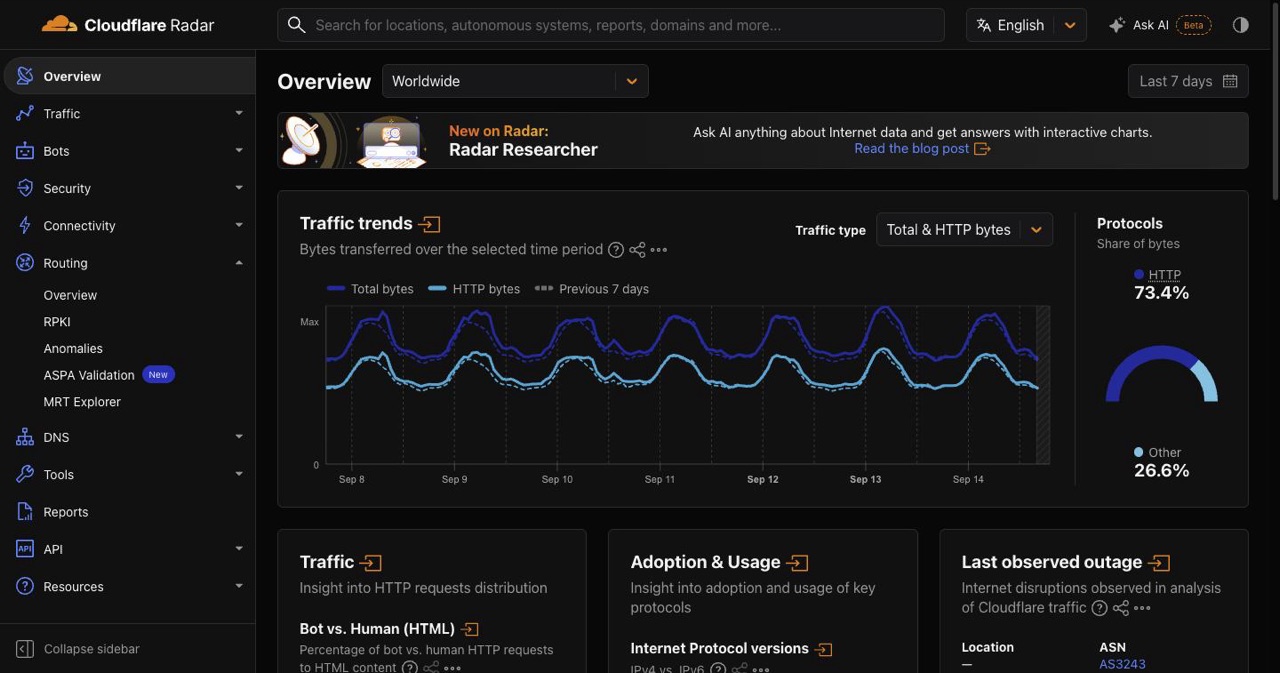
Cloudflare Radar: shows historical traffic and any anomalies for a given domain or TLD.
-
Google it. Seriously. If searching
"yourapp.top"returns forum posts about phishing, you've got bad neighbors.
Registration best practices that actually matter:
- Enable DNSSEC at the registrar level. It prevents DNS hijacking, which is disproportionately common on low-reputation TLDs.
- Turn on 2FA on your registrar account. Domain hijacking is a real attack vector.
- Set calendar reminders for renewal 60 days out. Expired domains on sketchy TLDs get scooped up within hours by bulk buyers.
- Use a reputable registrar. Namecheap, Porkbun, and Cloudflare Registrar all have reasonable anti-abuse policies and transparent pricing.
For more tips on setting up your SaaS for success, check out our full guide on SaaS directory submissions to boost your domain authority early.
The Real Cost of Saving $10 on a Domain
Here's the math that nobody talks about. A .top domain might cost $2/year versus $15 for a .com. That's a $13 difference. One failed enterprise deal because a security scanner flagged your domain costs you thousands. One month of email campaigns going to spam while you troubleshoot what's wrong costs you time you don't have.
Spamhaus put it plainly: these registries often base their business model on selling cheap domains at volume, and the abuse damages legitimate users caught in the same TLD. You're not just paying $2 for a domain. You're buying into an ecosystem that actively works against you.
The indie hacker and bootstrapper communities have a bad habit of optimizing for the wrong costs. Your domain is your address on the internet. Spend the $15.
FAQs
Is .io safe for SaaS in 2026?
Yes, for now. .io has a good reputation in the tech community and minimal abuse compared to cheap gTLDs. The main risk is existential: the British Indian Ocean Territory dispute occasionally raises questions about the long-term future of the extension. For a short-to-medium term product, it's fine.
Why is .top so bad for SEO specifically? Google doesn't publicly blacklist TLDs, but sites on heavily-abused extensions face lower quality scores by association, more frequent manual reviews, and email deliverability problems that reduce engagement signals. The SEO damage is indirect but real. Read more about Domain Rating here to understand how these signals impact your search visibility.
Can I build a legitimate site on .xyz? Technically yes. In practice, you'll spend time fighting firewalls, explaining your domain to skeptical users, and wondering why your outreach emails disappear. The math rarely favors it.
Is .ai worth the price premium? If you're building an AI product: yes. The extension is immediately understood, professionally respectable in the space, and has low abuse rates because the price itself filters out bulk registration abuse.
How often do "risky" TLDs change? Faster than you'd think. Interisle's research shows criminals migrate between TLDs as abuse on one extension gets mitigated. What was safe in 2023 may be a phishing hotspot by 2025. Check Spamhaus and Interisle quarterly if this matters to you.
What if I already have a domain on a risky TLD?
Start planning a migration. It doesn't have to happen tomorrow, but it should be on your roadmap. Set up a .com in parallel, run redirects, and update your email sending domain first, since that's usually where you'll feel the pain most immediately.
Your domain is the first trust signal anyone sees. Make it a signal that works for you.
Sources: Interisle Phishing Landscape 2025, Spamhaus Domain Reputation Update Oct 2024–Mar 2025, Interisle Phishing Trends Nov 2025–Jan 2026, APWG.
Get your SaaS in front of founders
List your product on the SaaSCity live city map - a permanent listing, real discovery, and a backlink from a high-DR directory. Free to start; upgrade for a dofollow link and a building on the map.