News
Apple Just Handed Google the Keys to Your iPhone — Here's What WWDC 2026 Actually Means for SaaS Builders
Apple signed a deal with Google to make Gemini the AI backbone of iOS, macOS, and the entire Apple Intelligence stack. Let that sit for a second.

Contents (6)
Quick answer: At WWDC 2026 Apple confirmed that Google Gemini is now the primary cloud model inside Apple Intelligence across iOS and macOS, sitting above on-device Apple Silicon models and Private Cloud Compute in a three-layer architecture. Gemini 1.5 Pro's one-million-token context window is the capability Apple wanted, enabling Siri to hold long cross-app conversations. OpenAI's GPT models stay available as a user-selectable alternative, which keeps Apple from depending on a single AI partner.
Key Takeaways
- Gemini is structural, not opt-in: it replaces the ChatGPT-style feature bolt-on introduced in iOS 18 with a default cloud layer.
- Three layers, in order: on-device Neural Engine models, then Private Cloud Compute, then third-party frontier models with user consent.
- Context length decided it: one million tokens let Siri read a 700-page PDF or an entire email history in one session.
- Reach is the story: the change touches over two billion active Apple devices.
- PCC is auditable: Apple Silicon servers, Apple-controlled software, and cryptographic attestation researchers can verify.
- App Intents became the forcing function: existing implementations are now Gemini-augmented for multi-step Siri actions.
- Split your AI calls: route commodity features through Apple Intelligence, keep core product intelligence on your own API calls.
- OpenAI stays as insurance: keeping a named alternative preserves Apple's negotiating leverage with Google.
Apple signed a deal with Google to make Gemini the AI backbone of iOS, macOS, and the entire Apple Intelligence stack. Let that sit for a second.
At WWDC 2026, Apple didn't just announce a product update. It revealed a fundamental shift in how Apple Intelligence works under the hood — one that puts Google Gemini at the center of experiences used by over two billion active Apple devices worldwide. For founders building on AI-native SaaS products, this isn't background noise. It's a structural change to the platform you're probably shipping on.
What Actually Happened at WWDC 2026
Apple's WWDC 2026 keynote confirmed what had been rumored since early 2025: Apple and Google have extended and deepened their AI partnership far beyond the existing ChatGPT integration introduced in iOS 18.
The short version: Apple Intelligence now uses Google Gemini as its primary cloud AI model for tasks that go beyond what Apple's on-device models can handle. This sits alongside a continued relationship with OpenAI, but Gemini takes precedence in the new architecture — particularly for reasoning-heavy tasks, multimodal queries, and Siri's expanded natural language capabilities.
According to MacRumors' reporting on the architecture announcement, Apple is routing requests through what it describes as a tiered intelligence framework: on-device models handle private, latency-sensitive tasks first, and cloud models (primarily Gemini) handle the heavier lifting when needed. Apple calls this "Private Cloud Compute," but the Gemini integration represents a significant expansion of the cloud-side of that equation.
This is a real shift. Apple has historically built walls around its AI infrastructure. Partnering with Google at this level — not just as an opt-in feature like ChatGPT integration, but as a structural layer — signals that Apple decided it was better to win on experience than to win on ownership.
How the New AI Architecture Actually Works
The architecture Apple revealed breaks down into three distinct layers, and understanding all three matters if you're building anything that touches Apple's platform.
Layer 1: On-Device Models (Apple Silicon)
Apple's custom Neural Engine on M-series and A-series chips handles tasks where privacy and speed are non-negotiable: transcription, summarization of personal content, writing assistance in apps like Mail and Notes, and local image processing. These models run entirely on the device. No data leaves. Apple has been transparent that this layer is the foundation of their privacy promise.
Layer 2: Private Cloud Compute
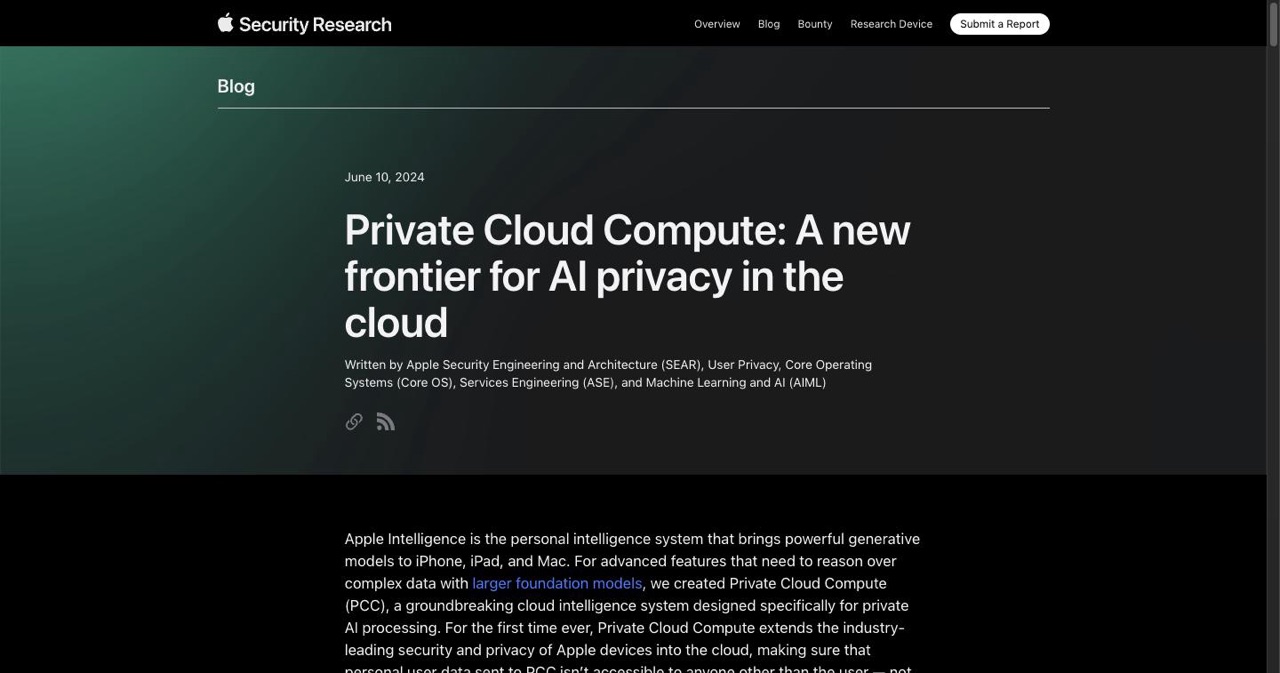
When the on-device model can't handle a request — either because it's too complex or requires real-time information — the request moves to Apple's Private Cloud Compute infrastructure. Apple has published technical documentation on PCC showing that these servers use Apple Silicon, run Apple-controlled software, and are designed so that Apple itself cannot read user requests. Independent security researchers can verify this through cryptographic attestation.
Layer 3: Third-Party Cloud Models (Gemini + OpenAI)
For tasks that need frontier-model capability — nuanced reasoning, real-time web queries, complex coding assistance, multimodal understanding — requests can route to external models. Users get a prompt asking for consent before any data leaves Apple's own infrastructure. Gemini is now the primary model in this layer, with OpenAI's GPT models remaining available as an alternative.
The Google partnership reportedly gives Apple preferential access to Gemini's latest model variants, including Gemini 1.5 Pro's long-context capabilities — up to one million token context windows — which enables Siri to hold longer, more coherent cross-app conversations than was previously possible.
Why Gemini? The Numbers Behind the Decision
This wasn't a brand deal. Apple's model selection has to hold up in front of a billion users, so let's look at what Gemini actually brings to the table.
On Google's own benchmarks, Gemini 1.5 Pro scores competitively across MMLU (Massive Multitask Language Understanding), MATH, and HumanEval coding benchmarks. In multimodal tasks — processing images, audio, and text together — Gemini has shown consistent strong performance compared to GPT-4o and Claude 3.5 Sonnet in third-party evaluations from LMSYS Chatbot Arena.
The specific advantage Apple cares about most: context length. One million tokens means Siri can theoretically hold your entire email history for a session, or read through a 700-page PDF and answer questions about it. No other frontier model offered this at comparable latency when the deal was reportedly structured.
There's also the business logic. Google already pays Apple an estimated $20 billion per year to be the default search engine on iOS. The Gemini deal expands that relationship — but critically, it also gives Apple leverage. Having two frontier AI partners (Google and OpenAI) means Apple isn't locked into either one's roadmap.
The skeptic's question here is obvious: doesn't this create a massive privacy problem? Apple's answer is the consent layer — users explicitly choose to send requests to external models — plus the PCC architecture ensuring even the first cloud hop is protected. Whether that's sufficient is a legitimate debate, but Apple has put its security team's credibility behind the PCC claims, and independent security researchers have been given tooling to audit it.
What This Architecture Means for SaaS Builders Right Now
Here's where it gets interesting for anyone shipping a SaaS product.
1. The Siri surface area just got a lot bigger
Siri has historically been a dead end for third-party developers. With Gemini powering more capable reasoning and Apple's expanded App Intents framework, Siri can now take multi-step actions inside your app without requiring explicit trigger phrases. If your SaaS has an iOS app, your App Intents implementations are now Gemini-augmented by default. That means richer natural language parsing of user requests into your app's action space.
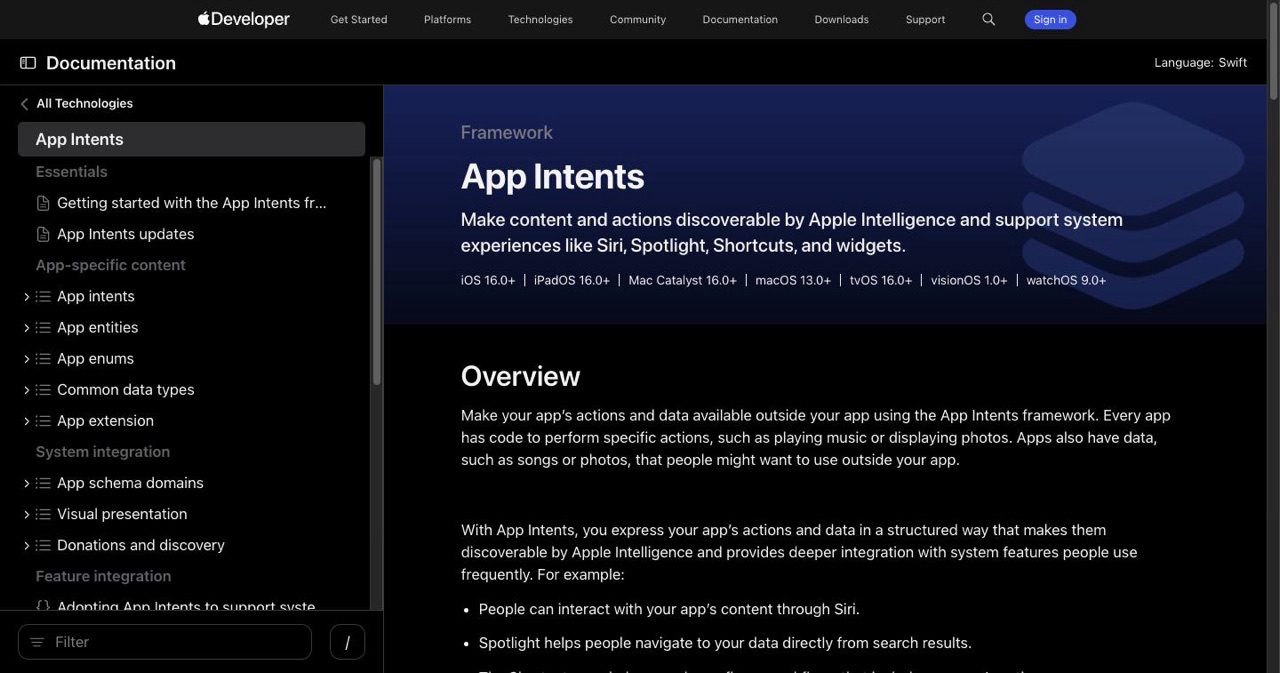
If you haven't invested in App Intents yet, this is the forcing function. Start with Apple's App Intents documentation and map your core user flows.
2. On-device AI just became a real competitive moat — for Apple, and by extension, for apps that use it
The PCC architecture means Apple's on-device models can handle sensitive workflows in ways that web-based AI apps simply can't match. Think health data, legal documents, financial records. If you're building a vertical SaaS in a privacy-sensitive category — healthcare, legal tech, fintech — native Apple Intelligence integration is now a differentiator you can build an actual feature around, not just a checkbox.
3. The AI API market just got more complicated
Before WWDC 2026, the indie SaaS playbook was simple: call OpenAI, maybe experiment with Claude or Gemini directly. Now the calculus changes slightly. Apple users on newer hardware have Gemini capabilities routed through Apple's infrastructure — which means if you're building a native app, you may get better performance and user trust by delegating to Apple Intelligence for certain tasks rather than making your own direct API calls.
That said, you still own your product's AI experience if you call the APIs directly. Routing through Apple means giving up control of the model, the prompts, and the output format. For commodity AI features (summarization, autocomplete), Apple Intelligence is a fine free ride. For your core product intelligence, keep calling the API yourself.
4. Google Gemini just got a massive distribution channel
For SaaS products built on Google's Gemini API, this is quietly good news. Apple's adoption drives Google's model quality improvements and pricing competitiveness. When a vendor this large bets on your AI infrastructure, they tend to keep investing in it. Gemini 1.5 Pro and whatever follows it will be better-resourced because of this deal.
If you've been sitting on the fence between OpenAI and Gemini for your backend AI calls, this deal is a reasonable signal that Gemini's long-term support and development isn't going anywhere. The Gemini API pricing is already competitive — particularly for long-context tasks where Gemini's million-token window genuinely matters.
5. The platform tax on AI features just changed
Previously, adding AI to a native Apple app meant either calling external APIs directly (handling your own keys, costs, and privacy compliance) or using Apple's limited on-device CoreML options. Now there's a middle path: route through Apple Intelligence for tasks where Gemini's capabilities matter and where you're okay with Apple's consent UX handling the user communication.
This is particularly relevant for indie SaaS builders shipping solo or small-team iOS apps. You can get frontier AI capabilities in your app without managing API costs for those specific features, as long as you're comfortable with the experience sitting inside Apple's UX patterns.
The Part Nobody Is Talking About
Apple kept OpenAI in the architecture. Gemini is primary, but OpenAI is still available as a user-selectable option. This isn't an accident.
Apple doesn't want any single AI company to have leverage over their platform. The moment Gemini is the only external model, Google can negotiate harder on the next deal. Keeping OpenAI as a named alternative — even if it gets less traffic — is an insurance policy.
For SaaS founders, this dynamic is worth watching. Apple is building an AI platform where they control the routing, the consent layer, the UX, and ultimately which model gets commoditized. That's a long game play to become the AI operating system for mobile, where the model underneath is increasingly invisible to users.
The companies that win in this environment are the ones building product value on top of the platform abstraction, not underneath it. If your SaaS moat is "we use GPT-4," that moat is already filling with water. If your moat is the workflow, the data model, the integration layer, or the domain expertise baked into your prompting — you're in better shape than you think.
The real question WWDC 2026 poses to every founder in this space isn't "which model should I use?" It's whether you're building a product or a wrapper. Apple just made it a lot easier to tell the difference.
SaaSCity.io covers AI tools, platforms, and infrastructure decisions for SaaS builders. Explore the SaaSCity directory to find AI-native tools mapped across the ecosystem.
Get your SaaS in front of founders
List your product on the SaaSCity live city map - a permanent listing, real discovery, and a backlink from a high-DR directory. Free to start; upgrade for a dofollow link and a building on the map.