News
Kimi K3 vs Qwen3.8-Max: China Shipped Two Trillion-Parameter Open Models in One Week
Moonshot's Kimi K3 (2.8T) and Alibaba's Qwen3.8-Max (2.4T) landed three days apart, both aimed at Claude Fable 5 and GPT-5.6 Sol. Here's what actually shipped, what's real versus vendor spin, and how the price-per-task math changed again.

Contents (8)
Quick answer: Kimi K3 and Qwen3.8-Max are two trillion-parameter open-weight models that Chinese labs shipped three days apart in July 2026. Moonshot AI released Kimi K3 on July 16 at 2.8 trillion sparse MoE parameters, a 1M-token context, and $3/$15 per million tokens, with weights due July 27. Alibaba previewed Qwen3.8-Max on July 19 at 2.4 trillion parameters and 10% preview pricing, but published no benchmarks, license, or weights date.
Key Takeaways
- Kimi K3 scale: 2.8 trillion total parameters in a Stable LatentMoE architecture that activates 16 of 896 experts per token.
- Qwen3.8-Max is unproven: Alibaba published no benchmark table, model card, license, or active-parameter count at preview.
- Cost per task, not per token: Artificial Analysis clocked K3 around $0.94 per task, undercutting GPT-5.6 Sol and Claude Opus 4.8 despite the $3/$15 list price.
- Coding is K3's strength: It moved from #18 to #1 on the Frontend Code Arena with a 76% pairwise win rate and won six of seven frontend categories.
- DeepSeek V4 sets the floor: 1.6T params, 49B active, $0.435/$0.87 per million tokens, 80.6% on SWE-bench Verified, MIT-licensed weights.
- Serving was rough at launch: Field reports put K3 at 26 to 28 tokens per second versus roughly 62 t/s in clean testing.
- Read the benchmarks carefully: Moonshot mixed agent harnesses across models, and K3 hallucinates more than top closed models on some evals.
Two Chinese labs just released models bigger than anything a Western company has ever open-sourced. They did it three days apart. And the second one landed while the first was still trending.
That's the week. On July 16, Moonshot AI dropped Kimi K3 — 2.8 trillion parameters, the largest open-weight model ever shipped. Three days later, on July 19, Alibaba previewed Qwen3.8-Max at 2.4 trillion. Both were timed to the World AI Conference in Shanghai, both are aimed squarely at Claude Fable 5 and GPT-5.6 Sol, and both triggered a semiconductor stock wobble. Developer group chats did not recover.
If you build with LLMs, this matters for a boring, practical reason: the price-per-task math changed again. Here's what actually shipped, what's real versus vendor spin, and what to do about it.
Kimi K3: the first open 3T-class model
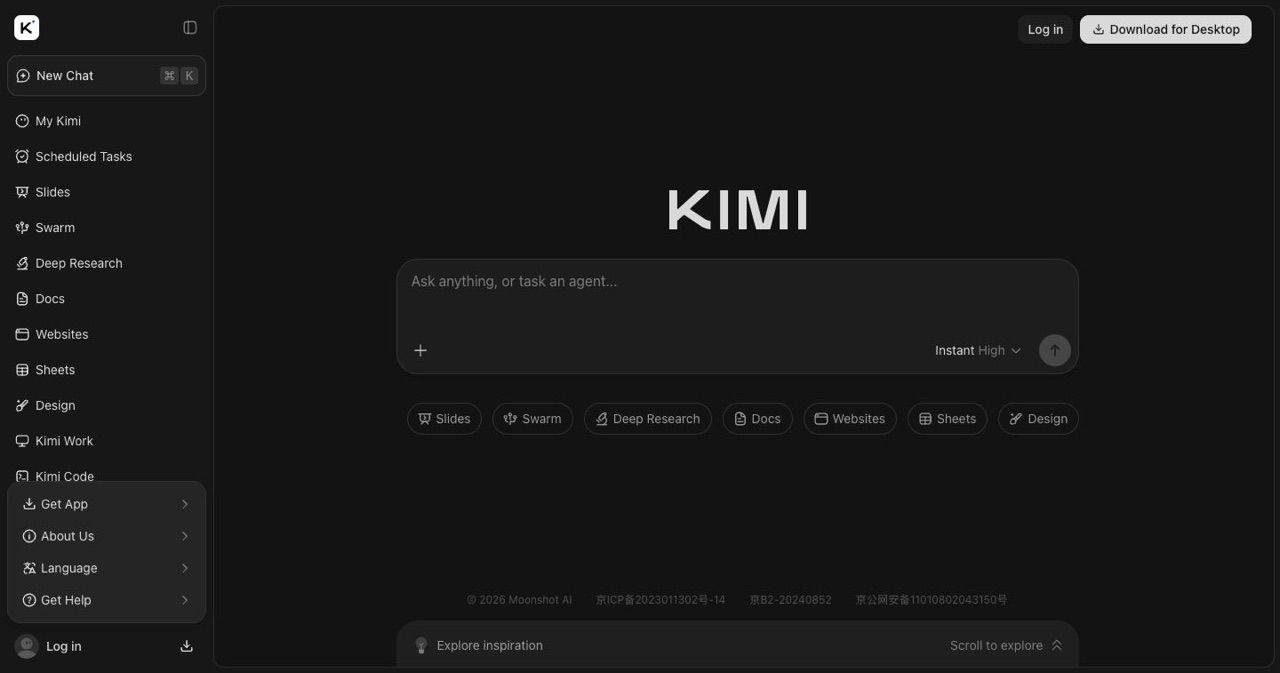
Moonshot calls K3 "open frontier intelligence," which reads like marketing until you look at the spec sheet. 2.8 trillion total parameters. A 1-million-token context window. Native vision — it reads images and video, not just text. Reasoning is always on; Moonshot calls it "thinking mode," and at launch there's exactly one setting: max.
The size number needs an asterisk, and it's a good one. K3 is a sparse mixture-of-experts model. Its architecture, Stable LatentMoE, activates just 16 of 896 experts on any given token, so you're never running all 2.8T at once. That's how a model this big stays affordable to serve. Moonshot hasn't published the active-parameter count, which is its own small tell.
Under the hood are two homegrown tricks: Kimi Delta Attention and Attention Residuals. Both were published as open research before launch, and both are pitched as efficiency wins — Moonshot claims K3 burns 21% fewer output tokens than its predecessor on the same work. It shipped in two flavors, K3 Max for chat and agent tasks and K3 Swarm Max for large-scale parallel jobs. (If K3's efficiency story sounds familiar, it's the same reasoning-token discipline that made Kimi K2.7-Code land so well earlier this summer.)
This is a real comeback story, too. Moonshot's market position had slipped over the past year and a half as DeepSeek ate the headlines. The company raised $2 billion at a $20 billion valuation in May, is reportedly in talks for a round near $30 billion, and is backed by Alibaba, Tencent, and Meituan. K3 is the flex.
The weights land July 27. Until then you can hit it through the Kimi app, Kimi Code, kimi.com, the API, or OpenRouter. Pricing is $3 per million input tokens and $15 per million output — the steepest any Chinese lab has charged, and Moonshot knows it. The pitch is cost per finished task, not per token: because K3 uses fewer tokens to reach an answer, Artificial Analysis clocked its cost-per-task around $0.94, undercutting both GPT-5.6 Sol and Claude Opus 4.8.
One catch before you get excited: on launch day the free servers were so jammed that tasks kept dying mid-run. Early throughput was rough too — field reports around 26–28 tokens per second, well under the ~62 t/s Artificial Analysis measured in a clean test. Big model, real demand, serving stack still warming up.
Qwen3.8-Max: Alibaba's answer, three days later
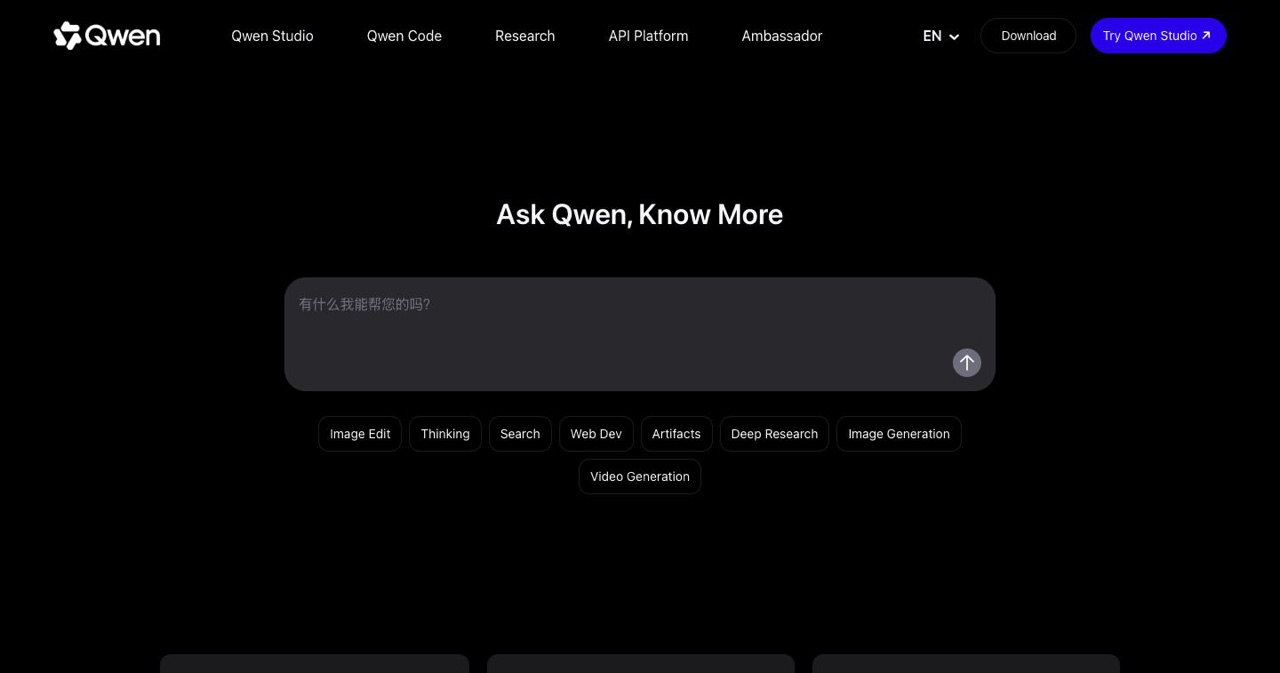
Alibaba clearly wasn't going to let Moonshot own the week. On July 19, the Qwen team previewed Qwen3.8-Max — 2.4 trillion parameters, sparse MoE, and the team's first multimodal model above a trillion params, handling text, images, video, and documents in one place.
The headline claim is bold: one of the most powerful models available today, "second only to Fable 5." That would place it above every OpenAI and Google model in Alibaba's own testing.
Here's the trust-shaped hole, and it's a big one: there's no proof yet. No benchmark table. No model card. No license. No active-parameter count. Every performance line so far is Alibaba's internal eval, not Artificial Analysis or LMArena. And "open-weight" is a promise — the weights aren't out, and Alibaba gave no date, only "soon." That would break the company's habit of keeping its Max-tier models closed, so watch whether it actually happens.
What you can do today is pay to try it. Qwen3.8-Max-Preview is live on Alibaba's Token Plan, Qoder, and QoderWork at 10% of standard pricing during the preview, with credit tiers running from about $6 (Lite) to $68 (Pro, which supports six to eight agents running at once). It speaks both OpenAI and Anthropic API formats, so pointing an existing coding agent at it is a config change, not a rebuild. Alibaba says it beats the prior Qwen3.7-Max on coding, full-stack builds, data analysis, and office work — the agentic stuff people actually ship.
Read the timing for what it is. Two trillion-parameter drops in one week from two labs isn't a coincidence. It's a cadence.
The quick comparison
| Kimi K3 | Qwen3.8-Max-Preview | DeepSeek V4 Pro | |
|---|---|---|---|
| Lab | Moonshot AI | Alibaba | DeepSeek |
| Released | Jul 16, 2026 | Jul 19, 2026 (preview) | Apr 24, 2026 |
| Parameters | 2.8T (sparse MoE) | 2.4T (sparse MoE) | 1.6T / 49B active |
| Context | 1M tokens | 1M tokens | 1M tokens |
| Multimodal | text, image, video | text, image, video, docs | text |
| Open weights | Jul 27, 2026 | "soon," no date | Yes (MIT) |
| Price (in / out per 1M) | $3 / $15 | 10% preview pricing | $0.435 / $0.87 |
| Independent bench | AA Index ~57, #4 | none yet | SWE-bench 80.6% |
Kimi edges Qwen on raw scale and, more importantly, on evidence — it has independent numbers, Qwen doesn't yet. Qwen's counter is access and speed of iteration: a live, purchasable preview at a tenth of the price while it "continuously evolves." Both are betting on the same thing. Open weights plus frontier-adjacent quality plus a fraction of the cost.
Building an AI SaaS on These Models? Get Found on SaaSCity
If you're wiring Kimi K3, Qwen3.8-Max, or DeepSeek V4 into a coding agent, developer tool, or AI SaaS, the model is the easy part — distribution is the hard part.
SaaSCity.io is the SaaS directory built for the next generation of software. List your product and it gets a permanent page, and on a paid plan it's visualized as a building in our interactive 3D digital city.
- 📈 Increase Domain Rating: Earn valuable dofollow backlinks that actually move your SEO.
- 🚀 Find Early Adopters: Reach founders, developers, and tech buyers directly.
- 🆓 100% Free to List: Submit your app in under 2 minutes.
Submit your project today and start growing your user base.
DeepSeek, GLM, and the wave behind them
Kimi and Qwen grabbed the week, but they're riding a bigger current. DeepSeek V4 — released back in April, not this month — is still the price-performance yardstick everyone measures against. Its Pro model runs 1.6 trillion params with 49B active and lists at $0.435/$0.87 per million tokens in and out, roughly 28× cheaper on output than Claude Opus 4.8. It scores 80.6% on SWE-bench Verified, the top open-weights result, tied with Gemini 3.1 Pro. Weights are MIT-licensed. That's the floor Kimi's $3/$15 pricing has to justify.
Zhipu's GLM 5.2 (744B) turned heads earlier this summer too, and Nvidia shipped Nemotron 3 Ultra in June. The through-line: China isn't chasing one hero model. There's a stack of labs — Moonshot, Alibaba, DeepSeek, Zhipu — shipping open or open-ish frontier models on a near-weekly beat, with GLM 5.x and a full Qwen 3.8 rumored for the weeks ahead.
The benchmarks, read honestly
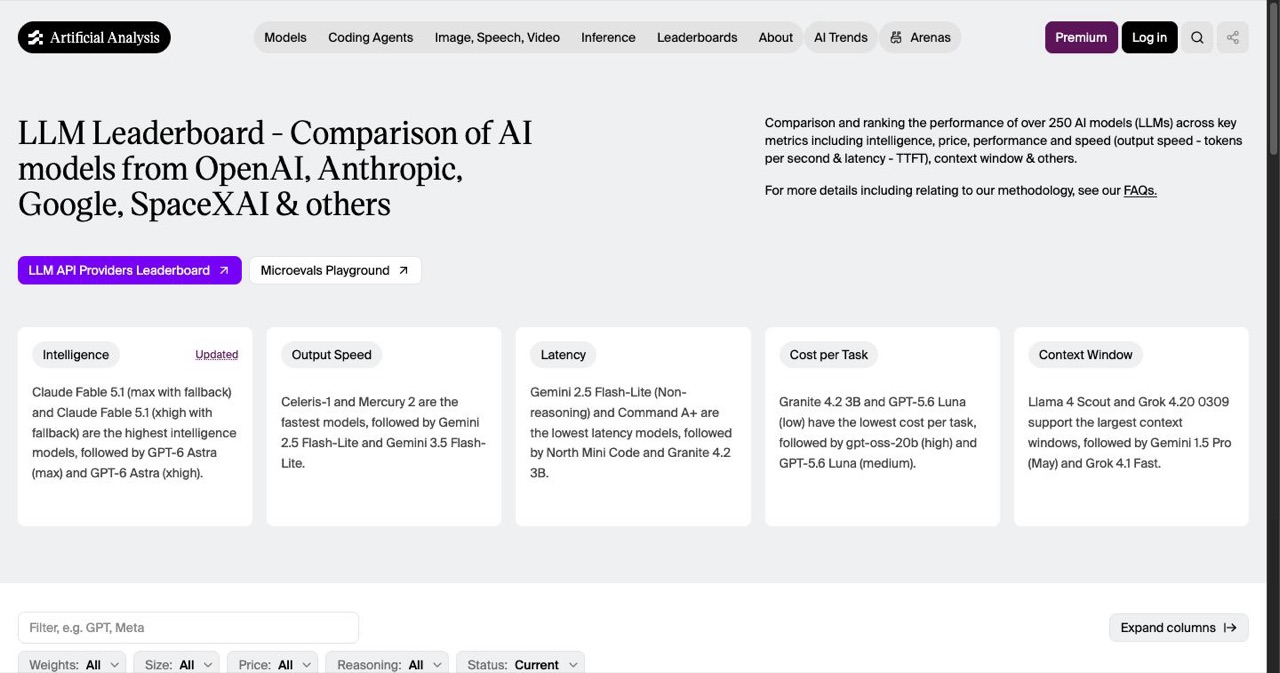
This is where you separate the hype from the receipts. Kimi K3's independent numbers are genuinely strong, and also more mixed than the headlines suggest.
On the Artificial Analysis Intelligence Index — a composite of nine evals scored 0 to 100 — K3 landed at about 57. That's fourth overall, behind Claude Fable 5 (~60), GPT-5.6 Sol (~59), and just ahead of Claude Opus 4.8 (~56). Fourth among roughly 189 models is a real result. It's also still fourth.
Coding is where K3 actually wins. It jumped from #18 to #1 on the Frontend Code Arena — a human-preference arena, not a static test — with a 76% pairwise win rate versus 63% for Fable 5, taking first in six of seven frontend categories. It topped the Design Arena, posted a 93.5% GPQA Diamond score (the best any open-weight model has managed), climbed to second on Artificial Analysis's private AA-Briefcase agentic test, and hit a state-of-the-art 91.2 on BrowseComp for long-horizon research.
Now the caveats, because trustworthy coverage includes them. Moonshot's own benchmark table mixes different agent harnesses — Kimi Code for K3, various setups for competitors — which makes apples-to-apples hard. ProgramBench's author pointed out that K3's headline coding metric averages implementation percentage rather than counting fully working programs, which flatters the number. K3 hallucinates more than the top closed models on some tests. And its general-purpose chat quality trails its coding scores by a wide margin.
For Qwen3.8-Max, there's simply nothing independent to report yet. "Second only to Fable 5" is a claim, not a measurement. Wait for the third-party numbers before you quote it in a deck.
What this actually means if you build things
Strip away the arms-race framing and here's the practical read.
Open weights are the real story. When K3's weights drop on July 27 — and if Qwen's follow — you can self-host, fine-tune, and build custom agents without renting someone's cloud or accepting their defaults. For cost-sensitive teams, that's the whole game.
Cost pressure is now permanent. DeepSeek at pennies, Kimi at frontier-adjacent quality for under a dollar a task, Qwen at 10% preview pricing — closed-model pricing has to answer for that. Your build-versus-buy spreadsheet looks different this week than it did last week, and if you're running agents at scale it's worth pairing these models with the token-discipline tactics in our guides on the best AI agent coding token plans and cutting LLM token costs 60–95%.
But the biggest model on the leaderboard is not the best tool for your job. K3 is a monster at frontend and a mixed bag on throughput and factual reliability. Qwen is unproven. DeepSeek is cheap and solid but not top-tier on raw intelligence. Match the model to the task, run your own eval on your own prompts, and don't let a parameter count do your thinking for you.
So here's the move: try Kimi K3 through the app or OpenRouter now, and mark July 27 for the weights. Kick the tires on Qwen3.8-Max's preview if agentic coding is your thing, but hold your verdict until real benchmarks land. Keep a DeepSeek V4 key around as your cheap baseline.
The gap between open and closed didn't close this week. It got narrower, louder, and a lot cheaper — and the next drop is probably already in training.
SaaSCity.io covers AI models, developer tools, and startup ecosystems. List your startup on the SaaSCity directory to get found and gain high-quality dofollow backlinks.
Get your SaaS in front of founders
List your product on the SaaSCity live city map - a permanent listing, real discovery, and a backlink from a high-DR directory. Free to start; upgrade for a dofollow link and a building on the map.
Founder resources
Related articles
Kimi-K2.7-Code Drops: Moonshot AI's Strongest Open-Source Coding Model Yet (+21.8% on Kimi Code Bench v2)
Zod's Malware Commit Never Reached npm: Inside the 2026 Supply-Chain Attack That Lingered in Git History