Build with AI
Best AI Agent Coding Token Plans in 2026: $1 vs $200 Compared
Developers are averaging $150/month on AI coding tools in 2026. Many are getting worse results than the guy paying $11. Here's the full breakdown of what's actually worth your money.


Contents (9)
Quick answer: The best AI coding token plan in 2026 depends on workload, not price. Claude Code Pro at $20/month leads on reasoning with 87.6% on SWE-bench Verified and a 1-million-token context window. OpenCode Go at $10/month buys 12 open-weight models across 75+ providers. CommandCode Go costs $1/month with $10 in credits and learns your style through its taste-1 architecture. Cursor Pro and GitHub Copilot Pro cover IDE work at $20 and $10.
Developers are averaging $150/month on AI coding tools in 2026. Many are getting worse results than the guy paying $11.
That's not a hot take. It's what happens when a market explodes without slowing down to ask whether expensive means effective. Claude Code hit 87.6% on SWE-bench Verified in April. OpenCode crossed 167,000 GitHub stars in three months. CommandCode just raised $5M to build a coding agent that actually learns your preferences. GitHub Copilot flipped to usage-based billing and quietly started capping heavy users.
If you haven't audited your stack since early 2025, you're likely paying for headroom you don't need, or missing tools that would save you hours weekly.
Here's everything that matters, as of June 2026.
Key Takeaways
- Price ceiling: $200/month is where the top tier settled across Claude Code Max 20x, Cursor Ultra, and ChatGPT Pro.
- Reasoning leader: Claude Opus 4.7, released April 16, 2026, scores 87.6% on SWE-bench Verified and 64.3% on SWE-bench Pro.
- Cheapest paid entry: CommandCode Go is $1/month with $10 in credits, and CommandCode raised $5M led by Preston-Werner Ventures.
- Open-model option: OpenCode Go runs $5 the first month then $10/month for 12 open-weight models, with limits around $12 per 5-hour window and $60/month.
- Copilot billing shift: GitHub Copilot moved to usage-based credits on June 1, 2026, where completions stay free but chat and agent actions burn credits.
- Real Cursor cost: Cursor's own docs put daily agent users at $60 to $100/month, not the $20 headline price.
- Hybrid stacks win: The $35 stack of Claude Code Pro, CommandCode Go, and OpenCode Go covers about 95% of developer workflows.
The AI Agent Coding Market, Fast Version
84% of developers now use or plan to use AI coding tools (Stack Overflow, 2025). Daily-user rate hit 51%. And yet only 29% of developers trust AI output without manual review.
That gap matters. The best coding plans aren't the ones that generate the most code. They're the ones that generate the right code with the least cleanup.
The market has fractured cleanly into three categories:
- Terminal agents: Claude Code, OpenCode, CommandCode, Codex
- IDE-native tools: Cursor, Windsurf
- Enterprise plugins: GitHub Copilot
They don't compete directly. Picking the wrong category costs more time than picking the wrong model does.
Three things reshaped the pricing landscape in early 2026: the $200/month ceiling solidified across Claude Code Max, Cursor Ultra, and ChatGPT Pro; usage-based billing spread (GitHub Copilot went fully credit-based on June 1); and Chinese open-weight models (DeepSeek V4, Qwen 3.7, Kimi K2.6) got close enough to closed frontier models that $10/month plans became genuinely competitive.
💡 Related: Looking for where to submit your AI tools? Check our complete guide to AI tool directories to get your product listed on 25+ platforms.
The Heavy Hitters
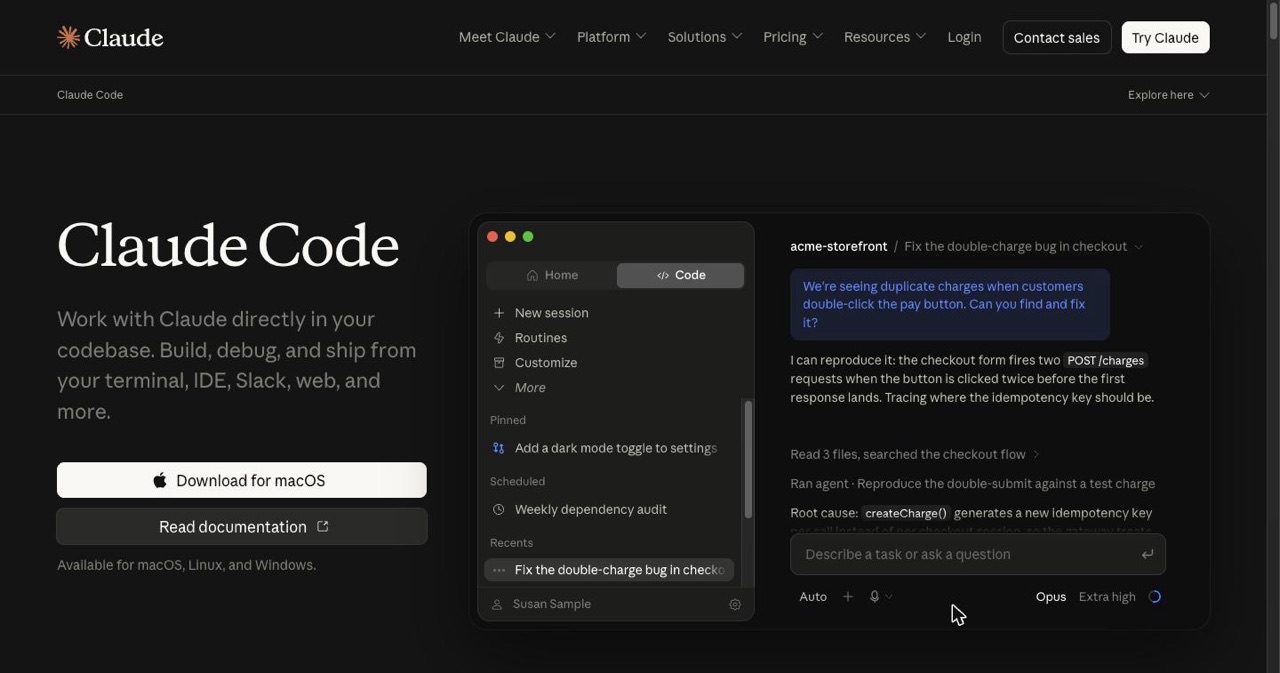
Claude Code (Anthropic): Terminal Agent With the Strongest Reasoning
Claude Opus 4.7 dropped April 16, 2026, and the benchmark jump was real. SWE-bench Verified went from 80.8% to 87.6%. SWE-bench Pro climbed from 53.4% to 64.3%. One team pointed it at a 14,000-line legacy ERP module, asked it to extract a billing service, and it read the entire file, planned the refactor, and executed without losing context.
The 1-million-token context window is the single biggest practical differentiator when working on real production codebases.
Pricing (June 2026):
| Plan | Monthly Cost | Usage |
|---|---|---|
| Pro | $20 ($17 annual) | Claude Code included, usage windows apply |
| Max 5x | $100 | 5× Pro usage |
| Max 20x | $200 | 20× Pro usage |
| Teams/Enterprise | $150+/user | Custom |
The catch: heavy autonomous use will still hit limits on Pro. For devs running Claude Code all day, Max isn't optional. It's the cost of doing business. Anthropic also split programmatic credit usage separately for agents as of June 2026, which affects how limits count in agentic workflows.
Best for: Large repos, production-level refactoring, anyone who needs the strongest available reasoning in the terminal.
💡 Related: Building an AI SaaS? Our guide to building AI SaaS in 2026 covers the full technical stack.
Cursor: The IDE You'd Actually Build In
Cursor is a VS Code fork that added Composer (multi-file editing), agent mode, and native support for Claude, GPT, and Gemini in one interface. It doesn't top Claude on raw reasoning, but it has the best editing experience: real-time diffs, line-by-line acceptance, and all of it inside a familiar environment.
Pricing (updated June 2026):
| Plan | Monthly Cost | Notes |
|---|---|---|
| Hobby | Free | Limited |
| Pro | $20 ($16 annual) | Sweet spot for most devs |
| Pro+ | $60 | 3× usage |
| Ultra | $200 | 20× usage |
| Teams Standard | $40/user | — |
| Teams Premium | $120/user | 5× usage |
Per Cursor's own docs, daily agent users typically land at $60–$100/month in real usage, not the $20 headline price. Budget accordingly.
Best for: Everyday shipping, UI work, developers who want inline completions and agent mode inside one editor. Less useful for deeply complex autonomous tasks that Claude Code handles better.
GitHub Copilot: The Enterprise Default That Just Got Complicated
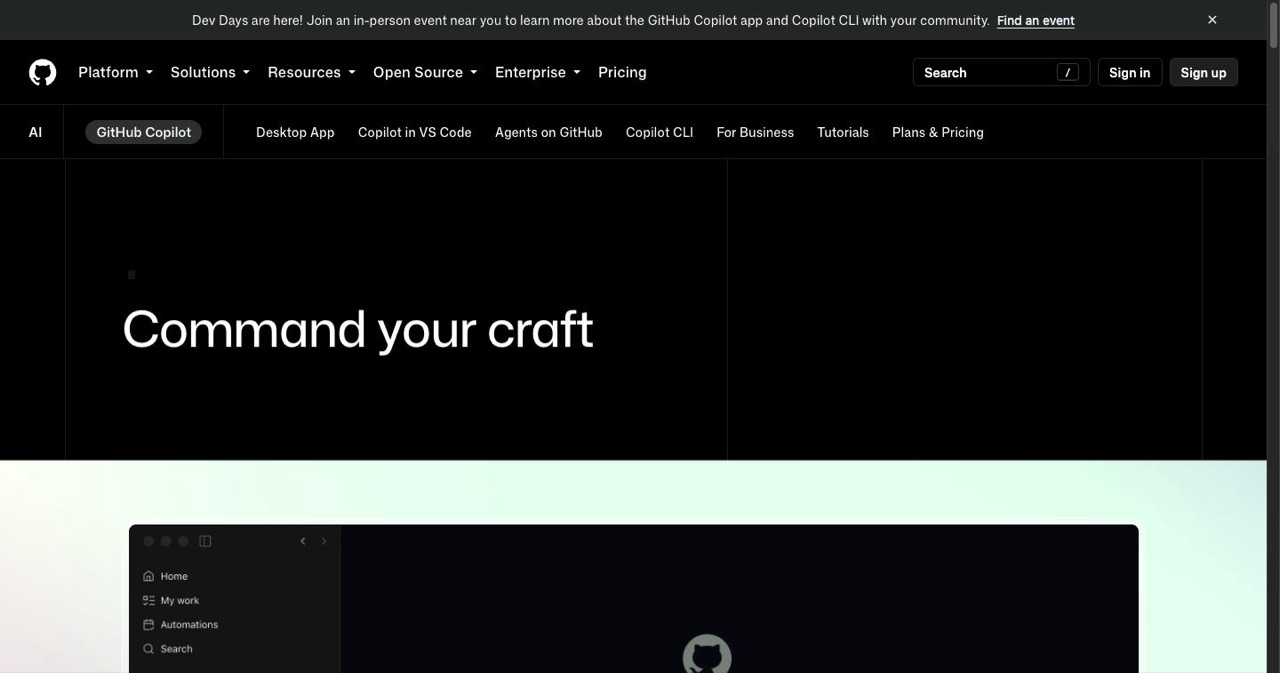
With 4.7 million paid subscribers, Copilot is the most widely deployed AI coding tool in the world. It works everywhere GitHub works, and it has IP indemnity, which is why Fortune 500 legal teams approve it.
The June 1, 2026 switch to usage-based credits has frustrated some heavy users. Code completions and Next Edit suggestions don't consume credits, but chat and agent actions do.
Pricing:
| Plan | Cost | Credits |
|---|---|---|
| Free | $0 | Limited |
| Pro | $10/mo | $10 credits |
| Pro+ | $39/mo | $39 credits, Claude Opus 4.7 access |
| Business | $19/user/mo | — |
| Enterprise | $39/user/mo | — |
Best for: Teams already in the GitHub–Microsoft ecosystem, enterprise compliance requirements, developers who need autocomplete everywhere without managing separate agents. Not the pick for power users chasing deep autonomous capability. The credit model punishes that.
💡 Related: Submitting your SaaS tool? Check our SaaS directory submission guide for the full list of directories.
The Budget Gems Most Devs Are Sleeping On
OpenCode Go: Open-Source Agent, $10/Month
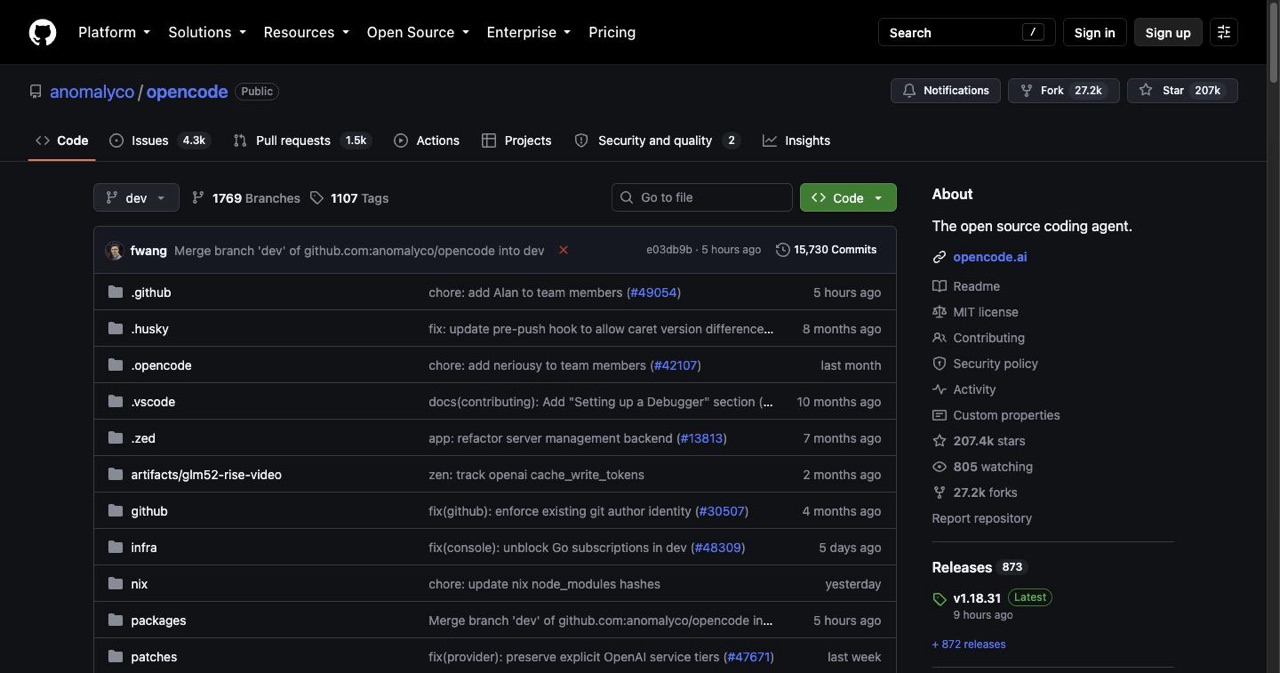
OpenCode hit 167,000 GitHub stars roughly three months after launching. It's MIT-licensed, terminal-native, and connects to 75+ LLM providers, local Ollama models included. The "Show HN" post hit #1 on Hacker News within hours, and the reason was obvious: two proprietary agents (Claude Code and Codex) were racing each other, and developers wanted an open-source answer.
OpenCode Go ($5 first month, then $10/month) is a hosted subscription that gives you access to 12 open-weight models through one API key, with no juggling separate provider accounts. The API is OpenAI-compatible, so you can plug it into Hermes Agent, Pi Agent, or anything that speaks to an LLM API. You don't even need to use OpenCode itself.
The model list leans on Chinese open-weight models: DeepSeek V4 Pro/Flash, Qwen 3.7, GLM-5.1, Kimi K2.6, MiniMax M3. No Claude, no GPT. Usage limits run at roughly $12 per 5-hour window and $60/month. That is dollar-equivalent usage, not request count.
One caveat: by default, OpenCode sends prompts to Grok's free tier for session titles, even if you've configured different providers, as confirmed in the March 2026 Hacker News thread. Fix it by setting a smallModel in your config. If you're working with proprietary code, BYOK mode pointed directly at Anthropic or your own Bedrock endpoint is the right approach.
"OpenCode Go is the cheapest multi-model AI coding subscription available in 2026. I use it alongside Claude Code — Go for the routine work, Claude for the hard stuff."
— Developer review, April 2026
Best for: Budget-conscious devs, open-source advocates, anyone who wants multi-model access without committing to a $100+ plan. Works alone or as a complement to a frontier plan.
CommandCode: The Agent That Actually Learns You
This one is genuinely different from everything else in the market.
CommandCode built something called taste-1, a meta neuro-symbolic reinforcement learning architecture that updates on every accept, reject, and edit you make. Instead of starting fresh every session (the core frustration with every other agent), it encodes your preferences (naming conventions, testing patterns, bracket style, architecture decisions) into a persistent constraint system that shapes future output.
After a week of use, it stops making the same mistakes. Not because the underlying model improved. Because it learned your codebase, your standards, your decisions.
Install is three words: npm i -g command-code.
Pricing:
| Plan | Cost | Credits | Notes |
|---|---|---|---|
| Go | $1/mo | $10 credits | Entry-level, international devs |
| Pro | $15/mo | $30 credits | Analytics, BYOK |
| Max | $100/mo | 110K+ requests | Power users |
| Ultra | $200/mo | 200K+ | Maxed-out daily usage |
| Teams | $40/mo flat | Pooled | Shared across team |
CommandCode raised $5M in seed funding led by Preston-Werner Ventures. That's GitHub co-founder Tom Preston-Werner backing it. Supports Anthropic, OpenAI, Google, DeepSeek, Kimi, and more, or BYOK from any supported provider.
The /learn-taste command imports session history from Cursor or Claude Code, so your preferences don't start from zero when switching.
"Command Code is the first agent where I trust open models in production. The harness is so solid I had to double-check I was still on DeepSeek Flash. Shipped multiple CLIs and a full Redwood app for $2."
Best for: Developers tired of fixing the same "AI style" mistakes across projects, terminal users who want consistent code quality, teams wanting shared taste profiles. If you've ever thought "the output feels generic," this is the tool addressing that exact problem.
💡 Related: Launching a developer tool? Our product hunt alternatives guide covers 20+ platforms to get discovered.
Full Comparison at a Glance
| Tool | Type | Entry Price | Key Strength | Open Models? | Best For |
|---|---|---|---|---|---|
| Claude Code | Terminal agent | $20/mo | SWE-bench 87.6%, 1M context | No | Complex refactors, large repos |
| Cursor | IDE fork | $20/mo | Best IDE editing experience | Multi-model | Daily dev, UI work |
| GitHub Copilot | IDE plugin | $10/mo | Enterprise integration, autocomplete | Multi-model | Large teams, compliance |
| OpenCode Go | Terminal agent | $10/mo | 75+ providers, no lock-in | Yes | Budget, flexibility |
| CommandCode | Terminal agent | $1/mo | Taste learning, style consistency | Yes + BYOK | Style-sensitive codebases |
| Codex (OpenAI) | Terminal/CLI | ~$20/mo | Reliable reasoning, OpenAI stack | No | ChatGPT ecosystem users |
How to Actually Choose
Budget under $20/month:
Start with OpenCode free (BYOK) or CommandCode Go at $1/month plus $10 credits. Add OpenCode Go at $10/month if you want multi-model access without API key management. GitHub Copilot Pro at $10/month is still the best entry-level autocomplete if you prefer not to touch the terminal.
Budget $20–$60/month:
Claude Code Pro ($20) paired with CommandCode Go ($1) covers most workflows: Claude for complex reasoning, CommandCode for repetitive-but-style-sensitive tasks. Or Cursor Pro ($20) if you prefer staying inside an IDE. The $35 total stack outperforms what most devs pay $100+ for.
Budget $100+/month:
Claude Code Max 5x ($100) is the strongest single plan for serious agentic use. Pair it with CommandCode Pro ($15) if style consistency across a team matters. Cursor Pro+ ($60) as an IDE alternative at higher usage volumes.
For teams:
GitHub Copilot Business ($19/user) handles compliance and autocomplete at scale. Claude Code on a team plan for autonomous multi-file tasks. CommandCode Teams ($40 flat) manages style consistency across engineers sharing a codebase.
Privacy-sensitive code:
OpenCode BYOK pointed directly at Anthropic or your own Bedrock endpoint. Zero data touches third parties.
The Combo Stacks Developers Are Actually Running
The $11 Stack: CommandCode Go ($1) + OpenCode Go ($10). Open models for 90% of tasks, taste-learning for code quality. Built for indie developers, freelancers, and anyone who doesn't need frontier model strength daily.
The $35 Stack: Claude Code Pro ($20) + CommandCode Go ($1) + OpenCode Go ($10). Frontier reasoning when you need it, open models for routine work, taste-learning running in the background on everything. The sweet spot for senior devs who want coverage without overpaying.
The $60 Stack: Cursor Pro ($20) + Claude Code Pro ($20) + OpenCode Go ($10) + CommandCode Go ($1). Full coverage: IDE editing, terminal agentic power, budget multi-model access, and style learning. What most working developers on a real budget should target.
💡 Related: Building your first SaaS? Check our startup launch checklist for the 50-step plan from idea to first revenue.
What's Coming
The convergence at $200/month across Claude Code Max, Cursor Ultra, and ChatGPT Pro isn't accidental. It's where market discovery landed for power users who stop caring about per-use cost and just want headroom.
Underneath that, open models are closing the gap fast. DeepSeek V4 and Qwen 3.7 are on CommandCode's and OpenCode Go's model roster for a reason. The question isn't whether they'll match Claude on SWE-bench. It's whether the tooling, latency, and integration quality catches up. For many workflows, it already has.
The $1–$10 tier is real now. Twelve months ago, it wasn't.
The Bottom Line
No single best AI coding plan exists. There's a best plan for your workflow, codebase, and budget.
If you're paying $100+ per month and haven't tested what a $10 OpenCode Go plan can handle for routine tasks, you're likely overpaying. If you're on a $10 plan and spending hours fixing the same style problems session after session, CommandCode's taste learning would pay for itself inside a week.
Most developers running optimal setups right now are on hybrid stacks: one frontier plan for hard problems, one open-model plan for volume work. The tools got better. The pricing got more flexible.
Start with the $5 OpenCode Go trial or npm i -g command-code for free credits. You'll know within 48 hours which gap you've been missing.
And whichever plan you land on, if the thing you're building with those tokens is a SaaS, don't burn them on scaffolding. A Next.js + Supabase AI boilerplate covers auth, billing, and AI wiring, so your agent spends tokens on the product instead of the plumbing.
Ready to list your AI coding tool? Submit your SaaS to SaaSCity — free with our badge, permanent SEO-indexed page, a building on our interactive city map with any paid plan, and access to a growing community of developers and founders.
Pricing verified June 2026. AI coding tool pricing changes frequently, so confirm current rates before committing to annual plans.
Get your SaaS in front of founders
List your product on the SaaSCity live city map - a permanent listing, real discovery, and a backlink from a high-DR directory. Free to start; upgrade for a dofollow link and a building on the map.