Build with AI
Your AI Coding Agent Forgets Everything. MiMo Code Doesn't.
Xiaomi just dropped MiMo Code, an open-source terminal AI coding agent. With a dedicated background subagent to solve the cross-session context window wall problem, it is designed for long-running autonomous development.

Contents (8)
Quick answer: MiMo Code is Xiaomi's open-source, MIT-licensed terminal AI coding agent, released as V0.1.0 on June 10, 2026 and built on OpenCode. Its distinguishing feature is cross-session memory: a dedicated background subagent maintains four context layers in SQLite with FTS5 search, so project knowledge survives session restarts without consuming the main agent's token budget. Xiaomi reports 82% on SWE-bench Verified against Claude Code's 79%, though the figures are vendor-reported.
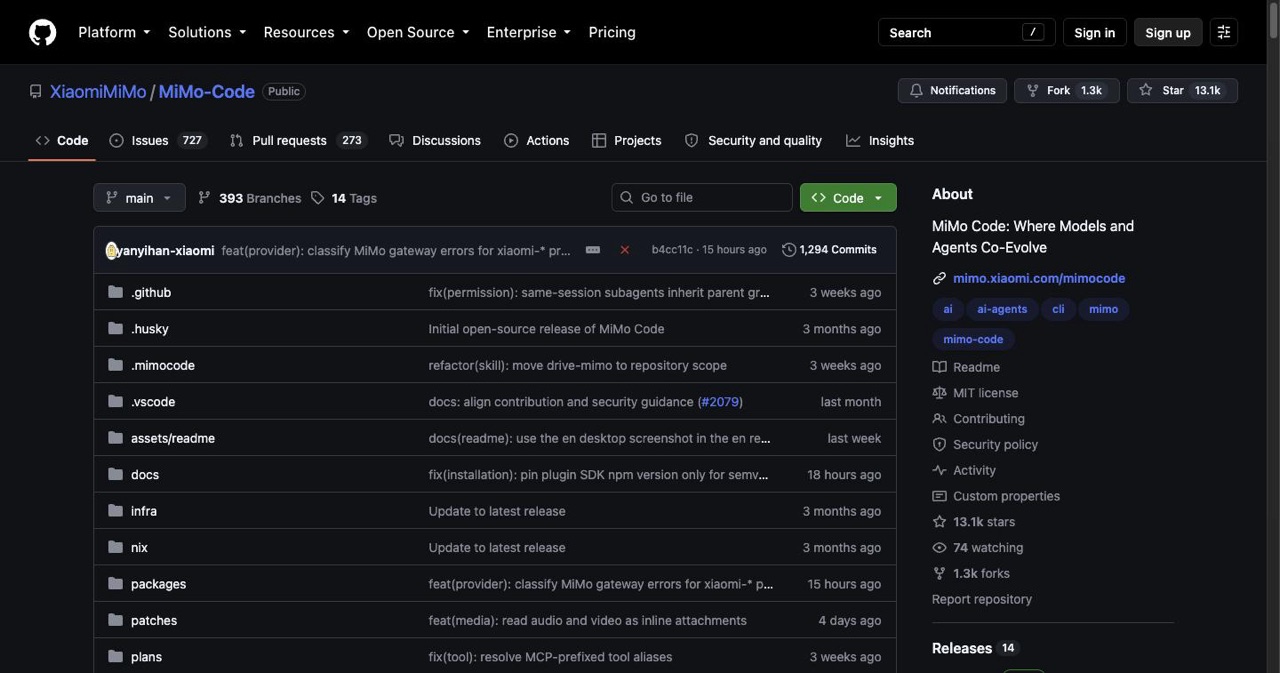
Xiaomi just dropped an open-source terminal AI coding agent, and it's already 5,600+ GitHub stars deep in under 48 hours. MiMo Code V0.1.0 shipped on June 10, 2026, landed on the Hacker News front page with 488 points, and immediately started circulating on X as "the Claude Code killer with actual memory." (If you've been tracking the agent space, you might recall our list of the wildest Claude Code projects that went viral recently). That last part is worth digging into.
Because here's the real problem that nobody in the AI coding tool space has solved cleanly: you start a complex feature Monday, spend two hours getting your AI agent up to speed on the project's quirks, and by Thursday it has completely forgotten every decision you made. You re-explain the auth flow. Again. You remind it about the legacy migration constraints. Again. It doesn't matter how smart the model is. Every session restart is amnesia by default. This is the context wall that plagues solo developers engaged in vibe coding or managing tight AI token plans.
MiMo Code was built to fix exactly that.
Key Takeaways
- Memory is the product: A background subagent condenses context independently, so the main agent never spends its token budget on bookkeeping.
- Four layers in SQLite: checkpoint.md for session state, human-editable MEMORY.md for project knowledge, global preferences, and raw history traces, with resume kept under 65K tokens.
- The harness itself adds points: Running the same MiMo-V2.5-Pro model in both, MiMo Code scored 62% on SWE-bench Pro against Claude Code's 57%.
- The gap widens on long tasks: In a beta across 576 developers and 1,213 judged pairs, MiMo Code won over 65% of tasks above 200 execution steps and roughly split below that.
- It self-improves on a schedule: /dream consolidates historical sessions roughly every seven days and /distill turns repeated workflows into reusable skills.
- Migration is built in: Claude Code skills, MCP servers and commands load automatically, and any OpenAI or Anthropic-compatible API works, including local models.
- Treat the numbers carefully: All benchmarks are vendor-reported, not on public leaderboards, and telemetry is on by default until you set MIMOCODE_ENABLE_ANALYSIS=false.
What Is MiMo Code?
MiMo Code is a terminal-native (TUI) AI coding agent from Xiaomi's MiMo AI team, released as open source under an MIT license. It's built on top of the open-source OpenCode project and supports reading and writing files, running shell commands, managing Git, and orchestrating complex multi-step development workflows directly from your terminal.
This is not just another model wrapper. It's positioned as a "self-evolving tool" focused on model-agent collaborative optimization, with a goal of breaking the limitations of traditional AI coding tools.
The big unlock on day one: it ships with "MiMo Auto," a zero-configuration channel offering free, limited-time access to MiMo-V2.5, Xiaomi's natively multimodal model with a sparse mixture-of-experts design. We've previously written about why MiMo-V2.5-Pro is the best LLM backbone for autonomous workflows, and this release further reinforces that architecture.
It also supports any other major LLM via OpenAI or Anthropic-compatible APIs: DeepSeek, Kimi, GLM, or a locally running model. And if you're already a Claude Code user, it includes direct Claude Code compatibility with automatic loading of skills, MCP servers, and commands. One-click migration.
The Part That Actually Matters: Cross-Session Memory
Most writeups about MiMo Code lead with the benchmarks. That's the wrong place to start.
The benchmark numbers only make sense once you understand why the agent performs differently from competitors on long tasks. It comes down to how memory is handled, and this is the architecture decision that separates MiMo Code from every other tool in this space.
The problem with existing agents: Existing AI coding agents lose early decisions and task status as work becomes longer and the context window fills up. MiMo Code addresses this through a dedicated background subagent.
Here's how it works in practice:
MiMo Code has a dedicated background subagent that continuously manages and stores context while you work. When the active conversation gets close to its limit, the subagent automatically condenses everything into a structured summary, allowing the main agent to continue without losing its place. Critically, this background writer doesn't compete with the main agent for token budget. It runs independently so your active agent stays focused on the actual work.
The memory system underneath uses four distinct layers, all backed by SQLite with FTS5 full-text search for fast querying:
checkpoint.md: current session state and progressMEMORY.md: persistent project knowledge such as architecture decisions, coding conventions and known constraints, in human-editable plain Markdown- Global preferences: your personal cross-project settings
- Raw history traces: fallback for detailed reconstruction
On session resume, the system doesn't just dump everything back in. It intelligently prioritizes: task tree first, then checkpoint, then recent messages, then project memory, keeping total injected context under 65K tokens in typical use.
/dream and /distill: The Self-Improvement Loop
This is where MiMo Code gets genuinely interesting for anyone running it over weeks or months.
/dream periodically (roughly every seven days) reviews historical sessions, deduplicates them, and compresses them into long-term memory. /distill mines past sessions for repeated workflows that can be automated.
Run a particular deploy sequence twenty times? /distill packages it into a reusable skill. Accumulate two months of context on your SaaS app's database schema? /dream consolidates that into clean, queryable knowledge that gets injected at the start of every future session. For tips on managing skill files and agent configurations, our guide to improving agent skills and token optimization goes into depth on maximizing efficiency.
The agent, over time, genuinely gets better at your specific project, not just at coding in general.
The Benchmark Claims (Read the Fine Print)
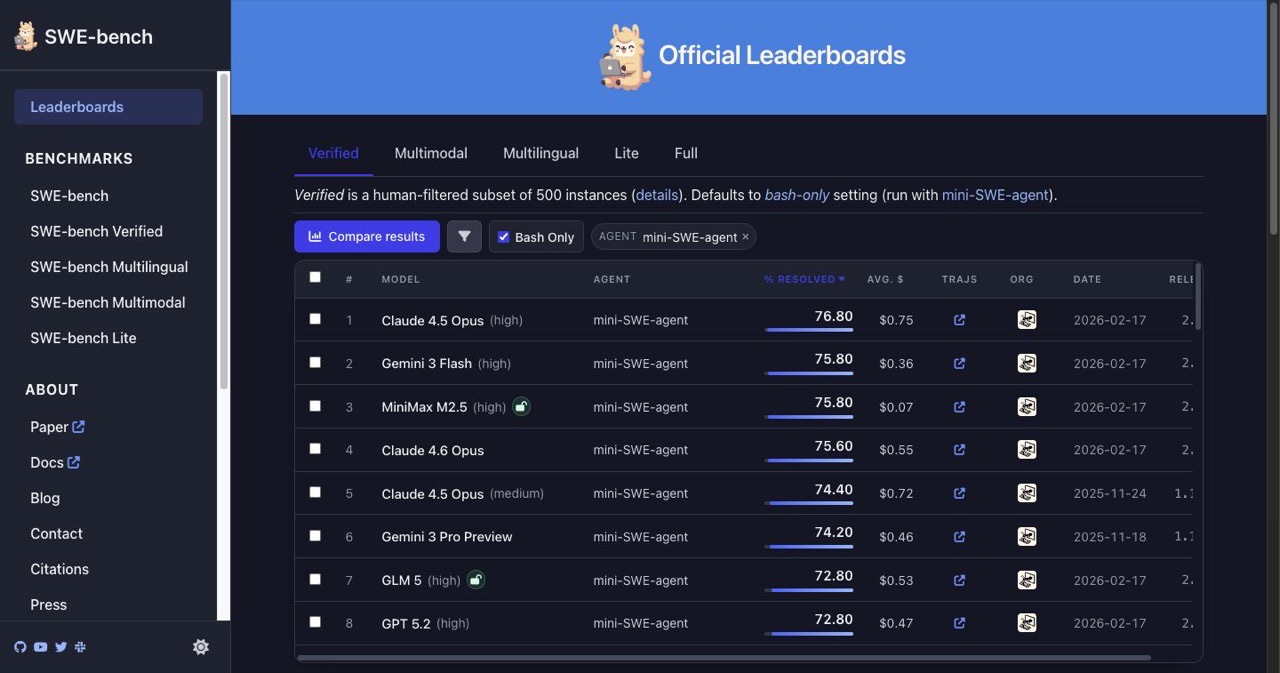
According to figures published in Xiaomi's technical blog, MiMo Code paired with MiMo-V2.5-Pro outperformed Claude Code paired with Claude Sonnet 4.6 across three benchmarks: SWE-bench Verified (82% vs 79%), SWE-bench Pro (62% vs 55%), and Terminal Bench 2 (73% vs 69%).
The more interesting test: running the same MiMo-V2.5-Pro model in both harnesses, MiMo Code scored 62% on SWE-bench Pro versus 57% for Claude Code, and 73% on Terminal Bench 2 versus 68%: roughly five points each, attributable purely to the agent system rather than the model.
That's the number to pay attention to. The memory architecture isn't just marketing. It measurably contributes to task completion independent of the underlying model. For a broader view of other agents performing at this level, refer to our analysis of the Claw Era agentic systems.
The human evaluation data is also compelling: an internal beta across 576 developers, 474 private repositories, and 1,213 judged head-to-head pairs (same target model in both agents) showed a roughly even split for tasks under 200 execution steps, but a win rate exceeding 65% for MiMo Code on tasks requiring more than 200 steps.
The caveat you need to hear: these are vendor-reported figures, not yet on public leaderboards. The benchmark edge over Claude Code is self-reported, and a V0.1.0 release number signals exactly what it suggests about maturity. Real-world results vary. Treat these numbers as a directional signal, not a guarantee.
Xiaomi notably did not publish comparisons against OpenAI's Codex or Google's Gemini CLI. Claude Code is the sole named competitor throughout its materials, a telling choice of benchmark target.
MiMo Code vs. Claude Code vs. Cursor: An Honest Breakdown
There's no single "best" tool here. They make different trade-offs for different workflows.
MiMo Code vs. Claude Code
Both are terminal-first, agentic, Git-aware tools. The functional overlap is substantial. Where they diverge:
MiMo Code wins when:
- You need persistent project memory that survives session restarts
- You're running long autonomous tasks (>200 steps) where context management matters
- You want model flexibility: plug in any provider, including local models
- Cost is a constraint (MiMo Auto is free to start; the MiMo API pricing is significantly lower than Anthropic's for comparable throughput)
- You want to audit or fork the agent itself, since it's fully open source
Claude Code wins when:
- You want a more mature, polished out-of-box experience
- You're already deep in the Anthropic ecosystem
- Frontier-level reasoning on complex single-turn problems is the priority
For ongoing maintenance of a complex codebase (something with a 12-month history, evolving architecture, and three different contributors' decisions baked in), MiMo Code's memory system changes the game.
MiMo Code vs. Cursor
These tools are not the same category despite often being discussed together.
Cursor is an AI-native IDE built for interactive, visual, human-in-the-loop editing. You're in the loop on every change. It's fast for prototyping, great for inline composer workflows, familiar to anyone coming from VS Code.
MiMo Code is for autonomous terminal operation: long-running background tasks, remote/SSH environments, headless servers, complex refactors where you want to specify a goal and come back when it's done. The /goal command is the defining interface: you set a natural-language stopping condition (e.g., "all tests pass and changes are committed to the feature branch") and an independent judge model monitors whether that condition is actually met. If you are building autonomous systems that you intend to run in a self-managed environment, check out our guide on self-hosting alternatives to Vercel and Supabase.
The real answer for many power users: run both. Cursor for interactive sessions and exploratory work; MiMo Code for heavy implementation runs and background work on large codebases. They complement more than compete.
Getting Started in 60 Seconds
# macOS and Linux
curl -fsSL https://mimo.xiaomi.com/install | bash

# Windows / cross-platform via npm
npm install -g @mimo-ai/cli
First launch asks you to choose between MiMo Auto (free, no login), Xiaomi account login, Claude Code credentials import, or a custom OpenAI-compatible API. Configuration lives in .mimocode/mimocode.json in your project directory or a global config file.
One thing to do immediately: telemetry is enabled by default and sends usage metrics to Xiaomi's servers. Set MIMOCODE_ENABLE_ANALYSIS=false in your environment to disable it. Standard consideration for any cloud-connected dev tool, but worth doing before you point it at anything sensitive.
Run it from your project directory and you're coding. The build agent is active by default. Tab switches between build (active implementation), plan (read-only analysis), and compose (specs-driven orchestration for end-to-end features).
For your first real use, try: /goal implement the feature and ensure all tests pass then step away. Check what it did. That's the intended workflow.
What the Community Is Actually Saying
The developer response on Hacker News skewed positive on the architecture, skeptical on the vendor benchmarks, and genuinely curious about the memory system. Common thread: the pain point is real. Everyone who has used AI coding agents extensively has hit the context-window-wall problem on long projects. The question is whether MiMo Code's approach holds up beyond the controlled benchmark environment.
Several commenters noted the curl | bash install pattern: standard in open-source tooling, but always worth inspecting the script first. A few early testers flagged unusually high log disk usage in initial testing, which is a v0.1 issue worth watching.
The geopolitical angle came up, as it always does for tools from Chinese companies. The open-source nature partially addresses this: you can read exactly what the agent does, and MIT licensing means you can self-host everything. That won't satisfy every organization's compliance requirements, but it's a meaningfully different trust posture than a closed-source tool from any origin.
The Bigger Shift This Represents
MiMo Code is a signal that the competition in AI coding tools is moving past "which model scores best on benchmarks this week" into "which agent system can maintain useful context, evolve over time, and ship complex software without constant human supervision."
That's the right competition to be having.
The best AI coding tool for building a greenfield weekend project is probably still Cursor or whatever frontier model is hottest this month. But for maintaining a real codebase (one with years of decisions, specific architectural constraints, and ongoing feature development), the agent that remembers is going to win. MiMo Code is betting everything on that insight.
It's v0.1. Some rough edges are expected. But the core architecture is sound, the benchmarks on long-horizon tasks are hard to dismiss outright, and the self-distillation concept hints at a trajectory that gets meaningfully better the longer you use it.
If you run a complex project from the terminal, the install takes two minutes. Run it on something real. The memory system is either going to feel like magic on day five, or you'll find the edge cases that matter for your workflow. Either way, that's useful information.
Install it. Try the /goal command on a real task. Report back.
MiMo Code is available at github.com/XiaomiMiMo/MiMo-Code. All benchmark figures are vendor-reported by Xiaomi as of June 10, 2026, and have not been independently verified on public leaderboards.
Get your SaaS in front of founders
List your product on the SaaSCity live city map - a permanent listing, real discovery, and a backlink from a high-DR directory. Free to start; upgrade for a dofollow link and a building on the map.