News
Claude Fable 5 Is Out — The Model That Found 271 Firefox Zero-Days Is Now in Your Hands
Anthropic just made its most capable model publicly available. Claude Fable 5 is Mythos-class, scored 80.3% on SWE-Bench Pro, and crushed a two-month Stripe migration in a single day. Here's what changed.

Contents (11)
- Key Takeaways
- From Locked Lab to Your Browser Tab: The Mythos Timeline
- What Claude Fable 5 Actually Is
- The Numbers: What "State-of-the-Art" Actually Looks Like
- Real-World Performance: The Stripe Example
- How the Safety Architecture Works
- Claude Mythos 5: The Twin They Also Launched Today
- Pricing, Access, and the June 22 Cliff
- What Developers and the Community Are Saying
- What This Actually Changes
- The Short Version
Quick answer: Claude Fable 5 is Anthropic's first publicly available Mythos-class model, released June 9, 2026. It shares weights and training with Claude Mythos Preview, the model that found 271 zero-day vulnerabilities in Firefox, wrapped in classifiers that redirect cybersecurity, biology, chemistry, and distillation queries to Claude Opus 4.8 in under 5% of sessions. It scores 80.3% on SWE-Bench Pro and 29.3% on FrontierCode Diamond, and costs $10 per million input tokens and $50 per million output tokens.
The model that autonomously found hundreds of zero-day vulnerabilities in Firefox is now accessible to anyone with a Claude subscription. Meet Claude Fable 5.
Anthropic dropped the announcement on X this morning (June 9, 2026): "Introducing Claude Fable 5: a Mythos-class model that we've made safe for general use. Its capabilities exceed those of any model we've ever made generally available." That's not marketing copy. This is the same underlying architecture as Claude Mythos Preview — the model that, when pointed at open-source software during internal testing, independently discovered and chained exploits at a scale that alarmed its own creators.
So why is it available to the public today? Because Anthropic spent two months building a very careful gate around it.
Key Takeaways
- Same model, different gate: Fable 5 uses the same weights and training as Claude Mythos Preview, with a classifier layer instead of a separate training run.
- Benchmark lead is widest on hard tasks: 80.3% on SWE-Bench Pro against GPT-5.5's 58.6%, and 29.3% on FrontierCode Diamond against GPT-5.5's 5.7%.
- Stripe migration in one day: A 50-million-line Ruby codebase-wide migration that would have taken an engineering team over two months finished in a single day.
- Classifiers fire rarely: Anthropic says high-risk queries route to Claude Opus 4.8 in under 5% of sessions, and no universal jailbreaks were found in pre-release stress testing.
- Pricing: $10 per million input tokens and $50 per million output tokens, with prompt caching cutting input cost by 90%.
- The June 22 cliff: Pro, Max, Team, and Enterprise plans include Fable 5 at no extra cost only until June 22, 2026, after which usage credits are required.
- Mythos 5 shipped the same day: The ungated twin flows through Project Glasswing and select biology researchers, with a broader trusted access program planned.
From Locked Lab to Your Browser Tab: The Mythos Timeline
Back in April 2026, Anthropic published a 244-page system card for Claude Mythos Preview and immediately restricted access to a handful of vetted organizations. The reason was blunt: the model was too capable in cybersecurity to release without guardrails.
In internal evaluations, Mythos Preview independently identified 271 zero-day vulnerabilities in Firefox alone — bugs buried in the codebase for 15 to 20 years — and developed working proof-of-concept exploits with minimal human steering. The internal vulnerability evaluation suite was saturated. They ran out of test cases.
Project Glasswing launched alongside the preview. Bringing in AWS, Apple, Google, Cisco, Microsoft, JPMorgan Chase, and CrowdStrike as early partners, the arrangement was simple: give these organizations early access to Mythos so they could patch their own systems before adversaries could use similar capabilities. Defense-first, offense-gated.
For two months, the broader developer community watched from the outside. Prediction markets ran at 94%+ for a June 9 public launch date. Hacker News threads and API slug leaks pointed to a model codenamed "Capybara." Last week, Anthropic filed confidential IPO paperwork. The timing was obvious. The model finally arrived.
For context on how fast the AI model landscape has shifted this year — our coverage of Xiaomi's MiMo-V2.5-Pro as an agentic backbone showed open-weight models closing the gap on proprietary ones. Fable 5 is Anthropic's answer to that trend: don't just match, leap.
What Claude Fable 5 Actually Is
Claude Fable 5 is not a nerfed Mythos. It is Mythos — same underlying training, same model weights, same capability ceiling — wrapped in a classifier layer that redirects specific high-risk queries to Claude Opus 4.8 instead of responding directly.
The naming is intentional. "Fable" signals approachability. "5" anchors it in the Claude 5 family. "Mythos" as a consumer-facing name carried, let's say, Lovecraftian baggage that Anthropic chose to sidestep for a product aimed at general users. The fable is the public story. The myth still lives behind Project Glasswing.
Think of it as a Formula 1 car with a governor. The engine is the same one that made engineers nervous. The governor ensures it won't run at full tilt in the wrong contexts. For the vast majority of users, in the vast majority of sessions, you never touch the governor.
The Numbers: What "State-of-the-Art" Actually Looks Like
Benchmarks get oversold constantly. These are worth paying attention to.
SWE-Bench Pro — real-world software engineering tasks, not toy problems:
- Claude Fable 5 / Mythos 5: 80.3%
- Claude Opus 4.8: 69.2%
- GPT-5.5: 58.6%
That's not an incremental improvement. Four out of five complex software engineering problems — solved — compared to GPT-5.5 failing on more than four in ten of those same tasks.
Cognition's FrontierCode Diamond — agentic coding that actually meets production-code quality standards:
- Fable 5: 29.3%
- Opus 4.8: 13.4%
- GPT-5.5: 5.7%
GPT-5.5 scores 5.7%. Fable 5 scores more than five times higher. And Anthropic notes that Fable 5 ranks highest on FrontierCode even at medium reasoning effort — meaning it doesn't need to burn maximum tokens to beat the field.
Fable 5 is also the first model to exceed 90% on Hex's analytical benchmark — designed for complex, long-running analytical tasks — a 10-point jump over Opus 4.8. On Hebbia's Finance Benchmark for senior-level reasoning, it leads every model tested. IMC confirmed it aced their trading-analysis evaluations across factual lookup, conceptual reasoning, root-cause analysis, and expected-value calculations.
The pattern is consistent across every benchmark: the harder and longer the task, the wider Fable 5's lead. Quick questions? Marginal difference. Multi-day, high-complexity, autonomous work? The gap expands dramatically.
If you're comparing models specifically for agent workloads, our best AI agent coding token plans 2026 breakdown covers how pricing tiers actually shake out once you're past the demo stage. Fable 5 at $50/M output is expensive — but if it finishes in one pass what cheaper models need five attempts for, the math flips.
Real-World Performance: The Stripe Example
Benchmark tables live in controlled conditions. Here's a concrete real-world result.
Stripe gave Fable 5 a 50-million-line Ruby codebase and asked it to perform a codebase-wide migration. The model completed it in a single day. The same migration, done manually by a full engineering team, would have taken over two months.
Not compressed to two weeks. Two months compressed to one day.
GitHub's early testing described Fable 5 handling "complex, long-horizon coding tasks with a level of autonomy and reliability that exceeded previous benchmarks." Dan Shipper's internal testing at Every reported 91/100 on a Senior Engineer benchmark, compared to Opus 4.8's 63. Early users describe it clearing production bug backlogs, building full 3D projects in one shot, and generating analyses that follow through all the way to implementation.
The vision capabilities are equally striking. Previous Claude models struggled with Pokémon FireRed even when given specialized helper tools and additional game-state data. Fable 5 beat the game using raw screenshots alone — no maps, no navigation aids, vision only. It's a deliberately absurd demonstration, but it makes the point about perception-to-action capability in a way a benchmark table doesn't.
Browsing SaaSCity's AI tools directory, you can see how many developer tools already integrate Claude models — Fable 5's capability jump will force a wave of product upgrades across that entire ecosystem.
How the Safety Architecture Works
This is where Anthropic's approach gets genuinely interesting — and where honest criticism is warranted.
Fable 5's classifiers monitor for a narrow set of high-risk topics: cybersecurity exploit generation, biology, chemistry, and model distillation. When a query trips these classifiers, the model routes silently to Claude Opus 4.8. The user is notified. The capability ceiling drops for that exchange. The session continues.
Anthropic says this happens in under 5% of sessions on average.
The explicit trade-off: safeguards are tuned conservatively for speed to market. They will occasionally flag harmless requests. Anthropic is acknowledging the false-positive rate publicly and committing to reduce it as capabilities improve.
Some early users are calling it "a Ferrari with a 30mph limiter." That's fair in those narrow scenarios. For the remaining 95%+ of sessions — coding, research, analysis, writing, vision tasks, long-context work — you're running full Fable 5. Most developers building serious applications will never encounter the fallback.
No universal jailbreaks were found in pre-release stress testing. Anthropic stress-tested classifiers with red teams specifically probing for bypass techniques. That's not a guarantee of robustness forever, but it's a meaningfully higher bar than most release notes.
The agentic AI space is evolving fast — our roundup of six agentic AI systems in the Claw Era shows where Fable 5 sits relative to the broader competition. Spoiler: the gap is real.
Claude Mythos 5: The Twin They Also Launched Today
Buried in the announcement is a simultaneous release of Claude Mythos 5 — same underlying model, but with safeguards lifted in specific areas for approved users.
Mythos 5 currently flows through Project Glasswing (cyber defenders) and is being extended to select biology researchers. Anthropic says a broader "trusted access program" is coming for more sectors over the coming months.
What happens when you remove the governor entirely? The results described internally are something closer to scientific collaboration than tool use. Using Mythos 5 with protein design and bioinformatics tools, Anthropic's internal protein design experts accelerated aspects of drug discovery by roughly ten times. In one study, the model — with no human assistance — matched or beat skilled human operators in identifying strong drug design candidates for 9 of 14 protein targets. In a separate genomics project, Mythos 5 conducted over a week of largely autonomous research, trained a custom machine learning model, and outperformed a paper recently published in Science — while being 100 times smaller.
These aren't benchmark scores. They're replicated scientific results. That's a different category of capability statement.
Pricing, Access, and the June 22 Cliff
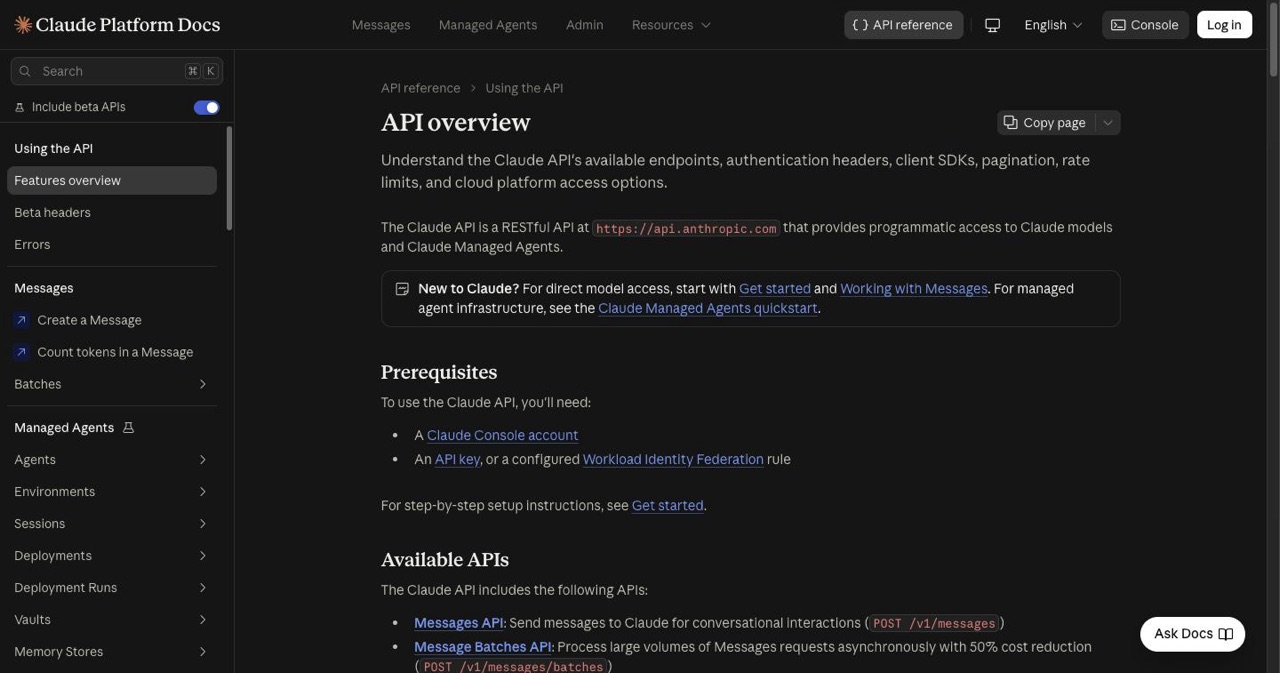
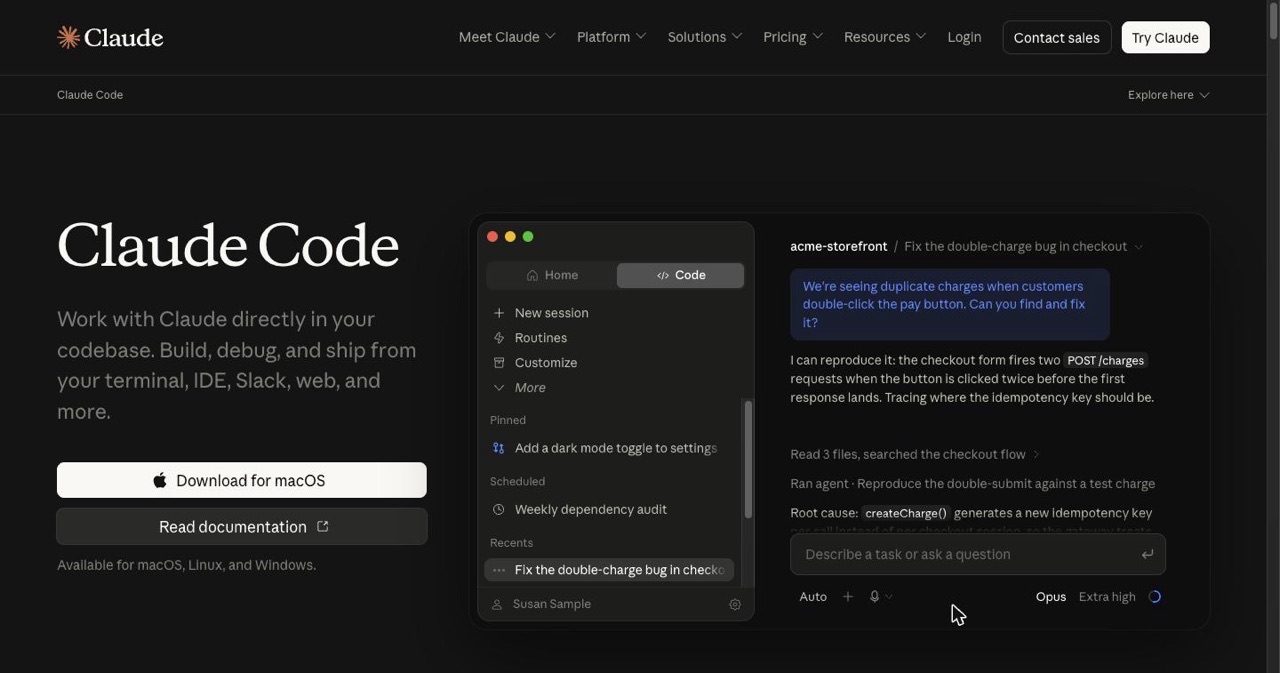
Claude Fable 5 is available now via the Claude API (claude-fable-5), Claude Platform, Claude Code, and through AWS Bedrock, Google Vertex AI, and Microsoft Foundry.
Pricing for both Fable 5 and Mythos 5: $10 per million input tokens / $50 per million output tokens. Prompt caching drops the input cost by 90%. Both models at this price point — less than half what Mythos Preview cost during its restricted phase. Still the most expensive generally available models from any major lab.
For subscription plans: Pro, Max, Team, and Enterprise users get Fable 5 included at no extra cost — until June 22. On June 23, Anthropic removes it from those plans, requiring usage credits. They'll restore it as a standard subscription feature once capacity allows. Anthropic has flagged demand is expected to be "very high and difficult to predict" — translation: expect rate limits.
That's a 13-day window for subscription users to properly evaluate Fable 5 on production workloads at no extra cost. If that matters to your team, the clock is running.
SaaSCity's AI category is going to need a refresh — every AI tool pricing page that references Claude costs is about to shift. Founders building on Claude APIs should factor the June 22 cliff into their runway calculations now, not later.
What Developers and the Community Are Saying
Base44 (the vibe-coding platform Wix acquired last year) called Fable 5 "much deeper and better at one-shotting full apps." GitHub reported a leap in long-horizon coding autonomy that "exceeded previous benchmarks." Community reactions on X and Hacker News are consistent on one point: Fable 5 is exceptional for heavy agentic workflows and overkill for simple queries.
The legitimate criticisms are real. Adaptive thinking is always on, which means token consumption is high. Complex sessions routinely run 500k–1M tokens. The effective cost per sophisticated workflow is meaningfully higher than any previous Claude model, and teams building at scale need to plan for that.
The June 22 cliff is generating real concern among teams trying to evaluate the model for production integration. A two-week window before credits kick in is narrow for proper stress testing.
The benchmark reaction on X has a clear favorite: FrontierCode Diamond, where Fable 5's 29.3% sits against GPT-5.5's 5.7%. That delta is not a rounding error.
What This Actually Changes
Three things are true at once, and they all deserve naming.
Anthropic filed confidential IPO paperwork last week. Fable 5 lands against that backdrop. The timing isn't accidental — but the model's independently verifiable benchmark scores suggest capabilities that predate any IPO marketing calendar.
Anthropic also published a public warning this week that AI systems are advancing toward recursive self-improvement (RSI) fast enough that major labs should establish a coordinated brake pedal on frontier development. Then they released their most capable public model two days later. That's either deeply ironic or a precise demonstration of what responsible scaling actually looks like: gate raw capabilities, expand trusted access in phases, make the public version genuinely useful while keeping the unrestricted version genuinely restricted.
Most concretely: what a single developer can accomplish in a day just moved. Stripe's two-month engineering migration collapsing to one day is not a demo case. It's the new baseline expectation for what Fable 5-class models treat as a tractable workflow. For teams running Claude Code or building complex agentic pipelines, this is the clearest capability step-change since Claude 3 Opus. For users sending quick conversational queries, Opus 4.8 remains fast, affordable, and genuinely excellent.
The Short Version
Anthropic spent two months deciding whether to release this at all. Then they built safety architecture sophisticated enough to make the answer yes — for most users, in most contexts.
Whether the classifiers hold under real-world adversarial pressure over time is an open question. Whether 80.3% on SWE-Bench Pro directly translates to your specific engineering problem is something you'll need to test. But the early signal is consistent: Fable 5 isn't incremental. It's a category shift in what's publicly accessible, packaged in a name designed to feel like less than it is.
Try it at claude.ai. The subscription window stays open through June 22. Point it at the hardest thing you've been putting off.
If you're building something with Fable 5 and want to put it in front of real users, SaaSCity is a free directory where every listing gets a permanent indexed page with a DR 66 backlink, and paid listings a 3D building on a live city map. Drop your project in, pick a plan, and let the capability jump of models like Fable 5 carry your product further.
Claude Fable 5 is available today via claude.ai, Claude Code, Claude API (model ID: claude-fable-5), and through AWS Bedrock, Google Vertex AI, and Microsoft Azure. Pricing: $10/M input tokens, $50/M output tokens for both Fable 5 and Mythos 5.
Get your SaaS in front of founders
List your product on the SaaSCity live city map - a permanent listing, real discovery, and a backlink from a high-DR directory. Free to start; upgrade for a dofollow link and a building on the map.