News
Google Just Dropped Nano Banana 2 — And It's Already #1 on the Image Arena Leaderboard
Google shipped Nano Banana 2 today, February 26, 2026. This AI image generation and editing model combines Nano Banana Pro quality with Gemini Flash speed, debuting at #1 on the Image Arena leaderboard.

Contents (8)
Quick answer: Nano Banana 2 is Google's AI image generation and editing model, shipped February 26, 2026 on the Gemini 3.1 Flash Image backbone. It debuted at number 1 on the Image Arena leaderboard. It generates from 512px to native 4K across 13 aspect ratios, keeps up to 5 characters and 14 objects consistent across scenes, renders precise multilingual text, and pulls live information through Google Search integration. Developer pricing starts at $0.045 per 512px image and $0.067 per 1024px image.
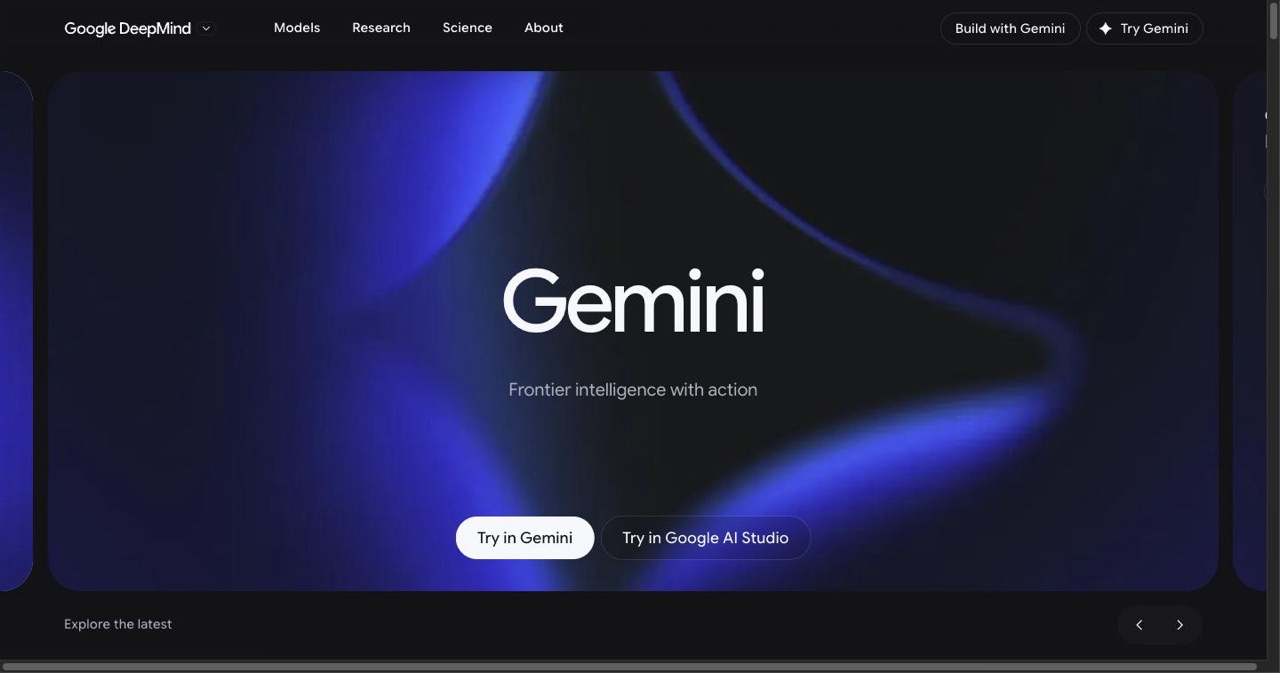
Google shipped Nano Banana 2 today, February 26, 2026, and the dev community hasn't stopped talking about it since. If you missed the announcement: this is the AI image generation and editing model that combines the quality ceiling of Nano Banana Pro with the raw speed of Gemini 3.1 Flash Image — and it debuted at #1 on the Image Arena leaderboard on day one.
That doesn't happen by accident. If you're looking to build and launch an AI SaaS with the latest tech, this might be the breakthrough you've been waiting for.
Key Takeaways
- Number 1 on day one: Nano Banana 2 debuted at the top of the Image Arena leaderboard on its February 26, 2026 launch day.
- Gemini 3.1 Flash Image is the backbone: That is what removes the speed penalty Nano Banana Pro carried while keeping Pro-level quality.
- Search integration is the differentiator: Real-time world knowledge pulls current information into generation, which static-trained competitors cannot match.
- 512px to native 4K, 13 aspect ratios: Default output is 1024px, with 1:1, 16:9 and 21:9 among the supported ratios.
- Consistency is built in: Up to 5 characters and 14 objects hold across scenes, removing the need for custom fine-tuning on narrative work.
- Multilingual text finally renders: Charts, UI mockups and localized marketing materials come out legible.
- Pricing that supports commercial products: $0.045 per 512px image and $0.067 per 1024px image through the Gemini API, with free pro-level access in the Gemini app.
From Nano Banana to Nano Banana 2: A Quick History
The original Nano Banana launched on Gemini 2.5 Flash and immediately went viral. Visual reasoning at that speed, with those outputs? Developers were hooked. Then came Nano Banana Pro — more precision, more control, but slower. The community noticed. The feedback was clear: we want Pro quality without the speed tax.
Nano Banana 2 is Google's answer.
Built on Gemini 3.1 Flash Image, it rolls out today across the Gemini app, AI Studio, Vertex AI, and the Gemini API for developers. Free users get access to pro-level features through the Gemini app immediately. Developers hit the API starting at $0.045 per 512px image and $0.067 per 1024px image — pricing that makes it genuinely viable to build commercial products on top of it.
What Nano Banana 2 Actually Does Differently
Let's skip the marketing language and get into what matters.
Speed without the quality trade-off. Previous models made you choose. Nano Banana 2 doesn't. Gemini 3.1 Flash Image as its backbone means rapid iterations — storyboards, product mockups, ad creative — without waiting. For teams running high-volume generation workflows, this changes the math entirely.
Real-time world knowledge. This is the feature that separates Nano Banana 2 from most competitors. It integrates with Google Search to pull current, accurate information into image generation. Ask it to depict a real landmark in current weather conditions. Ask it to render a product in a scene that reflects a live event. The outputs are accurate in ways that static-trained models simply can't match.
Resolution from 512px to native 4K, across 13 aspect ratios. Standard 1024px output by default. Supports 1:1, 16:9, 21:9, and everything in between. Whether you're generating social content, widescreen cinematic stills, or product photography, there's no cropping workaround needed.
Subject consistency at scale. Up to 5 characters and 14 objects maintained consistently across scenes. If you're building anything narrative — comics, brand storytelling, product series — this is a big deal. Consistency across frames used to require custom fine-tuning. Now it's built in.
Text rendering that actually works. Anyone who's tried generating infographics or typography with AI image models knows the pain. Nano Banana 2 brings precision multilingual text rendering. Charts, UI mockups, multilingual marketing materials — the text doesn't melt anymore.
Multimodal input. Text-to-image, image+text-to-image, complex mixed prompts. The editing capabilities cover product mockups, nature photography, and vibrant lighting effects across 50+ tested use cases.
How It Stacks Up
Here's a clean comparison of the Nano Banana series:
| Feature | Nano Banana (Original) | Nano Banana Pro | Nano Banana 2 |
|---|---|---|---|
| Base Model | Gemini 2.5 Flash | Gemini 3 | Gemini 3.1 Flash |
| Speed | Standard | Slower | Lightning-Fast |
| Resolution | Up to 1MP | Enhanced | 512px–4K Native |
| World Knowledge | Limited | Improved | Real-Time Search |
| Text Rendering | Basic | Good | Precision Multilingual |
| API Pricing (512px) | N/A | Varies | $0.045 |
| Image Arena Rank | — | — | #1 (Launch Day) |
Some Reddit users are noting the jump from Pro feels incremental in casual use. Fair point for light users. But for developers building production systems — the speed gains alone justify the switch, and the search integration opens use cases that flat-out didn't exist before.
Compared to ChatGPT and Grok's image tools: both are strong. But neither has real-time search baked into image generation at this price point. That's a structural advantage Google is quietly building a moat around.
The Part Developers Actually Care About: Building on Top of Nano Banana 2
Here's the real question: how fast can you ship a product on top of this?
If you're starting from scratch — API setup, auth, payments, moderation, database schema, admin panel — you're looking at four months minimum and $15,000+ in development costs. That's before you've validated a single user. For a better approach, check our startup idea validation checklist.
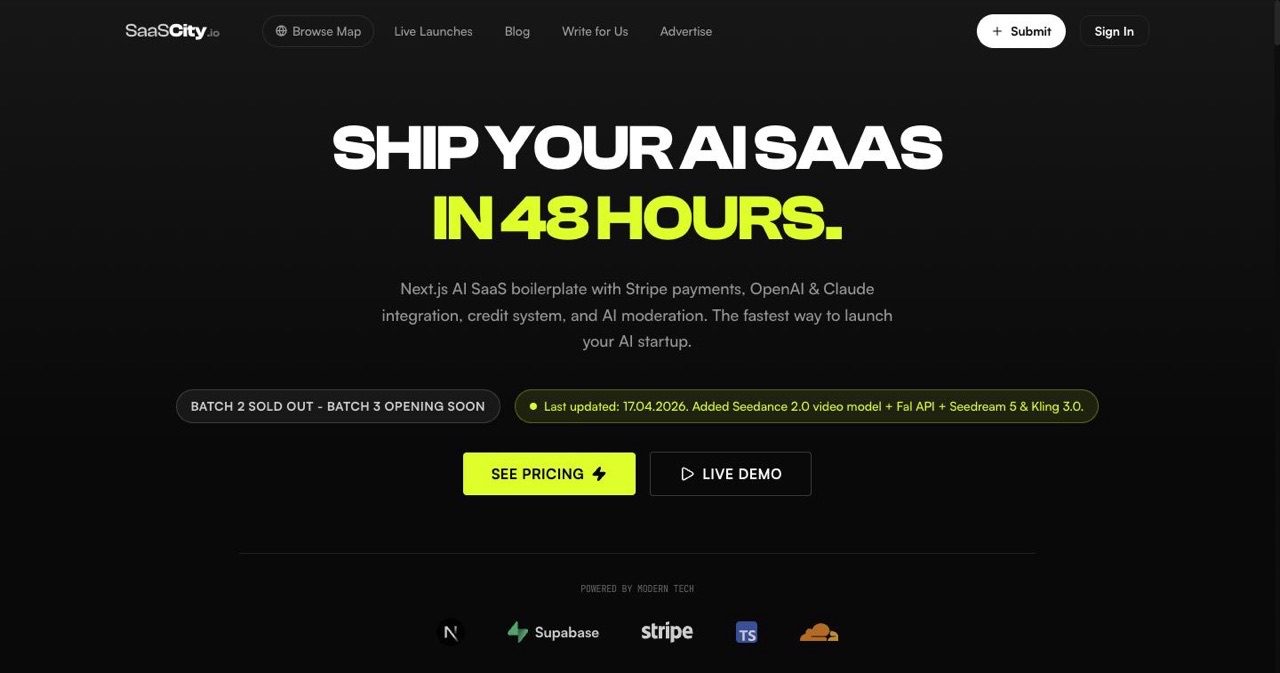
SaaSCity's AI SaaS Boilerplate (2026 edition) cuts that to 48 hours.
It's a Next.js + Supabase + Stripe stack, updated specifically to integrate Nano Banana models including Nano Banana 2. The thing is genuinely production-ready out of the box. Here's what's actually included:
Five pre-built AI apps ready to launch: an AI Studio with 20+ models, a UGC Video Generator, YouTube Thumbnail creator, and more. All wired to support high-fidelity Nano Banana 2 outputs without custom integration work.
Full monetization infrastructure. Subscriptions, credit systems, paywalls, refund flows. You're not building payment logic from scratch — you're adjusting config files.
Security that matters for AI products. AI moderation for NSFW outputs, CAPTCHA, device fingerprinting. Running an image generation product without moderation is how you get your API keys revoked and your product de-platformed. It's essential to follow SaaS compliance 2026 guidelines, and this ships with the guardrails already in place.
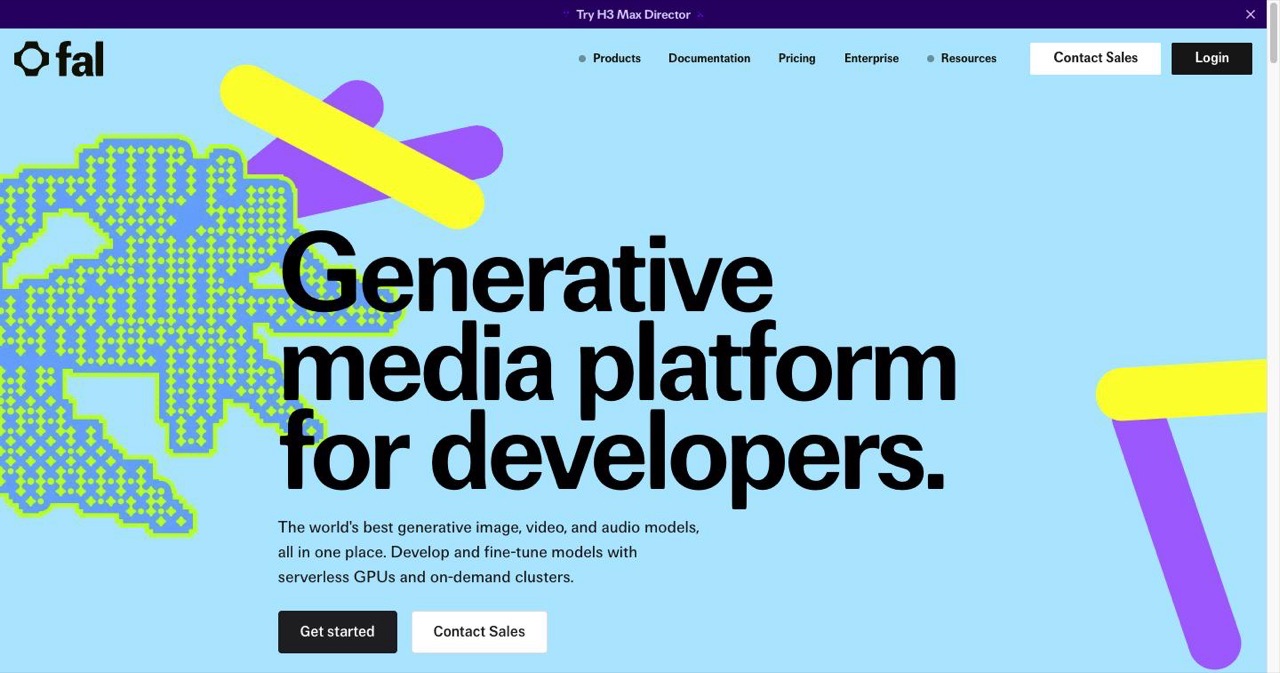
Scalable routing with no GPU overhead. API calls route through Replicate and fal.ai — the same platforms developers on X are already spinning up for Nano Banana 2 access. The architecture supports growth from zero to a million users; you add workers, not servers.
Admin panel for revenue and generation tracking. Know what's being generated, what's converting, where users drop off. If you're seeing high attrition, review our SaaS churn playbooks for optimization strategies.
The pricing: $79.99 one-time during the current sale (rising to $199.99). Lifetime updates and full source code. The stack includes $229+ in pre-built AI apps and a $79 safety kit in the bundle.
If you're building anything in AI content, creative tooling, or marketing automation — grab it at saascity.io/ai-saas-boilerplate-2026 before the sale ends.
Real Use Cases Worth Building Right Now
The combination of Nano Banana 2's capabilities and a ready-to-monetize infrastructure opens specific opportunities that are practically greenfield:
Multilingual ad creative generation. Brands running global campaigns need localized imagery with accurate text in dozens of languages. Nano Banana 2's text rendering + multilingual support makes this viable at scale. Build the tool, charge per credit.
Accurate real-world simulations. Real estate staging with current weather conditions. Event planning visualization with live context. The search integration makes these outputs accurate enough to be commercially useful.
Consistent character-driven content. Comics, brand mascots, product lifestyle series. Five characters, fourteen objects, maintained across scenes. A subscription tool for indie creators here is an obvious build.
Product photography at volume. Prompt-free product mockups with high-fidelity results. E-commerce brands spend significant budget on photography. An AI-powered alternative that produces consistent, brandable output is a clear value proposition.
Storyboarding for agencies. Video production agencies need fast, consistent scene visualization. Nano Banana 2's speed makes the iteration loop viable for professional workflows. To keep costs low, you can leverage zero cost developer toolkits during the early development phase.
Where This Is Heading
The X developer community has been buzzing about Nano Banana 2 since November 2025 rumors put the release window in that month. The actual launch exceeded expectations on speed and the search integration was a genuine surprise to many who expected a more incremental update.
The pattern here is clear: Google is systematically closing the gap between its search infrastructure and its generative AI outputs. Real-time world knowledge in image generation isn't a gimmick — it's a compounding advantage that gets more powerful as the search index grows.
For builders: the window to ship early products on emerging AI models is always shorter than it feels. The developers who built on Nano Banana Pro when it launched are already ahead. Nano Banana 2 is faster, more capable, and cheaper to run.
The question isn't whether to build on it. It's how fast you can ship.
Frequently Asked Questions
What is Google Nano Banana 2? Nano Banana 2 is Google's latest AI image generation model, built on the Gemini 3.1 Flash Image architecture. It is designed to provide high-quality image generation with lightning-fast speeds and real-time world knowledge via Google Search integration.
How does Nano Banana 2 compare to the Pro version? While Nano Banana Pro focused on high precision at the cost of speed, Nano Banana 2 offers similar (or better) quality with significantly improved performance, making it better suited for production-grade applications that require rapid iterations.
Is Nano Banana 2 ranked on the Image Arena leaderboard? Yes, Nano Banana 2 debuted at #1 on the Image Arena leaderboard on its launch day, surpassing previous industry leaders in visual quality and reasoning.
How much does it cost to use the Nano Banana 2 API? As of February 2026, API pricing starts at $0.045 for a 512px image and $0.067 for a 1024px image, making it highly competitive for commercial AI applications.
Can I build a SaaS using Nano Banana 2? Absolutely. Many developers are already integrating Nano Banana 2 into their products. For those looking to launch quickly, using a specialized AI SaaS boilerplate can reduce development time from months to just 48 hours.
Does Nano Banana 2 support text rendering? Yes, it features precision multilingual text rendering, which is a major improvement over previous models that often struggled with legible typography and complex chart elements.
Nano Banana 2 is live now in the Gemini app and via the Gemini API. Developer access through AI Studio, Vertex AI, and platforms like fal.ai. SaaSCity's updated boilerplate with native Nano Banana 2 integration is at saascity.io/ai-saas-boilerplate-2026.
Looking to showcase your new AI project? Make sure to list it on SaaSCity.io—the ultimate directory for 2026 AI web and mobile applications.
Get your SaaS in front of founders
List your product on the SaaSCity live city map - a permanent listing, real discovery, and a backlink from a high-DR directory. Free to start; upgrade for a dofollow link and a building on the map.