News
Microsoft VibeVoice: Open Source Voice AI That Competes With the APIs You're Paying For
Microsoft released VibeVoice — three open-source voice AI models covering ASR, TTS, and real-time streaming synthesis. The TTS code was briefly pulled over deepfake concerns. The ASR is now in Hugging Face Transformers. The full family is MIT-licensed and does things paid APIs don't. Here's the architecture and what to build with it.


Contents (8)
Quick answer: VibeVoice is Microsoft's MIT-licensed open source voice AI family on GitHub, made of three models: VibeVoice-ASR (7B) for 60-minute single-pass transcription with speaker IDs across 50+ languages, VibeVoice-TTS (1.5B) for 90-minute multi-speaker synthesis, and VibeVoice-Realtime (0.5B) for streaming speech at roughly 300ms to first audio. Microsoft pulled the TTS code on September 5, 2025 over misuse concerns. The ASR shipped in Hugging Face Transformers on March 6, 2026.
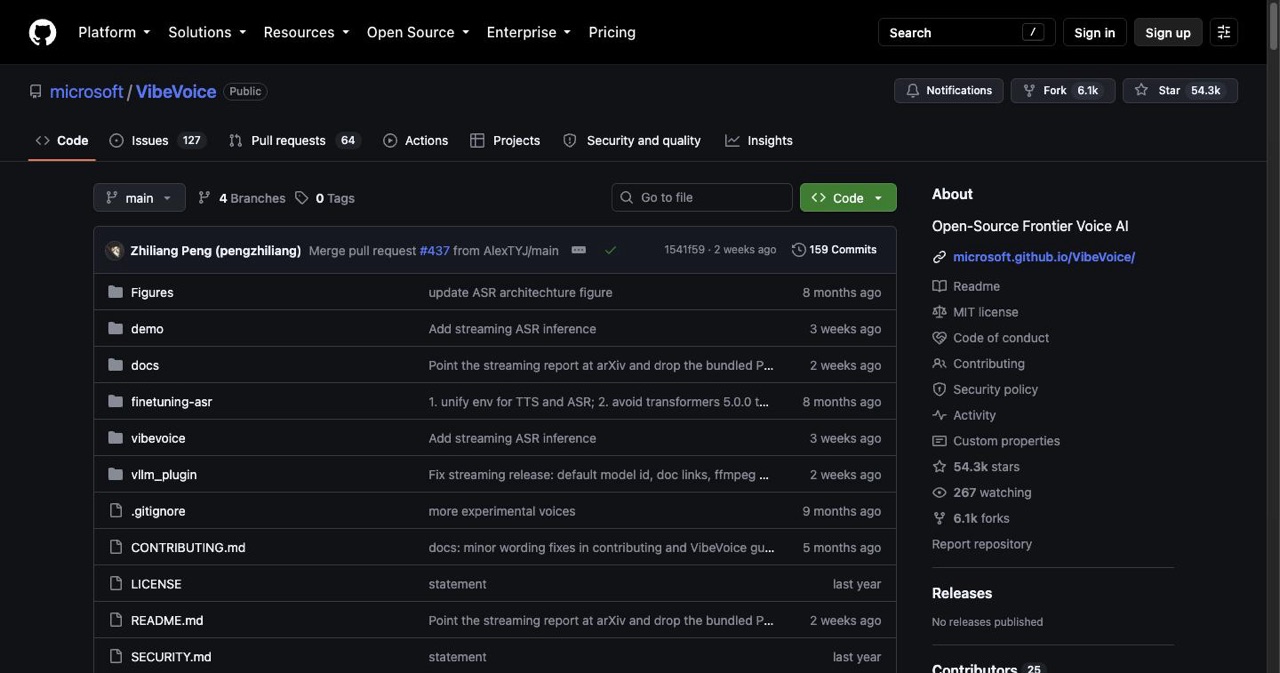
Microsoft shipped an open source voice AI model family called VibeVoice. Then pulled part of the code eleven days later.
Not because of a bug. Because the 1.5B-parameter TTS model worked convincingly enough that the team got cold feet about unsupervised use in the wild. They cited "misuse concerns" and removed the synthesis code on September 5, 2025, less than two weeks after the August launch.
That's the tell. When a team pulls their own open-source code over capability concerns — not a crash, not a license violation — you're looking at something that actually performs. The ASR model and the Realtime streaming TTS stayed public. By March 2026, the ASR was integrated into Hugging Face Transformers. The Realtime TTS has a Colab demo that's been running since December.
This is VibeVoice — Microsoft's openly released family of frontier voice models, MIT-licensed, peer-reviewed at ICLR 2026, and far more technically interesting than its understated GitHub presence would suggest.
Key Takeaways
- Three models, not one: VibeVoice covers ASR at 7B, TTS at 1.5B, and Realtime streaming TTS at 0.5B parameters, all MIT-licensed.
- 60-minute single pass: The ASR holds a full hour of audio in a 64K token context window, so there is no chunking and no stitching errors at boundaries.
- 7.5 Hz tokenizer: Audio is encoded at 7.5 tokens per second by paired acoustic and semantic tokenizers, below the 12.5 Hz that most voice systems use.
- 300ms first output: VibeVoice-Realtime clears the sub-500ms threshold for conversational voice and accepts streaming text input.
- ICLR 2026 Oral: The TTS model was accepted as an Oral presentation, a tier that sits under 2% of all submissions.
- The TTS code was withdrawn: Microsoft removed the synthesis code on September 5, 2025 citing misuse concerns; weights and model card stayed on Hugging Face.
- No published WER tables: The repo references DER, cpWER, and tcpWER in figures but gives no standalone comparison numbers against Whisper large-v3 or Deepgram Nova.
What VibeVoice Actually Is
VibeVoice isn't a single model. It's three of them, built to cover the full open source voice AI stack across very different deployment constraints:
-
VibeVoice-ASR (7B parameters) — Long-form automatic speech recognition. Processes up to 60 minutes of continuous audio in a single pass. Outputs structured transcripts with speaker IDs, timestamps, and support for customizable domain hotwords. Natively multilingual across 50+ languages.
-
VibeVoice-TTS (1.5B parameters) — Text-to-speech synthesis supporting up to 90 minutes of generation with up to four distinct speakers and natural conversational turn-taking. Multilingual. The code was temporarily removed due to misuse concerns; the model card and weights remain on Hugging Face.
-
VibeVoice-Realtime (0.5B parameters) — Streaming TTS optimized for latency. First audible output at roughly 300 milliseconds. Accepts streaming text input, which means you can pipe LLM output directly into it and start hearing speech before the sentence is finished.
That range — from a 7B model for bulk transcription to a 500M model for edge-adjacent real-time inference — isn't accidental. Microsoft built a system for multiple deployment contexts, not a single use case.
| Model | Parameters | Key Capability | Languages |
|---|---|---|---|
| VibeVoice-ASR | 7B | 60-min single-pass + speaker diarization | 50+ |
| VibeVoice-TTS | 1.5B | 90-min synthesis, 4 speakers | Multilingual |
| VibeVoice-Realtime | 0.5B | ~300ms first token, streaming input | Multilingual |
TTS voice options: 11 distinct English style voices plus 9 additional language locales — German, French, Italian, Japanese, Korean, Dutch, Polish, Portuguese, and Spanish.
The Architecture: Why the Token Frame Rate Matters
Most speech systems treat audio as audio: waveform in, text out, or text in, waveform out. VibeVoice runs everything through a speech tokenizer layer first — two of them, actually. One acoustic (capturing signal-level detail) and one semantic (capturing linguistic meaning). Both operate at an ultra-low frame rate of 7.5 Hz.
That 7.5 Hz figure means the model represents each second of audio as just 7.5 tokens. Most voice systems work at 12.5 Hz or higher. At first it sounds like a lossy tradeoff. In practice, a lower frame rate dramatically reduces the sequence length for long audio — and sequence length is the direct driver of transformer compute cost. A 60-minute meeting at 7.5 Hz is a tractable input. At 25 Hz, the same file starts to strain against context limits.
The synthesis side uses what the team calls a next-token diffusion framework: a large language model processes the text context and understands tone, pacing, and speaker style; a diffusion head converts that understanding into high-fidelity acoustic output. The LLM handles semantics. The diffusion head handles sound quality. Each does what it's better at.
For ASR, the headline spec is the 64K token context window. That's long enough to hold a full 60-minute audio file as tokens — no chunking, no transcript stitching at boundaries, no compounding errors where one split's mistake seeds the next one's. One pass, one coherent output with speaker labels already embedded.
The Proof
The TTS model was accepted as an Oral presentation at ICLR 2026. ICLR oral acceptance rates sit under 2% of all submissions — in a year where Oral at ICLR is competitive enough that labs use it as a hiring signal. That acceptance predates the TTS code controversy and is independent of Microsoft's infrastructure. The research holds regardless of what happens to the GitHub repo.
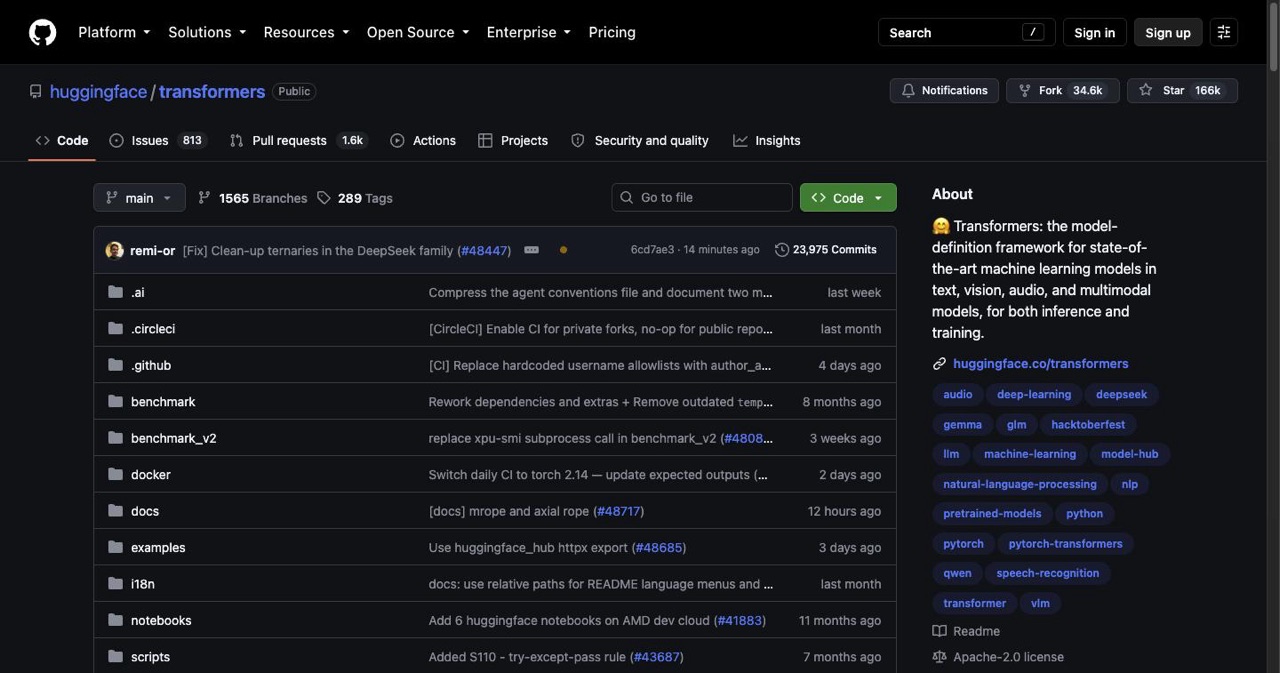
On March 6, 2026, the ASR model was merged into Hugging Face Transformers — which means it passed HF's maintainer review and now lives alongside Whisper, wav2vec2, and Seamless M4T in the same library. That's a meaningful signal about API stability: the team is confident enough in the model's behavior to ship it as a first-class Transformers citizen.
The 300ms first-token latency for the Realtime variant places it in range of production-grade conversational systems. Sub-500ms is the standard threshold for voice interfaces that feel responsive rather than lagged. VibeVoice-Realtime clears it.
What's missing: hard comparative WER numbers against Whisper large-v3 or commercial alternatives like Deepgram's Nova. The repository mentions DER (diarization error rate), cpWER (character-level word error rate), and tcpWER (time-coded word error rate) in visual figures, but no standalone tables exist for citation. For production evaluation, you'll need to run domain-specific benchmarks yourself — which is the right call anyway.
Getting Started
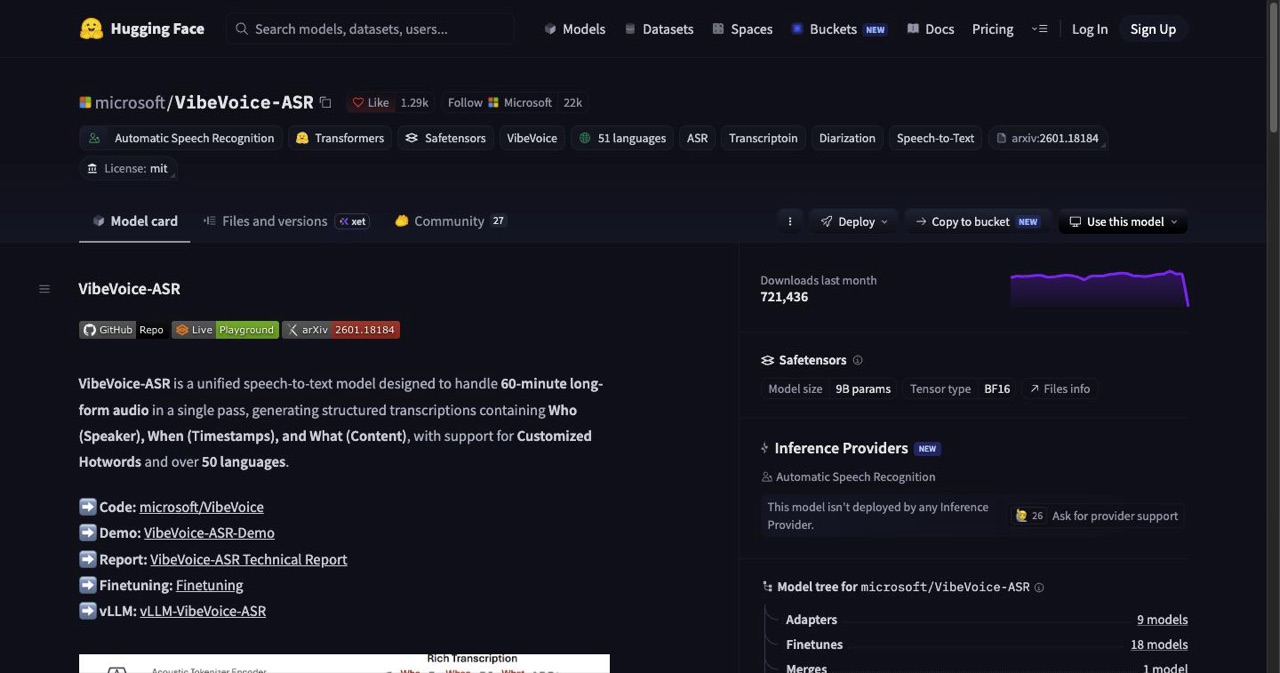
Both the ASR and Realtime TTS models are available through Hugging Face. The ASR is now in Transformers proper:
from transformers import AutoModelForSpeechSeq2Seq, AutoProcessor

model = AutoModelForSpeechSeq2Seq.from_pretrained("microsoft/VibeVoice-ASR")
processor = AutoProcessor.from_pretrained("microsoft/VibeVoice-ASR")
The interactive ASR playground runs at aka.ms/vibevoice-asr — worth testing before you start integrating. The Realtime TTS has a Google Colab demo linked from the repo for streaming synthesis.
For production use, the Realtime-0.5B model is the most deployable right now. It's small enough to run on a single GPU without enterprise-scale inference infrastructure, and the latency profile is already in range for voice bot use.
What This Means for SaaS Builders
Voice AI in products typically means a short menu: Deepgram for ASR, ElevenLabs for TTS, or OpenAI's Whisper and TTS endpoint for something in the middle. All three charge per minute, per character, or per request. Volume adds up.
VibeVoice changes that math — and does it with capabilities the paid APIs don't offer in one place.
The 60-minute single-pass ASR is the most immediately practical differentiator. Podcast transcription, meeting notes, earnings call parsing, customer support call review — all involve audio longer than 15 minutes, which is where chunked ASR starts introducing stitching artifacts and compounding error. One model, one API call, speaker labels included.
The multi-speaker TTS is narrower but real. If you're building an AI podcast generator, a dialogue system, or any product that needs consistent voice identities across a conversation, 4-speaker output with natural turn-taking is rare. Open Notebook — the self-hosted NotebookLM alternative we covered this week — uses exactly this type of capability to generate AI podcasts from research documents. VibeVoice makes that feature set self-hostable and free.
The Realtime variant is most relevant for conversational AI: voice bots, customer service agents, accessibility tooling, live captioning. 300ms latency plus streaming text input means you can feed it LLM output as it streams and begin speech before the sentence is complete — the same streaming-first pattern that makes modern AI chat interfaces feel instant.
The honest constraint is in the README: "We do not recommend using VibeVoice in commercial or real-world applications without further testing and development." That's not just legal hedging. The TTS withdrawal is evidence the team means it. For a product shipping to users, plan accordingly:
- Deploy now: ASR for internal transcription pipelines, search indexing over audio, meeting summaries
- Test in staging: Realtime TTS for voice bots where quality can be caught before it ships
- Evaluate only: TTS in customer-facing products until community benchmarks accumulate
This is the same maturity pattern you see with most frontier open source releases — research first, production second. We saw Apertus, EPFL's fully open foundation model, follow the same arc: published for research use with production trust building over months.
List Your Voice AI Tool on SaaSCity
Building something with VibeVoice — a transcription API, a voice bot interface, a speaker diarization service, or your own voice AI product? Get it in front of the buyers looking for exactly what you built.
SaaSCity.io is the directory for SaaS founders, developers, and AI tool builders. Your listing isn't a static row in a table — your product becomes a building in our interactive 3D city map, visible to a community actively shopping for AI infrastructure.
- 100% free to list — no fees, no waitlists, two minutes at /live/submit
- Earn dofollow backlinks — directory links that actually move your domain rating
- Find early adopters — founders visit to buy, not browse
If you haven't mapped the full landscape of directories worth listing in, the complete guide to AI tool directories is a good place to start.
The Bottom Line
The voice API market runs on a pricing moat with one structural foundation: open source voice AI hasn't been capable enough to replace it. Whisper closed that gap for basic transcription. VibeVoice is making the same argument for the richer end of the stack — speaker-aware long-form transcription, multi-voice synthesis, real-time streaming — on MIT terms with Hugging Face distribution.
It's not finished. The TTS withdrawal is a reminder that capability outpacing responsible deployment is a real problem in voice AI, where the attack surface for voice cloning and deepfakes is immediate. But caution in response to real capability is different from caution in response to theoretical risk.
The SaaS builders who start evaluating VibeVoice now — who run their own transcription benchmarks, test the Realtime latency against their use case, and start building internal pipelines on the ASR — are the ones who won't be surprised when that "not recommended for production" disclaimer quietly disappears.
That's when prices go up. Everywhere else.
SaaSCity.io covers open-source AI tools and developer technology. Explore the SaaSCity directory to discover what's shipping right now — or list your own product.
Get your SaaS in front of founders
List your product on the SaaSCity live city map - a permanent listing, real discovery, and a backlink from a high-DR directory. Free to start; upgrade for a dofollow link and a building on the map.