Build with AI
The Best Vibe Coding Tools for Rapid Startup Prototyping (2026): Pick by Job, Not by Ranking
There is no single best vibe coding tool. There is a best tool for the next 48 hours of your startup. Lovable, Bolt.new, Replit, v0, Base44, Cursor and Claude Code compared by the job they do, what they cost in October 2026, and when the prototype has to stop being vibe-coded.

Contents (9)
- Key takeaways
- What "vibe coding" means, and why it matters for which tool you pick
- The only split that matters: demo versus code you will keep
- Best vibe coding tools for a startup prototype, by job
- A one-afternoon prototyping stack
- Where the prototype starts lying to you
- What to pick on Monday
- After the prototype: get it in front of people
- FAQ
Quick answer: there is no single best vibe coding tool. Pick by the job in front of you this week. Lovable for a non-technical founder who needs a polished demo with login and a database. Bolt.new for a scaffold you are happy to throw away. Replit if you want to see the code and deploy from the same browser tab. v0 if the bet is the interface. Base44 for a cheap internal tool. Then move to Cursor or Claude Code the moment the prototype has to be kept, reviewed and handed to someone else.
Every list of "the best vibe coding tools" puts a winner at number one. That ranking is the least useful thing in it. A founder trying to get a clickable demo in front of five customers by Friday and an engineer trying to make that demo survive a security review are doing different jobs, and the tool that wins one loses the other.
This guide sorts the tools by the job. Prices and screenshots were checked on the vendors' own sites on 7 October 2026. Where sources disagree, we say so.
Key takeaways
- The real split is demo versus code you will keep. Prompt-to-app builders (Lovable, Bolt.new, Replit, v0, Base44) win the first afternoon. AI editors and agents (Cursor, Claude Code) win the week after.
- Most teams pay for both. 58.4% of companies paying for Lovable also pay for Cursor, per Cledara's purchasing data from 7 October 2026.
- Paid plans start at about $20 to $30 a month. Iteration is what costs money, because the agent re-reads a bigger codebase on every edit.
- The prototype is not the product. A June 2026 audit found a vulnerability in 91% of 200 live vibe-coded apps. Veracode puts AI code's security pass rate at about 56%, flat for years.
- Export to GitHub on day one. It is the escape hatch from credit limits, outages and lock-in.
What "vibe coding" means, and why it matters for which tool you pick
Andrej Karpathy coined the term on X on 2 February 2025. His version was specific: accept every change, don't read the diffs, paste error messages back in with no comment, and judge the app by running it. "It's not too bad for throwaway weekend projects," he wrote.
Simon Willison drew the line that still holds. If you reviewed the code, tested it and can explain it, that is software development, not vibe coding.
Then the word escaped. Collins named "vibe coding" its Word of the Year on 6 November 2025 and defined it as using AI prompted by natural language to help write code, with no mention of review. By 2026, vendors call almost any AI-assisted building "vibe coding", including senior engineers in Cursor who read every diff.
Karpathy has since split the two modes himself. At Sequoia's AI Ascent in spring 2026 he put it this way: vibe coding raised the floor, agentic engineering raises the ceiling.
That split is the spine of this article. The first group of tools below is real vibe coding: you describe, you click, you judge by the result. The second group is what you hand the result to once it matters. If you are brand new and want the full walkthrough of how vibe coding works, start with our beginner's guide to vibe coding and come back here when you need to pick a tool.
The only split that matters: demo versus code you will keep
There are three tool classes, and practitioners on X have settled on the same taxonomy:
| Class | Tools | What you judge | Who it is for |
|---|---|---|---|
| Prompt-to-app builders | Lovable, Bolt.new, Replit, v0, Base44 | The running app | Founders, PMs, designers, anyone who needs a URL today |
| AI code editors | Cursor, Windsurf, GitHub Copilot | The diff | Developers working in a real repo |
| Terminal and repo agents | Claude Code, OpenAI Codex | The diff and the tests | Engineers doing multi-file, backend and hardening work |
The interesting number is how often the classes overlap. Cledara's SaaS spend data, updated 7 October 2026, shows that 58.4% of companies paying for Lovable also pay for Cursor. Read that as a relay, not a rivalry: one tool gets the idea on screen, the other makes it hold weight.
Y Combinator saw the same thing early. In March 2025, managing partner Jared Friedman told TechCrunch that about a quarter of the Winter 2025 batch had codebases that were roughly 95% AI-generated. He was careful to add that these founders were technical and could have written the code themselves. That estimate covers one batch, but the pattern stuck: AI writes the first version, someone who can read code decides what survives.
Best vibe coding tools for a startup prototype, by job
Each tool below gets the same three answers: what it is best at, what it costs, and where it breaks. All prices are list prices as shown on 7 October 2026, before tax.
Lovable: the polished full-stack demo, no IDE required
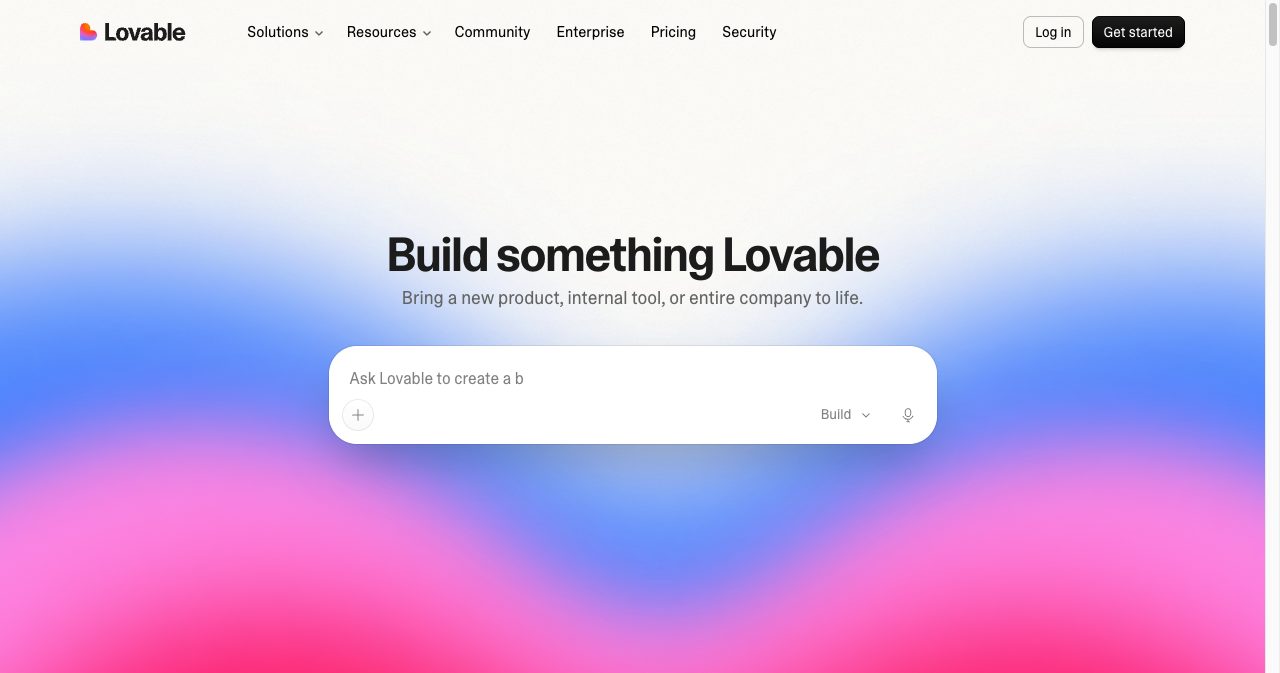
Lovable turns a chat into a React app with a Supabase backend, so login and a real database are there from the first prompt. Hosting is included and you can sync the code to GitHub.
Best for: a non-technical founder who needs something that looks like a product, with sign-up and saved data, this week. Also internal tools and landing-page-plus-dashboard demos.
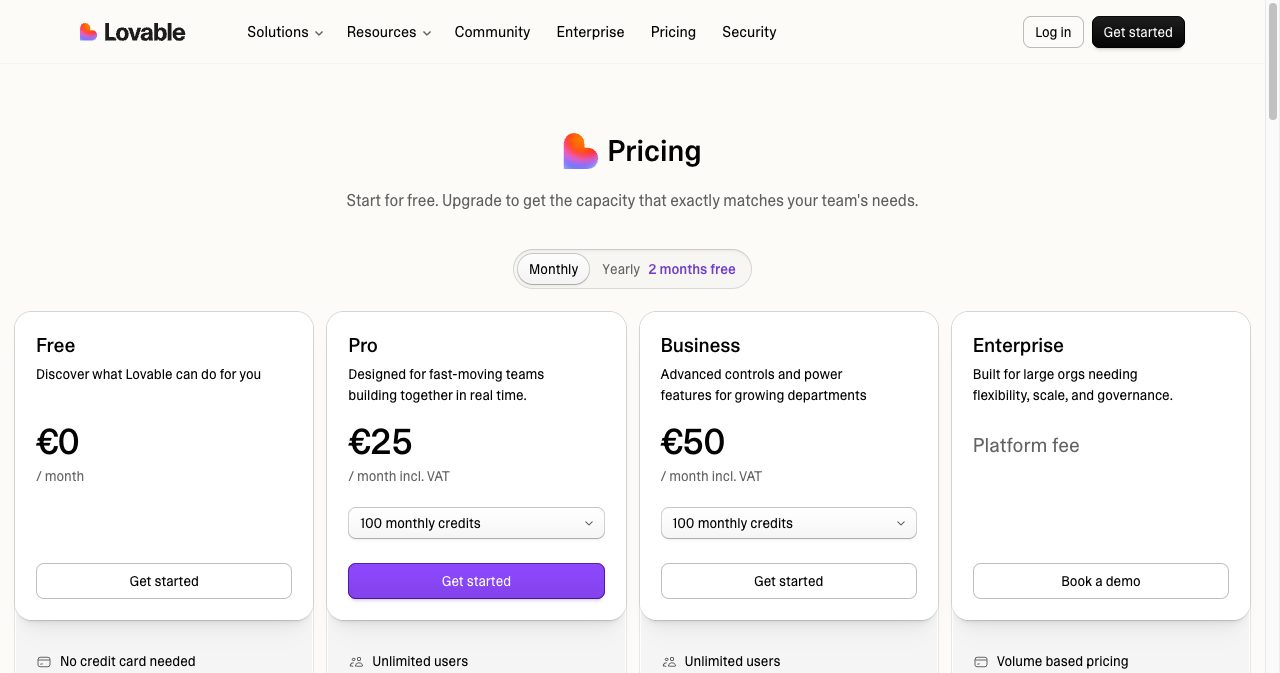
Price: free gives 5 credits a day, up to 30 a month. Pro is 25 a month for 100 monthly credits, and Business is 50 a month. Our checkout showed euros including VAT. Every plan also gets 5 daily build credits and 20 Cloud credits a month.
Where it breaks: credits burn fastest when you iterate, which is exactly what a prototype needs. You inherit Supabase conventions, and if you outgrow the bundled backend, a Supabase Pro plan of about $25 a month joins the bill. Complex workflows and enterprise integrations get shaky. The big one is database security: daily.dev's July 2026 review said about 70% of the Lovable apps it audited had incomplete or disabled Supabase row-level security. Check RLS before a single real email address goes in.
Lovable is also the category's money leader. It raised $400 million at a $13.3 billion valuation on 12 August 2026 and says users have started over 60 million projects. Those are company figures. We unpacked what they mean for the business in Lovable's $600M ARR and the economics of vibe coding.
Bolt.new: the fastest scaffold you are willing to throw away
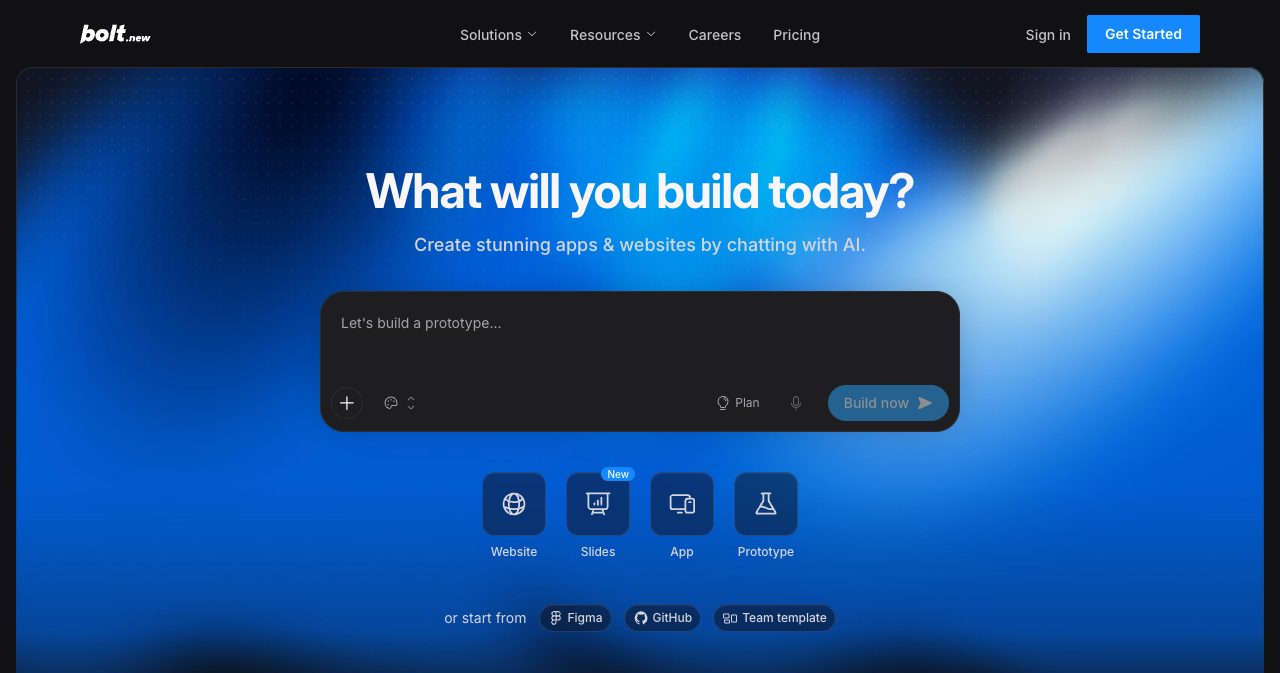
Bolt.new, built by StackBlitz, runs a full development environment in the browser. You can start from a prompt, a Figma file or a GitHub repo, and you get more framework choice than Lovable: Next.js, Remix, Astro, SvelteKit and Vue are all on the table.
Best for: a hackathon, an afternoon demo, or answering "is this idea even clickable?" before you spend real time on it.
Price: free gives 300,000 tokens a day and 1 million a month. Pro is $25 a month for at least 10 million tokens and no daily cap. Teams is $30 per member.
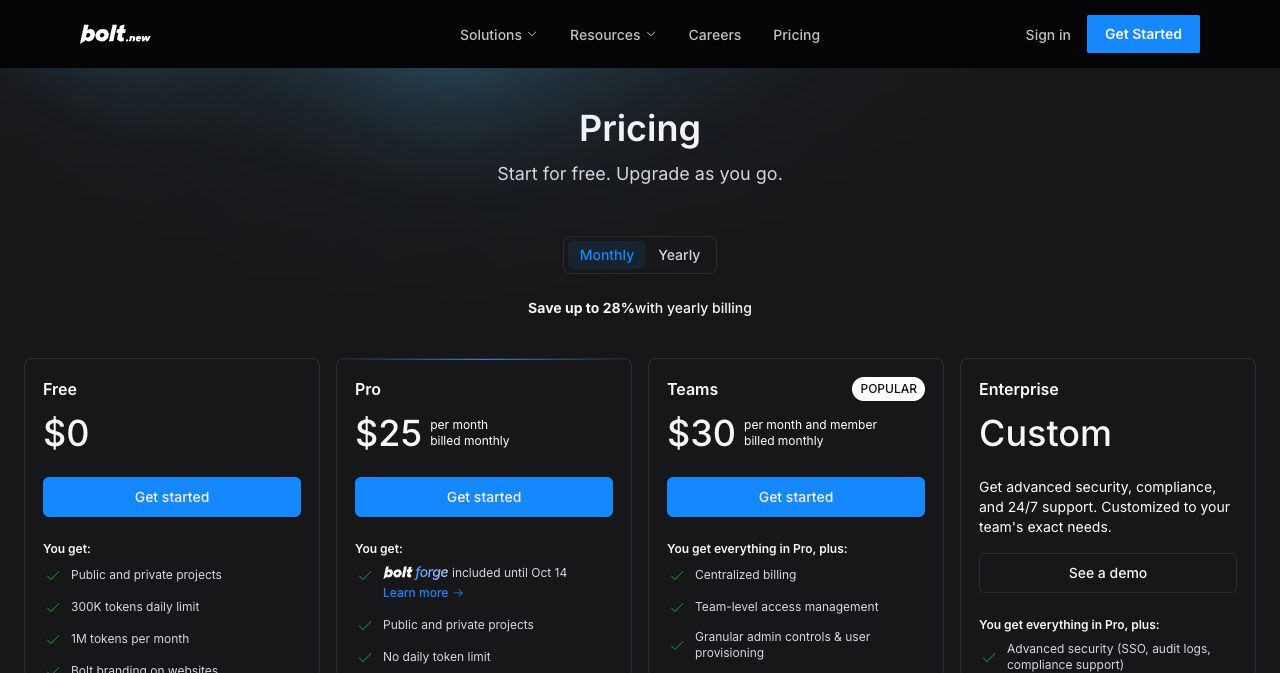
Where it breaks: generated code gets heavy and collects dead files. daily.dev flags exposed API keys and missing auth middleware as the typical failures. Tokens also get more expensive per change as the project grows, because the agent re-reads more of it each time. Bolt is excellent for two days and expensive and messy for two months. If you are inside a Microsoft shop, note that Bolt added Azure deploys and a Microsoft Marketplace listing in May 2026.
Replit: build, run and deploy in one browser tab
Replit is a cloud IDE with an agent, a database, hosting and multiplayer editing built in. Unlike the chat-first builders, the code is always right there.
Best for: a prototype that might become the product, founders who want to learn what the agent wrote, and small teams who edit together. Replit is also cited more often than Lovable for generating mobile apps.
Price: Core is $20 a month, or $18 billed yearly, and includes $20 of usage for the stronger models. Pro is $100 a month, or $90 yearly, with $100 of usage, 10 parallel agents and up to 15 collaborators.
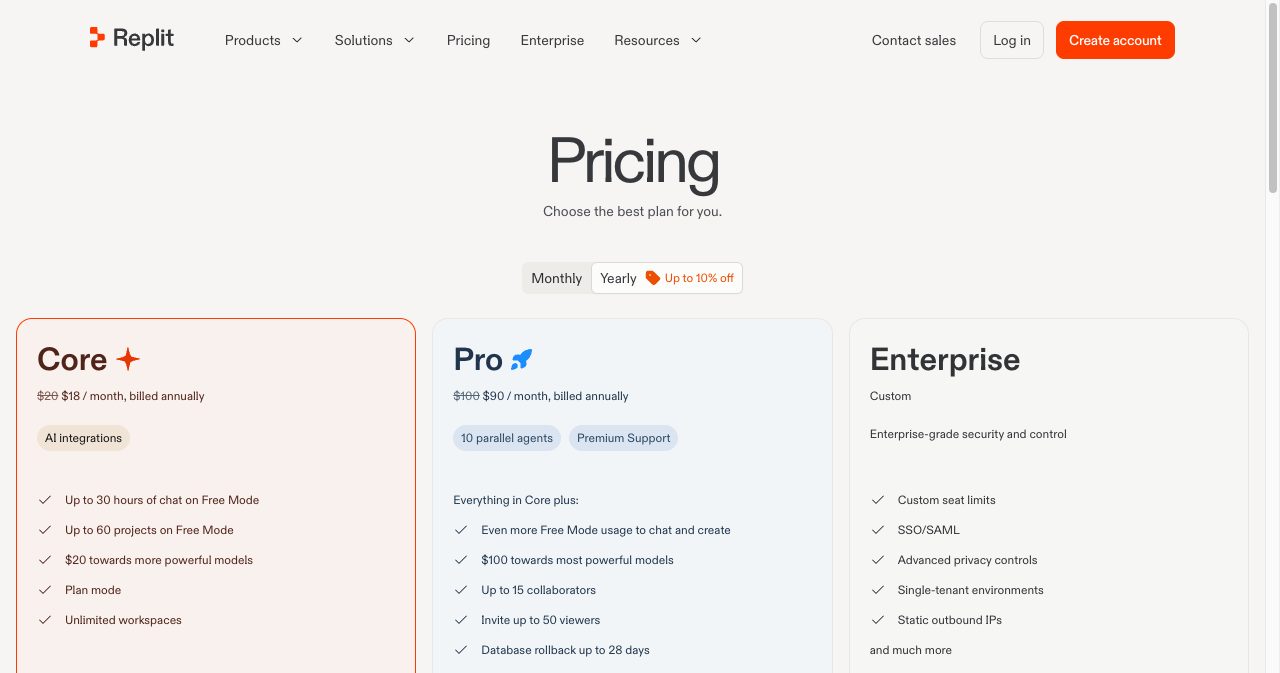
Where it breaks: daily.dev reports the agent starts looping once a project passes roughly 15 to 20 components. Default setups often skip auth middleware and rate limiting. Usage-based credits make the monthly bill hard to predict, and the coupling between Replit's database, auth and hosting makes moving out later painful.
v0 by Vercel: the interface, not the product
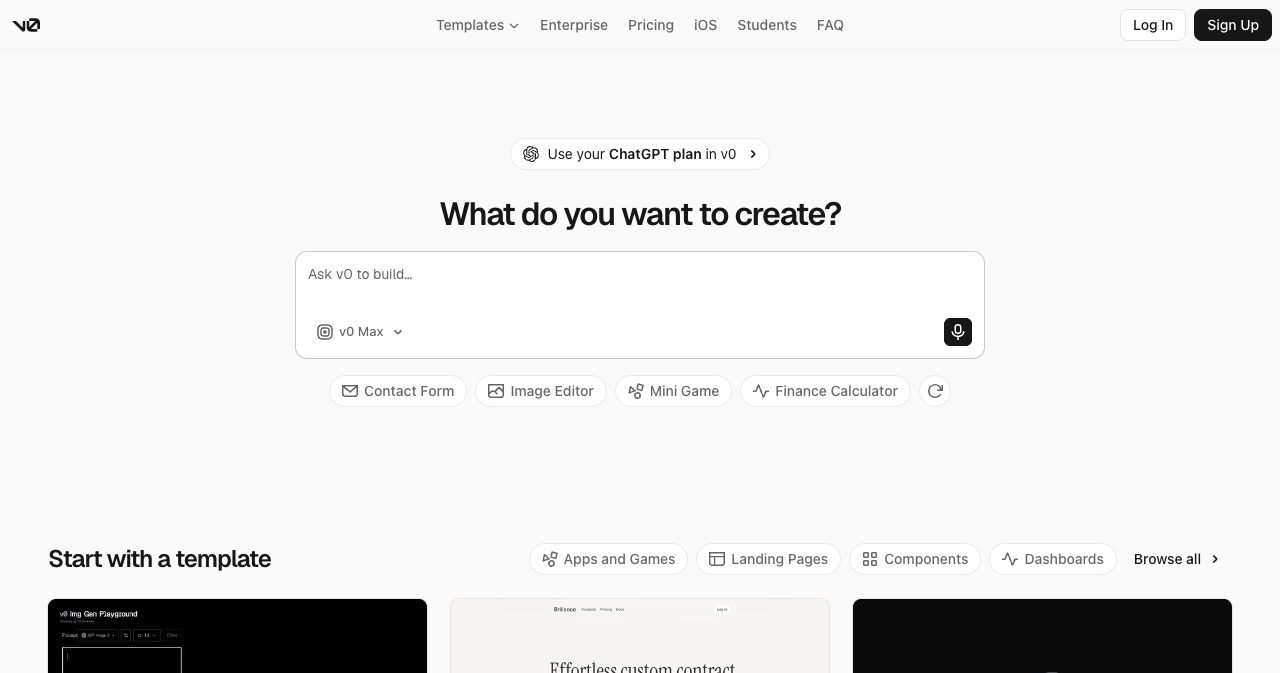
v0 turns prompts into React and Next.js with Tailwind and shadcn/ui. It has the best visual output of the prompt-first tools and deploys naturally to Vercel.
Best for: a landing page, a component kit, a dashboard UI, or a design-to-developer handoff when your team already works in React.
Price: free is capped at 7 messages a day. Plus is $30 per user a month with $30 of credits and $2 of free daily credits. Business is $100 per user. Some comparison sites still list Plus at $20, so check before you budget.
Where it breaks: there is little or no backend, so v0 alone is not a working product. You are locked into React, Next.js and Vercel. Rich interactions such as editors and drag-and-drop still need a human. A common pairing from practitioners: v0 for the UI, Claude Code for the backend.
Base44: the cheapest predictable all-in-one for internal tools
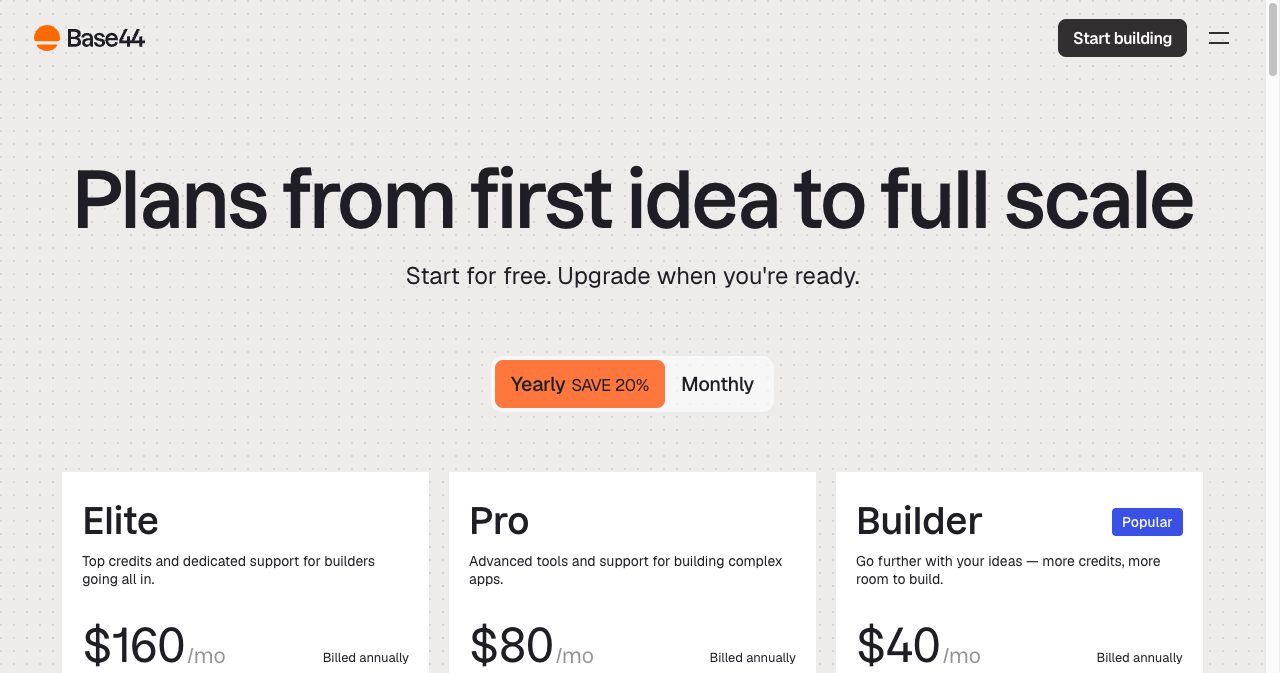
Base44 builds frontend, backend, database, auth and hosting from a prompt. Wix bought it in June 2025 for about $80 million plus earn-outs, and its founder says it passed $200 million in annual recurring revenue in August 2026. That figure is founder-reported, not audited.
Best for: operations tools, internal workflows and a first version on a tight budget.
Price: free includes 25 message credits a month. Billed yearly, Starter is $16 a month, Builder $40, Pro $80 and Elite $160, with monthly billing about 20% higher.
Where it breaks: connecting to a production database you already own is limited. It is fine for a new app and weak when your data already lives somewhere else.
The handoff tools: Cursor and Claude Code
These two are not prototyping tools in Karpathy's sense. They are where a prototype goes when someone has to own it.
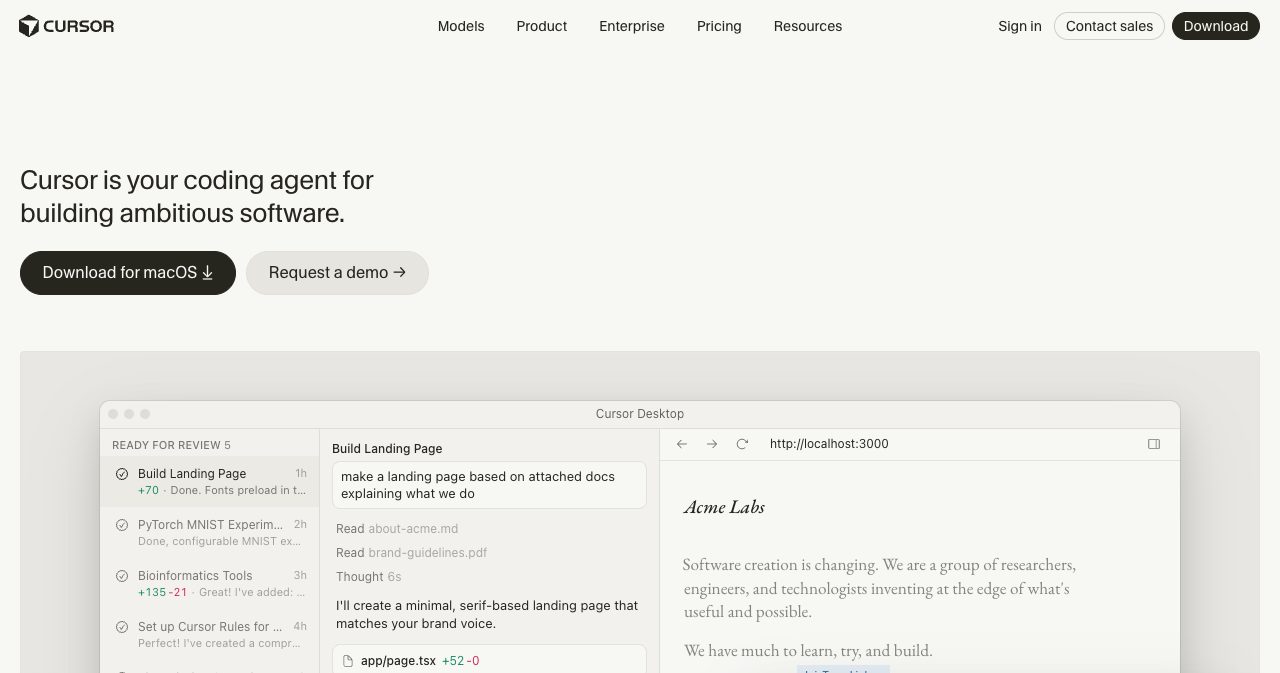
Cursor is an AI-native editor forked from VS Code, with agents that edit across a real repository. The Individual plan is $20 a month and Teams is $40 per user. SpaceX's $60 billion all-stock acquisition of Cursor was announced in June 2026 and closed on 14 August 2026. Forbes reported Cursor had crossed $4 billion in annualized revenue in early June. It needs a developer at the keyboard, and long sessions can lose context or over-refactor, so review still matters.
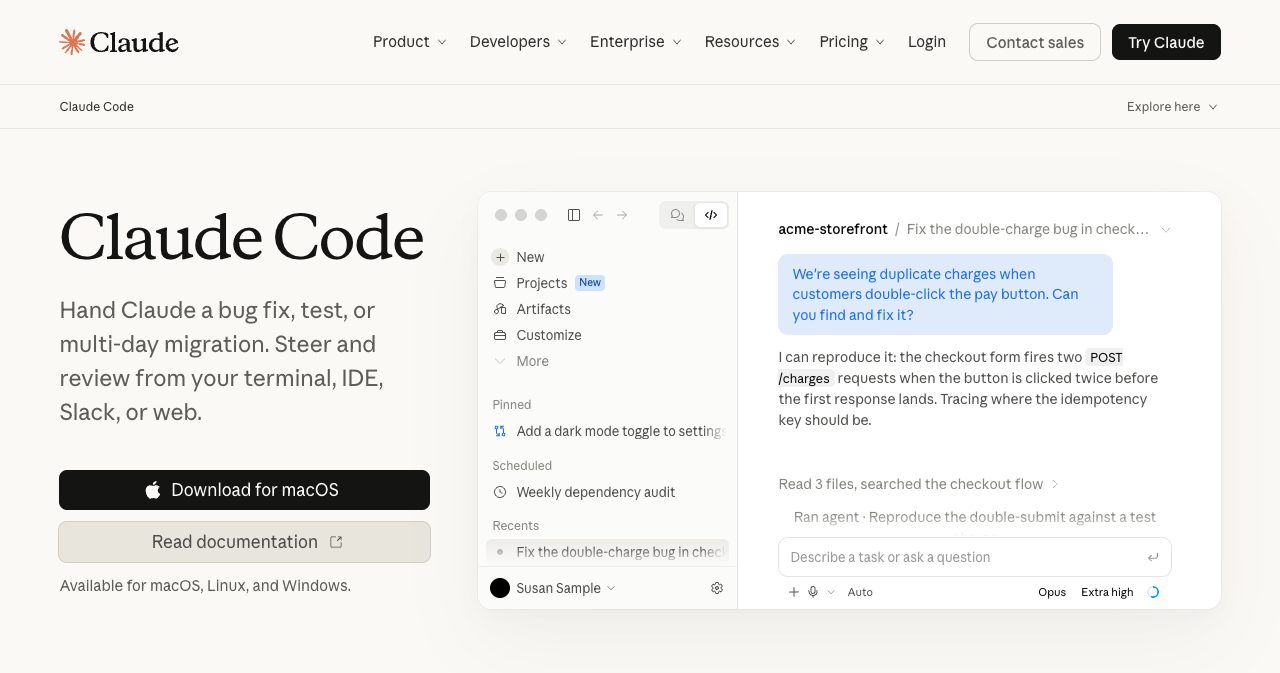
Claude Code is Anthropic's coding agent, used from the terminal, IDE, Slack or web. It runs commands, edits many files and is strongest on backend and repo-wide work such as "fix the auth and the data model." It comes with the $20 Claude Pro plan, with $100 and $200 Max plans for heavy use. In Stack Overflow's 2025 survey, 40.8% of respondents who use or build AI agents had used Claude Code, far more than any prompt-to-app builder. There is no visual preview by default, which makes it a poor first tool for a founder judging a UI. If cost is your worry, see our Claude Code pricing breakdown.
When to switch: daily.dev's rule of thumb is around 1,000 lines of code, or when changes start touching dozens of files. Past that point, browser builders hit token and reasoning limits, and a $20 editor working on your exported repo beats another stack of credits.
Two others deserve a line. Windsurf, now owned by Cognition alongside its Devin cloud agent, is a Cursor alternative with a smaller community. FlutterFlow is the visual path if native mobile is the actual product. Evidence for AI-generated mobile apps is thinner than for web apps, so treat any "ship to the App Store this weekend" promise with care.
The comparison table
| Tool | Best job | Skill needed | Paid from (Oct 2026) | You own the code? | Main trap |
|---|---|---|---|---|---|
| Lovable | Polished full-stack demo | None | 25/mo, 100 credits | Yes, via GitHub sync | Credit burn, Supabase RLS left open |
| Bolt.new | Throwaway scaffold | Low | $25/mo, 10M tokens | Yes, export | Heavy code, token cost grows with size |
| Replit | Prototype that may become the product | Low to medium | $20/mo ($18 yearly) | Yes | Agent loops past ~15 to 20 components |
| v0 | React UI and landing pages | Low | $30/user/mo | Yes | No real backend |
| Base44 | Budget internal tool | None | $16/mo billed yearly | Limited | Weak on existing databases |
| Cursor | Owning and hardening the code | Developer | $20/mo | Yes | Needs review, context loss |
| Claude Code | Backend and multi-file fixes | Developer | $20/mo (Claude Pro) | Yes | No visual preview |
A one-afternoon prototyping stack
You do not need a bake-off. You need an order of operations. This is the one we would run, and it matches what working developers describe on X: a stack, not a winner.
- Write the user story in one paragraph. Who signs up, what they create, what they see next. If you cannot write it, no tool will.
- Generate it in Lovable or Bolt.new. Use v0 instead if the interface is the whole bet.
- Force one real flow. Sign up, create one record, log out, log back in, see it again. A prototype without auth and persistence is a slideshow.
- Export to GitHub the same day. It protects you from credit limits, outages and lock-in, and it is what an engineer will ask for first.
- Screenshot the ugly states. Empty lists, errors, "permission denied." AI builders design the happy path. These screens show you where the prototype is hollow.
- Only then open Cursor or Claude Code. Hand the repo to the agent with a short brief: tighten auth, check database rules, move secrets server-side.
If every AI prototype you make looks the same, that is a known problem. Designers are now shipping shadcn-based kits so founder prototypes stop wearing the default AI look. We covered the fixes in how to avoid AI slop in vibe-coded frontends.
Where the prototype starts lying to you
A working demo tells you the idea can be clicked. It says nothing about whether the app is safe to put customer data in, and the numbers here are not close.
- 91% of live vibe-coded apps had a vulnerability. A paper first posted to arXiv in June 2026 and revised in September audited 200 deployed vibe-coded web apps, built with tools including Claude Code and Lovable. It found 1,186 vulnerabilities, and 65.77% of them were rated Critical or High. Most were broken access control, injection and authentication failures.
- The usual suspects repeat across tools. Missing auth middleware, Supabase row-level security left off, API keys shipped to the browser and no rate limiting. A demo with two fake users never needs any of those, so the AI never writes them.
"But the models got better." They got better at writing code that runs. Veracode's 2026 GenAI Code Security Report, published 28 July 2026, found models still pass its security checks only about 56% of the time, barely changed since its first report. Code-specialised models were no safer than general ones. Better models write more code faster, and on these numbers that means more vulnerable code faster.
There is a commercial version of the same lesson. BigIdeasDB checked more than 130 apps still running on Lovable, Replit, Vercel or Netlify subdomains in September 2026. Only 7.6% reported any revenue, the median earner made $29.50 a month, and none cleared $1,000 in monthly recurring revenue. That is one dataset, and the subdomain is a symptom rather than the cause. Still, the point stands: the tool builds the prototype, and a real domain, real security and real distribution are separate jobs.
Before launch, run the gate. Our pre-launch security checklist for vibe-coded startups splits it into what blocks launch, what must be ready on launch day, and what can wait.
What to pick on Monday
- Non-technical, need auth and a database this week: Lovable. On a tight budget: Base44.
- Need a running scaffold fast and don't mind binning it: Bolt.new.
- Want to see the code and deploy from the browser: Replit.
- The interface is the bet and you work in React: v0.
- The prototype just got real users, data or a technical cofounder: export to GitHub and move to Cursor, with Claude Code for backend and multi-file fixes.
Whichever you pick, do two things in the first week. Export the repo, and book a code review before a real email address lands in your database.
After the prototype: get it in front of people
The tools on this list are good enough that building is no longer the bottleneck. Getting noticed is. That BigIdeasDB result is a distribution problem as much as a code problem: a prototype on a free subdomain with no links pointing at it is invisible to customers, search engines and AI assistants alike.
Once your app is on its own domain and has passed the security checklist, give it somewhere to be found. SaaSCity is a human-reviewed launch directory where every product gets a permanent, indexed page and a building on a live city map that other founders browse. Listing your product takes about ten minutes, and you can check where you start with our free domain rating checker. For other places that accept AI-built apps, see where to list a vibe-coded app. If you would rather not spend a week on forms, our directory submission service submits your product to 50 to 150 directories for you.
FAQ
What is the best vibe coding tool for a startup prototype?
It depends on the next 48 hours. A non-technical founder who needs a polished demo with login and a database should start in Lovable. A throwaway scaffold to see if an idea is clickable is fastest in Bolt.new. A founder who wants to see the code and deploy in one browser tab should use Replit. If the bet is the interface and the stack is React, use v0. Once the prototype has to be kept, reviewed and handed to an engineer, move to Cursor or Claude Code.
What does vibe coding actually mean?
Andrej Karpathy coined the term on X on 2 February 2025 for building software by prompting an AI, accepting every change without reading the diffs, and pasting errors back in until it works. He said it was fine for throwaway weekend projects. Simon Willison's test still holds: if you reviewed, tested and can explain the code, that is software development, not vibe coding. Collins made it Word of the Year on 6 November 2025 with a wider definition that drops the no-review part.
How much do vibe coding tools cost in 2026?
Paid entry clusters at 20 to 30 a month, then usage. As checked on 7 October 2026: Lovable Pro 25 a month for 100 credits, Bolt.new Pro $25 for 10 million tokens, Replit Core $20 ($18 billed yearly), v0 Plus $30 per user, Base44 Starter $16 billed yearly, Cursor Individual $20, and Claude Code from the $20 Claude Pro plan. Iteration is what gets expensive, because agents re-read a larger codebase on every change.
Can a non-technical founder ship a production app with vibe coding?
They can ship a convincing demo. Shipping something that holds customer data is a different job. A June 2026 audit of 200 live vibe-coded apps found at least one vulnerability in 91% of them, with 65.77% of the bugs rated Critical or High, mostly broken access control, injection and authentication. Before real users arrive, someone who can read the code has to review auth, database rules and secrets.
When should I switch from Lovable or Bolt to Cursor or Claude Code?
Switch when the prototype gets real users, real data or a technical cofounder, or when the code passes roughly 1,000 lines and changes start touching dozens of files. At that size browser builders burn more credits per edit and start looping, and a $20 a month editor or terminal agent working on an exported GitHub repo is cheaper and safer.
Are Lovable and Cursor competitors?
Mostly not. Cledara's purchasing data, updated 7 October 2026, shows 58.4% of companies paying for Lovable also pay for Cursor. Teams use the prompt-to-app builder for the first version and the AI editor once the code has to be owned.
Did the AI models get better at writing secure code?
Not by much. Veracode's 2026 GenAI Code Security Report, published 28 July 2026, found models pass its security checks about 56% of the time, almost unchanged from earlier editions. Coding-specialised models were not more secure than general models. Better models write more code that runs, not more code that resists an attacker.
Get your SaaS in front of founders
List your product on the SaaSCity live city map - a permanent listing, real discovery, and a backlink from a high-DR directory. Free to start; upgrade for a dofollow link and a building on the map.