Launch & Growth
How to Choose SaaS Launch Directories by Domain Rating: A 2026 Framework
Most SaaS directories don't move your Domain Rating or send you traffic. Here's how to filter the 2,000+ options down to the ones actually worth your time.


Contents (8)
Quick answer: A DR-based framework filters SaaS launch directories before you submit to any of them. Set a hard Domain Rating floor of 40 to 50 and skip everything below it, which removes 85 to 90 percent of typical roundup lists. Then weight indexation over raw authority by spot-checking five to ten existing listings with a site: search. Split what remains into traffic directories like Product Hunt and AlternativeTo and authority directories that supply permanent dofollow links, and sequence submissions across several weeks instead of blasting fifty forms in one weekend.
Every founder eventually hits the same wall: you've shipped the product, you're ready to launch, and someone in a Slack community drops a list of "50 places to submit your SaaS." You submit to all fifty. Six months later, you check your backlink profile and find that maybe eight of them actually indexed, three passed any real authority, and the rest are sitting in a Google sandbox next to a hundred other unread listings.
This isn't a submission problem. It's a filtering problem, and it's fixable before you spend a single evening on forms.
Key Takeaways
- Filtering problem, not submission problem: Of fifty submissions from a typical community list, maybe eight index and three pass real authority.
- Set a floor, not a target: DR 40 to 50 is a reasonable hard floor for early-stage SaaS, and it cuts roughly 85 to 90 percent of most roundup lists.
- Indexation beats authority: A directory indexing 90 percent of listings within two weeks is worth more than one with triple the domain authority and a 25 percent rate.
- Verify before you submit: Spot-check five to ten existing listings with a
site:search to see what will happen to your own page. - Two buckets, two jobs: Traffic directories need polished copy and screenshots; authority directories need permanent, verified, dofollow listings.
- Sequence over weeks: Tier-one traffic directories first, then authority directories, then niche category directories on an ongoing basis.
- Velocity risk is real: Submitting to many low-authority sites in a short window can read as unnatural link velocity, especially on a brand new domain.
Why "More Directories" Is the Wrong Strategy
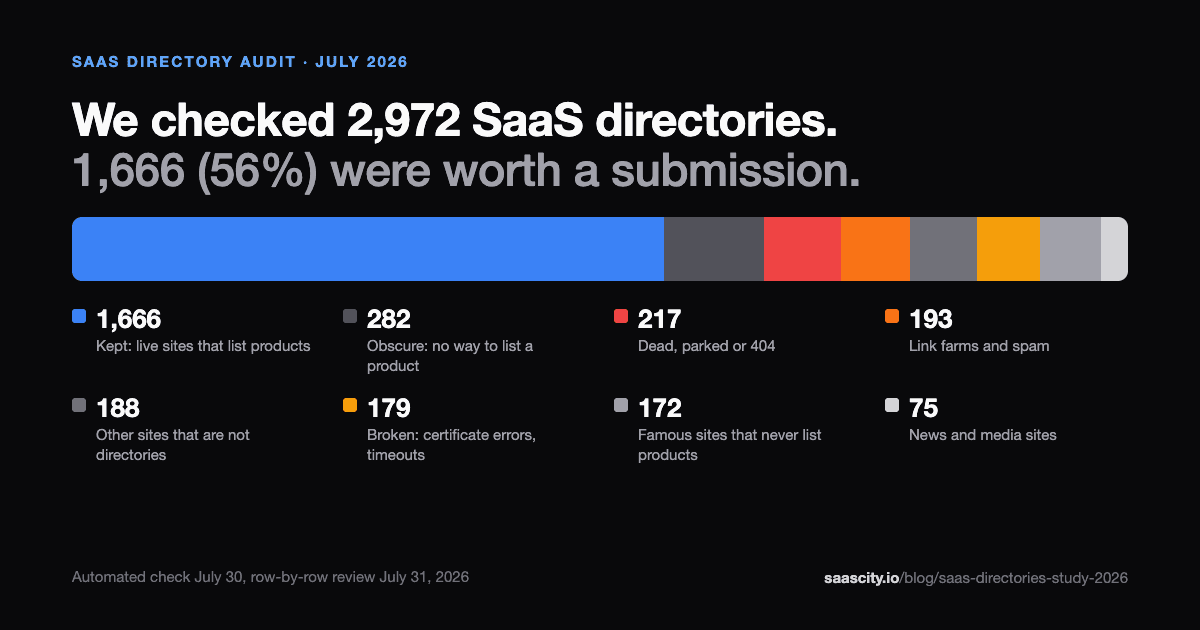
Directory submissions are attractive because they're cheap and fast compared to earning links through content or outreach. But cheap and fast only pays off if the directory itself carries weight. A dofollow link from a directory with Domain Rating (DR) 12 and no organic traffic does close to nothing for your site's authority. Google also increasingly discounts link farms and low-quality aggregator pages in its ranking calculations.
We covered the mechanics of this filtering process in detail here: checking product readiness, preparing your submission kit, and screening directories by DR before you submit. This piece goes one layer deeper: how to actually rank and sequence the directories once you've filtered the junk out.
Step 1: Set a DR Floor, Not a DR Target
Founders often ask "what DR should I aim for?" That's the wrong question. You don't control which directories accept you. You control which ones you bother submitting to. Set a hard floor (DR 40–50 is a reasonable line for most early-stage SaaS products) and don't submit below it, regardless of how easy the form is. If you'd rather start from a list that already shows the number, our best SaaS directories page ranks directories by live Ahrefs DR.
This single rule eliminates roughly 85–90% of the directories in most "ultimate list" roundups circulating online. It also protects you from a subtler problem: submitting to too many low-authority sites in a short window can look like unnatural link velocity to search engines, particularly if your own domain is brand new.
Step 2: Weight Indexation Over Volume
A directory that indexes 90% of its listings within two weeks is worth more to you than one with triple the domain authority but a 25% indexation rate. Indexation is the only signal that tells you Google is actually crawling and passing value through that specific listing page, not just the directory's homepage.
Before submitting, spot-check five to ten existing listings on the directory using a site: search. If most of them aren't indexed, that tells you what's coming for your own page, no matter how strong the directory's overall metrics look.
Step 3: Separate "Traffic" Directories From "Authority" Directories
Not every listing needs to do the same job. Split your target list into two buckets:
Traffic directories are ones with an active community that actually clicks through to product pages. Think Product Hunt on launch day, or a niche directory with an engaged newsletter. These are worth the extra polish on your submission copy and screenshots.
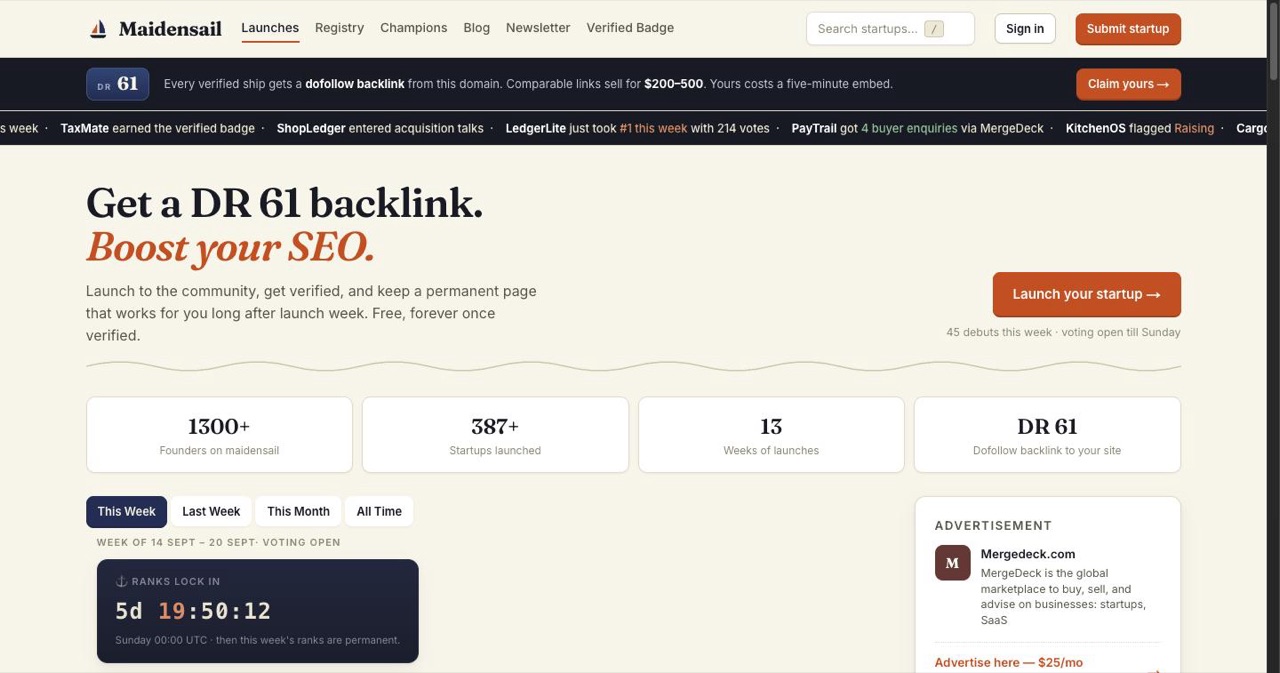
Authority directories exist mainly to strengthen your backlink profile. They may send negligible direct traffic, but a permanent, verified, dofollow listing on a well-indexed, reasonably high-DR site compounds over time. Maidensail's registry is built around this second bucket specifically: every verified listing is a permanent page, not a 30-day feature slot that disappears after launch week, which matters if you're building a link profile you can rely on a year from now rather than a traffic spike you can't.
Step 4: Sequence, Don't Blast
Submit in tiers over several weeks rather than all at once. A practical sequence:
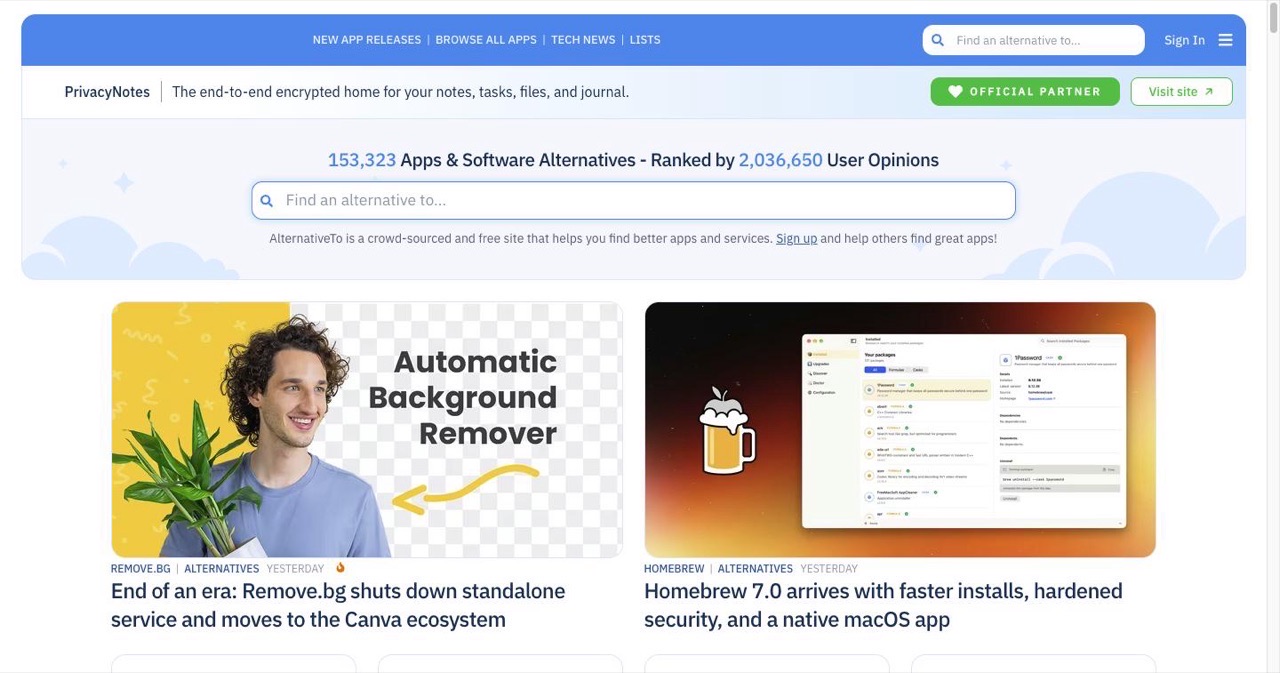
- Week 1: Tier-one traffic directories where a coordinated launch day matters (Product Hunt, AlternativeTo, G2 if you qualify). For launch-day boards beyond Product Hunt, our Product Hunt alternatives comparison lists 25 of them by DR, price and link type.
- Week 2–3: Tier-one and tier-two authority directories with confirmed high indexation rates and a DR at or above your floor.
- Ongoing: Niche, category-specific directories relevant to your vertical, added as you find them, screened with the same DR-and-indexation checklist every time.
This staggered approach also gives you a second benefit: you can watch which listings actually convert into signups or demo requests, and stop investing submission time in categories that don't perform.
If you'd rather not fill in the forms yourself, a directory submission service can work through the list for you. Hold it to the same DR floor and indexation checks, and ask for a report of what went live. No service can promise you a DR gain.
A Practical Starting Point
If you're building this list from scratch, don't start from a random Notion roundup. Start from a directory that already applies this filtering for you. Maidensail verifies and ranks listings by live Ahrefs Domain Rating rather than accepting every submission, which removes a meaningful chunk of the manual screening work described above. Getting verified there costs nothing, and because listings are permanent rather than time-limited, it's a reasonable first entry in your "authority" bucket before you move on to sourcing the rest of your list.
The Takeaway
Directory submissions still work as a link-building channel in 2026, but only for founders willing to filter aggressively before they submit. Set a DR floor, check indexation before you trust a directory's stated metrics, separate traffic plays from authority plays, and sequence your submissions instead of blasting fifty forms in a weekend. The founders getting real value out of directories aren't the ones submitting to the most sites. They're the ones submitting to the right dozen.
Get your SaaS in front of founders
List your product on the SaaSCity live city map - a permanent listing, real discovery, and a backlink from a high-DR directory. Free to start; upgrade for a dofollow link and a building on the map.