Launch & Growth
How Long Do Backlinks Take to Work for a Micro-SaaS? The 2026 Timeline
The most-cited study on backlink timing found one link takes about ten weeks to move a page a single position. If your first 20 directory links went live a month ago and nothing moved, you're probably on schedule. Here's the four-stage timeline, a 7-step test to see whether one link did anything, and when to stop waiting and change the page instead.

Contents (10)
- How long do backlinks take to work?
- What actually happens between a link going live and a ranking change?
- How long does Google take to index a new backlink?
- Why do some backlinks work in two weeks and others never?
- How do you check whether a specific backlink is working?
- What timeline should a micro-SaaS expect from directory and launch-platform links?
- When should you stop waiting on a backlink?
- Do backlinks move AI search visibility the same way they move Google rankings?
- Questions founders ask about backlink timelines
- The number to check tonight
The average backlink in the most-cited study on this question took ten weeks to move a page up a single position in Google.
So if your first 20 directory links went live a month ago and Google Search Console still shows a flat line, you're probably on schedule. The clock you've been watching started too early. It starts when Google finds the link, which can be weeks after you submitted the form.
Quick answer: Backlinks to a micro-SaaS on a young domain usually take a few days to eight weeks to be found by Google, about ten weeks after that to move a page one position, and three to six months before a pattern shows. Pages already on page two of Google move first. Pages on page one barely move from a single link.
Figures checked November 20, 2026. Study results are the numbers each study's authors published, dated inline.
How long do backlinks take to work?
A single backlink takes about ten weeks on average to move a page one position in Google, counted from the day Google discovers it. For a micro-SaaS, discovery alone can take a few days to eight weeks, so three months from going live to a visible ranking change is a normal timeline.
That ten-week figure comes from a study Kristina Kledzik ran for Moz, published April 21, 2016. She worked at a company with nearly 200,000 indexed pages, picked 76 links pointing at pages with similar content that hadn't changed significantly in six months, and tracked rankings for keywords with a Keyword Difficulty of 25 to 35%. On average, one link produced one rank jump after ten weeks ("It takes 10 weeks on average to see 1 rank jump," as her section heading puts it).
The study is ten years old and covers one company's site, and Kledzik herself calls it "a fairly small data set." It's still the figure most people quote, because few public measurements isolate single links on pages where nothing else changed. Treat ten weeks as an order of magnitude.
For a young SaaS domain, the stages line up like this:
| Window | Stage | What you can expect | Evidence |
|---|---|---|---|
| Week 1 | Discovery | Referral clicks if the linking page has visitors. Possibly an entry in Ahrefs, whose backlink index refreshes every 15 to 30 minutes. No ranking change. | Ahrefs, Google Search Central |
| Weeks 2 to 4 | Discovery and indexing | Links from major directories such as SaaSHub appear in Ahrefs one to three weeks after approval. DR can tick up. | SaaSCity backlinks guide (October 2026), Ahrefs |
| Weeks 4 to 12 | Evaluation | Smaller directories appear in Ahrefs at four to eight weeks. Pages on page two or deeper start climbing around weeks 8 to 9. Impressions rise before clicks. | SaaSCity backlinks guide, Moz (2016) |
| Months 3 to 6 | Ranking | The average one-spot gain per link lands around week 10 after discovery. Page-one pages barely move. Time to judge the page as well as the link. | Moz (2016), Ahrefs (2025) |
The directory rows come from our guide to getting backlinks for a SaaS, checked by hand in October 2026. They describe how fast link tools pick up directory listings, which is a separate question from when rankings move.
Ask the same question in an SEO forum and the answers run from two weeks to six months. People start the clock at different moments (submitted, published, discovered), measure different things (DR, impressions, position, signups) and start from different positions. A page at #14 needs a few spots; a page at #84 needs seventy.
What actually happens between a link going live and a ranking change?
Four things happen in order: Google discovers the link, indexes the page it sits on, weighs it against the rest of your link profile, and then re-ranks your page. Each stage has its own delay, and the delays add up, which is why backlink timelines are measured in months.
1. Discovery
Discovery is the first visit Googlebot makes to the linking page after your link appears on it. For deep pages, that visit can take a long time. Google's John Mueller described the range in a 2018 hangout, reported by Search Engine Journal on October 16, 2018: "some URLs we will crawl daily. Some URLs maybe weekly. Other URLs every couple of months, maybe even every once half year or so." A fresh listing on page 40 of a small directory's category archive is the half-year kind.
2. Indexing
Indexing means Google keeps the crawled page. A visit doesn't guarantee that, and thin directory listings often get dropped. If the page with your link never enters the index, the link has nothing to stand on.
3. Evaluation
Evaluation is where Google weighs the link: whether it's followed or nofollow, how many other links share the page, and whether the pattern looks like a link scheme. Kledzik's data points to a built-in delay here. Links from both low and mid-authority domains showed their first big jump only after 10 weeks, and she suspected "Google's probably taking a bit more time to trust a link from a lower-quality site."
4. Ranking
Ranking is the part you see: the target page moves, provided it competes for a query people search. Google's Search Central getting-started page gives the general rule: "Some changes might take effect in a few hours, others could take several months," and you "likely want to wait a few weeks to assess whether your work had beneficial effects."
How long does Google take to index a new backlink?
Google can take anywhere from a few days to several months to index a new backlink. The deciding factor is how often Googlebot already visits the page your link sits on, and nothing you change on your own site speeds that up directly.
Google's recrawl documentation says "Crawling can take anywhere from a few days to a few weeks," and warns that "Requesting a crawl does not guarantee that inclusion in search results will happen instantly or even at all."
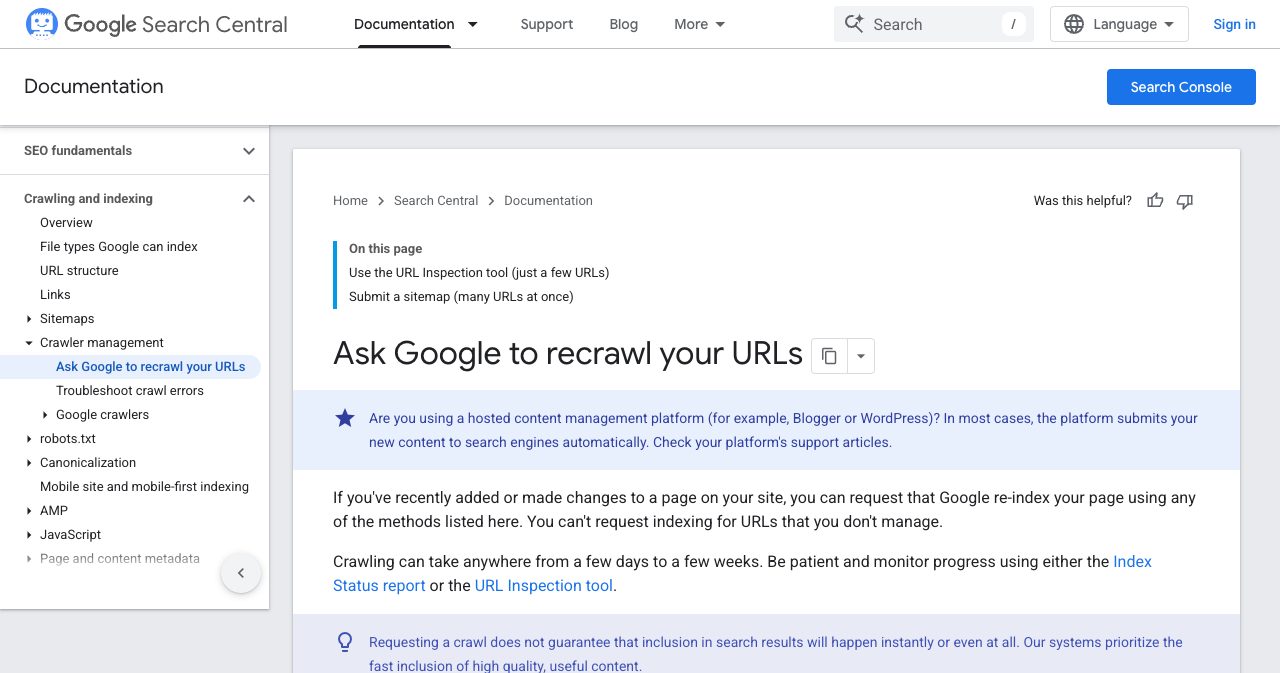
With backlinks, the page that needs crawling belongs to someone else. Google's URL Inspection tool only accepts URLs from your own Search Console property ("The URL must be in the current property"), and the recrawl page adds: "You can't request indexing for URLs that you don't manage." You can't push a directory's listing page into the index yourself.
You can check it and nudge it. Search Google for site: plus the listing URL, or search a unique sentence from your listing in quotes; if it shows up, the page is indexed. To give Googlebot another route in, link to the listing from a page on your own site that gets crawled often, such as a press page.
Link tools run on separate clocks. Ahrefs says on its big data page that its backlink index is "updated with fresh data every 15–30 minutes." A link in Ahrefs means Ahrefs found it; Google keeps its own schedule.
Why do some backlinks work in two weeks and others never?
Backlinks that seem to work in two weeks usually point at pages that were already close to ranking, or at pages that would have ranked anyway. Links that never work tend to sit on pages Google ignores, carry nofollow, or point at a page nobody searches for.
In the Moz data, pages already on Google's first page "didn't show much of a rankings increase with one link, barely moving over one spot in 22 weeks," while pages on page two or deeper "took off after 8–9 weeks." A page at #12 for a low-competition query needs a nudge. A page at #60 needs far more than one link.
Other quick wins owe nothing to the link. Ahrefs' May 15, 2025 study by Patrick Stox, Technical SEO at Ahrefs, found that only 1.74% of a million random URLs first seen in September 2023 reached the top 10 within a year, down from 5.7% in 2017. A second sample of 2 million URLs created in October 2023 with non-empty English content did better, at 6.11%. And 40.82% of the pages that reached the top 10 got there within one month. Some pages rank fast regardless, and a link that lands the same week takes the credit.
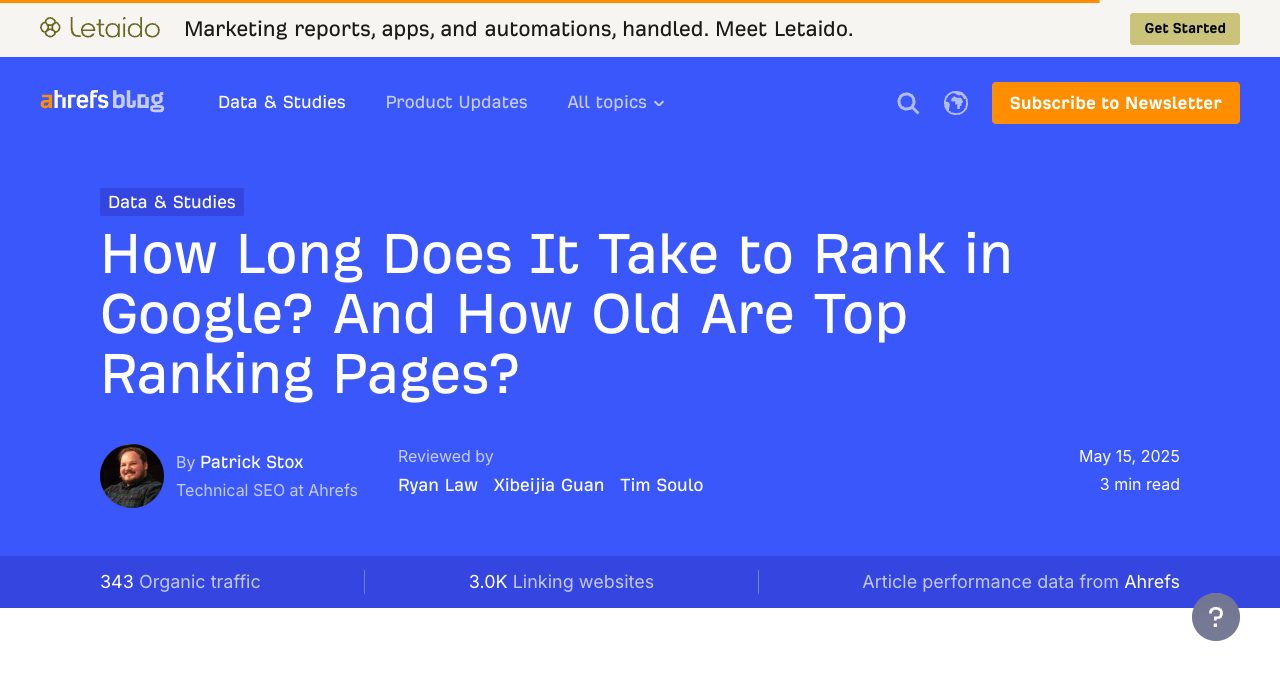
The same study shows what a new SaaS is up against: 72.9% of top-10 pages are more than three years old (59% in 2017), and the average #1 result is five years old (two years in 2017). Most first-page results have had years to collect links.
Links that never work tend to fall into six patterns.
The linking page never gets crawled
Plenty of directories exist mainly to collect submissions. SaaSCity's study of 2,972 SaaS directories found 1,306 not worth a submission, from dead domains and expired certificates to link farms. Google's spam policy lists "low-quality directory or bookmark site links" among its examples of link spam, so links from those sites tend to be ignored at best.
The link is nofollow
SaaSCity's backlinks guide describes launch platforms as mostly nofollow, and Ahrefs states that "If a website is only linking to you via nofollow links, it won't increase your DR." Google has treated nofollow as a hint since September 10, 2019, so such a link might count toward ranking, but you can't plan a quarter around "might." Count these links as traffic and mentions.
The link shares a page with 400 others
In the original PageRank paper by Sergey Brin and Lawrence Page (1998), each page's vote is divided by the number of links going out of it. Google's ranking has changed enormously since then, but that dilution is why one line in a 400-product category list passes far less than a featured spot on a page with ten links.
The target page has no search demand
If Search Console shows zero impressions for your target query over 28 days, no link can lift a ranking nobody sees. Point links at pages that already earn impressions, even at position 30.
The competitor has 100 times your links
Thirty links in a month feels like a lot until you look at a competitor with 3,000 referring domains. Moz has a useful example: a site owner earned around 20 links to a page that was being outranked by pages with "about 6 more inbound links," and it took "5–10 weeks to move from #9 to #5." Twenty links can close a gap of six; a gap of 3,000 calls for a different keyword. Pick queries where the top pages have tens of referring domains.
The links were bought
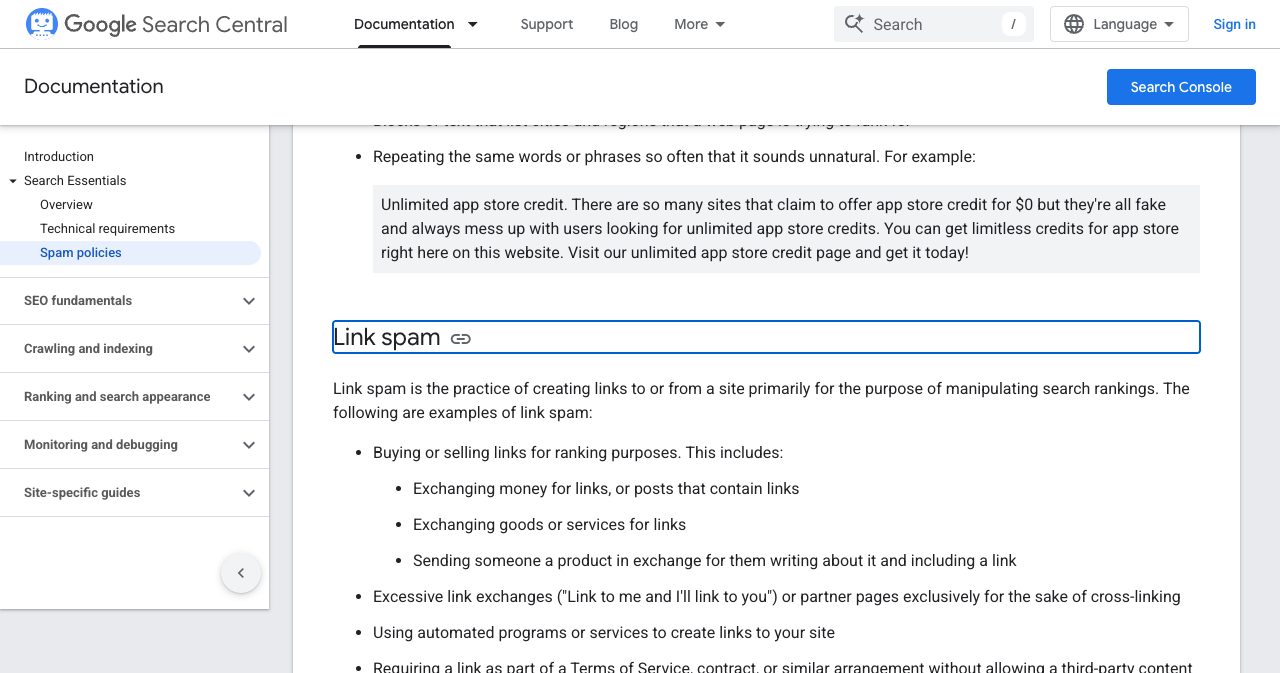
Google's spam policies define link spam as "the practice of creating links to or from a site primarily for the purpose of manipulating search rankings," and the first example listed is "Buying or selling links for ranking purposes." Google's December 2022 link spam update said its SpamBrain system "can now detect both sites buying links, and sites used for the purpose of passing outgoing links," and that "any credit passed by these unnatural links are lost." If your 30 links came from a "100 directories for $49" package, stop waiting for them.
How do you check whether a specific backlink is working?
To check whether one backlink is working, compare the page it points to against a similar page on your site that got no new links, starting from the day the link was discovered. Check both in Google Search Console at 4, 8 and 12 weeks.
Total traffic is the noisiest number you have, and most founders who give up on links were watching it. This protocol isolates one link:
- Log the link the day it goes live. Write down the linking page URL, the page it points to, the anchor text, the date and the rel attribute. Right-click the link, choose Inspect, and look for nofollow, sponsored or ugc in the rel value.
- Confirm the linking page is indexed. Search Google for site: plus the listing URL, or search a unique sentence from your listing in quotes. If the page doesn't appear, Google hasn't indexed it, and the link can't help until it does.
- Pick a control page. Choose a page on your own site that targets a similar keyword, ranks in a similar position and will get no new links during the test. Whatever it does is background noise: algorithm updates, seasonality, sitewide changes.
- Record a baseline for both pages. In Google Search Console, open the Performance report, filter by each page and save the average position, impressions and clicks for its main query over the last 28 days.
- Find the discovery date. Export Latest links from the Search Console Links report, which is sorted by discovery date, or open the Ahrefs Backlinks report with the New tab and Show history set to Last 30 days. The first date the link appears starts your clock.
- Compare at 4, 8 and 12 weeks. Pull the same Search Console numbers for both pages at each checkpoint, and don't edit either page in between. A target page that climbs while the control stays flat points to the link. Both moving together points to something sitewide.
- Make the call at week 12. If the target moved, keep earning links to it. If it didn't and it still sits beyond page two, the link was too weak for that keyword or the keyword is wrong for the page. Change the page or the keyword before chasing more links.
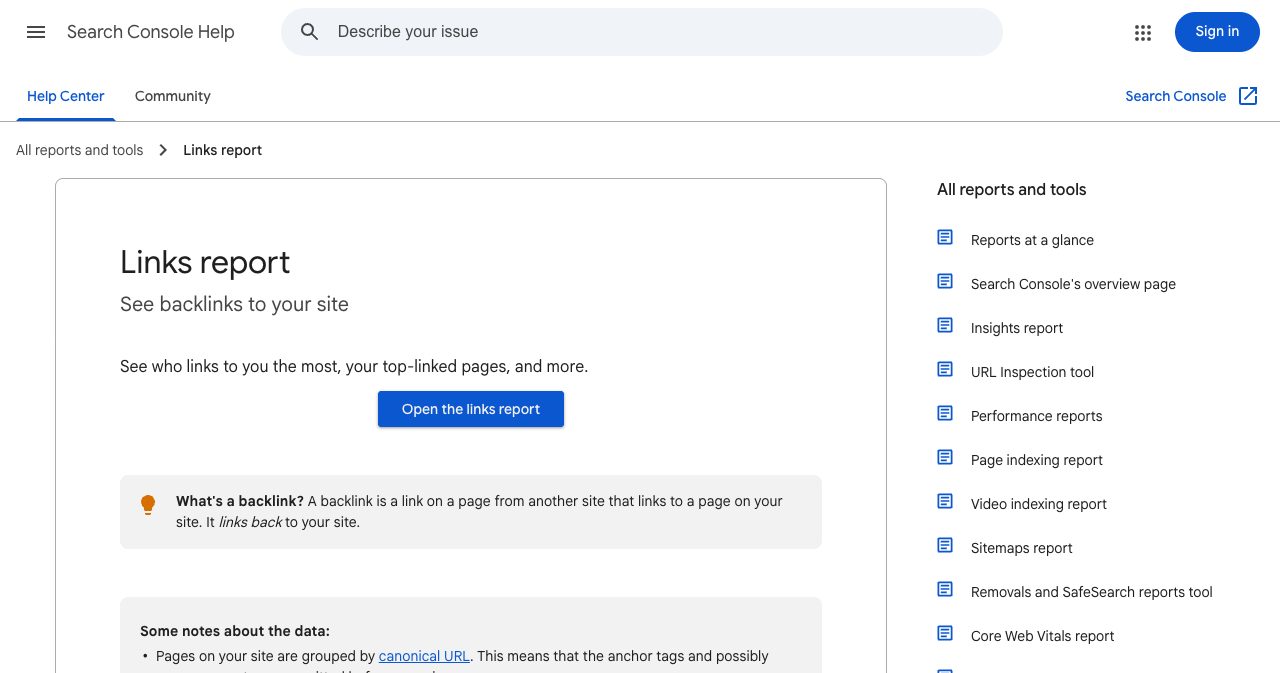
Two quirks of the Links report matter for step 5. Google says it "isn't a comprehensive list of every link on your site." It's a sample, so a missing link doesn't prove Google hasn't seen it. And "The report doesn't specify if a link is marked as nofollow," which is why step 1 has you check the rel attribute yourself. The Latest links export, sorted by discovery date, is the closest thing to a timestamp Google gives you.
On the Ahrefs side, the free plan for verified sites (Ahrefs Free, formerly Ahrefs Webmaster Tools) shows up to 1,000 backlinks at once, plenty for a young SaaS. The Backlinks lesson in Ahrefs Academy shows how to isolate new ones with the New tab, a 30-day history and the "Newly published/Link added" status filter.
The 12-week window is a little longer than Moz's 10-week average on purpose, so a slow link gets a fair hearing.
What timeline should a micro-SaaS expect from directory and launch-platform links?
A micro-SaaS should expect directory links to show up in Ahrefs within one to eight weeks, Domain Rating to move within the first month, and rankings to follow two to four months after that, provided the links are followed and the listing pages are indexed. Launch-platform links mostly bring traffic.
Each source runs on its own clock:
| Link source | Shows up in Ahrefs | Moves DR? | Ranking effect to expect |
|---|---|---|---|
| Major directory such as SaaSHub | 1 to 3 weeks after approval | Yes, if followed and it's the first link from that domain | Small, from month 2 or 3 |
| Small directory | 4 to 8 weeks | Yes, if followed, but low-authority domains add little | Very small; in the Moz data, links from sites under DA 25 netted barely two ranks |
| Launch platform (Product Hunt-style) | Varies | No, when the link is nofollow | Launch-day traffic and mentions; ranking credit only if Google takes the hint |
| Free G2, Capterra or SourceForge profile | Never, because it doesn't link to you (October 2026) | No | Buyer trust and branded search |
| Followed editorial mention on a relevant site | When the article gets crawled | Yes | The largest per link; Moz found higher-authority links had a bigger effect |
| Paid link package | Often | Possibly | None once SpamBrain neutralizes it |
Sources: SaaSCity backlinks guide (October 2026), Moz (2016), Ahrefs Domain Rating documentation, Google Search Central (2019, 2022).
The low-authority row comes from Moz's data: pages that got a link from a site under DA 25 dropped after 13 weeks, "then recovered to barely two ranks up." Kledzik's own rule was to spend no time or money on sites under DA 25. That's strict for a micro-SaaS that needs its first ten referring domains from somewhere, but it argues for working the top of your list first.
Why DR moves before rankings
Domain Rating often climbs in week three while rankings sit still until month three, and the formula explains why. Ahrefs CMO Tim Soulo writes (May 4, 2022) that DR is "measured on a logarithmic scale from 0 to 100," built from followed links only, and that "Only the first link from a domain will increase your DR." Each new directory counts once, as soon as Ahrefs indexes it, while rankings wait on Google's discovery and evaluation. Soulo also reminds readers that "Google ranks pages, not websites."
DR can fall without you losing a single link, too. Ahrefs' help center explains that when the strongest sites gain links, "we push all the other websites down by 1."
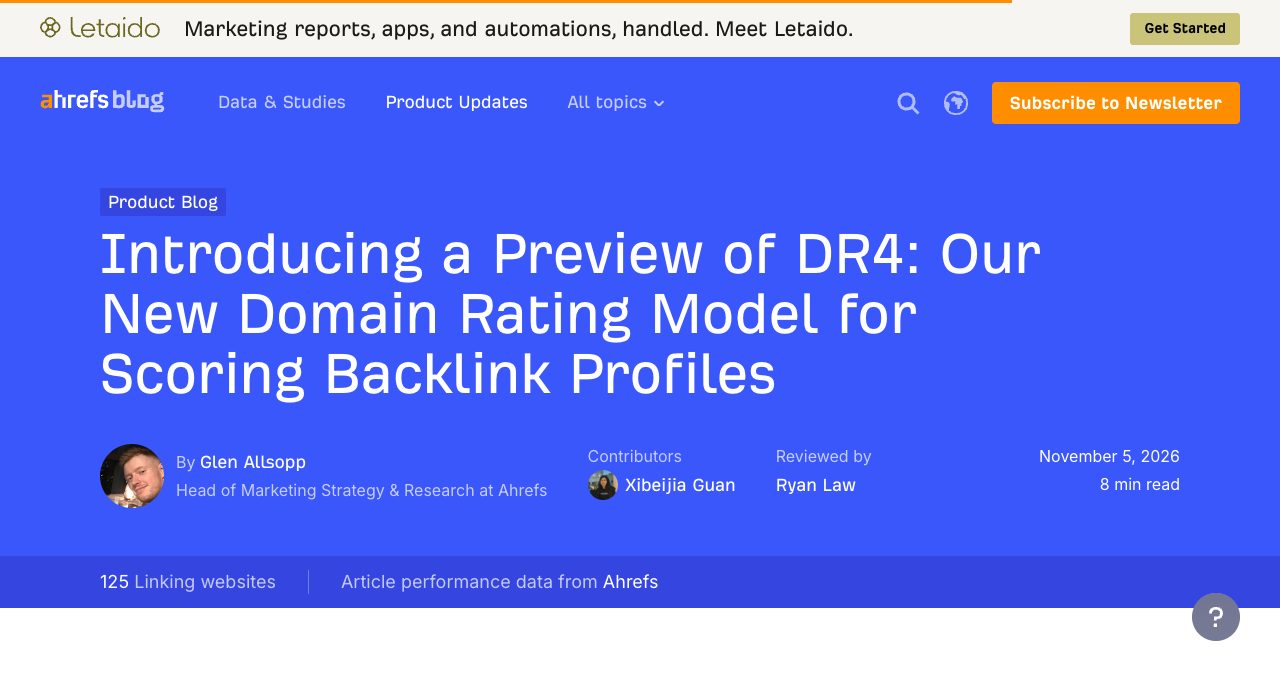
The formula itself is about to change. Ahrefs announced DR4 on November 5, 2026, in a post by Glen Allsopp, its Head of Marketing Strategy and Research, and says it replaces the current model in the standard interface on December 1. Subdomains get their own score, about half as many sites receive a rating, and links from sites Ahrefs estimates have organic search traffic carry more weight. If your DR jumps or drops in the first week of December, check a few competitors before you blame your links; Ahrefs recommends the same. Our Domain Rating playbook covers how many referring domains it takes to get from DR 0 to 30.
Picking the next batch
If your first links came mostly from launch platforms, our comparison of 25 Product Hunt alternatives lists each one by DR, price and link type, so you know in advance which clock each one runs on. If you're still building the list, SaaSCity is a gamified startup directory with a live city map and human editorial review. A listing is free with the SaaSCity badge on your site and an open launch week; the Basic listing ($19.99, one-time) is reviewed by hand, goes live within 24 hours and gets a building on the city map, and Premium ($39.99) adds a written launch review on the blog. Its Ahrefs DR was 71 as of November 20, 2026.
When should you stop waiting on a backlink?
Stop waiting on a backlink when the page it sits on still isn't indexed eight weeks after approval, or when the target page hasn't moved against its control twelve weeks after Google found the link. Eight weeks is the slow end of the directory range; twelve gives a margin over Moz's ten-week average.
After that, the data tells you which of three moves to make.
Keep going if impressions are rising and average position is creeping up, say from 40 to 25. That's what a page looks like on its way to page one. Moz's page-two pages needed 8 to 9 weeks to take off, and Kledzik found each link's effect "increases over time."
Change the keyword if the page climbed and then stalled on page two or three for a query where the top results have hundreds of referring domains. Look in Search Console for a narrower query the page already gets impressions for, and aim the page and your next links at that.
Change the page if nothing moved, the control didn't move either, and the page barely gets impressions. Stox's advice in the Ahrefs study: "After ~6 months, you may want to look at updating your content if you're still not in the top 10." A 300-word feature page won't outrank a five-year-old guide however many directories link to it.
Do backlinks move AI search visibility the same way they move Google rankings?
Only partly. In Google's AI Overviews and AI Mode, backlinks help through the same indexing and ranking systems as regular search. Across AI answers more broadly, brand mentions track visibility more closely than link counts, so a listing that names your product matters even when its link is nofollow.
Google's AI features documentation says "There are no additional requirements to appear in AI Overviews or AI Mode, nor other special optimizations necessary." To be shown as a supporting link, "a page must be indexed and eligible to be shown in Google Search with a snippet." The slow clock applies here as well: a link that helps a page get indexed and rank also makes it eligible for AI Overviews.
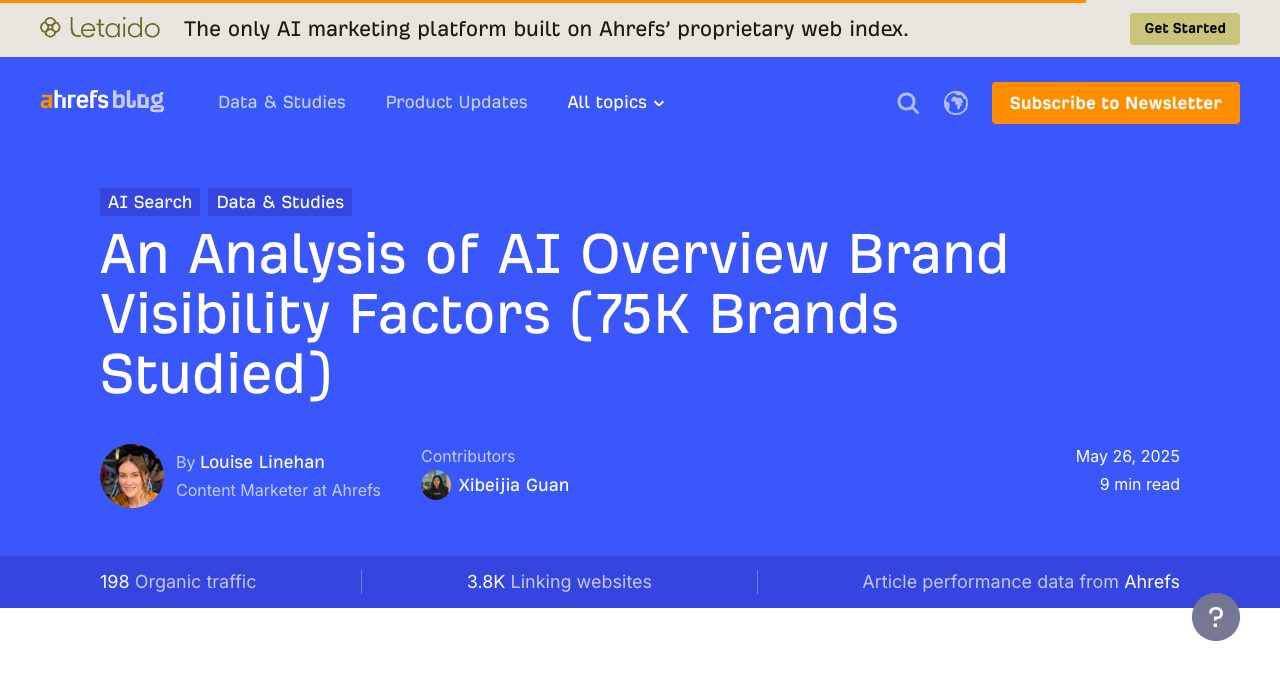
Mentions are the stronger signal. Ahrefs' study of 75,000 brands by Louise Linehan, Content Marketer at Ahrefs, published May 26, 2025, measured how closely different factors track mentions in AI Overviews:
| Factor | Correlation with AI Overview brand mentions |
|---|---|
| Branded web mentions | 0.664 |
| Branded anchors | 0.527 |
| Branded search volume | 0.392 |
| Domain Rating | 0.326 |
| Referring domains | 0.295 |
| Number of backlinks | 0.218 |
| URL Rating | 0.18 |
About 26% of the brands had no AI Overview mentions at all. Linehan stresses that "correlation ≠ causation," and her conclusion still leans one way: "online brand mentions appear to be more impactful than link building."
For a micro-SaaS, that changes how you score a directory listing. A nofollow listing that names your product, describes it accurately and sits on an indexed page still counts as a mention, even if it never moves DR. Use the same category and the same plain one-line pitch in every listing so the mentions agree with each other. Expect this channel to trail rankings, since a page has to be indexed before any AI feature can cite it.
Questions founders ask about backlink timelines
How long do backlinks take to work for a micro-SaaS? About three months from going live. Google recrawls the linking page first, then weighs the link; Moz's 2016 study put one link at about 10 weeks for a one-position gain.
How long does Google take to find a new backlink? A few days to a few weeks for most pages, per Google. Deep pages can wait months: Mueller said some URLs are crawled only once every half year.
Why did my Domain Rating go up but my rankings didn't? DR counts the first followed link from each domain as soon as Ahrefs finds it. Rankings wait for Google, and Google ranks pages, not websites.
Do nofollow links from Product Hunt and other launch platforms help SEO? They don't raise DR. Google has treated nofollow as a hint since September 2019, so count them as traffic and mentions.
How can I tell if one specific backlink is working? Compare the linked page with a similar unlinked page in Search Console at 4, 8 and 12 weeks after discovery, without editing either.
How long do directory backlinks take to show up in Ahrefs? One to three weeks for major directories like SaaSHub, four to eight for smaller ones (SaaSCity backlinks guide, October 2026). Free G2, Capterra and SourceForge profiles don't link at all.
Can I make Google index a backlink faster? Not directly, because you can't request indexing for URLs you don't manage. Link to the listing from your own site and check it with a site: search.
Why haven't 30 backlinks moved my rankings? Usually unindexed pages, nofollow links, crowded pages, no search demand or much stronger competitors. Ahrefs found 72.9% of top-10 pages are over three years old.
When should I stop waiting for a backlink to work? At eight weeks if the linking page isn't indexed, and at twelve weeks after discovery if the target page hasn't beaten its control.
Do backlinks help a SaaS show up in Google AI Overviews? Indirectly. Pages must be indexed and snippet-eligible, and Ahrefs found brand mentions (0.664) track AI Overview visibility far more closely than backlinks (0.218).
Will Ahrefs DR4 change my Domain Rating in December 2026? Probably. DR4 replaces the current model on December 1, 2026, so compare with competitors before reading anything into the change.
Do paid backlink packages work faster? No. Google classes bought links as link spam, and SpamBrain strips the credit they pass.
The number to check tonight
Open Google Search Console, go to Performance and filter to the page most of your links point at. If it has impressions and an average position somewhere between 11 and 30, your links have something to push against. Give them until week 12 and run the control test.
If it has no impressions at all, link 31 won't change that, and neither will link 300. A different page or a different keyword will. So before the next submission, check that filter. Which page are your links actually pushing?
Get your SaaS in front of founders
List your product on SaaSCity for $19.99, one-time: a permanent listing and a building on the live city map.