News
Replit Just Dropped Anthropic for ChatGPT: What the Model Switch Means for Everything You've Built (2026)
Your vibe-coded app woke up with a new brain this week after Replit replaced Anthropic with OpenAI's GPT-6 Sol and Astra. Here is the operational fallout of that unannounced model transition, the vendor risk it reveals across AI builders, and why owning your distribution outside the platform matters more than whose API powers the editor. If you build software founders actually use, you can also list your project on SaaSCity to build independent distribution that platform pivots cannot erase.

Contents (9)
- Key takeaways
- What happened on the TechCrunch Disrupt stage
- The paper trail: how recently Replit ran on Claude
- What the model selector docs still promise users
- What a silent model swap does to a shipped product
- The founder checklist: protecting your app from platform drift
- Concentration risk and the $600M battlefield
- Platforms swap models; you need to own your distribution
- The takeaway for anyone building software in 2026
Quick answer: On Thursday, October 16, 2026, Replit CEO Amjad Masad announced onstage at TechCrunch Disrupt that Replit is no longer working with Anthropic, shifting its primary agent brains to OpenAI's GPT-6 Sol and GPT-6 Astra. Masad pointed to lower token costs, commercial partnership terms, and internal VBench benchmarks where OpenAI models scored higher on building applications from scratch. Yet a source familiar with the partnership told TechCrunch that the Anthropic relationship remains active, and Replit's documentation still lists Claude models in Max Mode. For software builders, the sudden pivot exposes the hidden fragility of building products on managed agent platforms without private evals or owned distribution.
Your vibe-coded app woke up with a new brain this week, and nobody sent you an email about it.
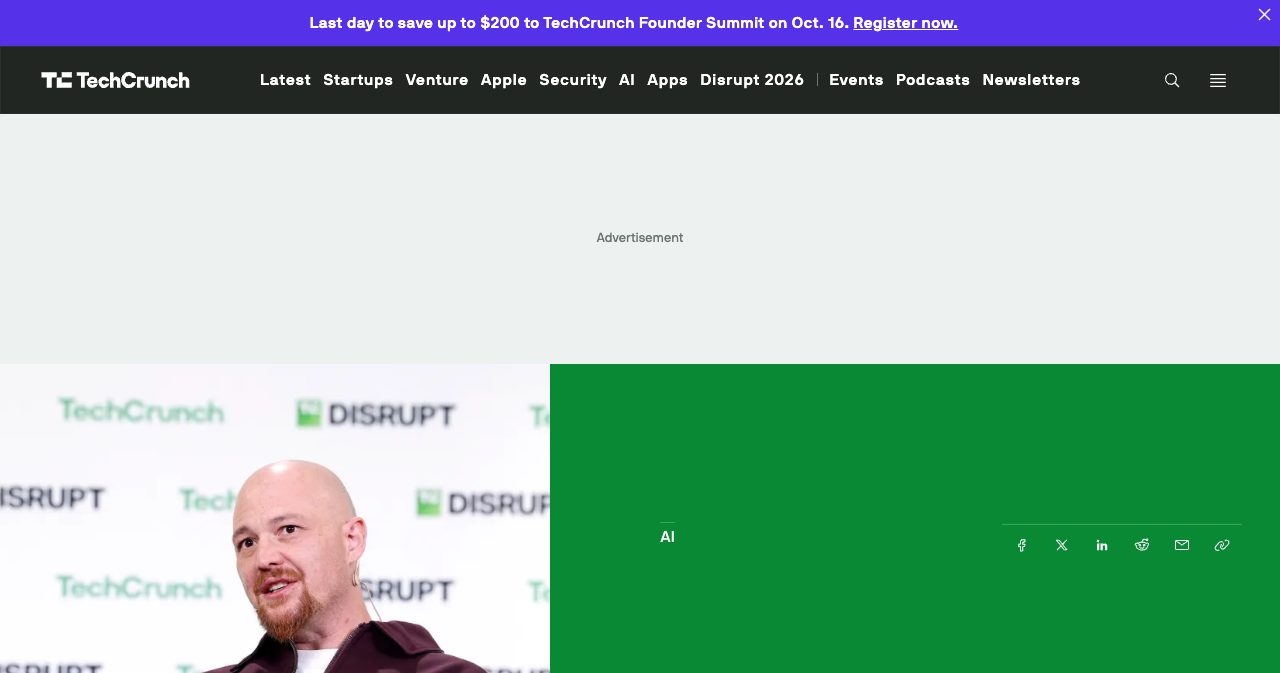
On Thursday afternoon, October 16, 2026, Replit co-founder and CEO Amjad Masad sat down on the TechCrunch Disrupt stage in San Francisco. An interviewer asked whether the OpenAI partnership Replit announced in August meant the company had stopped working with Anthropic. Masad did not dance around the question. "Yeah. I mean, yeah," he answered. "I think ChatGPT is better now." He explained that the decision came down to cost, partnership dynamics, and performance benchmarks, stating that OpenAI's models now generate software from scratch more effectively.
Quick disclosure since you are reading this on a startup directory's blog: SaaSCity is a gamified startup directory with a live city map and human editorial review. We track where products get built and how they get discovered, and I write about model migrations here because infrastructure shifts change what indie developers can ship. More on distribution economics near the end.
Key takeaways
- Amjad Masad confirmed onstage on October 16, 2026, that Replit has stopped working with Anthropic, adopting OpenAI's GPT-6 Sol and GPT-6 Astra as its primary models for building apps from scratch.
- A source familiar with the partnership told TechCrunch that the partnership remains in place, creating an unresolved contradiction between the CEO's public statements and private accounts.
- Masad attributed the move to three factors: lower token costs, deeper partnership support, and benchmark leads on Replit's internal VBench evaluation suite.
- Replit's official model selector documentation still lists Claude Fable 5.1 and Claude Opus 5.5 in Max Mode, confirming the user-facing platform is mid-transition rather than fully migrated.
- The Anthropic alliance helped Replit grow revenue by roughly 10x after the initial Replit Agent rollout, proving how quickly model alliances dissolve once unit economics shift.
- Enterprise contracts now represent 15% of Replit's revenue, up from 2% last year, with B2B software revenue making up more than half of the company's business.
- Builders relying on agent platforms need five defensive habits: model version pinning, private evaluation suites, prompt diffing, decoupled databases, and external distribution.
What happened on the TechCrunch Disrupt stage
The exchange happened during a live interview session at TechCrunch Disrupt 2026. The full session recording shows Masad answering candidly when asked about the August OpenAI deal. When pressed on whether Replit had severed ties with Anthropic, Masad confirmed the split directly: "It was a decision based on both cost, you know, partnership, and performance. And for all these reasons, we just felt like they were a better partner for now."
He pointed specifically to code generation benchmarks. Replit runs an internal evaluation harness known as VBench alongside standard public software engineering benchmarks. According to Masad, OpenAI's GPT-6 Sol and GPT-6 Astra consistently outperformed Anthropic's Claude family on building complete, vibe-coded applications from an empty repository.
As reported by TechCrunch, there is a twist to this story. Shortly after the onstage interview, a source familiar with the Replit-Anthropic partnership told TechCrunch that the partnership is actually still in place. TechCrunch reached out to Replit for clarification, but the company has not issued a formal joint statement. Additional reporting from unite.ai confirmed the details of the session, noting the contrast between the onstage remarks and the behind-the-scenes pushback.
This contradiction matters. When an executive declares a major vendor partnership dead onstage while sources close to the deal claim otherwise, it indicates an active, messy negotiation rather than a completed legal separation. For developers building software inside Replit Agent today, the operational reality is straightforward: OpenAI's models are driving the platform defaults.
The paper trail: how recently Replit ran on Claude
To understand why this sudden pivot startled developers, look at how tightly Replit's brand was bound to Anthropic just weeks ago.
In August 2026, Replit announced an expanded relationship with OpenAI when it rolled out its free tier updates, as documented in Replit's Free Mode post. At the time, nothing in the company's messaging suggested that Anthropic was being pushed out. Free Mode was framed as a multi-model routing layer designed to make software creation accessible to non-paying users.
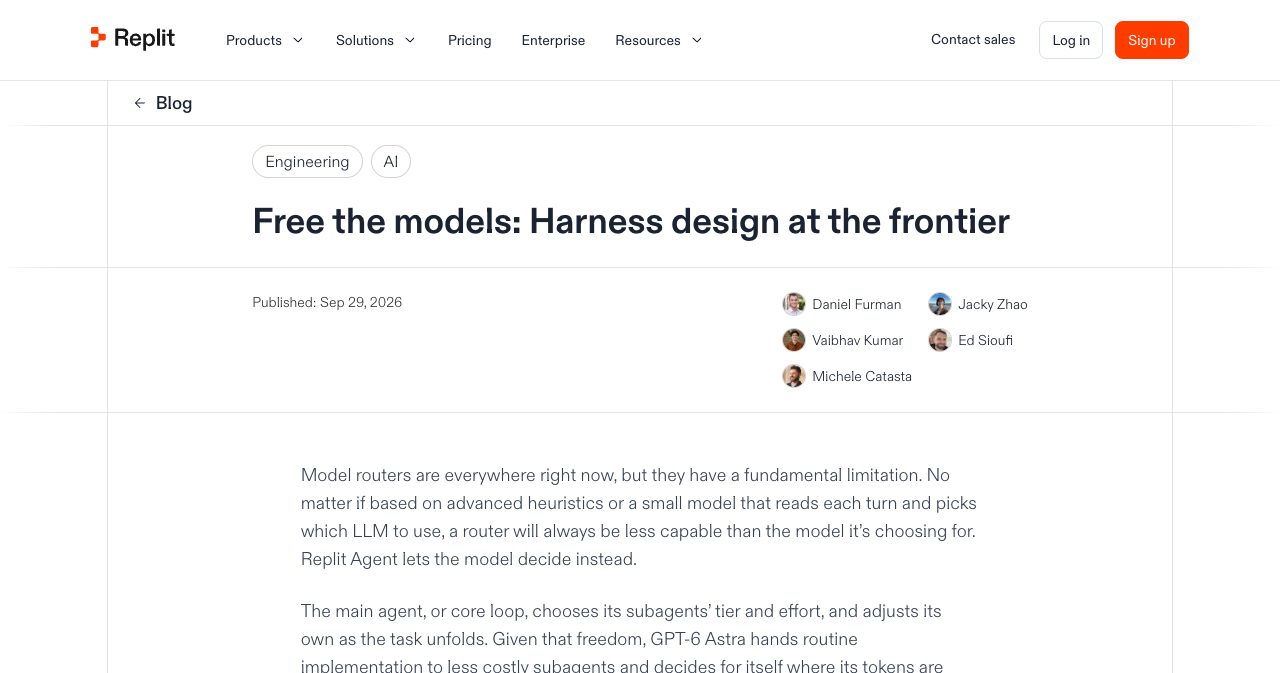
As recently as late September 2026, Replit published an engineering essay titled Free the models. That piece explicitly named Claude Fable 5 and Claude Fable 5.1 as primary engines powering Replit Agent's production environment. The post praised Claude's reasoning capabilities, explaining how Replit built custom harness architecture to let Anthropic models explore codebases, fix runtime errors, and coordinate multi-file changes.
Around the exact same time in late September, Replit product team members posted on X promoting Anthropic's Opus 5.5 release. The company celebrated its deep integration with Claude. Less than three weeks later, Masad sat onstage in San Francisco and stated that the partnership was over.
| Date | Milestone | Operational impact on builders |
|---|---|---|
| Early 2025 | Initial Anthropic partnership | Claude 3.5 Sonnet powers Replit Agent; revenue scales roughly 10x per Inc. reporting. |
| August 2026 | Replit introduces Free Mode | OpenAI integration announced for automated model routing; Claude remains primary for paid tiers. |
| September 2026 | "Free the Models" blog post | Claude Fable 5 and 5.1 documented as production backbones for complex agent reasoning. |
| Late September 2026 | Opus 5.5 internal promotion | Staff publicly endorse Anthropic's frontier capabilities for developer workflows. |
| October 16, 2026 | TechCrunch Disrupt onstage split | CEO confirms Replit dropped Anthropic for OpenAI; anonymous source claims partnership survives. |
| October 17, 2026 | Documentation discrepancy | Replit docs continue listing Claude in Max Mode while GPT-6 models take over production defaults. |
The timeline reveals how fast enterprise alliances move in the AI sector. The partnership that helped build Replit's modern reputation was replaced the moment pricing and benchmark margins shifted.
What the model selector docs still promise users
The friction for developers is that Replit's user interface and documentation have not caught up to the CEO's stage comments.
If you navigate to Replit's official model-selector documentation, you will see a model catalog that tells a very different story from Masad's interview. As of mid-October 2026, the documentation lists seven different Claude models available under Max Mode: Claude Fable 5.1, Claude Opus 5.5, Claude Sonnet 5, Claude Opus 5, Claude Opus 5 Fast, Claude Opus 4.8, and Claude Sonnet 4.6.
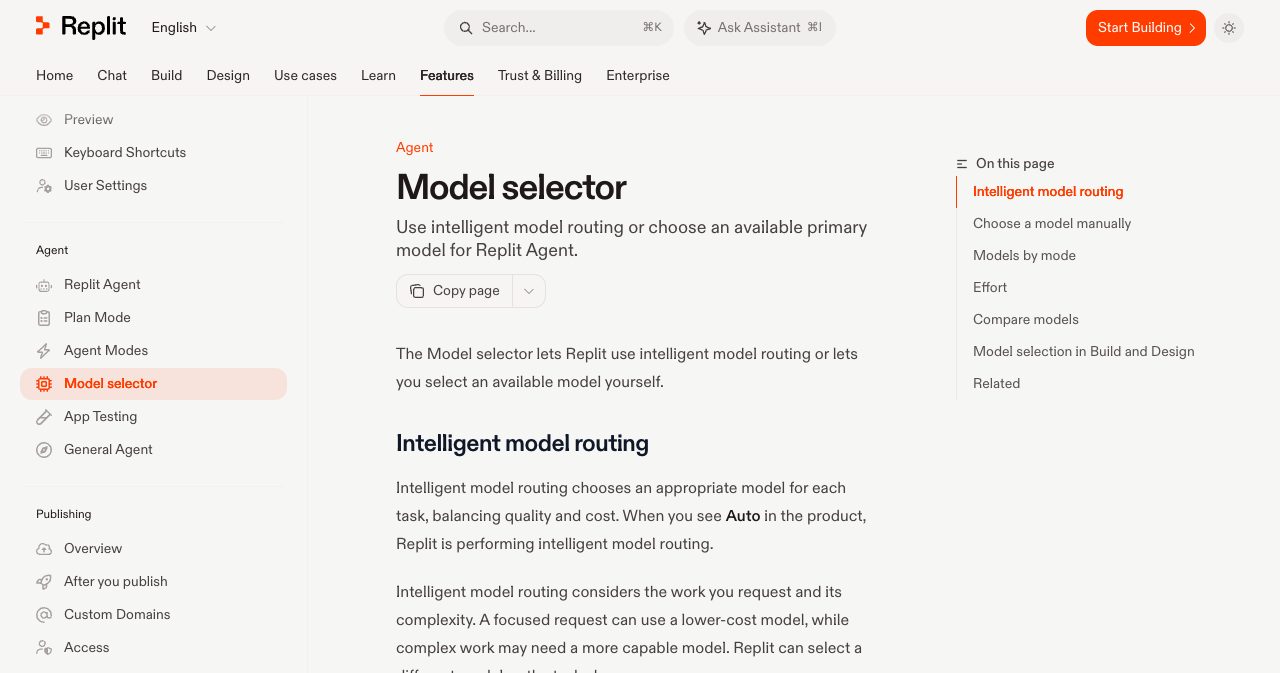
These Anthropic models sit side by side with OpenAI's GPT-6 Astra, GPT-6 Luna Fast, and Moonshot AI's Kimi K3. In Power Mode, Replit offers GPT-6 Sol. In Free Mode, an automated routing algorithm selects models dynamically based on platform capacity and query complexity. Fast model variants require an active Pro or Enterprise subscription.
| Mode | Available models per documentation | Pricing tier required | Stated role |
|---|---|---|---|
| Power Mode | GPT-6 Sol | Core, Pro, Enterprise | Default engine for high-speed scratch application creation |
| Max Mode | GPT-6 Astra, GPT-6 Luna Fast | Pro, Enterprise | Deep reasoning for multi-step architecture and complex refactoring |
| Max Mode (Legacy) | Claude Fable 5.1, Opus 5.5, Sonnet 5, Opus 5, Opus 4.8, Sonnet 4.6 | Pro, Enterprise | Retained in documentation despite onstage termination remarks |
| Max Mode (Alternative) | Kimi K3 | Pro, Enterprise | Long-context document ingestion and extended reasoning |
| Free Mode | Automated model router | Free tier | Dynamic background routing across multiple budget models |
This catalog creates an awkward operational reality. A founder paying for a Pro plan might select Claude Opus 5.5 in their agent settings, believing they are running on Anthropic's latest weights. Meanwhile, platform engineering is standardizing default scratch workflows on GPT-6 Sol and Astra.
When documentation diverges from executive statements, developer confidence takes a hit. Founders need to know exactly which model executes their database migrations, and right now, Replit's public surface gives two conflicting answers.
What a silent model swap does to a shipped product
Switching frontier model providers is not like swapping an AWS EC2 instance for a Google Cloud compute node. When you swap cloud compute, your compiled binary runs identically. When you swap an AI model, your compiler, runtime, and logic engine change at the same time.
Every frontier model family develops unique cognitive habits. Claude models are known for strict adherence to formatting rules, careful error handling, and predictable handling of XML code blocks. They tend to be cautious when writing database mutations, frequently verifying foreign keys and table constraints before executing schema changes.
OpenAI's GPT-6 models operate with different instincts. As we detailed when covering the GPT-6 Astra launch and rollout, OpenAI built Astra with advanced reasoning techniques like opaque recurrence, allowing the model to solve complex logic challenges using fewer visible reasoning tokens. In benchmark settings, this makes Astra fast and capable at generating boilerplate applications from scratch.
In an active production codebase, those stylistic differences cause unexpected bugs:
- System prompt misalignment: Replit Agent relies on complex system prompts designed to keep the agent inside its sandbox. Prompts tuned over months to restrain Claude often fail to constrain GPT-6 models in the same way, leading to unexpected file overwrites.
- Tool-calling conventions: Claude handles tool calls with specific tag structures. OpenAI models expect distinct JSON schemas. Subtle differences in how arguments get escaped can cause agent tool calls to fail during multi-step edits.
- Dependency choices: Claude models trained through mid-2026 lean toward specific npm libraries for state management and auth. GPT-6 models often default to newer or alternative packages. If an agent changes your project's core libraries halfway through development, you inherit split dependencies and bloated bundles.
- Error recovery loops: When Claude encounters a syntax error, it typically inspects the stack trace and edits the offending line. In our tests, GPT-6 models are more prone to rewriting entire files when trying to fix a localized bug, accidentally deleting custom business logic you wrote hours earlier.
When Replit swaps the underlying model without a formal migration guide, your product absorbs these behavioral shifts without your knowledge. Your app might compile, but the architectural assumptions governing its next update have shifted.
The founder checklist: protecting your app from platform drift
If you build SaaS products or indie tools inside an AI-assisted environment, you cannot afford to let vendor negotiations dictate your product stability. We discussed this broader dynamic in our guide on how SaaS founders navigate AI model fatigue: labs ship updates constantly, and chasing every launch is a recipe for broken code.
Here is a practical checklist to insulate your software from unexpected platform model switches:
1. Explicitly pin your model versions
Never rely on automatic model routing or generic default aliases for production work. If you work in Replit's Max Mode, manually select a pinned model version rather than leaving the selector on default settings. While default aliases like "latest" can silently repoint to new backends overnight, versioned selections give you stability while you test new model behavior.
2. Maintain a private evaluation suite
Do not trust public leaderboards or vendor marketing when evaluating model performance. Create an internal test suite of 5 to 10 golden tasks that represent your product's core workflows:
- Generating a specific PostgreSQL schema migration with Row Level Security.
- Creating an authenticated Stripe webhook endpoint.
- Refactoring a Next.js server component without introducing client-side hydration bugs.
- Wiring an API call to an external service with full error handling.
Whenever your builder platform announces a model update or swaps defaults, run your golden tasks through the new engine. Compare the output code against your established standards before letting the agent touch your production repository.
3. Diff agent code commits before merging
Treat an AI coding agent like an enthusiastic junior developer who lacks long-term context. Never allow an agent to commit directly to your production branch. Require every agent change to pass through a git pull request where you can review file diffs line by line. Look specifically for deleted comments, silently altered dependencies, and rewritten database queries.
4. Decouple your persistence layer
The most dangerous failure mode on integrated platforms is data lock-in. Replit provides integrated databases, but if an agent misbehaves, your data layer is exposed. Connect your application to an external database provider such as Supabase, Neon, or AWS RDS. Keep automated, off-platform database snapshots running daily. If a platform agent corrupts your local development schema, an external backup lets you restore state in seconds.
5. Keep prompt templates and architectural specs in version control
Document your application architecture in plain markdown files stored directly inside your repository. Maintain a SYSTEM_DESIGN.md file that specifies your tech stack, state management rules, routing architecture, and coding conventions. Feeding this explicit specification file into your agent at the start of every session helps anchor its reasoning, regardless of which model sits behind the API.
Concentration risk and the $600M battlefield
Replit's departure from Anthropic reveals a fundamental tension in the AI tooling industry: model vendor concentration risk works in both directions.
For Anthropic, losing Replit is a stinging symbolic blow. An Inc. report by Ben Sherry noted that the earlier Anthropic partnership helped Replit grow revenue by roughly 10x as Replit Agent took off. For more than a year, Replit served as Anthropic's premier showcase for developer coding capabilities. If Anthropic's most prominent startup partner will defect to OpenAI over pricing and VBench metrics, other developer platforms are undoubtedly running the same financial calculations.
At the same time, Replit's business is changing. At the Disrupt session, Masad shared that enterprise contracts now make up roughly 15% of Replit's revenue this year, compared to about 2% last year. B2B software revenue now represents more than half of the company's total revenue. As Replit shifts from hobbyist coders to enterprise engineering teams, its margin sensitivity increases. Saving a few fractions of a cent per thousand tokens across millions of daily agent calls directly impacts bottom-line profitability.
Yet by partnering with OpenAI, Replit is cozying up to a company that could easily make its core product redundant. OpenAI already provides code execution, web browsing, and canvas interfaces inside ChatGPT. Both OpenAI and Anthropic are steadily expanding their direct application building capabilities.
The financial prize in this market is massive. As we analyzed when Lovable crossed $600M in ARR, conversational app creation has become one of the fastest-growing revenue categories in software history. Lovable grew from $200 million to $600 million in run-rate revenue in less than a year by wrapping code generation in complete hosting, authentication, and deployment infrastructure.
Masad addressed this competitive risk directly onstage. He argued that OpenAI's and Anthropic's direct app-building tools remain "surface level" compared to Replit's full stack. He noted that OpenAI's lightweight applications rely on Cloudflare for external hosting, whereas Replit has spent years building what he calls an "agent habitat."
This agent habitat includes:
- Comprehensive sandboxing: Virtualized compute environments where agents can run bash commands safely.
- Network isolation: Granular control over which external domains an agent can contact during execution.
- Identity and authorization: Integrated user permissions that keep generated applications secure by default.
- Pre-deployment security scans: Automated checks that identify hardcoded API secrets and vulnerable npm packages before code reaches staging.
- Post-deployment penetration testing: Continuous background audits of live web applications.
- One-click database rollbacks: Instant point-in-time recovery. Masad cited an incident from 2025 where an agent accidentally dropped a production database during an automated refactoring session, which Replit's snapshot architecture restored immediately.
In a companion TechCrunch interview on self-driving companies, Masad laid out his broader vision: software platforms are evolving into autonomous company operating systems where agents handle everything from code creation to infrastructure monitoring.
Whether Replit's infrastructure habitat is defensible against OpenAI's massive distribution remains an open question. What is certain is that the platform will optimize its model partnerships to survive that fight.
Platforms swap models; you need to own your distribution
Here is the economic truth every indie founder needs to accept: Replit does not answer to your product roadmap.
Replit answers to its own balance sheet, its cloud unit economics, and its enterprise investors. If OpenAI offers cheaper tokens and a higher VBench score this week, Replit switches to OpenAI. If Google Cloud or an open-weights consortium offers better terms next year, Replit will switch again. The platform will re-architect its model routing whenever doing so preserves its margins.
If you build your product entirely inside someone else's walled garden, you are building on shifting sand. You cannot control which model runs behind your editor, and you cannot control how much the platform charges for compute credits.
What you can control is your audience, your search rankings, and your customer discovery.
When a founder launches a SaaS tool, customer acquisition beats prompt cleverness every single time. An app running on GPT-6 Astra that nobody knows about will fail. A simple, functional tool running on older tech that sits on page one of Google will generate revenue.
This is where building durable distribution channels outside your builder environment becomes essential.
On SaaSCity, we run a gamified startup directory with a live city map and human editorial review. Every accepted software product gets a dedicated listing page that search engines crawl and index.
If you want to establish an organic search footprint that outlasts platform pivots, adding the SaaSCity badge to your website earns your domain a dofollow backlink. Our platform sits at Domain Rating 68 at the most recent Ahrefs refresh, and the pricing page advertises a DR 68+ backlink. For early-stage products competing in crowded categories, a dofollow link from an indexed DR 68 domain provides real SEO momentum.
For founders who want to accelerate their launch timeline:
- Free Listing: Permanent listing page, human editorial review, and a dofollow badge link with an estimated review queue of approximately 308 days.
- Quick Pass ($19.99 one-time): Skips the badge requirement and the review queue completely, goes live within 24 hours, and places your interactive 3D building directly on the live city map.
- Premium ($39.99 one-time): Includes all Quick Pass features plus a dedicated editorial launch post written by our team, published within 3 days, containing three followed backlinks and optimization for AI answer engines like ChatGPT and Perplexity.
- Max ($99.99 one-time): Adds an in-depth 3,000+ word technical launch review featuring five followed backlinks, alongside high-visibility placements on the SaaSCity homepage ticker and city billboards.
Paid plans go live within 24 hours, giving your startup immediate distribution while you refine your product architecture.
The takeaway for anyone building software in 2026
The breakup between Replit and Anthropic marks the end of the honeymoon phase for AI coding platforms.
In 2024 and 2025, builders could pretend that model alliances were philosophical partnerships built around safety, craft, and developer experience. By late 2026, those illusions have evaporated. The AI developer tooling market is a high-stakes commodity war fought over token pricing, enterprise B2B contracts, and benchmark margins.
If you write software using AI agents, treat your platform providers with the same detachment they show their model vendors. Pin your versions. Back up your schemas. Review your git diffs. And above all, spend as much energy building independent distribution and organic domain authority as you spend crafting prompts.
Models change overnight. The customers who trust your domain do not.
Get your SaaS in front of founders
List your product on the SaaSCity live city map - a permanent listing, real discovery, and a backlink from a high-DR directory. Free to start; upgrade for a dofollow link and a building on the map.