News
AI Model Fatigue: How SaaS Founders Pick a Model When a New One Drops Every Week (2026)
Five labs shipped six frontier models in four days last week, and CNBC gave the exhausted feeling a name: model fatigue. Here's the actual method for picking an AI model in 2026 without re-architecting your stack every Tuesday, plus where SaaSCity fits if you're building on any of them.

Contents (10)
- Key Takeaways
- The week that broke everyone's evaluation queue
- Point release, or step change? Learn to tell the difference
- Pick five of ten, and mean it
- Benchmarks are a marketing surface now, not a scoreboard
- Most of your SaaS doesn't need the frontier model
- Don't let a model launch block your launch
- The real moat is distribution, not the model card
- Where SaaSCity fits
- The bottom line
Quick answer: Model fatigue is the name CNBC gave on September 6, 2026 to the exhaustion of evaluating AI models that now ship several per week. In one four-day window (September 1-4), Anthropic, Meta, Google, OpenAI and MBZUAI all released new models. The method that survives it: pin your production model, review the field quarterly, shortlist from a real need rather than headlines, and test candidates on your own workload instead of a leaderboard.
Five AI labs put out six new models between Tuesday and Thursday of one week in September, and the correct response for almost every SaaS founder building on top of them was to do nothing.
Quick disclosure since you're reading this on a startup directory's blog: SaaSCity is a free, human-reviewed directory with a live city map where builders list their products, and I write about model releases here because they change what founders can build and what they're competing against, not because we have a stake in any particular lab. More on where the directory fits near the bottom.
On September 6, 2026, CNBC ran a piece with a name for what a lot of builders have been feeling: model fatigue. The trigger was a single week where Anthropic, Meta, Google, OpenAI and the UAE's Institute of Foundation Models all shipped new models, Nvidia closed a $12.9 billion acquisition of Hugging Face, and enterprise buyers were left staring at an evaluation queue that grows faster than anyone can clear it. OpenAI CEO Sam Altman told CNBC "we're all moving to faster cadences." Runpod CEO Zhen Lu put it more bluntly: "there's just so much frothiness that you have to make noise."
Neither of them is wrong, and neither observation should change what you do on Monday morning. Here's the method for picking a model in 2026, using that exact week as the case study.
Key Takeaways
- The term is dated and sourced: CNBC published the "model fatigue" piece on September 6, 2026, after six releases from five organizations in four days.
- Most releases are point releases: Farsight CTO Noah Faro said the last two step changes were Anthropic's Fable 5 in June and Kimi K3 in July.
- Evaluate five of ten, not ten of ten: Clockwork Systems CEO Suresh Vasudevan told CNBC his team picks a subset and moves on rather than testing every release.
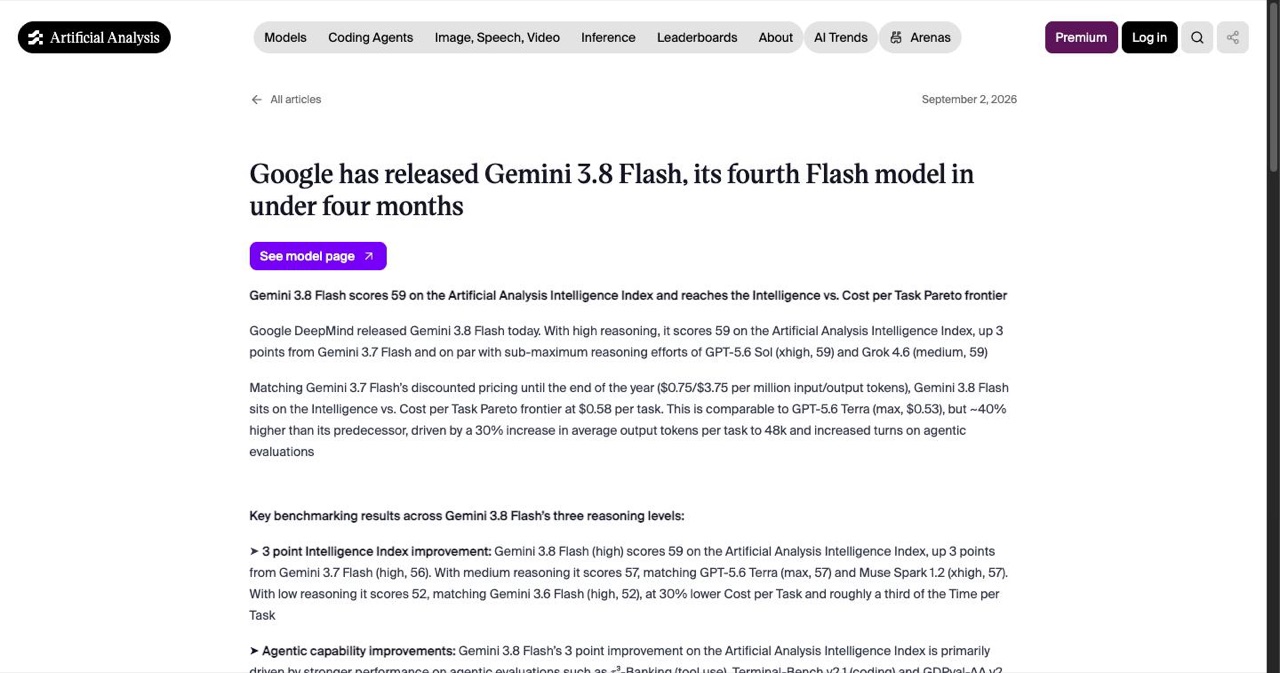
- Independent benchmarks beat launch-day claims: Artificial Analysis scored Muse Spark 1.3 (xhigh) at 52 and Gemini 3.8 Flash at 59 using the same suite across models.
- Open weights now cover much of the backend: K2 Horizon spans six Apache-2.0 models from 0.9B to 375B parameters with weights, code, training data and methodology published.
- Keep your ship date off a lab's calendar: GPT-6 Astra's rollout stumbled badly enough that OpenAI walked parts of it back within a day.
- The money is still growing: Gartner projects $2.59 trillion in AI spending for 2026, up 47% over 2025, with over $1 trillion going to services, software, cybersecurity, models and tools.
The week that broke everyone's evaluation queue
Here's what actually shipped, in order:
| Date (2026) | Lab | Release | What it is |
|---|---|---|---|
| Tue Sep 1 | Anthropic | Claude Fable 5.1 and Mythos 5.1 | frontier coding and knowledge-work update |
| Wed Sep 2 | Meta | Muse Spark 1.3 | agentic and coding refresh |
| Wed Sep 2 | Gemini 3.8 Flash + 3.8 Flash Cyber | fourth Flash release in under four months, plus a security-focused variant | |
| Thu Sep 3 | OpenAI | GPT-6 Astra | flagship release, rocky rollout |
| Thu Sep 3 | MBZUAI's Institute of Foundation Models | K2 Horizon (six models, 0.9B to 375B parameters) | fully open weights, code, training data and methodology |
| Same week | Nvidia | acquired Hugging Face for $12.9B | not a model, but it reshapes who controls model distribution |
Six releases from five organizations in four days. Notre Dame professor Ahmed Abbasi told CNBC the labs are "all playing the share-of-wallet game," which is the least surprising sentence in the whole story once you look at the money involved. Gartner is projecting $2.59 trillion in AI spending for 2026, a 47% jump over 2025, with more than $1 trillion of it going to services, software, cybersecurity, models and tools. OpenAI and Anthropic are each closing in on roughly $1 trillion valuations as they head toward public markets, with Anthropic reportedly targeting an IPO in mid-October. When that much capital is riding on "which lab is winning this quarter," a quiet week starts to look like losing.
None of that is a technology story. It's an investor-relations story that happens to be told through model releases.
Point release, or step change? Learn to tell the difference
The single most useful thing anyone said in the CNBC piece came from Farsight CTO Noah Faro, who called most of that September week's launches "point releases" rather than genuine step changes. His read: the last two releases that actually moved the needle were Anthropic's Fable 5 in June and Kimi K3 in July. Everything shipped in between has been iteration, not a new floor for what's possible.
That distinction is the whole ballgame for a founder deciding whether to spend a sprint on a migration. A point release usually means: same architecture, tuned weights, a few percentage points on benchmarks, modest cost or speed gains. Meta's Muse Spark 1.3 fits that shape — its own launch post describes "improved performance across agentic and coding tasks," with roughly 20% fewer tool calls and 25% fewer tokens than its predecessor on comparable work. That's a real efficiency win if you're already on Meta's stack. It is not a reason to rip out a working integration built on something else.
A step change looks different: a new capability class, a cost curve that breaks the previous one, or a benchmark gap wide enough that your current model genuinely can't do the task. Fable 5 back in June and Kimi K3 in July both cleared that bar according to Faro. Most of what shipped this particular week didn't, and treating a point release like a step change is exactly how teams burn a quarter chasing a leaderboard instead of shipping product.
Pick five of ten, and mean it
Clockwork Systems CEO Suresh Vasudevan gave CNBC the most quotable, most useful line for anyone doing this kind of evaluation work: if his team wants to test ten models for a task, they may just pick five and move on. "It's really challenging to go evaluate every one of the ones that are coming out right now," he said, and he's the CEO of a company whose job is literally to know this stuff.
If Clockwork Systems doesn't evaluate every release, you don't need to either. The method that scales:
- Pin your production model. Whatever you're running today stays running until you have a specific reason to change it, not a vague sense that something newer exists.
- Set a fixed review cadence. Quarterly is enough for almost every SaaS workload. Weekly evaluation cycles are how a two-person team spends more engineering time comparing models than building product.
- Shortlist from need, not from headlines. When review time comes, pick candidates based on what would actually move your metrics — latency, cost per task, a capability gap you've hit in production — and skip the rest, deliberately, the way Vasudevan does.
- Test on your own workload. A model that tops a general leaderboard can lose badly on your specific prompts, your specific tool calls, your specific edge cases. There's no substitute for running your own eval set.
This is slower than "always run the newest model," and that's the point. Slower and deliberate beats a rewrite every six weeks.
Benchmarks are a marketing surface now, not a scoreboard
Every lab publishes numbers that make its own model look best. That's not cynicism, it's the incentive structure Abbasi described. So treat launch-day benchmark claims the way you'd treat a pricing page: informative, self-interested, and worth cross-checking.
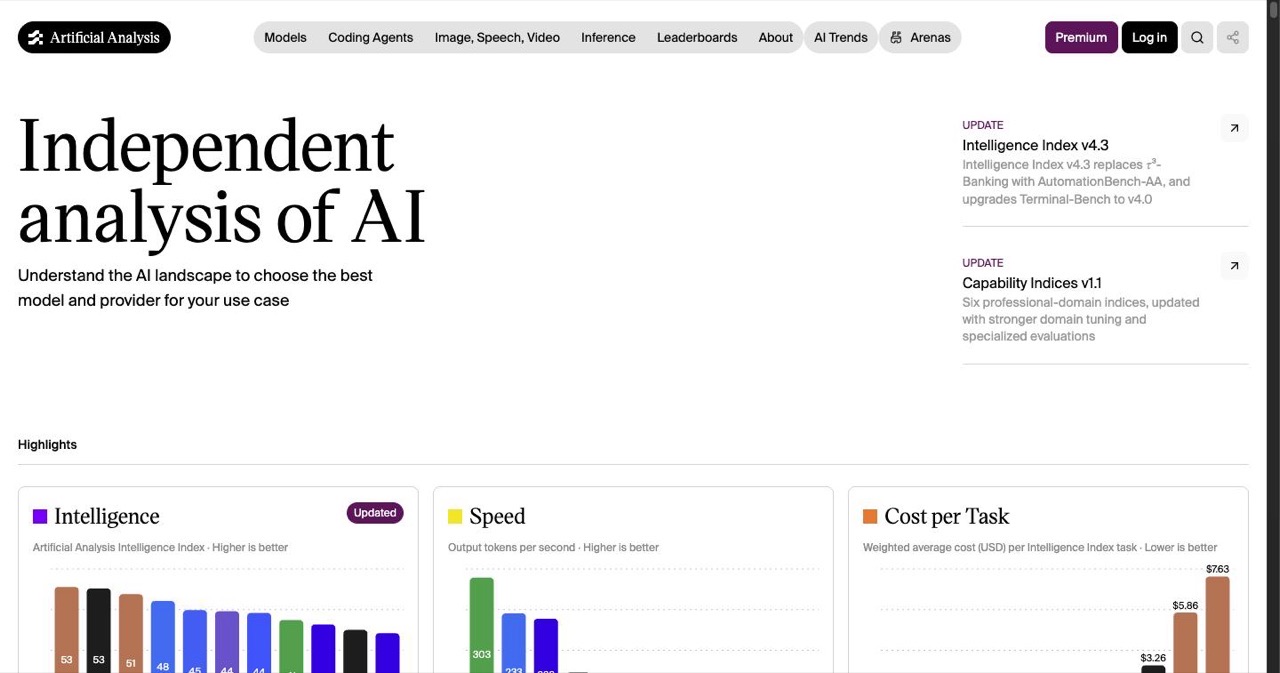
Artificial Analysis is the closest thing the industry has to a neutral scoreboard, because it runs the same evaluation suite across every model instead of letting each lab pick its own favorable comparison. Its numbers for the same September week are a useful reality check against the marketing copy:
| Model | Artificial Analysis Intelligence Index score | Context |
|---|---|---|
| Meta Muse Spark 1.3 (xhigh) | 52 | well above the 28 median for comparable models |
| Google Gemini 3.8 Flash | 59 | Google's fourth Flash-tier release in under four months |
Neither number is a scandal, and neither is a revolution. They're solid, incremental scores for solid, incremental releases, which is exactly what you'd expect from point releases shipped for competitive reasons. Google's own announcement for Gemini 3.8 Flash and the Cyber variant is more specific about the security-focused sibling: over 70% success at finding vulnerabilities across 20 programming languages, and 2.6 times more correct patches than other large models in Chrome Security team testing. That's a genuinely useful, narrow capability. It's also not a reason to swap your general-purpose model.
The Register's coverage of the same release put it plainly in its own headline: Google reminding everyone it's still in the race. That's a fair description of most of the week's activity. Being in the race is not the same as changing what your product needs to run on.
Most of your SaaS doesn't need the frontier model
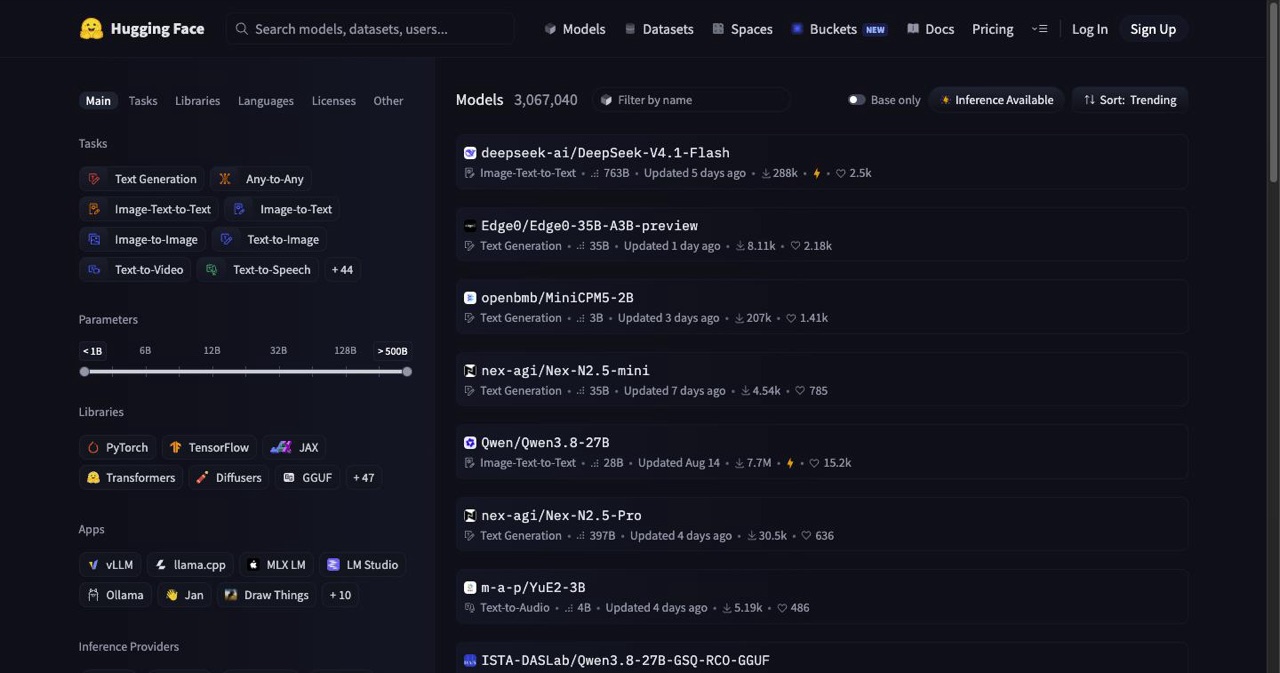
The quietest but most consequential release of the week wasn't from a household name. MBZUAI's Institute of Foundation Models shipped K2 Horizon — six models from 0.9 billion to 375 billion parameters, released under Apache 2.0 with weights, code, training data and methodology, not just a download link. The smallest model targets watches and glasses. The 3.7B and 7B versions are built for phones and on-device work. A 36B sparse model with only 4B active parameters uses a "mixture of value attention" architecture to punch above its size, and a "diffusion distillation" technique generates blocks of tokens in parallel for roughly 3x faster inference without a quality hit. Dynamic routing sends each task to the cheapest model that can handle it. It's available through Hugging Face, vLLM and SGLang, with inference partners including Compass, Cerebras, AWS and Nebius.
Read that lineup and ask yourself which of your SaaS's AI-touching features truly need a frontier model. Support ticket classification? Field extraction from a form? Summarizing a support thread? Most SaaS workloads look like this, and this class of model — K2 Horizon's smaller tiers, DeepSeek-V4-Flash, Qwen3.8-Flash-Next, Gemini's Flash tier — handles it at a fraction of the cost with latency your users won't notice.
The frontier model earns its price tag on a narrower set of jobs: genuinely hard reasoning, long-horizon agentic work, novel code generation across a large unfamiliar codebase. If your product does one of those things as its core value proposition, keep paying for the frontier tier and don't feel bad about it. If it doesn't, every dollar spent routing routine tasks through a $50-per-million-token model is a dollar that should be funding something that actually grows the business — which, not coincidentally, is the argument for where SaaS founders should be spending on visibility instead.
Don't let a model launch block your launch
GPT-6 Astra's rollout the same week is worth studying for a different reason: it's what happens when your own release calendar gets tangled up with a lab's. Astra's launch stumbled hard enough that OpenAI walked parts of it back within a day, and any team that had synced its own feature launch to "the day GPT-6 Astra drops" inherited that chaos for free.
The rule that actually holds up: your launch calendar and a model provider's launch calendar are unrelated events. Build against a pinned, tested model version. Treat a new release as an input to your quarterly review, never as a trigger that reschedules your own ship date. Teams that couple the two end up debugging someone else's rollout on their own deadline, which is a bad trade no matter how good the new model eventually turns out to be.
The real moat is distribution, not the model card
Here's the part that's easy to lose in a week this loud: your customers do not know or care which model powers your product. They know whether it solves their problem, whether support answers fast, and whether they trust you enough to keep paying. Nobody churns because a competitor switched from Gemini to Claude. People churn because they never heard of you, or because the product they found first was good enough.
That's the lesson of a week where six models launched and the market barely moved for most builders. Model quality is a moving target that resets every few weeks by design, because that's the incentive every lab is chasing. Distribution — the listings, backlinks, launch visibility, and word of mouth that don't reset when a new checkpoint ships — compounds instead. A founder who spent last week evaluating six new models instead of shipping a feature or getting in front of ten new users made the wrong trade, almost regardless of which model they landed on.
Where SaaSCity fits
If you're building an AI product on any of the models above, or on whatever ships next week, the visibility problem doesn't go away just because your model stack is solid. SaaSCity is a free, human-reviewed startup directory with a live city map: every submission gets checked by an actual person, every listing gets a permanent page, every paid one a building on the map, and adding the SaaSCity badge to your site gets you a dofollow backlink from a DR 66 domain plus a slot in the next Monday launch batch. If you'd rather skip the badge and go live inside 24 hours, Quick Pass is $19.99. Premium at $39.99 adds a written launch post from the team with three sponsored links.
None of that expires when the next model drops. That's the whole argument.
The bottom line
Model fatigue is a real, named phenomenon as of September 2026, and it's not going away, because the incentives driving it (share-of-wallet, IPO timing, trillion-dollar valuations) aren't going away either. The founders who'll do fine through the next twelve months of this are the ones who pin a model, review on a schedule, evaluate against their own workload instead of a leaderboard, and spend the time they save on distribution that doesn't reset every Tuesday.
The next release is coming whether you watch for it or not. Build something worth finding in the meantime.
Sources: CNBC, "'Model fatigue' sets in as AI labs race to roll out new versions at frenetic pace," September 6, 2026; Meta AI Research, "Introducing Muse Spark 1.3," September 2, 2026; Google, "Gemini 3.8 Flash and 3.8 Flash Cyber," September 2, 2026; Artificial Analysis model and article pages; The Register, September 2, 2026; MBZUAI, "Institute of Foundation Models Launches K2 Horizon".
Get your SaaS in front of founders
List your product on the SaaSCity live city map - a permanent listing, real discovery, and a backlink from a high-DR directory. Free to start; upgrade for a dofollow link and a building on the map.