Reviews
Sportsmetric Review 2026: Sports Marketing Analytics From the Makers of Chartmetric
Sportsmetric (sportsmetric.com) is a sports marketing analytics beta from the Chartmetric team. It puts dated athlete audiences, sports creators and source-linked brand activity side by side so brands and agencies can build a better sponsorship shortlist. We went through the public profiles, the four free tools, the monthly rankings and the beta signup.

Contents (16)
- Key takeaways
- What is Sportsmetric?
- Who is behind Sportsmetric?
- What can you research with Sportsmetric?
- What does a public athlete profile show?
- WNBA, women's sports and college/NIL coverage
- The four free tools
- Monthly rankings and research reports
- How to build a sponsorship shortlist with Sportsmetric
- What Sportsmetric does not do
- How does Sportsmetric compare with SponsorUnited, Zoomph, Blinkfire, Genius Sports and Hudl?
- How much does Sportsmetric cost, and how do you get access?
- The Sportsmetric Chrome extension
- Who is Sportsmetric best for?
- Is Sportsmetric worth trying?
- FAQ
Disclosure: this is a sponsored review.
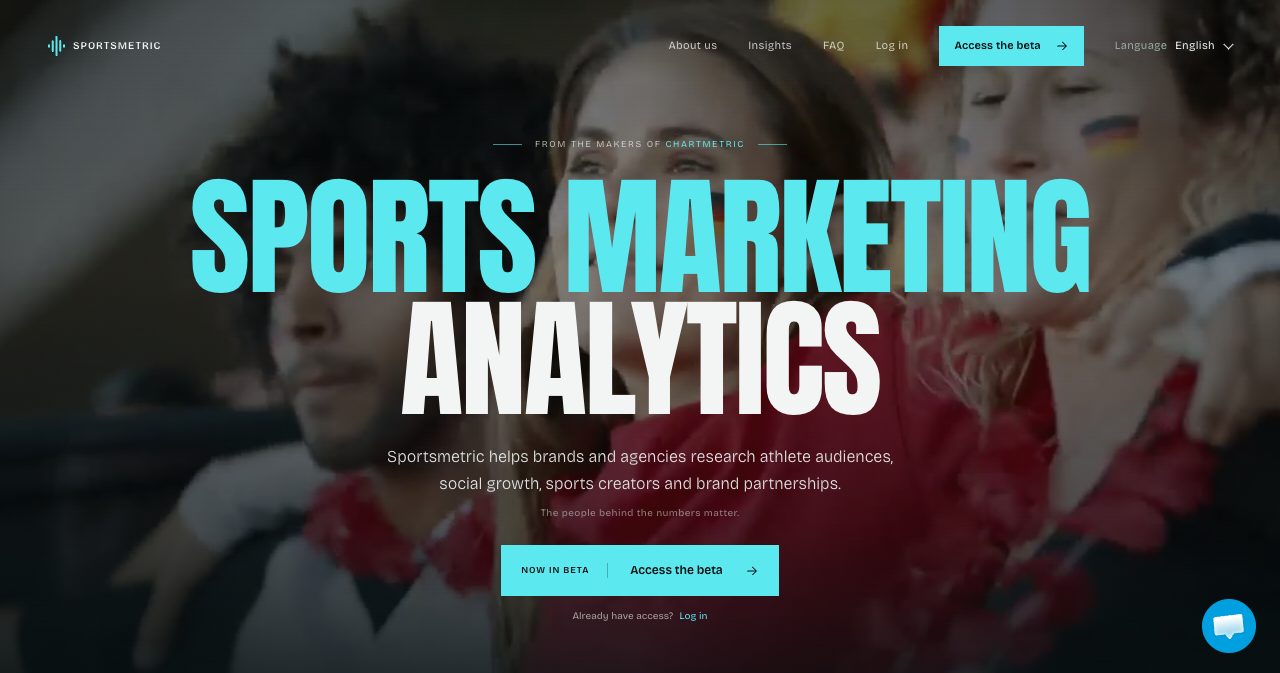
Quick answer: Sportsmetric is a sports marketing analytics platform from the team behind Chartmetric, the music data company. Brands, agencies, leagues and talent teams use it to research athlete audiences, social growth, sports creators and brand partnerships before they build a sponsorship shortlist. Every audience figure carries the date it was observed, and brand activity links back to its source. Public profiles and four research tools are free without an account, and the beta opens with a direct signup and no waitlist. It covers basketball, soccer and tennis today, with a strong focus on the WNBA, women's sports and college athletes.
Most sponsorship conversations still start with one number: followers. Somebody screenshots an Instagram profile, drops it into a deck, and the athlete with the biggest count goes to the top of the list. It's quick, but it leaves out almost everything a brand needs to know. When was that number recorded? Is the account growing, flat or coasting on one viral week? Is the athlete already wearing a competitor's shoes, or did they just appear in one post?
Sportsmetric was built for that gap. It comes from the people who spent a decade turning streaming and social data into something record labels could plan around, and it takes the same approach to sport. We spent a day in its public profiles, its four free tools, its monthly rankings and its research reports, and checked how the beta signup works. This review covers what you can do with it, what it deliberately won't claim, and who will get the most out of it.
Key takeaways
- Sportsmetric is a research tool for sports marketers. It looks at audiences, social activity and brand partnerships, and it stays out of coaching, performance analysis and live scores.
- Every follower count shows the date it was observed. Caitlin Clark's public profile, for example, records 4,156,024 Instagram followers on October 29, 2026.
- The public directory listed 298 athletes and 185 teams when we checked, with dedicated collections for the WNBA, women's sports and college/NIL.
- Four tools are free with no account: a Brand Sponsorship Tracker, a Sports Creator Finder, a Sports Partner Finder and an Injury and comeback tracker.
- Monthly rankings publish both percentage and absolute follower growth, along with how many profiles had usable data.
- It does not provide NIL valuations, deal prices, exposure valuation, sentiment or ROI, and it tells you so on almost every page.
- The beta has no waitlist and no published pricing yet.
What is Sportsmetric?
Sportsmetric is a web platform for sports marketing research. In its own words, sports marketing analytics is "the use of audience, social and partnership data to inform sports marketing decisions." That rules out the other things people often mean by sports analytics, such as player tracking, scouting video or betting data.
In practice, Sportsmetric brings together three kinds of evidence for athletes, teams, brands and sports creators:
- Audience data. Dated follower counts (mostly Instagram on the public pages), growth over a set window, and modeled demographics in the beta where they exist, with the model date attached.
- Social activity. Follower changes, post engagement and creator coverage, placed on a timeline next to games, news stories and videos.
- Brand activity. Official partnership and product announcements, plus brands observed in athletes' posts, each with a link to the source.
The point is to see these side by side. A follower jump means more when you can see that it happened the week of a playoff run, a signature shoe launch or a viral highlight. Sportsmetric is careful to call that timing "context" and not proof that one thing caused the other, which is a habit more marketing tools could pick up.
The platform is in beta. Public pages are available in seven languages: English, Spanish, Portuguese, French, German, Japanese and Korean.
Who is behind Sportsmetric?
Sportsmetric is made by the team behind Chartmetric, the music industry analytics platform Sung Cho founded in 2015. Chartmetric is widely used by labels, managers and artists to track streaming and social audiences, and Sportsmetric brings that audience-and-fandom approach to athletes and sports creators.
The About page on sportsmetric.com introduces five Chartmetric team members whose work informs the product:
- Sung Cho, founder and CEO, with a background in product management, mobile games and data analytics, including product work at Oracle.
- Akash Mukherjee, chief product officer, who has worked in analytics, data visualization and B2B product at Facebook, Amazon and Netflix.
- Chaz Jenkins, chief commercial officer, with experience across major record companies and independent labels.
- Charlie Rowe, data engineer, who builds the data pipelines.
- Rebecca Tang, product designer, who studied Human Centered Design and Engineering at the University of Washington.
That background matters for a beta. Tracking audience data across platforms, keeping every observation dated and flagging gaps instead of filling them is the kind of work this team has done for music for years.
What can you research with Sportsmetric?
The homepage splits the product into three jobs, each aimed at a different team.
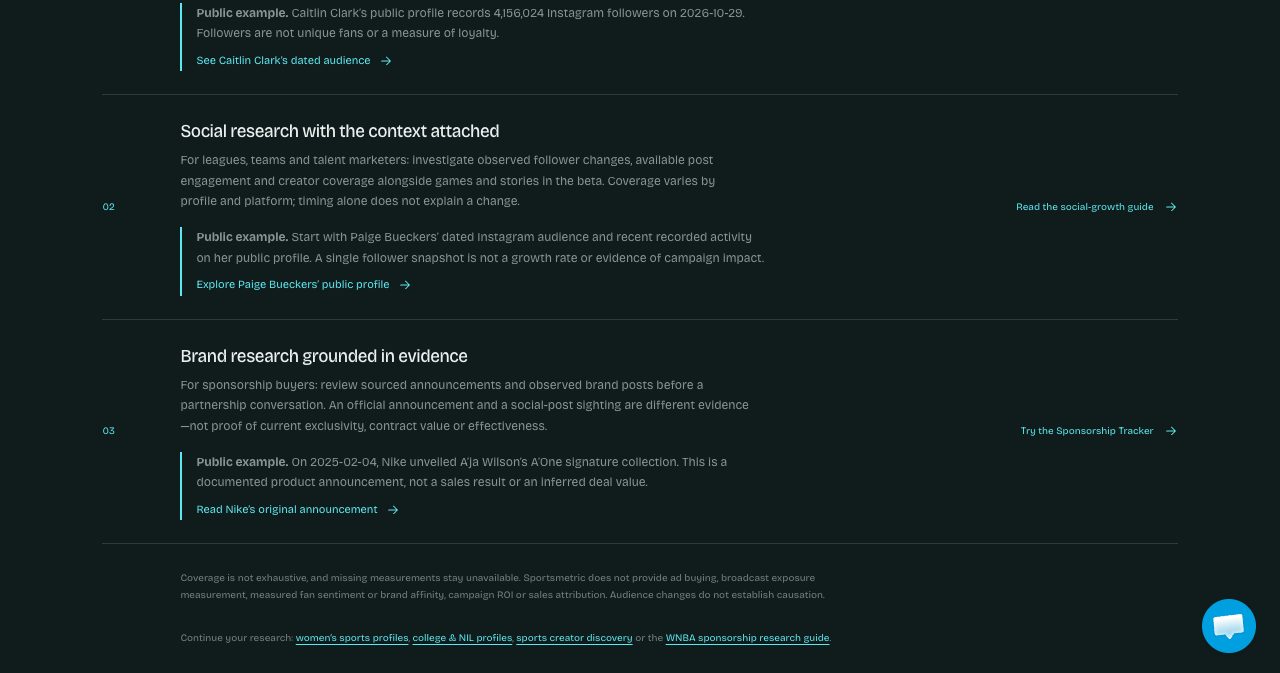
Audience research for a shortlist. Brand teams and agencies compare dated follower counts and sports context before approaching an athlete. In the beta, modeled audience demographics are available for some profiles, with model dates and coverage limits shown. Sportsmetric describes these as modeled estimates, and it doesn't present them as a census of fans.
Social research with context. Leagues, teams and talent marketers look at follower changes, post engagement and creator coverage alongside games and stories. Coverage varies by profile and platform.
Brand research grounded in evidence. Sponsorship buyers review sourced announcements and brands seen in posts before a partnership conversation. The homepage example is Nike unveiling A'ja Wilson's A'One signature collection on February 4, 2025. Sportsmetric labels it a documented product announcement and is careful not to read sales or a deal value into it.
What does a public athlete profile show?
Every public profile is a small, dated record. We opened Caitlin Clark's, which Sportsmetric uses as its main example.
The top of the page shows her sport, team and league (Basketball, Indiana Fever, WNBA) and one number: 4,156,024 Instagram followers, recorded October 29, 2026. Below that is a list of recorded events from the last three months. For Clark there were nine, mostly Fever playoff games against the Las Vegas Aces and Minnesota Lynx, plus a news story linked to its source.
A box called "About this record" sets the scope: the window ran from July 29 to October 29, 2026, the data was last updated October 29, and the page notes that none of the listed events is claimed to have caused a change in her audience. A link at the bottom points beta members to the full athlete view.
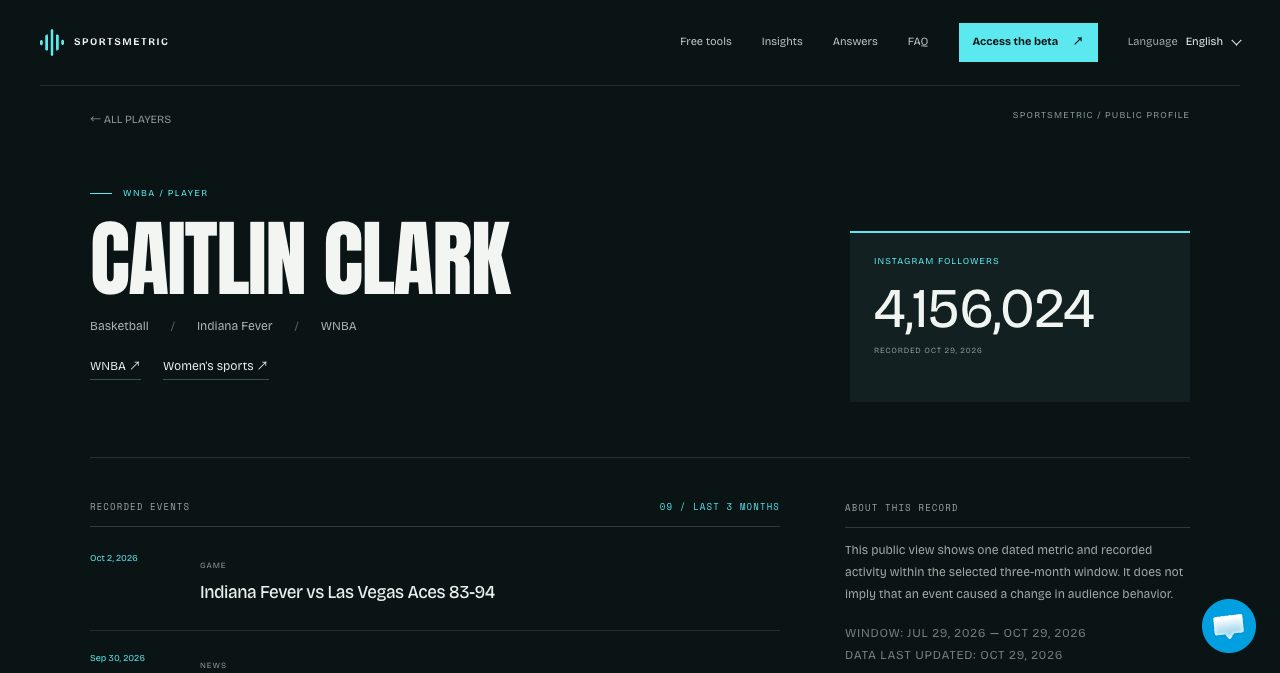
The public version is deliberately thin. It gives you one dated metric and a timeline, which is enough to check whether an athlete is in the database and what has happened around them lately. Growth curves, engagement history, demographics and partnership history sit in the signed-in beta.
WNBA, women's sports and college/NIL coverage
Sportsmetric puts its public effort where many sponsorship tools are thin: women's sports and college athletes. Here is what each public collection held when we checked on November 11, 2026, based on snapshots dated October 29.
| Collection | Profiles | Players | Teams |
|---|---|---|---|
| All athletes | 298 | 298 | – |
| All teams | 185 | – | 185 |
| WNBA | 78 | 63 | 15 |
| Women's sports (WNBA, WTA, women's college basketball) | 207 | 151 | 56 |
| College & NIL (basketball and football) | 139 | 80 | 59 |
The WNBA profile directory ranks players by recorded Instagram audience. Angel Reese led at 5,337,366 followers, followed by Sophie Cunningham (4,335,713), Caitlin Clark (4,156,024) and Paige Bueckers. Team pages show how many athletes Sportsmetric tracks on each roster, from 15 to 16 for most WNBA teams.
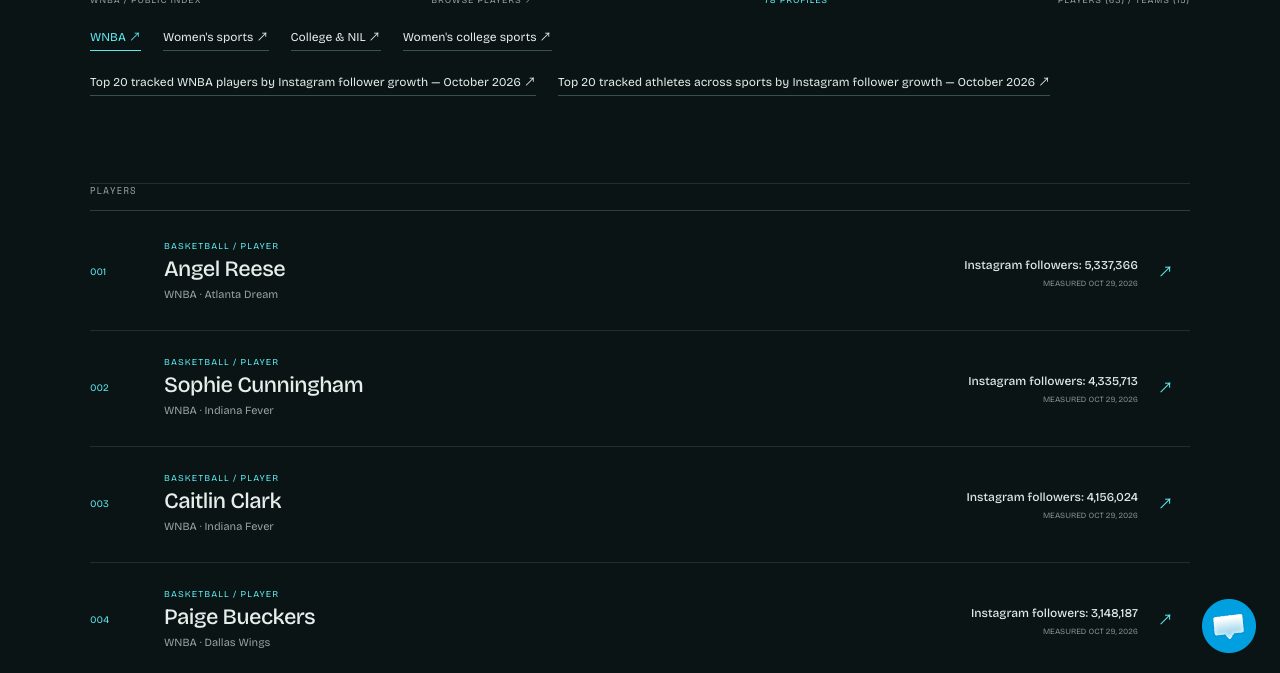
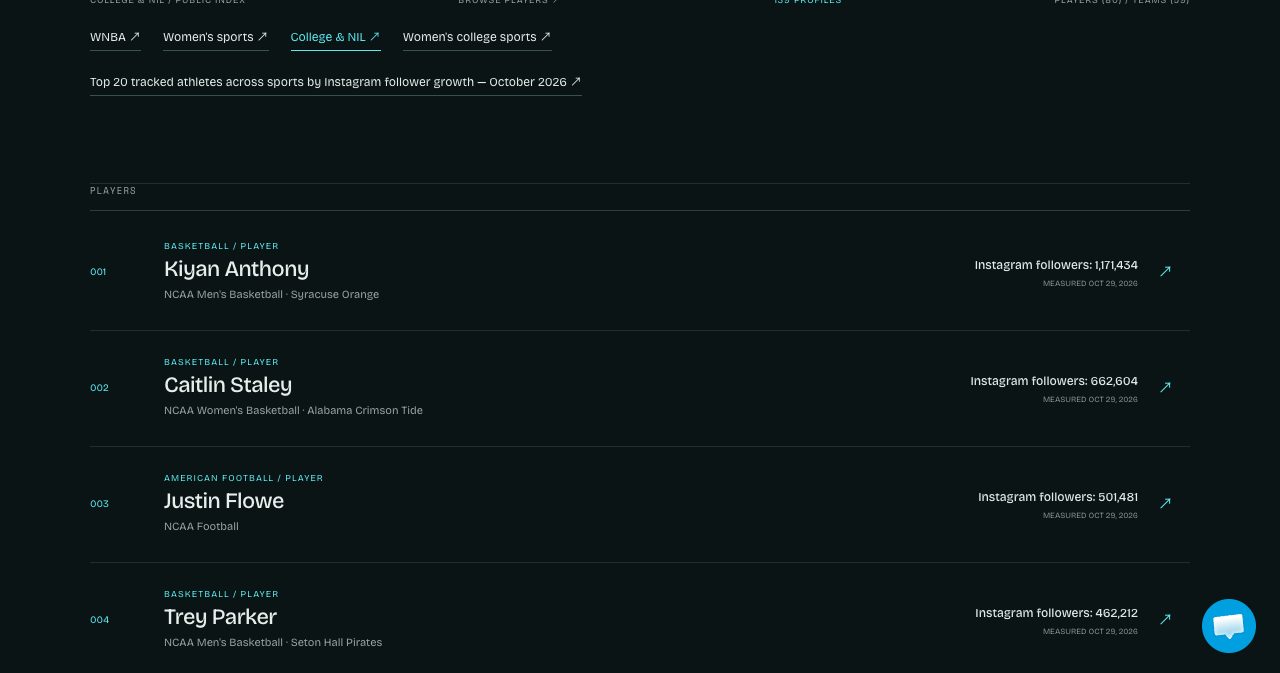
The women's sports collection adds WTA players. Aryna Sabalenka topped it at 5,781,027 Instagram followers. The college collection covers men's and women's basketball and football, with Syracuse's Kiyan Anthony leading at 1,171,434 followers and team pages for programs like Georgia (83 tracked athletes) and Texas A&M (67).
For NIL work, the college pages are useful because they say exactly what they don't do. They show audience and activity, and they skip valuations, earnings estimates, eligibility checks and lists of available deals. A post that mentions a brand is treated as content activity, not as proof of a paid NIL agreement.
The wider directory goes beyond women's sports. The biggest public profiles are Cristiano Ronaldo (679,758,022 Instagram followers), Lionel Messi (517,688,162) and LeBron James (153,620,343), and the team list opens with Real Madrid, Barcelona and the Philadelphia 76ers.
The four free tools
Sportsmetric's free tools are small, curated previews of what the platform does. Each one shows up to ten records, explains why a record is there, and links to the source. They are the best way to get a feel for the product before you sign up.
Brand Sponsorship Tracker
The Brand Sponsorship Tracker is a source-linked list of partnership announcements, product news and public sightings. You can search by brand, athlete or product, filter by evidence type (official announcements or seen in posts), update type (partnership, product, campaign, post sighting) and sport (WNBA, college, women's sports), and sort by date or brand.
When we checked, the public preview held seven updates. They included Nike announcing the Caitlin 1 signature shoe on September 14, 2026, Athletic Brewing's partnership with MetLife Stadium, the Jets and the Giants on August 13, 2026, and SKIMS' WNBA player campaign from May 2024. Every entry links to the original release on Nike Newsroom, the brand's own site or the WNBA.
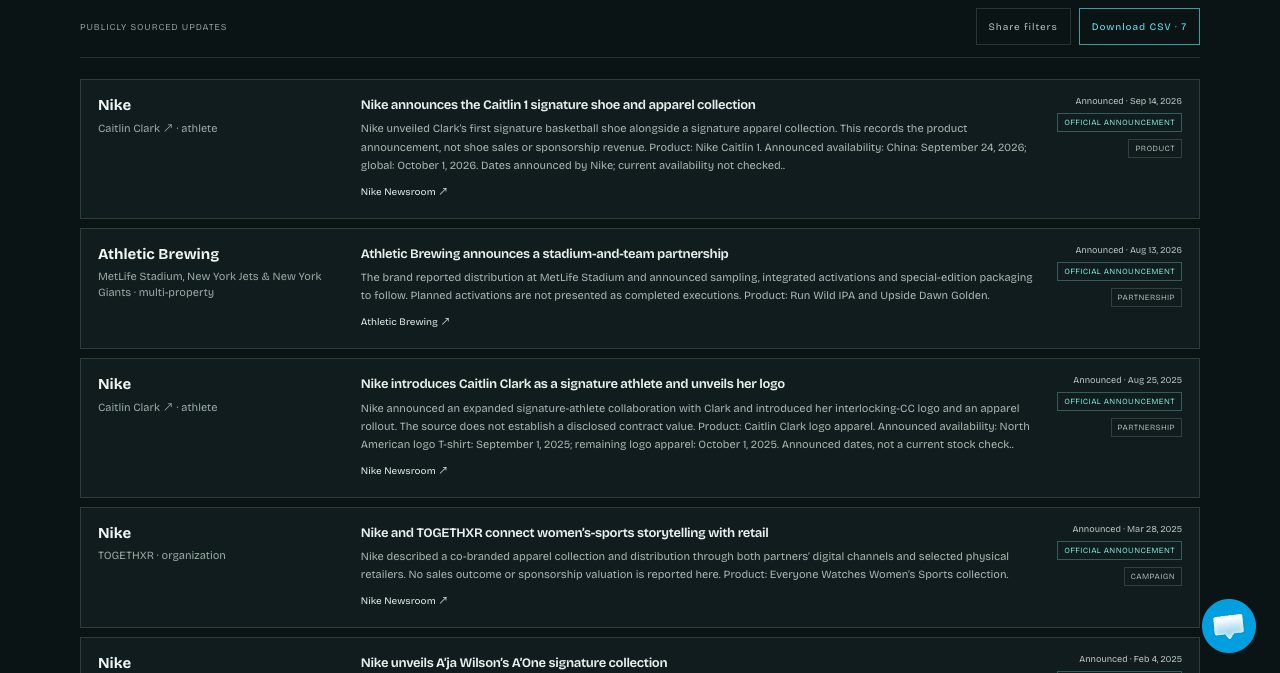
The detail we liked most is in the descriptions. The Caitlin 1 entry spells out that it records a product announcement and says nothing about shoe sales or sponsorship revenue. The Paige Bueckers entry points out that her G.T. Hustle 3 Player Edition was announced while she was a college NIL athlete, and keeps a Player Edition shoe separate from a full signature line. You can share a filtered view or download it as a CSV.
Sports Creator Finder
The Sports Creator Finder helps you find public sports-related accounts for a campaign. You can start from a brand example (Nike, SKIMS or Athletic Brewing) or pick a sport (basketball, soccer, football, fitness or tennis). The public sample showed 10 of 48 matching accounts across TikTok, Instagram and YouTube, including Bleacher Report, the Bundesliga, Barstool Sports and creators like Ben Azelart.
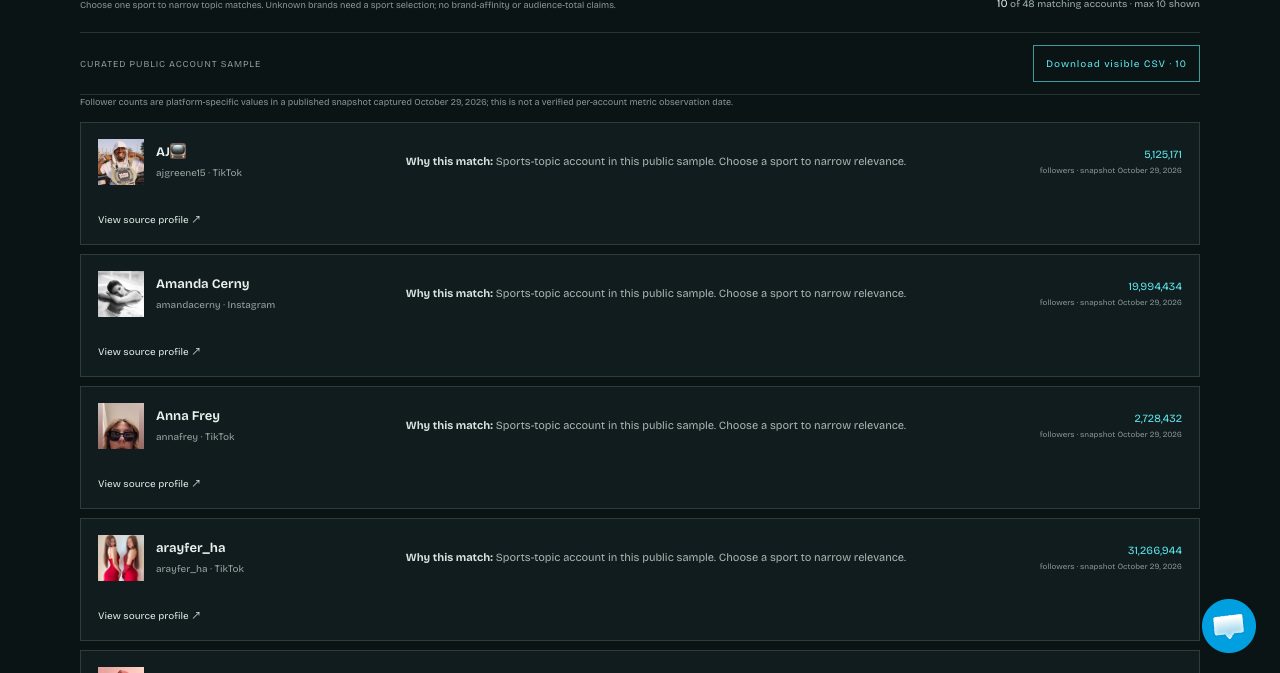
Each card has a "Why this match" line, the platform and a follower count from a dated snapshot. The tool tells you not to add counts across platforms, because audiences overlap and the total wouldn't be unique reach. Matches are based on public topic relevance, so there is no affinity score, no guess at sponsorship availability and no prediction of campaign results. That keeps it honest and makes it a first pass. Influencer teams will still want to vet each creator properly.
Sports Partner Finder
The Sports Partner Finder is a WNBA-first workspace for building a starting list. You choose a collection, sort by Instagram audience, recent activity, name or evidence available, and narrow it with a minimum follower count (10,000, 50,000, 100,000 or 500,000) and a research objective: audience awareness, content research or partnership research. Up to five profiles can go into a shortlist, where you add a campaign label and an objective, then download a CSV or a short research brief. The shortlist stays in your browser tab and isn't synced to an account.
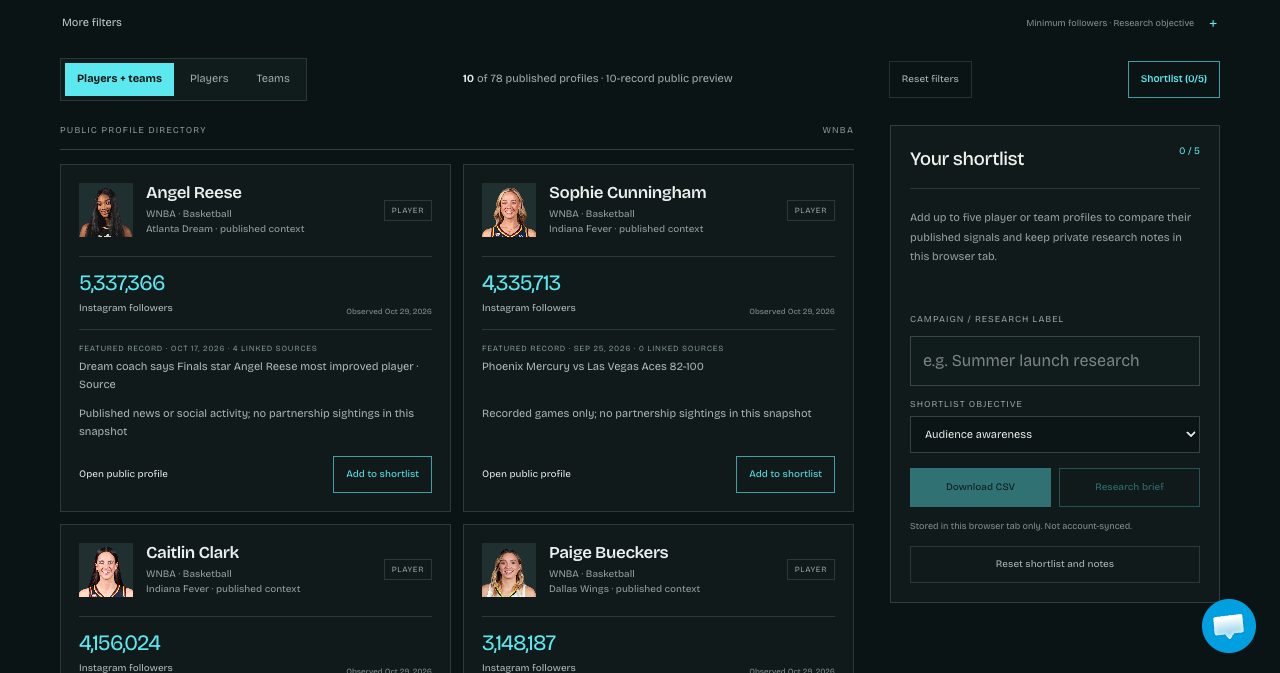
Each card shows the player's team, follower count and observation date, plus a featured record such as a news story or a brand sighting. Cameron Brink's card, for instance, showed "Apple: seen in posts" from October 24, 2026. Cards also say when there are no partnership sightings in the snapshot, which helps when you want athletes without an obvious category conflict.
Injury and comeback tracker
The fourth tool is the most unusual. It lists sourced injury and comeback reports for the WNBA, soccer and tennis next to dated audience observations. Sportsmetric states up front that an injury doesn't automatically mean less attention or fewer followers, and its own data backs that up.
When we looked, Caitlin Clark's return from a back injury in July 2026 sat next to a gain of 32,891 Instagram followers between July 11 and July 25. Brazil's Raphinha gained 498,011 in the two weeks around his hamstring injury in June 2026, in the middle of the World Cup. Where no measurement exists, the tracker leaves the field empty and says it won't estimate one.
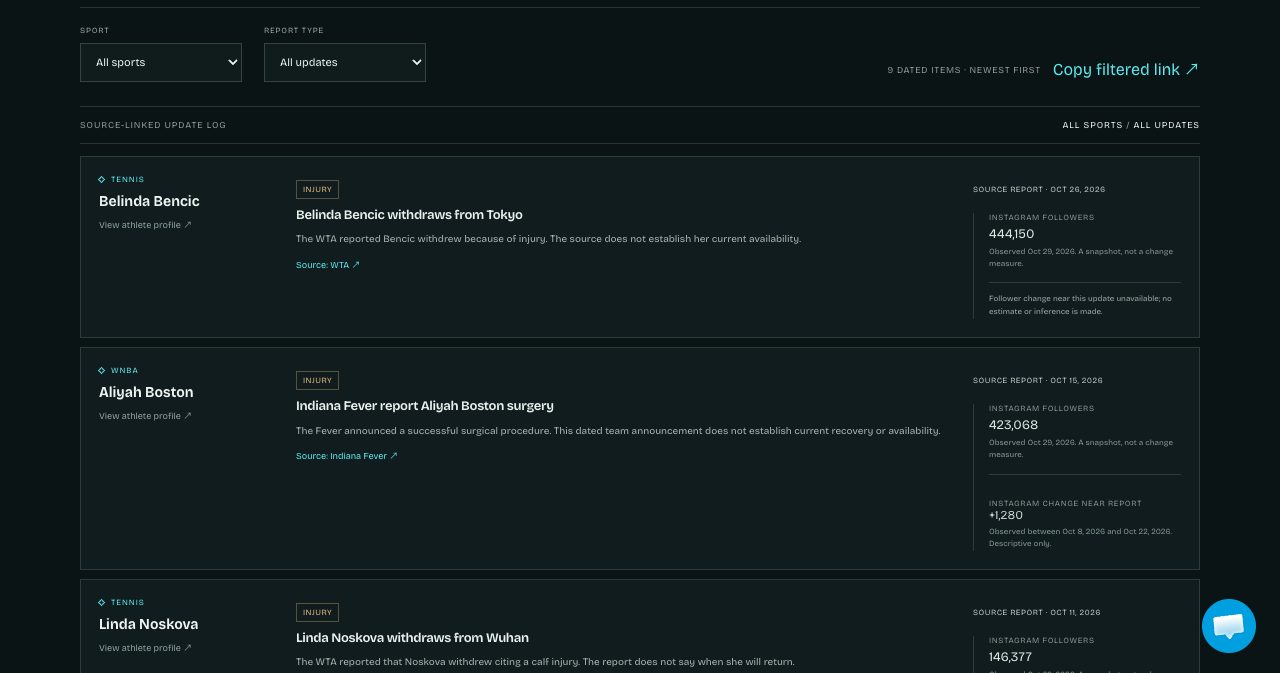
It is a historical log, not a live injury feed, and it doesn't forecast recovery or judge sponsorship risk. For a talent team explaining a quiet stretch to a partner, it's a useful reference.
Monthly rankings and research reports
The Insights section is where Sportsmetric publishes its own analysis. Three pieces show how it works.
Top 20 tracked WNBA players by Instagram follower growth
The October 2026 edition ranked players by percentage growth between September 29 and October 29, 2026. Kaila Charles led with 41.45%, going from 36,990 to 52,321 followers. Gabby Williams came second at 11.42%, but she added the most followers of anyone, 43,003, because she started from a much bigger base of 376,460.
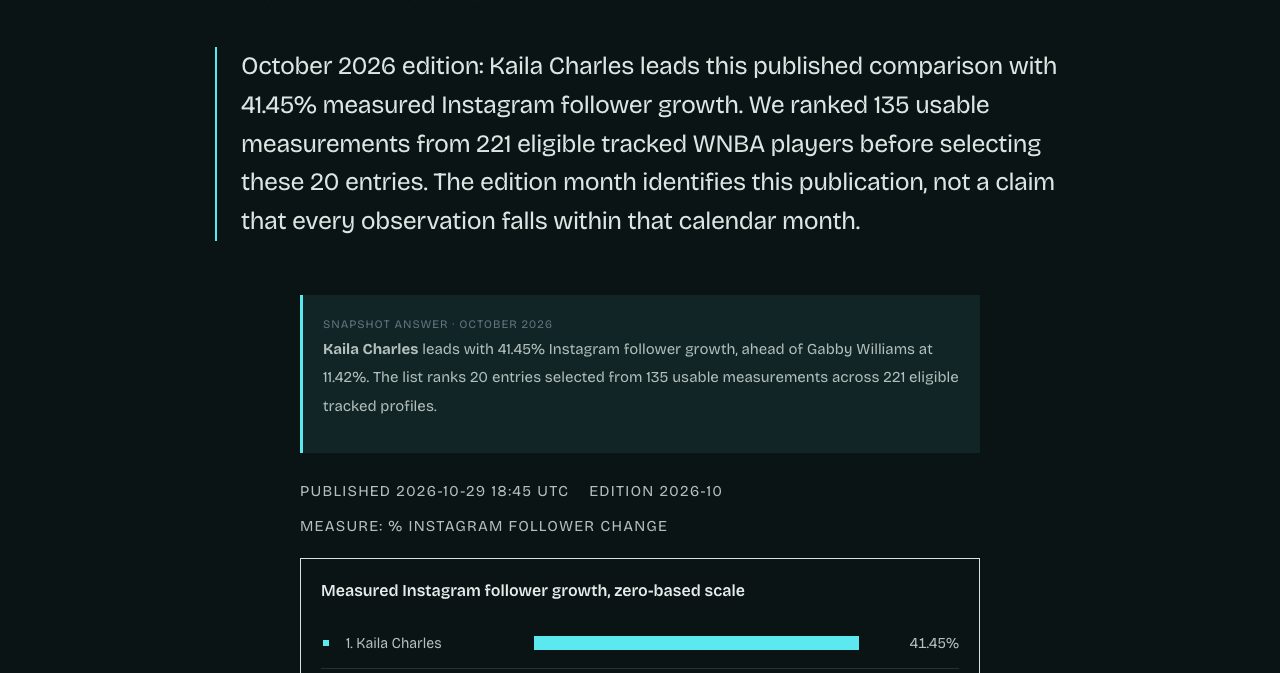
The ranking also shows its coverage. Only 135 of 221 eligible profiles had usable measurements for the window, about 61%. Sportsmetric says the 86 excluded records are missing data and shouldn't be read as athletes with zero growth. You won't find that sentence in most "fastest-growing athletes" lists, and it changes how much weight you can put on the ranking.
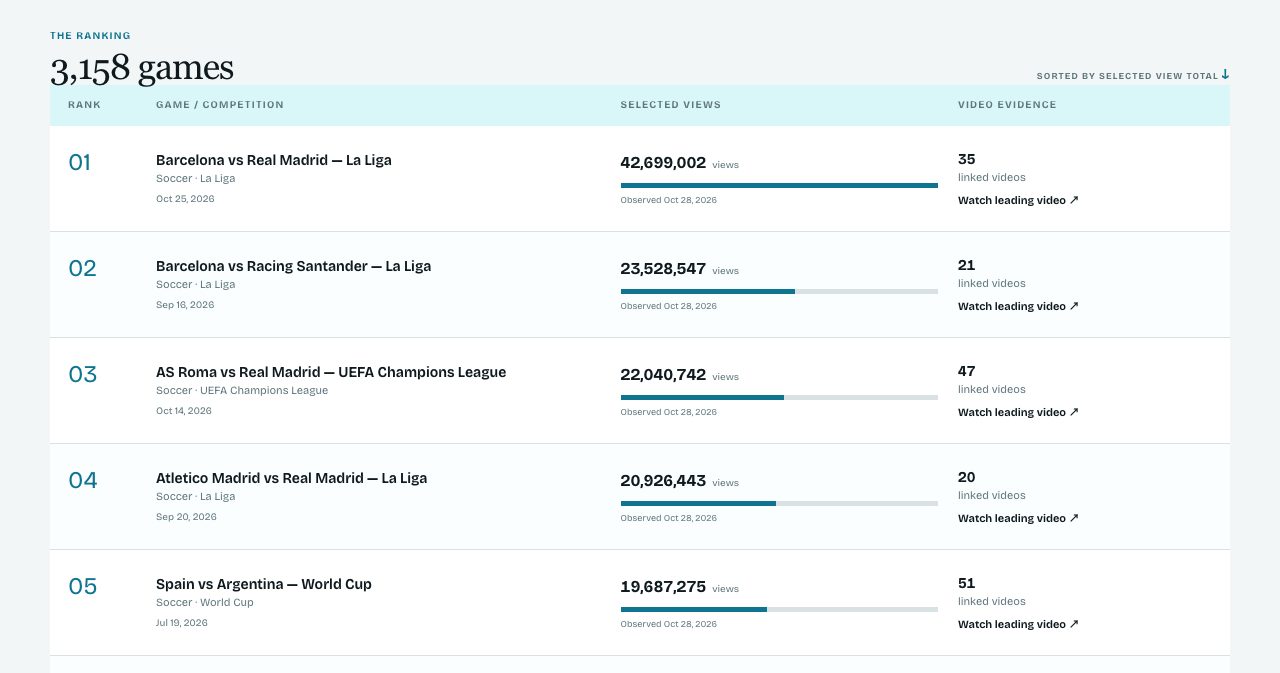
Most Watched Games Online, 2026
This ranking counts views on official YouTube game videos. The snapshot covered 3,158 games played between June 28 and October 28, 2026, with view counts taken on October 28 and the page published November 4. Barcelona vs Real Madrid in La Liga on October 25 led with 42,699,002 views across 35 linked videos. World Cup matches like Spain vs Argentina and England vs Argentina also made the top ten. You can filter by sport, league, month and video format (long-form or Shorts).
Sports Marketing & Fan Attention Report 2026
The flagship report focuses on women's sports, athlete audiences and brand activity, using public snapshots through October 29, 2026. The central finding is that a percentage-growth shortlist, an absolute-gain shortlist and a brand-evidence shortlist answer different questions. The 20 WNBA growth leaders added 154,948 Instagram followers in total, with a median growth of 8.04%. A review of 63 WNBA player pages found 16 brand sightings across 6 profiles, and none of them came with a field that disclosed paid partnership status. The report is a free PDF with no signup.
Beyond these, Sportsmetric publishes guides on building sponsorship shortlists, measuring social growth around a sports moment, NIL research and WNBA sponsorship research, plus the Sports CMO Decision Guide (a free 14-page PDF with two printable planning worksheets) and an Answers library on topics like sponsorship activation and sponsorship ROI.
How to build a sponsorship shortlist with Sportsmetric
Here is a practical workflow using only the public tools. With a beta account you'd run the same steps with more history and more profiles.
- Write down the objective. Awareness, content or partnership? The Partner Finder has a filter for each, and the answer decides which numbers matter.
- Pull a starting list. In the Sports Partner Finder, pick a collection, set a minimum follower count if your brief needs one, and shortlist up to five profiles.
- Open each profile. Note the follower count, the observation date and what happened in the last three months.
- Compare growth two ways. Use the monthly ranking to check both percentage growth and absolute gains. Small accounts tend to win on percentage and big ones on raw gains, and both can be right for different briefs.
- Check brand evidence. Search each name in the Sponsorship Tracker. Official announcements and brands seen in posts are different evidence, so open the source.
- Add creators. Use the Creator Finder to find sports accounts that could amplify the campaign, and keep platform counts separate.
- Confirm everything directly. Sportsmetric reminds you on almost every page to confirm rights, current relationships, eligibility and terms with the athlete's representatives. Do that before any offer.
This takes under an hour and gives you a shortlist where every number has a date and every claim has a source, which is exactly what a CMO or a legal team will ask for.
What Sportsmetric does not do
Sportsmetric publishes its limits as clearly as its features, so it is worth listing them before you sign up. It does not provide:
- Ad buying or media planning
- Broadcast exposure measurement or media valuation
- Fan sentiment or brand affinity scores
- Sales attribution, incremental lift or campaign ROI
- NIL valuations, athlete earnings or eligibility certification
- Contract values, deal prices or proof of exclusivity
- Unique or deduplicated reach across platforms
- Complete league censuses or live data feeds
None of this is hidden in fine print. The FAQ, the tool pages and the profiles all repeat it. If your brief needs any of the above, you'll pair Sportsmetric with a measurement or deal-intelligence vendor, or with your own survey and sales data.
How does Sportsmetric compare with SponsorUnited, Zoomph, Blinkfire, Genius Sports and Hudl?
Sportsmetric has published comparison pages against each of these vendors. Here is a summary of how it positions itself, based on those pages and each vendor's public descriptions.
| Tool | Main job | Where Sportsmetric fits |
|---|---|---|
| Sportsmetric | Athlete and creator audience research, social change around moments, source-backed brand activity | – |
| SponsorUnited | Sponsorship market intelligence, deal data, pricing and spend benchmarks, activation examples | Social attention and shortlisting; no verified deal-price database |
| Zoomph | Social benchmarking, sponsorship exposure and media valuation | Discovery and dated evidence; no exposure valuation |
| Blinkfire | Visual sponsorship detection and media valuation | Audience research and brand observations; no visual detection |
| Genius Sports (FANHub) | Sports data, fan activation and advertising | Audience and partnership research; no fan activation |
| Hudl | Performance video and team analysis | Marketing and NIL research; no coaching video |
In short, Sportsmetric is the research layer you use before a deal conversation. Its SponsorUnited comparison even declines to claim a price advantage or an overall feature win, which tells you a lot about how the company talks about itself. Many teams will end up running Sportsmetric next to one of these tools.
How much does Sportsmetric cost, and how do you get access?
Sportsmetric had not published pricing when we checked on November 11, 2026. The public side is free and needs no account: profiles, collections, the four tools, rankings, guides and reports.
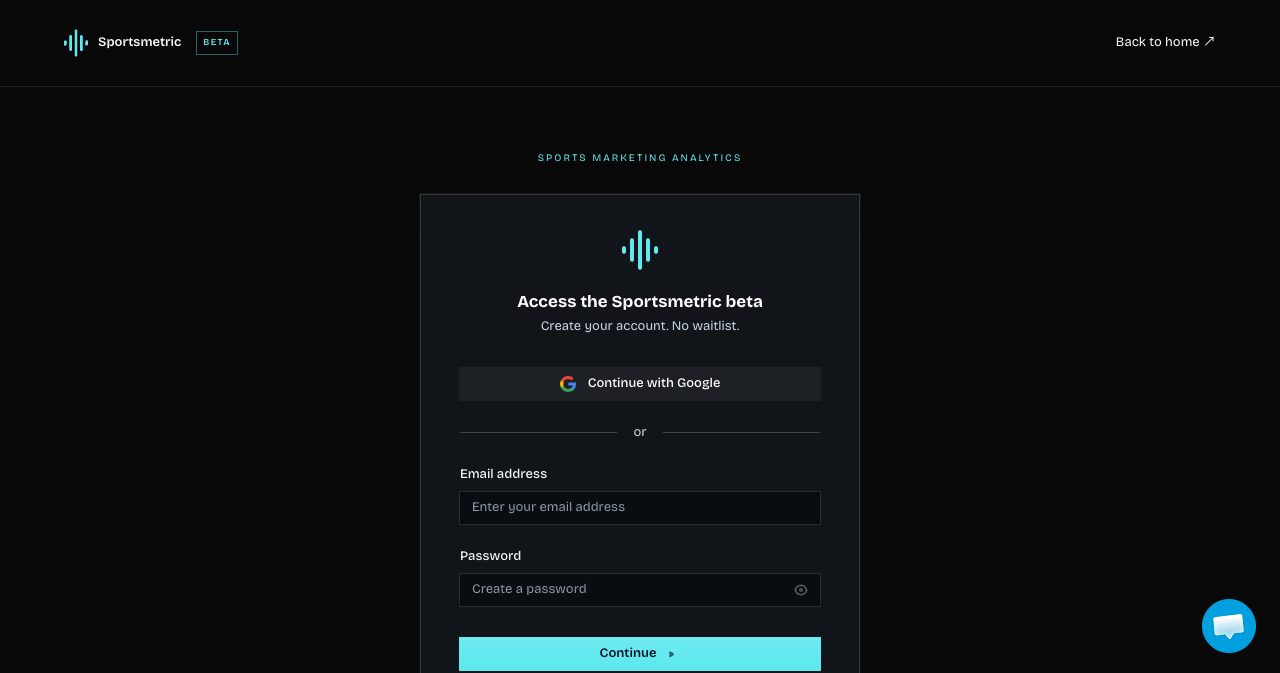
The beta has no waitlist. To get in, go to the sign-up page and continue with Google, or enter an email address and password. That's all the form asks for. Sportsmetric says features and data coverage are still evolving during the beta, and it invites questions and feedback at [email protected].
The Sportsmetric Chrome extension
There is also a Chrome extension, at version 1.1.0 when we checked. Open it on a news article or a team page and it detects athlete and team names from the page title, main heading and structured data, then returns up to ten possible Sportsmetric profiles without signing in. You can also type a name and switch between athletes and teams.
The privacy rules are tight. The extension reads the page only when you open it or click Detect this page, sends up to six name phrases for matching, and doesn't send page URLs or article text. It doesn't read browsing history, store your searches or run in the background. For anyone who reads sports news all day and wants quick context on a name, it's a handy shortcut.
Who is Sportsmetric best for?
Sponsorship and brand teams building athlete shortlists, especially in women's sports and college. The dated, sourced evidence is easy to drop into an internal brief.
Agencies preparing partnership recommendations who need to show their work. Every number comes with a date and every brand claim with a link, which saves a lot of back-and-forth with clients.
Talent and athlete marketing teams who want to show partners how an athlete's audience moves around big moments, with the context attached.
Leagues and teams tracking which players are drawing attention and which creators cover them.
Students, academics and investors. Sportsmetric has dedicated pages for researchers and for private equity teams doing commercial diligence. Both say clearly that public signals help frame questions and can't replace primary evidence.
It's a weaker fit if you need live sports data, performance analysis, ad buying, media valuation or a database of deal prices. It also isn't a full influencer marketing suite with outreach and contracts. And since it's in beta, coverage outside basketball, soccer and tennis is limited for now.
Is Sportsmetric worth trying?
Yes, if your work involves choosing athletes or creators to partner with. The free tools alone are worth an afternoon. The Sponsorship Tracker and the monthly growth rankings are some of the most carefully sourced public sports marketing data we have seen, and every figure is dated and linked. The bigger value is the habit it builds. Separating a sighting from a contract, percentage growth from absolute gains, and timing from causation makes for better sponsorship decisions, whatever tools you use.
The trade-offs come with being early. Public samples are small, pricing isn't published, and some signed-in features are still evolving. But the Chartmetric team has a long record in audience data, the product is honest about its limits, and getting in costs nothing but a signup. Start with the public profiles and tools, and when you want the full history, create a free beta account.
FAQ
What is Sportsmetric?
Sportsmetric is a sports marketing analytics platform from the makers of Chartmetric. It helps brands, agencies, leagues and talent teams research athlete audiences, social growth, sports creators and brand partnerships, with every audience figure dated and every brand record sourced. It does not do coaching, performance analysis or live sports data.
Who makes Sportsmetric?
The team behind Chartmetric, the music analytics company. Its About page introduces founder and CEO Sung Cho, chief product officer Akash Mukherjee, chief commercial officer Chaz Jenkins, data engineer Charlie Rowe and product designer Rebecca Tang.
Is Sportsmetric free?
Public profiles, the four tools, the monthly rankings and the reports are free without an account. The beta signup asks only for a Google sign-in or an email and password. No pricing had been published as of November 11, 2026.
How do I get access to the Sportsmetric beta?
Go to sportsmetric.com/sign-up and continue with Google or an email and password. There is no waitlist. Questions and feedback go to [email protected].
Which sports does Sportsmetric cover?
Basketball, soccer and tennis, with more planned. Public collections focus on the WNBA, women's sports and college basketball and football. The public directory listed 298 athletes and 185 teams when we checked.
Does Sportsmetric show NIL valuations or athlete earnings?
No. College profiles show dated audiences, school context and recent activity. They don't estimate NIL value or earnings, certify eligibility or list available deals.
Does "seen in posts" mean a brand deal is active?
No. It means a brand was observed in the athlete's posts. First-seen and last-seen dates describe sightings, not contract dates, and a separate source is needed to show a deal exists or is active.
Can Sportsmetric measure sponsorship ROI?
No. It does not provide ad buying, exposure measurement, sentiment, sales attribution or ROI. Social growth and engagement can inform a decision, but proving business impact needs sales, ticketing, viewing or survey data.
How is Sportsmetric different from SponsorUnited?
SponsorUnited focuses on deal intelligence, pricing benchmarks and activation examples. Sportsmetric focuses on social audience change, sports moments and source-backed brand activity for shortlisting, and has no verified deal-price database. Some teams use both.
Does Sportsmetric have a Chrome extension?
Yes. Version 1.1.0 detects athlete and team names on the page you're reading and returns up to ten profile matches without signing in. It doesn't send page URLs or read your browsing history.
Is Sportsmetric the same as Sportsmetrics, the ACL injury prevention program?
No. Sportsmetric (singular) is the sports marketing analytics platform at sportsmetric.com. Sportsmetrics with an s is an unrelated knee injury prevention training program.
Can students and researchers use Sportsmetric?
Yes. Sportsmetric has a page for students, professors and researchers on working with public audience observations, with dates, sources and gaps kept in view. Dated historical observations are available in the signed-in beta.
If you're building a marketing or analytics product yourself, SaaSCity is a human-reviewed startup directory with a live city map, and submitting takes about ten minutes.
Get your SaaS in front of founders
List your product on SaaSCity for $19.99, one-time: a permanent listing, a dofollow backlink and a building on the live city map.
Founder resources
Related articles
Tiquiz Review 2026: The AI Quiz Builder That Tags Your Leads in Systeme.io and GoHighLevel Without Zapier
FitDesk Review 2026: Free UK Personal Trainer Software With Bookings, Workouts and a 0.7% Payment Fee