Glossary
Dofollow vs nofollow: what a link's rel value tells Google
A [directory listing](/glossary/directory-submission) usually links to your site, with or without a rel value that asks Google to hold back credit. This page covers what each value means in 2026, how Google treats them and how to check your own listing before you count on the link.

Founder, SaaSCity
Updated
Checked against the sources listed at the end.
- 1,666
- Directories in our dataset
- 45.9%
- Give a followed link
- 36.3%
- Link type never confirmed
- 86
- Ask for a badge back
Contents (9)
- What are dofollow and nofollow links?
- Why there is no dofollow attribute
- rel="sponsored" and rel="ugc", added in 2019
- How Google treats each value today
- How to check any link in a minute
- What our directory data shows
- Are nofollow directory links worth it?
- Badges and paid listings: what Google's policy says
- FAQ
What are dofollow and nofollow links?
A dofollow link is an ordinary link with no rel value that holds back credit, so Google can count it as a signal for the linked page. A nofollow link carries rel="nofollow", or the newer sponsored or ugc values, which Google treats as a hint that it may leave the link out. There is no "dofollow" attribute.
Also called: dofollow link, nofollow link, rel="nofollow", follow link
Why there is no dofollow attribute
A dofollow link is a plain link. Nothing in HTML is called dofollow: the WHATWG HTML standard defines a nofollow keyword for the rel attribute and no dofollow keyword at all. SEO people use the word for a link without any value that holds back credit.
Google puts it the same way. Its documentation says that for regular links you expect Google to fetch and parse without any qualifications, you don't need to add a rel attribute. Writing rel="dofollow" changes nothing, because the values Google lists are sponsored, ugc and nofollow.
A nofollow link carries rel="nofollow". The HTML standard says the keyword means the page's author or publisher does not endorse the link, or that the link is there mainly because of a commercial relationship. Google announced it on January 18, 2005, to fight comment spam, and from then on links marked that way got no credit when it ranked sites.
When a directory sells a "dofollow listing", it promises a link without nofollow, sponsored or ugc. The checks further down show whether the live listing delivers.
What a listing link can look like
<!-- Followed ("dofollow"): no value that holds back credit -->
<a href="https://yourproduct.com">YourProduct</a>

<!-- Still followed: noopener and noreferrer are about browser behavior -->
<a href="https://yourproduct.com" target="_blank" rel="noopener noreferrer">YourProduct</a>

<!-- Nofollow -->
<a href="https://yourproduct.com" rel="nofollow">YourProduct</a>

<!-- Paid placement -->
<a href="https://yourproduct.com" rel="sponsored">YourProduct</a>

<!-- User-generated content, plus nofollow for tools that predate ugc -->
<a href="https://yourproduct.com" rel="ugc nofollow">YourProduct</a>

<!-- Not a real value: this link is simply followed -->
<a href="https://yourproduct.com" rel="dofollow">YourProduct</a>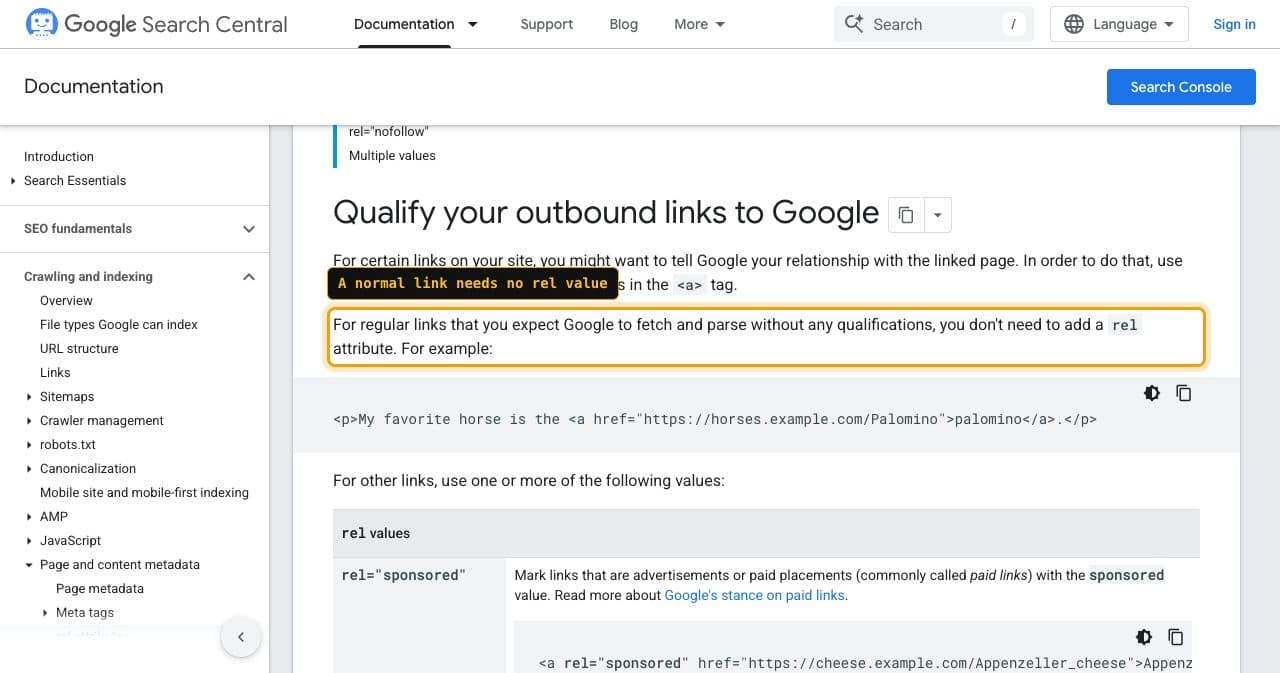
rel="sponsored" and rel="ugc", added in 2019
Google added two values on September 10, 2019, in a Search Central blog post by Danny Sullivan and Gary Illyes. Until then nofollow covered everything: blog comments, ads and any link a site did not want to vouch for.
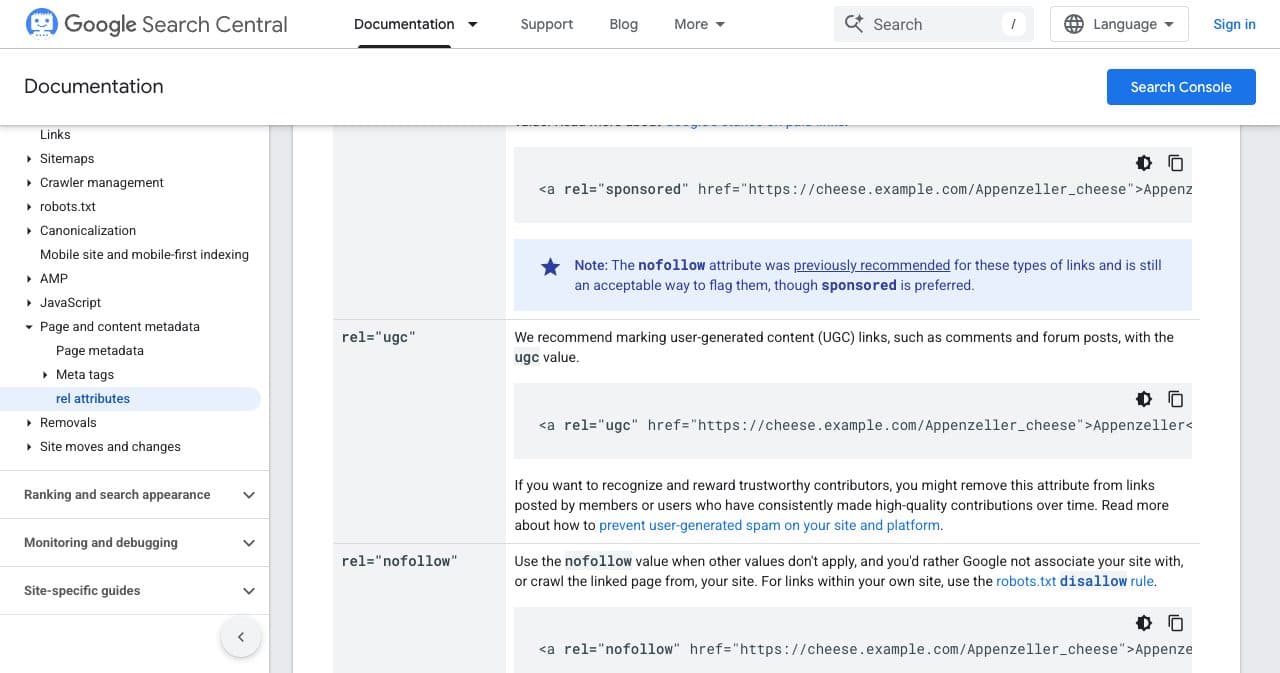
rel="sponsored" is for links that are part of ads, sponsorships or other compensation agreements. Google's current documentation asks sites to mark advertisements and paid placements with it, and says nofollow is still an acceptable way to flag paid links, though sponsored is preferred.
rel="ugc" is for links inside user-generated content, such as comments and forum posts. Google suggests a site may remove it for members who have made high-quality contributions over a long time.
rel="nofollow" stays the catch-all for links a site does not want to vouch for when the other two don't apply. Values can be combined, as in rel="ugc nofollow".
All three ask Google not to give the link the weight of a first-party endorsement. On a directory, sponsored usually means the placement was paid for.

A listing you can inspect
SaaSCity, the launch directory we run, reviews every listing by hand and gives it a permanent page on a DR 66 domain. A free listing’s link turns dofollow once our badge is on your homepage, and Quick Pass ($19.99) skips the weekly queue. Run the checks below on any live SaaSCity listing to see the markup for yourself.
How Google treats each value today
As hints. Since September 10, 2019, Google has used sponsored, ugc and nofollow as hints about which links to consider or exclude for ranking, and since March 1, 2020, nofollow has also been a hint for crawling and indexing. Before 2019, Google did not count a nofollow link as a signal at all.
In practice the hint usually holds. Google's 2019 post says that in most cases the switch would not change how it treats such links, which it would generally not consider for ranking. Its documentation says they will generally not be followed, though Google can still find the linked page through a sitemap or another site.
Two rules are firm. Paid links need sponsored or nofollow: Google's spam policies say having them is not a violation as long as they are qualified that way. And nofollow also works for a whole page: a robots meta tag with nofollow tells Google not to follow any link on that page, whatever each link says.
How to check any link in a minute
Check the live listing, not the pricing page. Directories change their link policy, and the dofollow labels on directory lists go stale: in our study, 104 sites that were dead or broken still carried one on the lists they came from.
- Inspect the link in Chrome Right-click the link to your site and choose Inspect, or press Ctrl+Shift+C (Cmd+Option+C on a Mac) and click it. No rel value, or only noopener and noreferrer, means followed; nofollow, sponsored or ugc means not.
- Read the page source Press Ctrl+U (Cmd+Option+U on a Mac) and search the HTML for your domain. A link that shows in DevTools but not in the source was added by JavaScript, which Google can still read if it is a normal <a> element with an href.
- List every link to your site In the Console (Ctrl+Shift+J, or Cmd+Option+J on a Mac), paste the first line below with your domain in it to print each link to your site and its rel value.
- Check from a terminal The curl line prints every <a> tag in the raw HTML that points at your domain. If nothing prints, look for a link through the directory's own redirect (/go/, /out/ or ?ref= in the href), which points at the directory first.
- Check the page around the link A robots meta tag with nofollow applies to every link on the page, and noindex keeps the listing out of Google's results. A canonical pointing to another URL asks Google to treat that URL as the main one.
Console and terminal checks (swap in your domain and listing URL)
// Chrome DevTools Console: every link to your site, with its rel value
[...document.querySelectorAll('a[href*="yourproduct.com"]')].map(a => (a.rel || '(no rel)') + '  ' + a.href).join('\n')

# Terminal: every <a> tag in the raw HTML that points at your site
curl -sL "https://directory.example/p/yourproduct" | grep -oiE '<a [^>]*href="[^"]*yourproduct\.com[^"]*"[^>]*>'

# Terminal: the listing's robots meta tag and canonical
curl -sL "https://directory.example/p/yourproduct" | grep -oiE '<(meta[^>]*name="robots"|link[^>]*rel="canonical")[^>]*>'
noopener and noreferrer do not make a link nofollow
Many directories add rel="noopener noreferrer" to links that open in a new tab. Those values deal with browser security and the Referer header, so the link is still followed. With noreferrer, though, visits from the listing can show up as direct traffic, so tag the URL you submit with UTM parameters.
What our directory data shows
Most directories with a known link type give a followed link, but a large share have never been checked. Of the 1,666 directories in our dataset (sweep of October 6, 2026), 764 (45.9%) give a followed link and 297 (17.8%) a nofollow one. The other 605 (36.3%) have never had the link type confirmed, and we mark them unknown instead of guessing.
419 directories are free to join and give a followed link. Our free dofollow directories page lists them all, grouped by Domain Rating.
86 directories (5.2%) ask you to place their badge on your site. A badge request does not guarantee a followed link: some directories in our data that ask for one still mark your link nofollow, so check a live listing before you add their badge.
Link types change without notice, so the check above is worth more than any list, ours included.
Are nofollow directory links worth it?
For rankings, rarely. For everything else, often. Google says it generally does not count nofollow, sponsored or ugc links for ranking, so a nofollow directory is not worth a submission for the link alone. It is worth one when the listing does any of these:
- Sends visitors. A nofollow link on a page people browse gets the same clicks as a followed one.
- Ranks for your name. A listing on a strong site can appear when someone searches your product's name, next to your own homepage.
- Gets cited. When an AI answer cites a directory page, it cites the page itself, so what helps is a listing that describes you accurately.
- Reaches buyers while they choose. Review sites and alternatives pages are read by people comparing products.
When to skip one
Skip a nofollow directory that also has no audience you can see: no recent listings, no votes or reviews and no listing pages in Google. That combination gives you nothing.
Badges and paid listings: what Google's policy says
Paid listings and badge swaps both touch Google's link spam policy. The policy, last updated August 28, 2026, defines link spam as creating links to or from a site primarily to manipulate search rankings. Its examples include buying or selling links for ranking purposes, "excessive link exchanges" and requiring a link as part of a terms of service, contract or similar arrangement "without allowing a third-party content owner the choice of qualifying the outbound link".
Google also says paid links are fine when they carry rel="nofollow" or rel="sponsored". On a directory, that markup is the directory's decision, not yours, and Google's spam policies have no separate rule for paid directory listings.
A badge swap is a reciprocal link: you link to the directory, and in return its link to you is followed, or the listing is free. Google's policy does not say how many exchanges count as excessive.
Our view: pay or swap when the directory's audience and page are worth having on their own, and count a followed link as a bonus. One badge for a directory you would list on anyway is a small trade. A footer of twenty badges for directories you never visit is much closer to what the policy describes.
Dofollow vs nofollow links: FAQ
- Is there a rel="dofollow" attribute?
- No. A followed link is a normal link with no nofollow, sponsored or ugc value. Google's documentation lists only those three values, so writing rel="dofollow" changes nothing.
- Do nofollow links help SEO?
- Not much for rankings: Google treats nofollow as a hint and generally does not count such links. A nofollow listing on a busy site can still send visitors and rank for your brand name, which a followed link on a dead site cannot.
- When did Google start treating nofollow as a hint?
- Google announced it on September 10, 2019. Nofollow, sponsored and ugc became hints for ranking that day, and nofollow became a hint for crawling and indexing on March 1, 2020.
- What is the difference between nofollow and sponsored?
- sponsored marks an ad, sponsorship or paid placement; nofollow says you would rather Google not associate your site with the linked page. For paid links Google prefers sponsored but accepts nofollow.
- How do I check if a link is dofollow?
- Right-click the link, choose Inspect and read its rel attribute. It is followed if it has no nofollow, sponsored or ugc value and the page has no robots meta tag with nofollow.
- Should a paid directory listing be marked sponsored?
- Google asks sites to qualify ads and paid placements with sponsored or nofollow, and on a directory that markup is the directory's call. Many paid listings are followed anyway, so judge one by its audience and its page.
How we checked
Definitions follow the primary sources below; numbers come from our directory dataset. Last checked on .
- Google Search Central: Qualify your outbound links to Google
- Google Search Central Blog: Evolving "nofollow", new ways to identify the nature of links (September 10, 2019)
- Official Google Blog: Preventing comment spam (January 18, 2005)
- Google Search Central: Spam policies, link spam
- Google Search Central: Robots meta tag specifications
- Google Search Central: Link best practices
- WHATWG HTML Standard: Link types
- Chrome for Developers: Open Chrome DevTools
- Google Chrome Help: Chrome keyboard shortcuts
Put your product on the map
Free with our badge, or $19.99 to go live within 24 hours.