Launch & Growth
The SEO Benefits of Listing SaaS Products in Directories (2026 Guide)
Directory SEO isn't dead, it's selective. Four benefits survive 2026: dofollow backlinks from pages Google actually indexes, control of your branded search results, referral traffic from buyers who are mid-comparison, and the third-party citations AI answer engines pull from. Here's how each one works and which directories still pass value, with DR and dofollow data from the 1,669 we track.

Contents (15)
- Key Takeaways
- The four SEO benefits of listing SaaS products, at a glance
- Why this channel is worth an afternoon at all
- Benefit 1: backlinks that actually pass value
- Benefit 2: you control what branded search shows
- Benefit 3: referral traffic that converts better than you'd expect
- Benefit 4: AI search citations are the newest channel
- What a realistic campaign actually returns
- Which directories are worth listing on in 2026
- How to list your SaaS so the SEO actually works
- Is SEO still worth it in 2026 for a SaaS founder?
- Common mistakes that waste directory submissions
- How to measure whether your listings worked
- Questions founders ask about directory SEO
- What I'd do with a new SaaS product tomorrow
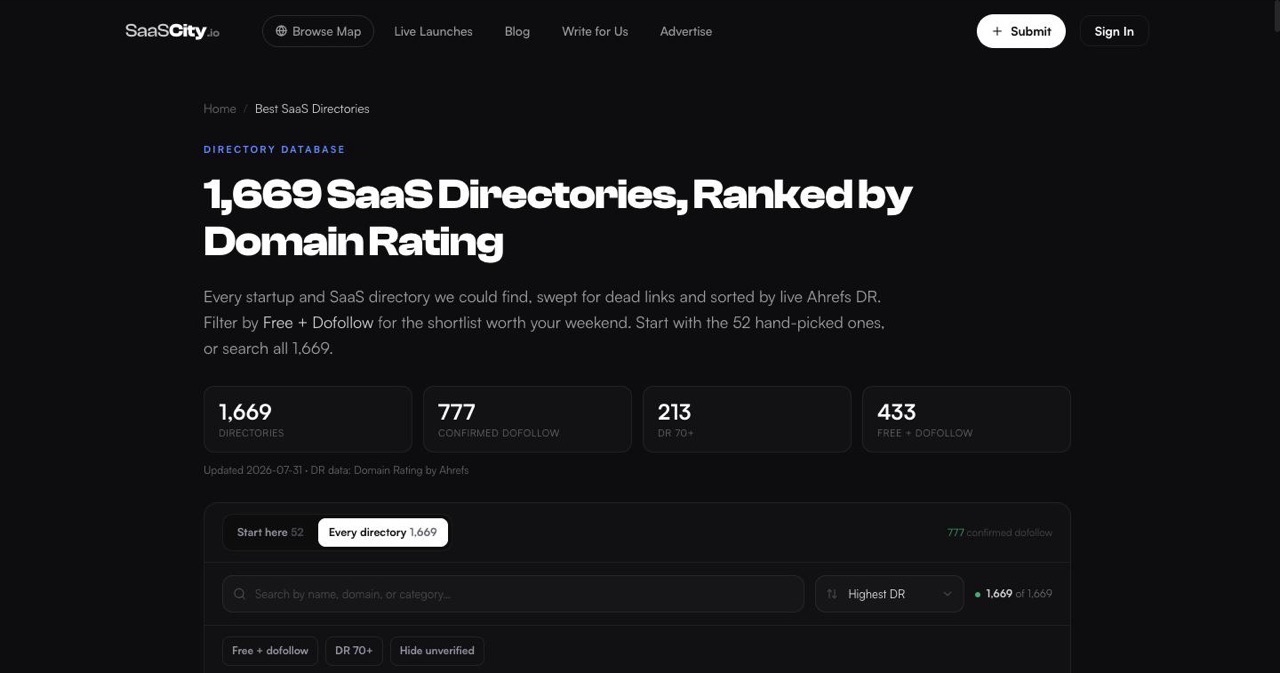
Quick answer: Listing a SaaS product in directories pays off through four channels in 2026: dofollow backlinks from directory pages Google has actually indexed, control over your branded search results page, referral traffic from buyers who are mid-comparison on sites like G2 and AlternativeTo, and third-party citations that ChatGPT, Perplexity and Google's AI features pull from. Of the 1,669 directories we track by Ahrefs Domain Rating, 483 sit under DR 20 and mostly never get indexed, so ten to fifteen well-chosen listings beat a 200-directory spree.
Last updated: September 2, 2026. Domain Rating figures below come from our own directory dataset, refreshed against Ahrefs on July 31, 2026. Third-party statistics are linked to their source and dated.
This piece covers which directories still pass value and which don't, using our own dataset of 1,669 tracked directories. We run one of those directories, and we say where it sits in the data.
Short answer: yes, the SEO benefits of listing SaaS products in directories are still real in 2026, but only through four specific channels. You get backlinks when the directory page is indexed and the link is dofollow. You get control over what people see when they Google your brand name. You get referral traffic from buyers who are actively comparing tools. And you get third-party citations that AI answer engines pull from when someone asks for "the best tool for X".
Most founders botch this, and I can point at exactly how. A founder I know spent a weekend last spring submitting his task app to 180 directories pulled from a GitHub awesome-list. Three months later: two referral visits, zero ranking movement, and a spreadsheet full of listings he was embarrassed to be on. His conclusion was that directory SEO is dead. It isn't. It went selective, and the benefits only show up when you treat the channel as curation instead of carpet-bombing. One curated listing that ranks beats 180 that don't, which is the whole argument of this post.
Key Takeaways
- Four benefits, not one: Backlinks, branded search control, referral traffic from comparison shoppers, and AI answer-engine citations are the only channels that still hold up.
- Indexation is the gate: A link only counts when Google has crawled the individual listing page and the link is dofollow, not just when the directory's homepage ranks.
- The DR distribution is brutal: Across 1,669 tracked directories refreshed against Ahrefs on July 31, 2026, 483 sit under DR 20 and only 213 are DR 70 or above.
- Ten to fifteen submissions is the sweet spot: Roughly 80 percent of the benefit comes from the nine top-tier platforms plus two or three niche directories in your vertical.
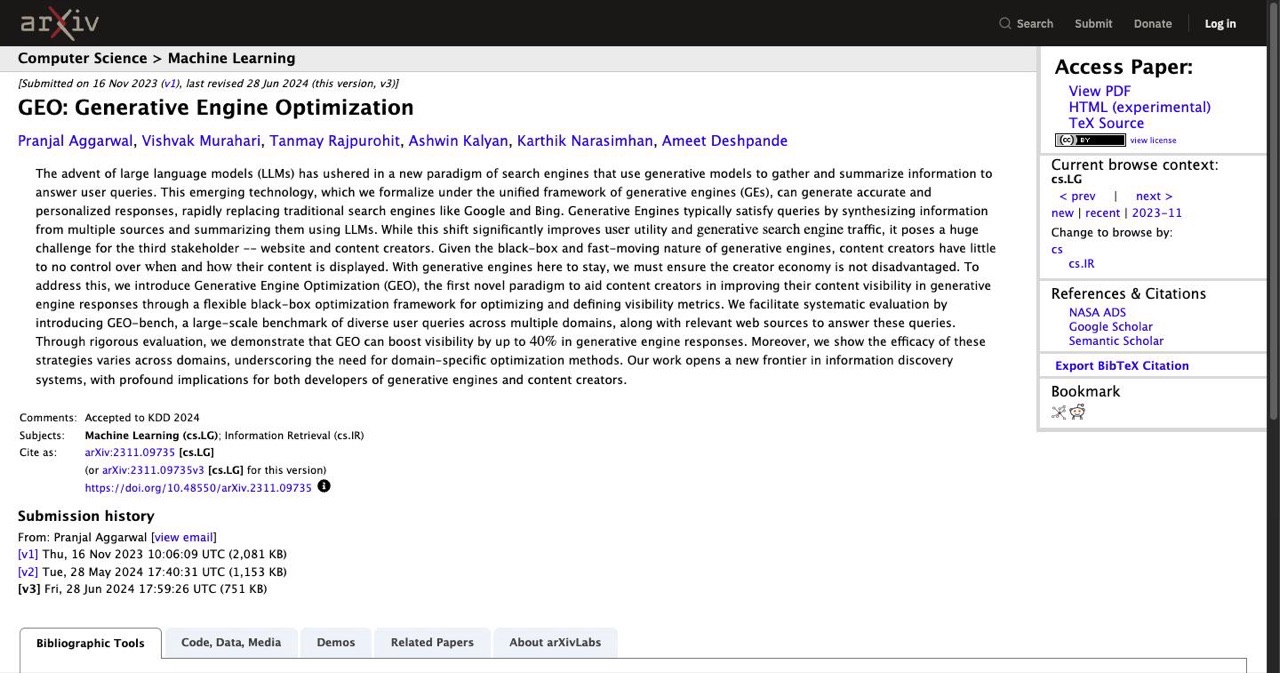
- Consistency feeds AI citations: The Princeton GEO study measured citing sources at about 40 percent visibility lift and adding statistics at about 37 percent, while keyword stuffing lowered it.
- Timelines differ by channel: Referral traffic lands in week one, new branded results within two weeks, backlink effects over a quarter, AI recommendations after months.
The four SEO benefits of listing SaaS products, at a glance
If you only read one table, read this one. The rest of the piece is the argument behind each row.
| Benefit | What it needs to work | First visible effect | How you measure it |
|---|---|---|---|
| Backlinks | Directory page indexed by Google, link dofollow, DR that isn't a rounding error | 4 to 12 weeks in your link profile | Ahrefs or Search Console links report |
| Branded search control | A complete profile with screenshots on a site that ranks for your brand name | 1 to 2 weeks | Incognito search for your product name |
| Referral traffic | A listing on a comparison page real buyers browse, tagged with UTM | Days | Analytics, referral sources by UTM |
| AI answer citations | Consistent, factual descriptions across many indexed sources | 2 to 6 months | Monthly checks of ChatGPT, Perplexity, Gemini for your category |
Notice what's not on the list. "Domain authority from 200 submissions" isn't a benefit, because the 150 directories nobody visits contribute nothing to it. The directory count was never the lever.
Why this channel is worth an afternoon at all
Start with the economics, because that's the honest reason anyone should care.
Seoptimer's SaaS SEO guide, updated in November 2025, puts organic and SEO-driven customers at 40 to 60 percent cheaper to acquire than customers from paid-only or outbound channels. That gap has been widening, not shrinking, as ad platforms crowd up and CPCs climb. The other number everyone quotes is older but still the baseline: BrightEdge's channel share research measured organic search at 53 percent of trackable website traffic across thousands of domains, with paid search at 15 percent. That study is from 2019, and nobody has produced a better cross-industry figure since, so treat it as the shape rather than the decimal.
Here's the part most coverage skips: a brand new SaaS has almost zero organic presence. You have a homepage, maybe a pricing page, and nothing else. You can't rank for anything yet. Directory listings are the fastest legitimate way to bootstrap that presence, because the directory already has the authority, the indexed pages, and the rankings you haven't earned. You are borrowing their visibility while yours develops.
A scheduling tool I advised in 2024 makes the pattern concrete. Eleven organic visits in its first month. Eleven. Its AlternativeTo listing, meanwhile, sat on a page ranking on page one for "Calendly alternatives", and that single page sent it more than 300 visitors over the same period. Months later the product's own pages started competing for the same queries. That handoff is the whole point: you borrow an audience while your own rankings mature.
Benefit 1: backlinks that actually pass value
Most directory backlinks are worthless, and the SEO benefits of listing SaaS products never came from volume. They come from a handful of listings on pages Google actually crawls. Knowing the difference is the entire skill.
Two conditions, both required.
Indexed means Google has crawled and cached the page your listing sits on, not just the directory's homepage. You can check this in thirty seconds: search site:thedirectory.com/your-category and see whether individual listing pages appear. If whole sections of the site are missing from Google, your listing is on a page no crawler visits.
Dofollow means the link carries no rel="nofollow" or rel="sponsored" attribute. Plenty of the better-known directories use nofollow precisely because spammers abused them. Those links aren't worthless, though. Google announced in September 2019 that nofollow would become a hint rather than a directive: for ranking from that day, and for crawling and indexing from March 1, 2020. A nofollow link on a page with real traffic still sends visitors, and visitors still convert.
You'll see big numbers thrown around. Toolfio's backlinks guide says that submitting to 50 to 100 directories can build "a solid backlink profile in a week". The count is achievable. The profile is the question. Here is what our own dataset says about the distribution:
| Our directory dataset (Ahrefs DR, refreshed July 31, 2026) | Count |
|---|---|
| Directories tracked | 1,669 |
| DR under 20 | 483 (29%) |
| DR 20 to 49 | 720 (43%) |
| DR 50 to 69 | 253 (15%) |
| DR 70 and above | 213 (13%) |
So a 100-directory spree, drawn at random, lands roughly 13 links on DR 70+ pages and around 30 on pages under DR 20, most of which are not indexed at all. The DR 70+ slice is where the backlink benefit lives, and you can hit it in an afternoon if you start from the right end of the list.
Among the 123 launch-focused directories we track separately, 99 pass dofollow links and 24 don't. The named ones, from that dataset:
| Directory | DR | Dofollow | Pricing |
|---|---|---|---|
| SourceForge | 92 | Yes | Freemium |
| G2 | 91 | Yes | Freemium |
| Capterra | 91 | Yes | Freemium |
| Product Hunt | 91 | No | Free |
| Software Advice | 87 | Not tracked in our dofollow set | Freemium |
| GetApp | 85 | Not tracked in our dofollow set | Freemium |
| TrustRadius | 84 | Not tracked in our dofollow set | Freemium |
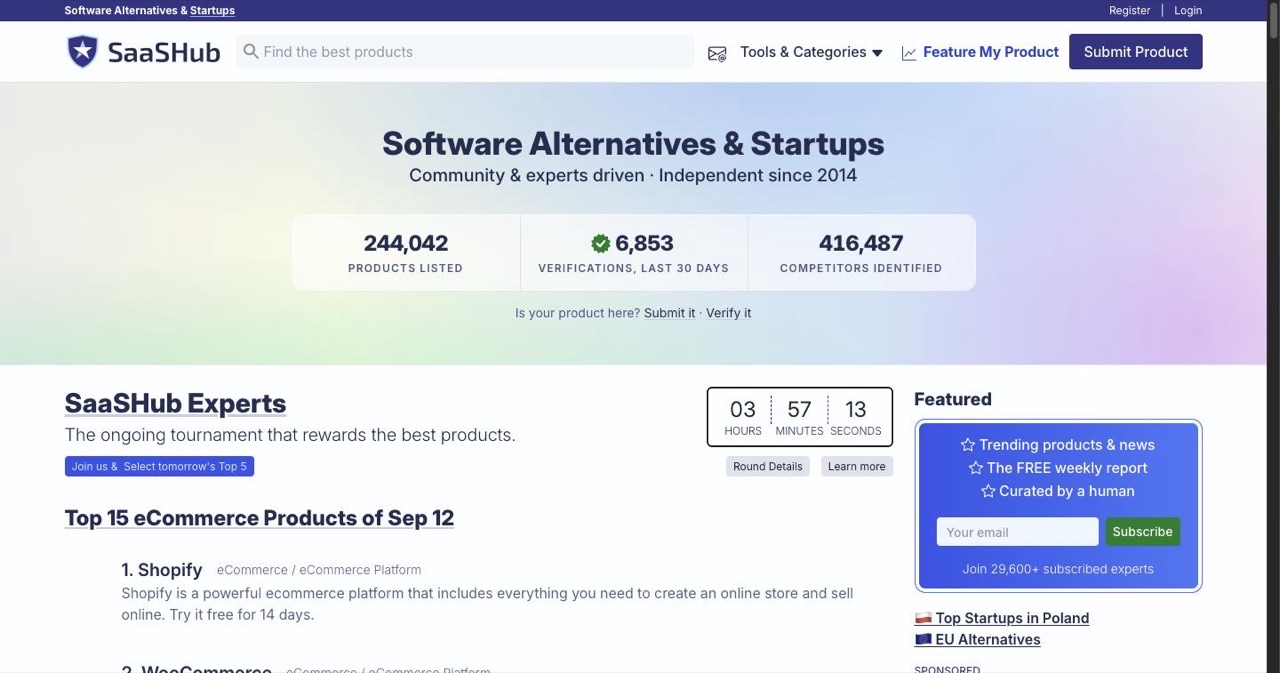
| SaaSHub | 80 | Yes | Free |
| AlternativeTo | 79 | No | Free |
| SaaSCity | 59 | Yes, on badge or paid plans | Freemium |
SaaSCity is our own directory, shown at its DR in that July dataset; the latest Ahrefs check puts it at 66. A DR 66 dofollow link from an indexed page is a good link for a new domain. It is not a DR 92 link.
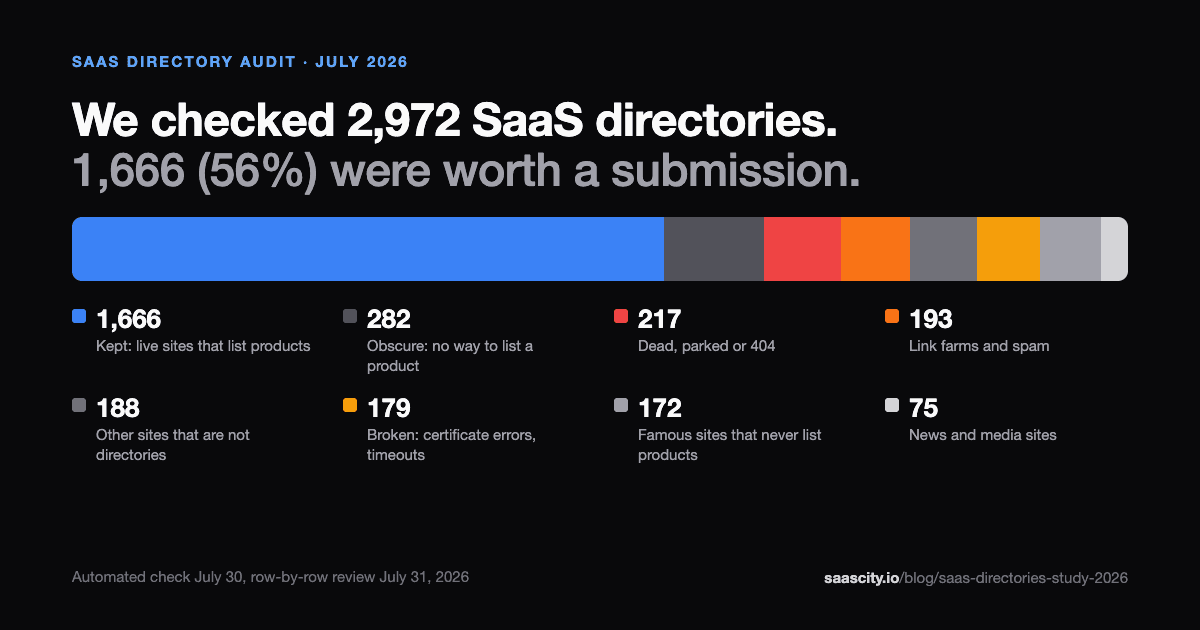
If you want the full method for sorting the useful directories from the dead ones, our DR-based framework for choosing SaaS launch directories walks through the floor-not-target logic and the indexation checks. The pre-filtered lists are the best SaaS directories and high-DR directories pages, both sorted from the same dataset.
Benefit 2: you control what branded search shows
Try this before reading another word: open an incognito window and search your product's name. What comes back? If it's your homepage and a graveyard of half-finished profiles, you have a trust problem that no amount of on-page SEO fixes. Of the four SEO benefits of listing SaaS products, this is the one I'd chase first, because it pays off fastest.
When someone hears about your product from a tweet, a friend, or a podcast, they Google the name. What shows up decides whether they trust you. If the only result is your lonely homepage with a title tag you wrote at 1am, that's a weak showing. If page one shows your site, your Product Hunt page, a G2 profile with 40 reviews, and a couple of directory listings with real screenshots, you suddenly look established.
Think of each listing as a piece of real estate on your own branded results page. Your homepage is one result. Google shows ten. You should own or influence as many of those ten as you can. A June 2026 guide from StartupSubmit makes the same point from the buyer's side: "Today's buyers rarely visit your marketing page first. Instead, they check G2, Capterra, and similar platforms before they ever land on your site."
This matters even more when things go wrong. A bad review, a critical blog post, a copycat with a confusingly similar name: having eight strong directory profiles already ranking for your brand pushes that content down. You are building defensive SEO before you need it, and nobody thinks about this until the day they do.
The trust signal compounds, too. A G2 profile isn't just a link. It's a validation layer, and absence from it reads as a red flag for B2B software. Verifiable third-party proof beats self-reported claims every time, which is the same principle behind the identity-verification problem SaaS founders are running into as fake products and fake reviews multiply.
Benefit 3: referral traffic that converts better than you'd expect
Directory traffic gets dismissed as low quality, and sometimes it is. Traffic from comparison-focused directories is a different animal, because of where those people are in their buying journey. Of the four benefits, this is the least glamorous and usually the first to show up in your analytics.
Someone browsing "alternatives to Notion" on AlternativeTo isn't researching abstractly. They have a Notion-shaped problem, they're unsatisfied, and they're shopping today. That's a warmer visitor than most paid social traffic, and it costs you nothing per click. Product Hunt's launch-day spike is famous, but the quieter ongoing traffic from category pages and "similar tools" modules is what persists.
A few things separate productive listings from dead ones:
- A real screenshot or short GIF. Text-only listings on visual directories get skimmed past. The first image does the selling.
- The words your buyers search for. "AI-powered workflow orchestration platform" describes nothing. "Connect your CRM to Slack in five minutes without code" gives both humans and search engines something to match.
- Votes and reviews. A listing with 30 upvotes and comments converts dramatically better than the identical listing with none. Activity begets activity.
Static listings rot. A product that shows momentum, votes, and a visible launch position keeps pulling clicks months after submission. A flat profile page with a 2024 copyright footer signals abandonment, and buyers read it exactly that way. Static listings also quietly undo the SEO benefits of listing SaaS products in the first place, because a page nobody engages with stops earning anything.
Benefit 4: AI search citations are the newest channel
This is the benefit most older content on the topic misses entirely.
When someone asks ChatGPT, Perplexity, or Google's AI features "what's the best project management tool for small agencies", those systems look at the same third-party sources human buyers do: comparison sites, review platforms, directories. The StartupSubmit guide linked above states it directly: "ChatGPT, Perplexity, and Gemini now pull from indexed directories when answering queries like 'best AI tool for [use case]'." The structured, factual descriptions on listing pages are exactly the kind of consistent information a model aggregates.
Two pieces of research are worth knowing here. Google's own AI features guide says there is no special markup or file that gets you into AI Overviews; they run on the same ranking systems as regular search, so an indexed, well-linked listing page helps the same way any indexed page does. The Princeton GEO study measured what moves visibility in generative engines: citing sources raised it about 40 percent, adding statistics about 37 percent, and keyword stuffing lowered it. Consistency and specificity win. Stuffing loses.
Think about it from the model's side. It can't fully trust your marketing site's self-description. But if twelve independent sources all describe your product the same way, with the same category, the same key features, and similar positioning, that agreement is a strong signal. Directory listings are the cheapest way to build that consistency footprint.
The practical requirement: your descriptions need to be specific and factual. "The future of work, reimagined" gives a model nothing to cite. "A Chrome extension that summarises YouTube videos into bullet-point notes and exports them to Notion" is a sentence an AI system can confidently repeat. Write every directory description like a fact sheet, not a poem. The technical side of this, llms.txt, schema, crawler access, is in our GEO and AEO playbook.
Is SEO dead now that AI answers the question?
No, and this is the clearest place to answer it, because it comes up constantly.
What's dying is ranking for thin informational queries that AI answers directly. "What is a CRM?" as a blog post is dead weight now. The underlying behaviour hasn't disappeared. People still search, a lot. The queries increasingly end in a decision, and both Google's AI features and the standalone assistants pull their recommendations from sources with authority and consistency, which includes well-maintained directories and review platforms.
If anything, AI search raises the value of being listed in authoritative third-party places, because it multiplies the number of surfaces where a consistent citation of your product can appear. Listing your SaaS well is one of the few tactics that gets more valuable in an AI search world, not less.
What a realistic campaign actually returns
Hype helps nobody, so here is the shape of a campaign I watched closely.
Two days of work, roughly 60 submissions, chosen from the top of the DR list rather than at random. Within a month: about 20 confirmed live listings, six to eight on directories with genuine traffic, three on sites with DR above 80. The immediate effect on Domain Rating was modest, a few points. The effects that showed up in analytics were sharper: referral traffic from two comparison sites inside the first week, three new branded search results on page one within two weeks, and, months later, the product appearing in AI-generated recommendations for its category.
None of that is a growth explosion. All of it compounds, and none of it expires when a budget does. That's the realistic first-quarter shape of the SEO benefits of listing SaaS products: modest, compounding, and easy to miss if you're only watching for fireworks.
Which directories are worth listing on in 2026
Rather than another 200-name list, here's the tiering I'd use.
Top tier, where you want a complete, reviewed, actively maintained profile: G2, Capterra, GetApp, Software Advice, TrustRadius, AlternativeTo, Product Hunt, SourceForge, SaaSHub. All of them are indexed, all are DR 79 or higher in our dataset, and buyers actually use them. G2 and Capterra matter for B2B because procurement teams check them. AlternativeTo is where the "cheaper, better, faster" crowd lives. Set these up properly and you've banked most of the benefit in a single afternoon.
Second tier, launch and discovery platforms: the newer Product Hunt alternatives and community-driven directories. These trade raw link equity for audience and momentum. Some are dofollow, some aren't. The good ones send real humans. We cover these in our Product Hunt alternatives guide, detailing the 20+ launch platforms that actually drive users with permanent pages.
Third tier, everything else, where discipline matters: niche directories for your vertical can be gold if they have an audience. A legal-tech directory browsed by legal-tech buyers beats a generic DR 50 directory full of nothing. The long tail of auto-generated, ad-stuffed, abandoned directories is a time sink. Our guide on where to list a vibe-coded app goes through this problem in painful detail, because AI-built apps get targeted by low-quality "AI tool directories" more than anything else, and most of those are parked domains wearing a costume. If you're tempted to pay someone to do the whole spree for you, read the directory submission services comparison first. We sell a directory submission service ourselves. It ends with a report of every submission, its status and a screenshot, and promises no listing or ranking.
How to list your SaaS so the SEO actually works
The difference between a useful listing and a wasted one is preparation. The checklist I'd run before submitting anywhere:
Nail your one-sentence description first. Plain language, core keyword in it. "Task management tool" is a category. "Task management tool for solo consultants who bill by the hour" is a position. The specific version ranks in filtered category searches on the directory itself, which is where most internal directory traffic happens.
Prepare assets before you start. Logo in every required size, three to five screenshots, a 30-second demo GIF, and your description in short, medium and long versions. Thirty submissions go from a two-day slog to a four-hour afternoon when everything is in one folder.
Use a taggable URL. Point listings at yoursite.com/?utm_source=directoryname. This is the only way you'll ever know which directories send traffic. I'm amazed how many founders skip it and then can't tell me whether their listings did anything.
Keep descriptions consistent across sites. Same category, same core feature claims, same pricing tier language. That consistency is what makes a model confident enough to cite you, and it compounds the benefit across every surface at once.
Add schema to your own site. Directory listings work best as one half of a pair. While you do discovery work off-site, your own pages need to tell Google exactly what you are. Our JSON-LD structured data guide for SaaS covers the schema types that get smaller products rich results.
Plan review-gathering from day one. A G2 profile with zero reviews is a stub. Ask your first ten happy users for reviews, personally, with a direct link. Ten reviews puts you ahead of most competitors who set up the profile and never followed through.
Time it to your launch. Listings work hardest when they're synchronised. Directory submissions belong in the two weeks before launch week, not scattered across the calendar; the full sequence is in our SaaS launch playbook for 2026. Staggered submissions also mean fresh listings keep appearing over time, which looks more natural to Google than 80 identical submissions on one Tuesday.
The 80/20 rule, applied
Roughly 80 percent of the SEO benefits of listing SaaS products come from about 20 percent of the directories you submit to. In practice that means the nine top-tier platforms above and two or three niche directories specific to your vertical. If you only have four hours, spend them on a meticulous G2 profile, a polished Product Hunt listing, and one niche directory where your buyers actually hang out. That beats 40 lazy submissions every time.
The three C's, briefly
People ask about "content, code, credibility" constantly. Directory listings hand you the credibility leg outright and contribute to the code leg through backlinks. They do nothing for content, which stays your job. Skip your own site's work and the listings will disappoint you through no fault of their own.
Is SEO still worth it in 2026 for a SaaS founder?
Yes, with a changed shape.
The case hasn't weakened. Organic search still carries the largest share of trackable traffic in the BrightEdge data, and SEO-driven customers remain 40 to 60 percent cheaper to acquire than paid ones per Seoptimer. Paid acquisition costs keep rising while SEO assets keep working after you stop paying.
What's less worth it in 2026: mass-producing generic blog posts, chasing head keywords you can't win, building thin programmatic pages. What's more worth it: product-led pages, comparison and alternatives content, structured data, brand consistency across the web, and presence in the directories and platforms that both buyers and AI systems reference. Directory listing sits squarely in the "more worth it" bucket, which is a reversal from the 2015 view that directories were a spammy relic.
The honest trade-off is speed. A paid campaign shows results this week. Directory listings show their first effects in weeks and their full effects over months. If you need customers by Friday, listings won't save you. If you're building something that should still be getting discovered in two years, skipping them leaves compounding returns on the table.
Common mistakes that waste directory submissions
Every one of these quietly cancels the SEO benefits of listing SaaS products you were counting on.
Submitting before the product is ready. If your site is a half-built landing page with a "coming soon" banner, every listing is a bad first impression that's permanent. Listings are hard to remove and Google caches them.
Keyword-stuffing the description. "Best AI CRM CRM software, AI-powered CRM for CRM needs" reads as spam to humans, gets moderated off the better directories, and per the Princeton study actively lowers AI visibility. Write like a person describing a tool to a colleague.
Ignoring the smaller communities. Everyone fights for Product Hunt and ignores the niche forum, the vertical newsletter, the small directory with 2,000 devoted readers. A directory with 2,000 exact-right readers beats one with 200,000 wrong ones, because referral conversion is what pays, not vanity traffic.
Never measuring. No UTM tags and no quarterly look at referral sources means you have no idea which listings earn their spot, so you can't do the one thing that matters: double down on the winners.
Treating it as done. A listing with old screenshots and a description that no longer matches your positioning actively hurts. Revisit your top listings every quarter. Update screenshots after a redesign, refresh descriptions when you pivot, add new reviews.
How to measure whether your listings worked
Set this up before submitting, then check on a simple cadence. Skip it and you'll end up like the founders who insist directory SEO is a myth, usually because they never tagged a URL in their lives.
Week one: referral traffic per source, filtered by UTM. If a major directory sent zero clicks in 30 days, either the listing is weak (bad screenshot, vague description) or the directory has no audience. Both are fixable or cuttable.
Month one: branded search in Google Search Console. If listings are doing their job, impressions for queries containing your brand name broaden, because more of page one now features you.
Quarter one: backlink profile. Check whether the dofollow links were indexed and counted. Check whether any listing pages themselves rank for category keywords, because when they do, you have a ranked asset you didn't have to build.
Ongoing: AI visibility. Every month or so, ask a couple of AI assistants what tools they'd recommend for your category and log whether you appear. Unscientific, but a direct read on the citation effect. Track it the way you'd track any brand metric.
Questions founders ask about directory SEO
What are the SEO benefits of listing SaaS products in directories? Four hold up in 2026. Backlinks, when the directory page is indexed and the link is dofollow. Control over your branded search results. Referral traffic from buyers who are mid-comparison. And third-party citations that ChatGPT, Perplexity and Google's AI features draw on when they recommend tools. Volume submissions to unindexed directories deliver none of them.
Do directory backlinks still work for SEO in 2026? Yes, from directories Google actually crawls, when the link is dofollow. Of the 1,669 directories we track, 483 sit under DR 20 and most never get their listing pages indexed. A link from an indexed DR 80+ page is a real link. A link from an unindexed DR 12 page is a bookmark. Nofollow has been a hint rather than a directive for ranking since September 2019, so high-traffic nofollow listings still send visitors and occasionally count.
How do I check whether a directory is indexed?
Search site:thedirectory.com/ plus your category or a competitor's listing path. If individual listing pages show up, it's indexed. If only the homepage appears, your listing will sit on a page no crawler visits. Run the domain through our Domain Rating checker as well; under DR 20 with no indexed listing pages is a skip.
Do directory listings help you show up in ChatGPT and Perplexity? Indirectly, yes. AI answer engines lean on third-party sources when they recommend tools, and directory pages are among the most-crawled of those sources. Consistent, factual descriptions across a dozen listings give a model something it can repeat with confidence. The Princeton GEO study found citing sources and adding statistics raise generative-engine visibility by roughly 40 and 37 percent.
How many directories should I submit a SaaS product to? Ten to fifteen. The nine top-tier platforms and two or three niche directories where your buyers browse. A 200-directory spree isn't harmful, since Google mostly ignores weak directories, but it's a lost weekend.
How long do the benefits take to show up? Referral traffic within the first week. New branded results on page one within two weeks. Backlink effects over a quarter. AI recommendations trail everything, typically months. None of it is a spike. All of it compounds.
Is SaaSCity free to list on, and is the link dofollow? Yes. The free plan gives you a permanent, indexed page and a dofollow backlink once you add the badge to your site. Quick Pass ($19.99) skips the badge and goes live within 24 hours with a building on the city map. Premium ($39.99) adds a launch post the team writes, with three sponsored links. The domain sits at DR 66 at the last refresh. An AI agent can submit for you through the free MCP server.
What I'd do with a new SaaS product tomorrow
Week one: prepare all assets, tag the URLs, then submit to G2, AlternativeTo, SaaSHub, SourceForge, Capterra if you're B2B, and two niche directories in your vertical. Two days of work, front-loaded. That single focused pass captures most of the SEO benefits of listing SaaS products. Week two: launch, and push early users to leave reviews on the profiles that matter. Then quarterly: refresh the top five listings, check referral and branded search data, and cut anything that's done nothing for two consecutive quarters.
The gut-check I give any founder who asks whether this is worth their week takes sixty seconds. Run that incognito search of your own product's name. If page one already reads like a wall of proof that you're real, skip most of this. If it's your homepage and a ghost town, the SEO benefits of listing SaaS products aren't theoretical for you. They're the cheapest gap in your entire go-to-market, and an afternoon of focused submissions closes most of it.
The founders who treat listings as a one-weekend checkbox get nothing from them. The ones who treat them as permanent, maintained assets keep collecting compounding returns long after the launch buzz fades. Be the second kind.
Get your SaaS in front of founders
List your product on the SaaSCity live city map - a permanent listing, real discovery, and a backlink from a high-DR directory. Free to start; upgrade for a dofollow link and a building on the map.