News
Reflection Just Shipped Beam, a 501B Open-Weight Model Built to Undercut the Chinese Labs (2026)
Reflection AI unveiled Beam on October 5, 2026, a 501-billion-parameter open-weight model that activates 23 billion parameters per token and claims GLM-5.2-level reasoning at 3-4x less inference compute. Weights under Apache 2.0 are promised later this month, but the benchmarks are still unverified. For founders, the useful question is not whether Beam beats GLM, it is how much of your AI bill you can move to a model you control.

Contents (8)
Quick answer: On October 5, 2026, Reflection AI unveiled Beam, a text-only sparse Mixture-of-Experts model with 501 billion total parameters and 23 billion active per token. Reflection says it matches Z.ai's GLM-5.2 on advanced reasoning while using 3-4x less inference compute, and it promises Apache 2.0 weights later this month. None of the benchmark numbers are independently verified yet. For founders, Beam matters because it gives you another credible open-weight option to route cheap work to, and because the cost math only works if you measure cost per accepted output, not per token.
You are reading this on a directory's blog, so weigh the next paragraph with that in mind. SaaSCity is a gamified startup directory where every listing gets a building on a live city map, and every listing is reviewed by a human editor. I cover AI model economics here because our founders ask about it constantly. I have no stake in Reflection's results.

What Beam actually is
Reflection AI was founded in 2024 by two former Google DeepMind researchers. It has raised about $4.7 billion from investors including Nvidia, Sequoia and Lightspeed, and its last round valued the company at $25 billion pre-money in April 2026, according to TechCrunch's launch coverage. Beam is its first frontier open-weight model, and the company is pitching it as the Western answer to DeepSeek, Qwen and Z.ai.
Here are the specs as Reflection published them in its October 5 announcement:
- Architecture: sparse Mixture-of-Experts
- Parameters: 501B total, 23B active per token
- Pretraining: 23.8 trillion tokens, mixing curated web data with licensed proprietary datasets
- Context: 256K tokens in standard form, extended to 1M tokens through midtraining
- Modality: text only
The active-parameter number is the one to focus on. A Mixture-of-Experts model routes each token through a small subset of its weights. Beam holds 501 billion parameters but only computes with 23 billion on any given step. That is why the company can claim frontier-adjacent reasoning without the per-token compute of a dense model that size.
One detail that the headline "1M context" hides: the million-token window comes from a midtraining extension, and the default is 256K. If your use case needs long context, test at the length you actually plan to send, not the spec-sheet number.
The 3-4x compute claim, read carefully
Reflection says Beam performs on par with GLM-5.2 on advanced reasoning benchmarks while using 3-4x less inference compute. GLM-5.2 is a much larger model by the numbers TechCrunch reports, around 744 billion total parameters with 40 billion active, so the efficiency story is plausible on paper. A model with 23 billion active parameters should be cheaper to run than one with 40 billion.
Three caveats matter here.
First, the benchmarks are self-reported. The announcement lists results on coding and agentic tests, including SWE-bench Pro v2-Hard, Terminal-Bench v2.1 and SWE-bench Verified, plus reasoning tests such as AIME 2026 and GPQA Diamond. The company compares Beam against Inkling, GLM 5.2, GLM 5.3, Kimi K3, Qwen 3.8-Max and DeepSeek V4.1 Flash. Those numbers are useful for a first read. They are not a substitute for a test on your own prompts, and independent evaluators have not confirmed them as of this writing.
Second, compute saved inside the model is not the same as a lower bill. Your price per token on a hosted endpoint depends on the provider's hardware utilisation, batching and margin. A model that needs 3-4x less compute per answer can still cost you the same if the provider prices it like a premium product.
Third, "3-4x less compute" tells you nothing about how many attempts you need to get a usable answer. If a cheaper model needs two retries and a human edit, the saving disappears. More on that below.
On the training side, Reflection describes a high-compute reinforcement learning run on 10,500 Nvidia GB300 GPUs over four weeks, with more than 100 million rollouts, roughly 1.3 billion sandboxes and close to one million training environments. The company calls it one of the largest open-lab RL runs to date. Scale alone does not prove quality, but it explains why the company spent so much on compute deals. TechCrunch reports more than $7 billion in GB300 access agreements with SpaceX (June 2026) and Nebius (July 2026), running through 2029.
Apache 2.0, 1M context and the reasoning-effort knob
Three features matter more to a builder than the leaderboard position.
Apache 2.0. This is the license that changes your options. It allows commercial use, modification, redistribution and fine-tuning without the usage restrictions that come with some open-weight releases. If you run Beam on your own infrastructure, your customer data never has to leave it, and you can train on proprietary data without asking a vendor's permission. For data-sensitive SaaS and companies in regulated EU markets, that is a practical advantage over any closed API. Reflection has said the weights, a technical report and a model card will arrive later in October. Wait for the actual license file before you ship anything on it.
The 1M context window, once you reach it, lets you send whole codebases or long document sets in one request. The cost is that long prompts multiply the work the model does and the memory your serving stack needs. Long context is a feature to use on purpose, not by default.
The reasoning-effort parameter is the one I would watch most closely. Reflection describes a user-facing control that trades tokens for quality, and an asynchronous policy-gradient RL setup with a controllable length penalty. In plain terms, you can tell the model to think less when a task is simple and more when it is hard. That is the lever that actually moves your cost per task. A cheap model that always thinks for 40,000 tokens is not cheap. A model you can throttle per request is.
Why the Axios angle matters
Axios reported on October 4 that open-weight models already dominate usage on multi-model platforms, but still account for a small share of high-spend enterprise API usage. Beam, alongside other Western open-weight releases landing this month, is meant to change that calculation. The bet is that enterprises will move more volume to open models if the quality gap closes and the cost gap stays wide.
Reflection is also testing what it calls "AI factories," a sovereign-AI model where an institution trains a custom system on its own data. The company is exploring a partnership with Shinsegae Group in South Korea as a test of that idea. For most SaaS founders, the AI factory pitch is far away. For anyone selling into governments, banks or healthcare, the direction matters: buyers increasingly want models they can run in their own jurisdiction.
Comparison: Beam, GLM-5.2, Kimi K3, Inkling and closed models
| Model | Total / active params | Context | License | Cost angle |
|---|---|---|---|---|
| Beam (Reflection) | 501B / 23B | 256K standard, 1M via midtraining | Apache 2.0 (promised, weights due October 2026) | Reflection claims 3-4x less inference compute than GLM-5.2; no public API price yet |
| GLM-5.2 (Z.ai) | ~744B / 40B (per TechCrunch) | Not verified here | MIT, per OrcaRouter's comparison | Open weights; cost depends on your host |
| Kimi K3 | Not verified here | Not verified here | Not verified here | Reflection includes it in its comparison set; check Moonshot's release for specs |
| Inkling (Thinking Machines) | Not verified here | Up to 1M, multimodal (text, image, audio) | Apache 2.0, per OrcaRouter | Third-party comparison reports about 25K output tokens per task versus about 43K for GLM-5.2 |
| Closed frontier models (OpenAI, Anthropic, Google) | Not published | Vendor-specific | Proprietary | Per-token API pricing; no self-hosting |
Two rows are blank on purpose. I did not find verified parameter counts or context specs for Kimi K3 in the sources I checked, and I would rather leave a gap than guess. Inkling's multimodal input is a real difference from Beam, which is text-only. Reflection's own announcement says Beam beats Inkling on four coding tests where both report results, and that is the number I'd want independently replicated before trusting.
Running a 501B model is not free
The cost argument for open weights gets sloppy when people forget the infrastructure. Here is the arithmetic that founders should do before they touch a GPU quote.
At 8-bit precision, the weights alone take roughly 500 GB of memory. At 16-bit, they take about 1 TB. Add the KV cache, which grows with every token of context you keep open, and you are looking at a multi-GPU node even for modest concurrency. Loading that much data from disk also takes minutes, which hurts autoscaling and cold starts.
Then there is the human cost. Someone has to patch the serving stack, watch GPU utilisation, handle failover and keep an eval pipeline running when a new checkpoint lands. For a team of two, that is a real part of the week. A rough rule I use: self-hosting pays only when the monthly GPU bill plus the engineering hours it costs is clearly below what you would pay the API for the same volume. Most early-stage SaaS products don't reach that line.
Hosted open-weight endpoints sit between the two extremes. You get the open model's price without running the cluster, and you can switch providers if one raises prices or drops the model. That flexibility is the real benefit of open weights for a small company, more than any single cost number.
How I'd decide: route, self-host or stay closed
Here is the decision order I'd use for a SaaS feature that calls an LLM.
1. Build an eval set from your own work. Pull fifty to a hundred real requests from your product, with known good answers. Without this, you're picking models from press releases.
2. Measure cost per accepted output. Divide total model spend by the number of outputs your users actually keep. A model that is 3x cheaper but needs a retry in four of every ten requests is not 3x cheaper. Include the edits and support tickets in the math.
3. Route by task difficulty. Classification, extraction, summarisation and first-draft text usually tolerate a cheaper model. Hard debugging, security-sensitive code and anything customers pay a premium for may still justify a closed frontier model. Route the hard path to the expensive model and the routine path to the cheap one.
4. Start with a hosted open-weight endpoint. Only self-host when volume is steady, data residency is contractual, or you need to fine-tune on proprietary data that cannot leave your environment.
5. Keep a second provider warm. Any single model endpoint can change price, rate limits or availability with little notice. Having a tested fallback is cheap insurance.
If you want a broader view of how to pick among these options without drowning in model names, our piece on model fatigue when choosing AI models for SaaS walks through the same trade-offs from a product angle. For token pricing across coding tools, the best AI agent coding token plans comparison shows where the margin really goes.
What to do this week
Three actions cost you nothing.
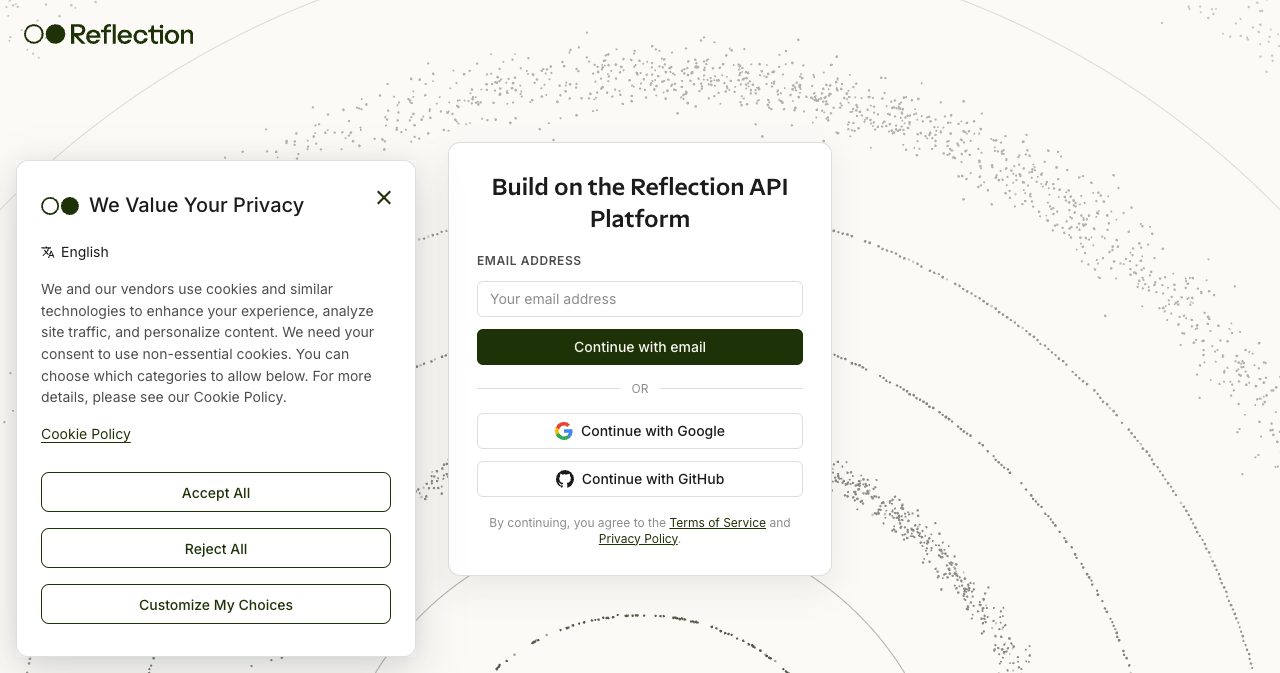
First, join the waitlist at platform.reflection.ai so you can test Beam's hosted access before the weights arrive. Early access is not the same as an endpoint you can rely on in production, so treat it as an evaluation environment.
Second, run your eval set against Beam, GLM-5.2 and your current model. Record accepted outputs and total cost for each. Don't trust a single benchmark table, including this one.
Third, check the license file when the weights drop. Apache 2.0 is permissive, but read the actual text and any attached model card before you bake the model into a product.
Expect independent tests of Beam in the coming weeks. Some will confirm Reflection's numbers and some won't. Either result tells you something about your own routing.
The bigger lesson is that AI cost is now a product decision. Token prices, model access and even the availability of a closed model can change with little warning. Teams that already have an open-weight option tested will ride those changes. Teams that don't will scramble.
Your product needs customers no matter which model it runs on. SaaSCity gives you a free listing with a permanent indexed page and a building on the live city map. Add the SaaSCity badge to your site and you get a dofollow backlink, along with a slot in the next Monday launch. Want the faster route? Quick Pass at $19.99 goes live within 24 hours. Premium at $99.99 adds a written launch post with three dofollow links. Submit your AI product to SaaSCity and get it in front of the founders who are running these same cost comparisons this week.
Which part of your AI bill would you move first: the cheap routine calls, or the hard requests you are afraid to route away from your current model?
Get your SaaS in front of founders
List your product on the SaaSCity live city map - a permanent listing, real discovery, and a backlink from a high-DR directory. Free to start; upgrade for a dofollow link and a building on the map.