SaaS Business
Ticketing Platform Fees in 2026: Why Percentage Pricing Quietly Eats Your Event
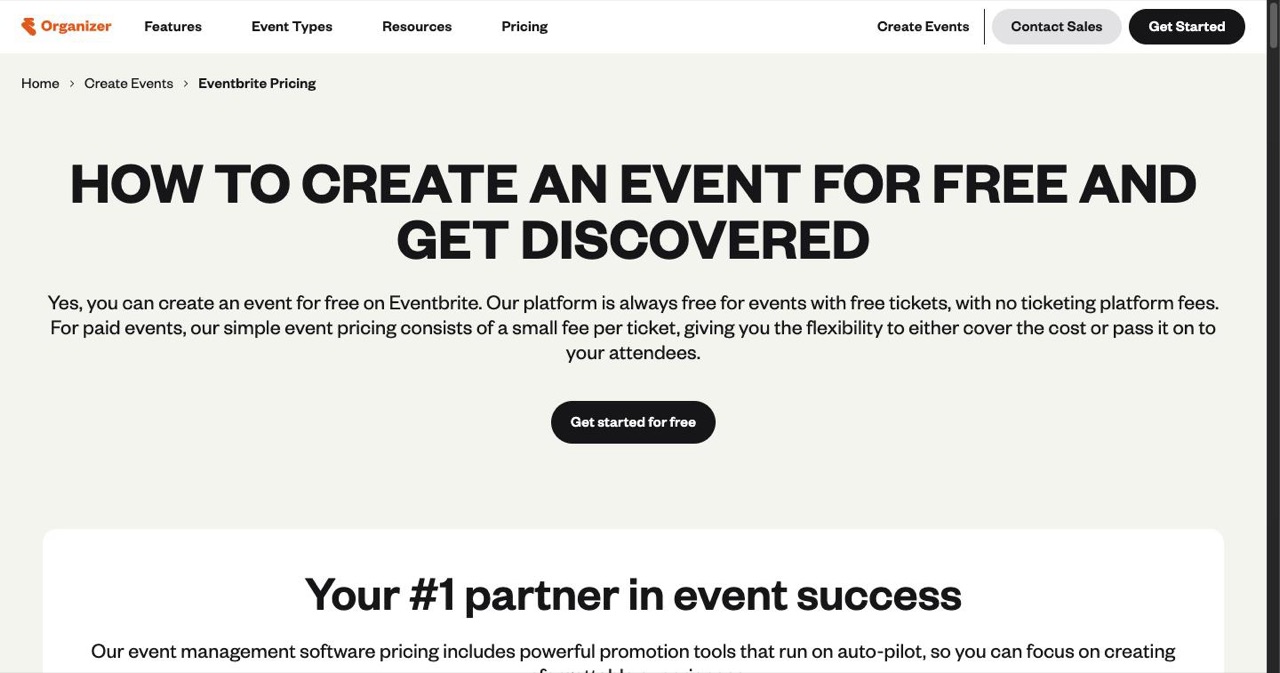
Eventbrite charges 3.7% + $1.79 per ticket plus 2.9% processing, with no cap. A flat-fee platform charges €0.25-€0.50 no matter what the ticket costs. Here is the actual math on a €25 ticket and an €80 ticket, what the fee page never tells you, and how to pick a ticketing system for a club, a theatre or a small festival.

Contents (10)
- Key Takeaways
- The two pricing models, stated plainly
- The math, on two real ticket prices
- The second bill nobody quotes
- Who holds your money is a bigger deal than the fee
- Resale: the part organizers keep giving away
- The other costs that don't appear on a fee page
- A comparison framework you can actually use
- Who should pick what
- What to do this week
Quick answer: Ticketing platforms bill either a percentage of the ticket price or a flat amount per ticket. Eventbrite's published 2026 US structure is 3.7% plus $1.79 service fee and 2.9% payment processing with no cap, which is about 10.2% on a $50 ticket. A flat-fee platform charges €0.25 to €0.50 per paid ticket regardless of price, plus processing such as €0.32 for iDEAL through Mollie. Flat fees win above roughly €7 to €10 per ticket.
A theatre group I know sold 420 tickets at €22 last spring. Gross: €9,240. What actually landed in the bank was €8,290. Nobody stole anything. The fees were on the pricing page the whole time, written exactly as advertised. They just never did the multiplication before they picked the platform.
That gap — €950, roughly the cost of the lighting rig they rented — is the entire subject of this post.
Ticketing is one of the last corners of SaaS where percentage-of-revenue pricing is still treated as normal. Nobody would accept a CRM that charges 4% of every deal it stores, or a mail service that bills a slice of every invoice you send. But in ticketing the model survived, and because the fee is usually shown as a small number next to a small number, it stays invisible until you multiply.
| The default model | Percentage of ticket price + fixed component + payment processing |
| Eventbrite, 2026 | 3.7% + $1.79 service fee, plus 2.9% processing, no cap |
| Effective rate, $50 ticket | ~10.2% |
| Flat-fee model | €0.25-€0.50 per paid ticket, regardless of price |
| Break-even | Flat fee wins above roughly €7-€10 per ticket |
| The second bill | Payment processing, almost never included in the headline |
| The structural detail | Who holds the money between sale and event |
Key Takeaways
- Percentage pricing scales with your ticket price, not the platform's work: Serving a €150 ticket costs the same as a €5 one, but the bill does not.
- The break-even is around €7 to €10: Below it percentage pricing can be cheaper, above it flat fees win by a widening margin.
- The gap is real money: 500 tickets at €25 costs €1,725 on a percentage platform against €410 flat plus Mollie, a €1,315 difference.
- Processing is a second bill: iDEAL runs about €0.32 flat, Bancontact 1.40% plus €0.25, EEA consumer cards 1.80% plus €0.25, SEPA Direct Debit €0.35.
- Who holds the money matters more than the rate: Platforms that pay out after the event leave you funding deposits and artist advances yourself.
- In-house resale keeps the cap, the data and the traceability: External marketplaces take a cut of your event and hand you a stranger at the gate.
- The European Accessibility Act has applied since 28 June 2025: Consumer e-commerce checkouts are covered, and the exposure sits with you as the seller.
The two pricing models, stated plainly
Percentage pricing ties the platform's revenue to your ticket price. Raise the price of your gala dinner from €45 to €65 and the platform earns more for doing precisely the same amount of work: storing a row, sending an email, generating a QR code. The cost of serving that ticket did not change. The bill did.
Flat-fee pricing charges a fixed amount per paid ticket. €0.25, €0.50, whatever the platform sets. A €5 ticket and a €150 ticket cost the same to sell, which is honest, because they do cost the same to serve.
Both models are defensible on paper. Percentage pricing is easier to swallow at zero volume, because 3.7% of nothing is nothing, and platforms lean on that. It is a genuinely friendlier entry point for a first event where you have no idea whether you will sell 20 tickets or 200. The problem is that the model that got you in the door is the one that follows you at 2,000 tickets, and by then it is expensive to leave.
The math, on two real ticket prices
Take Eventbrite's published 2026 US structure: 3.7% + $1.79 service fee, plus 2.9% payment processing, with no cap on the total. Compare it against a flat-fee European platform charging €0.50 per paid ticket including VAT, with payments running through Mollie at €0.32 per iDEAL transaction.
I'll treat $1 as €1 to keep this readable. The shape of the answer does not change if you do the conversion properly.
A €25 ticket, 500 sold
| Percentage platform | Flat fee + Mollie | |
|---|---|---|
| Service fee per ticket | €1.79 + €0.93 = €2.72 | €0.50 |
| Payment cost per ticket | €0.73 (2.9%) | €0.32 (iDEAL) |
| Total per ticket | €3.45 | €0.82 |
| Effective rate | 13.8% | 3.3% |
| On 500 tickets | €1,725 | €410 |
| Difference | €1,315 |
An €80 ticket, 300 sold
| Percentage platform | Flat fee + Mollie | |
|---|---|---|
| Service fee per ticket | €1.79 + €2.96 = €4.75 | €0.50 |
| Payment cost per ticket | €2.32 (2.9%) | €0.32 (iDEAL) |
| Total per ticket | €7.07 | €0.82 |
| Effective rate | 8.8% | 1.0% |
| On 300 tickets | €2,121 | €246 |
| Difference | €1,875 |
Look at the effective rate column. On the percentage platform it falls as the ticket price rises, because the fixed €1.79 gets diluted. That is the number platform marketing likes to quote, and it is technically true. It is also the wrong number to care about. What leaves your bank account is the euro figure in the bottom row, and that goes up, always, forever, in a straight line.
The break-even sits somewhere around a €7-€10 ticket. Below that, percentage pricing can genuinely be cheaper, mostly because flat fees stop looking small when the ticket itself is €4. Above it, the flat fee wins and keeps winning by a wider margin every time you raise a price.
The second bill nobody quotes
Almost every "what does ticketing cost" article stops at the platform fee. Then the payment processing invoice arrives.
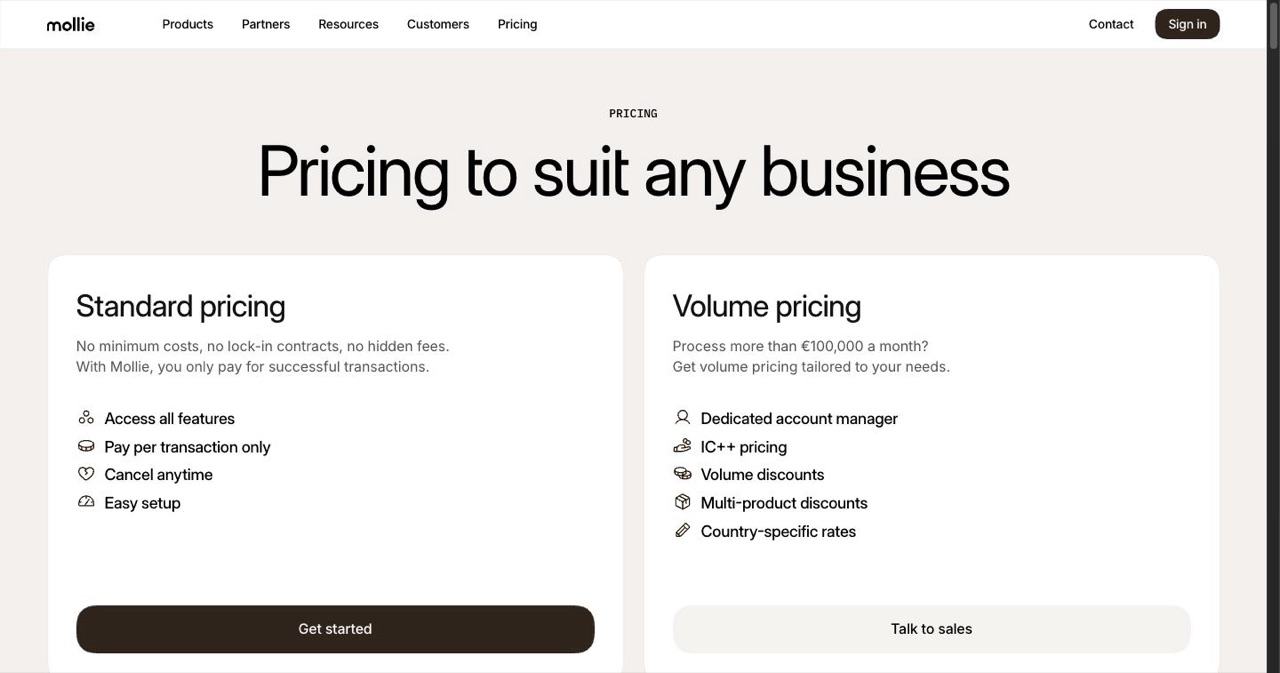
This is a separate bill from a separate company, and it works differently per payment method:
- iDEAL (the dominant Dutch method) is flat: about €0.32 per transaction through Mollie. It does not care whether the ticket is €10 or €200.
- Bancontact is 1.40% + €0.25.
- Consumer Visa/Mastercard in the EEA is 1.80% + €0.25. Commercial cards and Amex are 2.90% + €0.25.
- SEPA Direct Debit is €0.35, which is why memberships and season tickets are so much cheaper to collect than one-off card sales.
The practical consequence: if your audience is Dutch and pays by iDEAL, your entire per-ticket cost can realistically sit under €1.00 all-in on a flat-fee platform, at any ticket price. If your audience pays by international card, you are paying a percentage no matter which platform you chose, and you should optimise the platform fee harder to compensate.
Two rules follow. First, when you compare platforms, always ask whether processing is included or billed separately, because "0.9% per ticket" including processing and "0.9% per ticket" excluding it are completely different products. Second, push your buyers toward the flat-rate payment method if you have one available. A visible iDEAL button above the card fields is worth real money over a season.
Who holds your money is a bigger deal than the fee
Here is the structural question that most organizers only learn the hard way: between the moment a visitor pays and the moment your event happens, whose bank account is the money sitting in?
Three answers exist.
The platform holds it and pays out after the event. Common, and comfortable for the platform, because it covers them against chargebacks if you cancel. For you it means your pre-sale revenue is unavailable to pay the deposits, the artist advance, the tent rental and the insurance — the costs that all fall due before the event. Small organizers finance this out of their own pocket or a reserve, which is exactly what an association usually does not have.
The platform holds it and pays out in installments. Better. Still their money until it isn't.
The money goes directly to your own payment provider account. You connect your own Mollie, Stripe or Adyen account, the platform never touches the funds, and payouts follow your processor's normal schedule. The platform bills you separately for its own fee.
That third structure is worth more than a percentage point of fee difference to most clubs and theatres, and it is the first thing I'd check on any platform's pricing page. It also means the platform's insolvency is not your problem — a lesson the Dutch market learned expensively when gift-card operators collapsed holding consumer balances.
If you're weighing processors rather than ticketing platforms, the same logic in more depth is in our guide to choosing a payment processor.
Resale: the part organizers keep giving away
Secondary ticketing is where the second-largest chunk of value quietly leaves the building.
The default path is that your buyer can't attend, posts the ticket on an external resale marketplace, and someone else buys it. Three things happen. The marketplace takes a cut of a transaction on your event. The new attendee is a stranger to you: no email, no name on your list, no way to tell them the gates open an hour early. And unless the marketplace enforces a cap, the ticket may resell well above face value, which your audience will blame you for, not the marketplace.
Built-in resale flips all three. The ticket is invalidated and reissued inside your own system, so it stays traceable and fraud gets harder. You set a maximum resale price, usually face value, so touting stops being profitable on your event. And the new holder lands in your attendee list like any other buyer.
The regulatory wind is behind this too. Several European markets have moved to restrict above-face-value resale, and the direction of travel across the EU is toward capped, traceable secondary sales rather than open marketplaces. Building resale in-house is the version of compliance that also happens to be the version that serves your audience. Platforms increasingly ship this as a toggle — MijnEvent's resale module, for instance, is a capped, in-platform swap rather than a link out to a marketplace.
The other costs that don't appear on a fee page
Fees are the visible cost. These are the ones that show up in your time and your reputation.
The tool sprawl. A typical mid-size event runs tickets on one system, merch on a webshop, food truck registration in a spreadsheet, parking on a form, memberships in accounting software, and donations through a payment link. Six systems, six exports, six reconciliations, and no single number for "what did this event actually make." Consolidating those into one back office isn't a feature, it's the difference between a treasurer who volunteers again next year and one who doesn't.
Accessibility. The European Accessibility Act has applied since 28 June 2025 and covers consumer-facing e-commerce, which is exactly what a ticket checkout is. If the checkout can't be completed with a keyboard or read by a screen reader, the exposure is yours as the seller. WCAG AA is the practical bar, and it is a reasonable question to put to a vendor in writing.
Privacy. Every tracking pixel on your checkout is a consent problem, a cookie banner, and a slice of conversion lost to the banner itself. Platforms that avoid tracking entirely dodge the banner, and the checkout gets faster as a side effect. You still need a signed data processing agreement covering your attendee data, whichever platform you pick. If you want the broader compliance picture, our SaaS compliance checklist covers the GDPR side in detail.
Support in your own language, in your own timezone. At 19:40 on the night of the event, with a queue outside and a scanner that won't authenticate, the value of a support line that answers in your language exceeds every feature comparison you made in January.
A comparison framework you can actually use
Forget feature grids. Nine questions, asked in this order, will separate the shortlist faster than any review site:
- Is the fee a percentage or a flat amount per ticket? Multiply it by your realistic ticket count at your realistic price. Write the euro figure down.
- Is payment processing included or a separate bill? Get the per-method rates.
- Where does the money go? Platform account or an account you own.
- When do you get paid? Before the event, or after.
- Do you get your own URL? A branded subdomain converts better than a generic marketplace listing with someone else's logo above your event.
- Is resale built in and capped?
- Which modules do you actually need? Reserved seating for a theatre. Memberships and season passes for a sports club. Donations for a charity night. Rentals for a village hall. Buy the ones you need, ignore the rest.
- Is the checkout WCAG AA and cookie-free? Ask for it in writing.
- Can you leave? Full CSV export of attendees and orders, on demand, without asking permission.
Question 1 decides most of the money. Question 3 decides most of the risk. Questions 7 and 9 decide whether you're still on the platform in three years.
Who should pick what
Free events and tiny paid events (under ~50 tickets). Take the free tier of anything reputable. The fee difference at that volume is a rounding error; pick on ease of setup and get on with it.
Cheap tickets, high volume (€5 and under, thousands of tickets). This is the one genuine case where percentage pricing can be cheaper. Run the arithmetic both ways; do not assume flat wins.
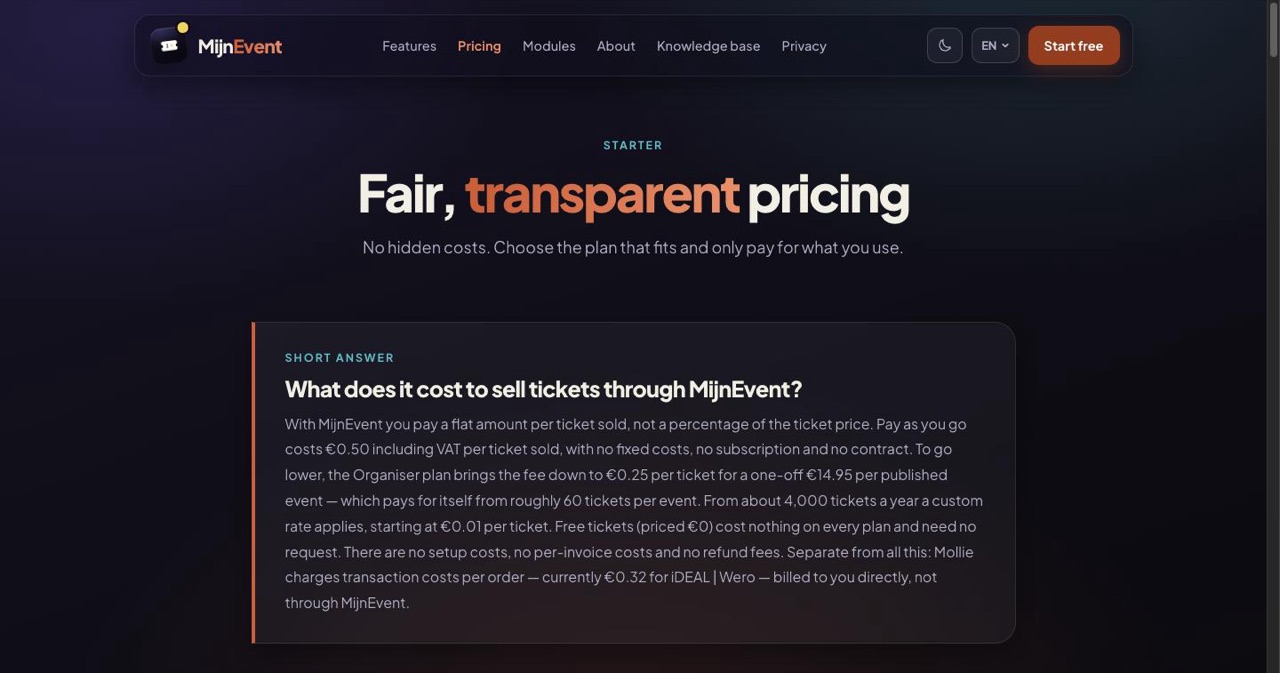
Associations, theatres, sports clubs, service clubs, charity nights. Flat fee, direct payout, the two or three modules you actually use, native-language support. Your ticket prices are high enough that percentage pricing costs real money, and your volume is too low to negotiate it down. This is also where MijnEvent fits most naturally: €0.25-€0.50 per paid ticket including VAT, payouts straight to your own Mollie account, 0% on donations, a branded subdomain, and modules for seating, memberships, merch, parking and local vouchers in one back office. It is Dutch-first, so it's the right answer if your audience and your support needs are in the Netherlands or Belgium, and the wrong one if they aren't.
Mid-size festivals (2,000-20,000 tickets). Negotiate. At this volume every platform has a rate card it doesn't publish, and flat-fee platforms typically quote well under €0.10 per ticket. Get quotes from three and make them aware of each other.
Large-scale, high-demand on-sales. You are buying queue infrastructure and fraud tooling, not a fee model. Different conversation entirely.
Anyone whose audience is global and pays by card. The platform fee matters less than you think, because card processing is a percentage regardless. Optimise for the checkout experience and the payout terms.
What to do this week
Open your last event's payout report. Find the gross ticket revenue and the amount that actually landed. Divide the second by the first. That percentage is your real, all-in ticketing cost, and it is almost certainly higher than the number on the pricing page you read before you signed up, because the pricing page didn't include processing.
Now take that percentage and apply it to next season's projected revenue. If the result is larger than a line item you'd argue about in a board meeting — a sound engineer, a marketing budget, an insurance policy — it's worth two hours of your time to switch. If it isn't, stay where you are and stop reading comparison posts.
Most organizers who run this calculation are surprised twice: once by the size of the number, and once by how long it had been that size. Compare fee models honestly. Look at MijnEvent's Eventbrite comparison or any vendor's own comparison page with appropriate scepticism, since they wrote it. Then do your own multiplication, because that's the only number that will ever be true for your event.
Building the software rather than running the event? Launch pricing has the same trap in it, and we've written about what happens when infrastructure costs jump underneath a fixed price.
Fee figures cited: Eventbrite pricing, Mollie pricing, Weeztix pricing, and MijnEvent's published rate card, all as of September 2026. Platform pricing changes; verify before you commit. Eventbrite figures are US-market and quoted in USD.
Get your SaaS in front of founders
List your product on the SaaSCity live city map - a permanent listing, real discovery, and a backlink from a high-DR directory. Free to start; upgrade for a dofollow link and a building on the map.