News
Hetzner's 2026 Price Hikes Are Pushing Developers to Just Buy the Hardware
Hetzner raised cloud prices up to 209% on June 15, 2026. Theo priced the same 32 GB / 16-thread box at €237.99/month rented versus a $759 mini PC owned. Here is the full timeline, the real numbers, and when buying actually wins.

Contents (10)
Quick answer: Hetzner raised prices three times in 2026, and the June 15 adjustment repriced compute density rather than everything evenly. Shared Intel and ARM lines (CX, CAX) rose 30-38%, while dedicated vCPU (CCX) and AMD shared (CPX) rose 113-209%: CCX13 went from €15.99 to €42.99, and the US CPX51 from €77.99 to €237.99. Existing instances keep old pricing until you rescale. The cause is DRAM contract prices up roughly 171% year over year on AI datacenter demand. Developers are moving to netcup RS root servers, Hetzner's Server Auction, and owned mini PCs.
On August 29, 2026, Theo posted a comparison that did not need a chart. Need 32 GB of RAM and 16 threads? Renting it from Hetzner now runs about €237.99 a month — roughly $275. Buying a GMKtec mini PC with the same specs costs $759, and about $700 on sale.
Three months of rent buys the machine outright.
The post did ~383k views and 299 replies inside a day, and the replies were the real story: half were people posting photos of the Proxmox boxes under their desks, half were people explaining why a mini PC on a residential line is not a datacenter. Both sides are right, which is why this is worth writing down properly instead of dunking.
| Trigger | Hetzner's third 2026 price action, June 15 |
| Worst-case increase | +209% (US CPX41) |
| Lines hit hardest | Dedicated vCPU (CCX) and AMD shared (CPX) |
| Lines barely touched | Shared Intel/ARM (CX, CAX): +30-38% |
| Grandfathering | Existing instances keep old pricing — until you rescale |
| Root cause | DRAM contract prices up ~171% YoY on AI datacenter demand |
| Where people went | netcup root servers, Hetzner dedicated/auction, mini PCs |
Key Takeaways
- Three actions, not one: setup fees in February 2026, broad 30-37% increases on April 1 hitting new and existing customers, then the June 15 repricing of new orders and cloud rescales.
- Uneven by design: CX23 went €3.99 to €5.49 (+38%) while CCX13 went €15.99 to €42.99 (+169%) and the US CPX41 rose 209%.
- Grandfathering has one trapdoor: an existing instance keeps its old rate until you resize it, and a rescale moves it to current pricing permanently.
- Root cause: DRAM contract prices up about 171% year over year through 2025, with NVMe and some CPU lines following, and Hetzner has no long-term supply contracts to absorb it.
- netcup is the most-cited alternative: RS 1000 G12 gives 4 dedicated EPYC cores, 8 GB DDR5 ECC, and 256 GB NVMe around €10.74-14.87/mo against €42.99 for a 2-core CCX13.
- Hetzner is still cheap in places: dedicated took a smaller hit and the Server Auction was largely exempt from June.
- Owning is not free: a 65W mini PC running 24/7 draws roughly 570 kWh a year, about €170 in Germany or $75 in the US, plus a UPS, backups, and your own on-call time.
- The rule: steady, self-managed, non-mission-critical workloads move home fine; public-facing production with real traffic stays in a datacenter.
The timeline: three price actions in one year
This was not one announcement. It was a ratchet.
February 2026 — Setup fees went up, the second increase that month, with Hetzner citing "exceptionally high purchase prices for hardware components." Barely registered outside the forums.
April 1, 2026 — Broad increases of 30-37% (some reports as high as 50%) across cloud, dedicated, storage, and load balancers. This one hit new and existing customers. The popular EX44 dedicated went €42.30 → €47.30. Object storage rose about 30%.
June 15, 2026 — The big one. Applies to new orders and cloud rescales only, so existing servers were spared. Dedicated vCPU and AMD shared lines jumped 113-209%. The dedicated portfolio was restructured into standardized -1/-2/-3 tiers plus a cheaper "Limited" (-1-Ltd) line, and the Server Auction was largely left alone.
The June numbers
Monthly, EUR, excluding IPv4, Germany/Finland unless noted:
| Plan | Before | After | Change |
|---|---|---|---|
| CX23 (shared Intel) | €3.99 | €5.49 | +38% |
| CAX11 (shared ARM) | €4.49 | €5.99 | +33% |
| CPX22 (shared AMD) | €7.99 | €19.49 | +144% |
| CPX52 | €36.49 | €100.49 | +175% |
| CCX13 (dedicated vCPU) | €15.99 | €42.99 | +169% |
| CCX23 | €31.49 | €85.99 | +173% |
| CCX63 | €374.49 | €853.49 | +128% |
| CPX41 (US) | €38.99 | €120.49 | +209% |
| CPX51 (US) | €77.99 | €237.99 | +205% |
US regions averaged roughly +158%, Germany about +99%, Singapore about +78%. That last row is Theo's number.
The shape here matters more than any single line. Hetzner did not raise prices evenly — it repriced compute density. Cheap shared vCPU stayed cheap. Anything with guaranteed cores and real memory roughly tripled. If your workload was the reason you chose Hetzner in the first place, you are the one who got hit.
Why: the AI hardware squeeze reaches the discount tier
Hetzner's stated reason was "dramatically increased costs to operate infrastructure and to buy new hardware." That is accurate and boring, and the mechanism is worth spelling out.
DRAM contract prices rose roughly 171% year over year through 2025. AI datacenter buildouts consumed HBM capacity, and because HBM and commodity DDR5 compete for the same fab lines, the commodity market got squeezed alongside it. NVMe SSDs followed. Some CPU lines followed.
Hetzner's entire price advantage came from buying commodity — often consumer-grade — components in volume and testing them rigorously, rather than paying enterprise markup. That model is brilliant when RAM is cheap and brutal when it is not. Hyperscalers hedge with multi-year supply contracts; a mid-size European host buying near spot has nowhere to put the cost except the invoice.
The same pressure showed up at OVHcloud, Scaleway, and IONOS. European shared-vCPU is still the cheapest in the market. But dedicated-vCPU pricing has now largely converged with DigitalOcean, Vultr, and Linode — which erases the specific reason a lot of teams were in Europe. Stock is also thin: several cheaper CX types are frequently out of stock across locations.
The mini PC argument, steelmanned both ways
For buying. A GMKtec NucBox M5 Ultra-class machine gives you a Ryzen APU with 8 cores and 16 threads, upgradable SO-DIMM RAM and NVMe, often dual 2.5GbE, in something the size of a hardback book. Current models run $270 to $759 depending on config. Against €237.99/month, payback is about three months and everything after that is electricity. For an always-on box running coding agents, local model inference, CI, or personal infrastructure, the cloud is now charging a subscription for a thing you can just own.
Against buying. The replies made the case immediately, and it is not snobbery:
- No ECC memory on most consumer mini PCs — silent corruption on a 24/7 box is a real failure mode
- No BMC/IPMI, so a hung machine means physically walking to it
- Single PSU, consumer SSDs without power-loss protection
- Residential ISP: CGNAT, no static IP, terms of service that often prohibit hosting
- No DDoS scrubbing, no transit redundancy, no 99.9% SLA, no remote hands at 3 a.m.
The honest counter, which Theo and others made, is that a Hetzner cloud VPS is not delivering most of those extras either. You get the datacenter, the network, and the power — genuinely valuable — but not per-VM redundancy or a meaningful SLA on a €5 instance. The comparison is less absurd than it first looks.
Where it lands: steady, self-managed, non-mission-critical, or privacy-sensitive workloads move home fine. Public-facing production with real traffic still belongs in a datacenter. That is the whole rule.
What developers are actually switching to
netcup root servers
The most-cited alternative by a wide margin. The RS G12 line sells genuinely dedicated cores at prices Hetzner used to charge:
| netcup RS 1000 G12 | Hetzner CCX13 (new) | |
|---|---|---|
| Dedicated cores | 4 (EPYC) | 2 |
| RAM | 8 GB DDR5 ECC | 8 GB |
| Storage | 256 GB NVMe | 80 GB |
| Price | ~€10.74-14.87/mo | €42.99/mo |
The VPS G12 line is competitive too (VPS 1000 G12 in the €8-11 range). Reports on support quality and account handling are mixed — some people love the value, some have had billing and verification friction. Prices and SKUs rotate constantly; check the live page before you plan around a number in a blog post, including this one.
Hetzner dedicated and the Server Auction
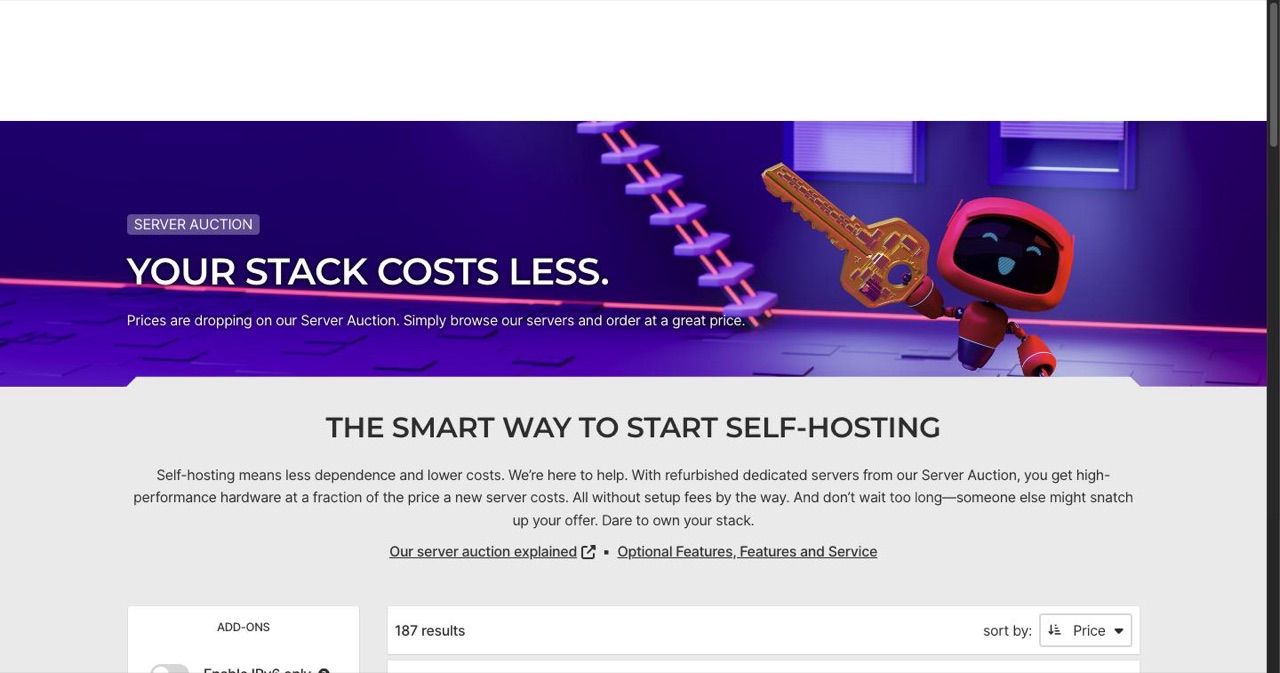
The most common reply to "Hetzner got expensive" was "then stop buying Hetzner cloud." Dedicated took a much smaller hit than cloud, and the Server Auction — used hardware, cheap, no long commitment after the first month — was largely exempt from June. Ryzen dedicated boxes in the €84-class range came up repeatedly in the thread as the answer for people who wanted the datacenter without the cloud tax.
If you want one clean recommendation: before you buy a mini PC for anything production-shaped, price a Hetzner auction box and a netcup root server. They beat the mini PC on everything except sovereignty, and they beat new Hetzner cloud on price.
Other names that came up: Contabo, OVH, PureVoltage (US dedicated with Proxmox), Scaleway.
The homelab path
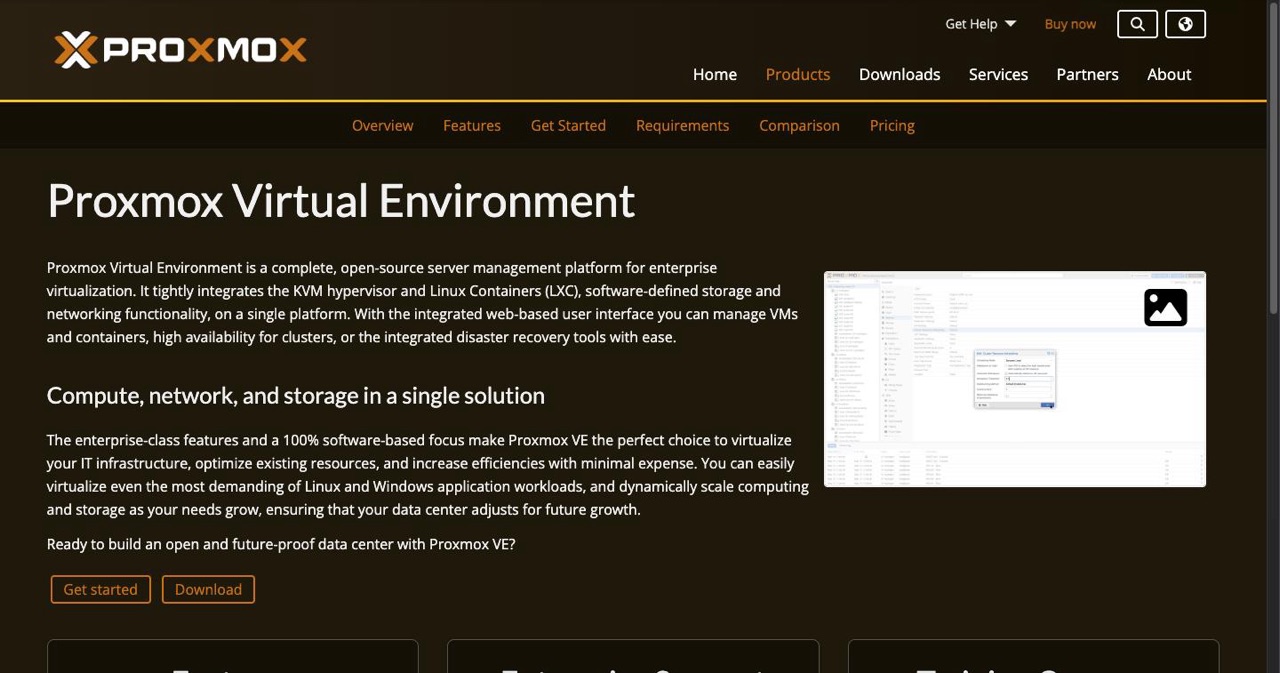
Buy once: GMKtec, Beelink, Minisforum, or refurbished micro desktops — Dell OptiPlex, Lenovo ThinkCentre, HP EliteDesk — at $130 to $400. Stack Proxmox VE for VMs and LXC on top, Tailscale for remote access without exposing anything, Docker for the workloads, and a real backup target off the box.
The payback stories in the replies were consistent: five cheap minis replacing several hundred dollars a month of cloud. The caveats were equally consistent — electricity, heat, noise, ISP terms, hardware failure with no hot spare, no instant scale-out, and the fact that you are now the sysadmin at 3 a.m. That last one is the real price and nobody puts it in the spreadsheet.
If you are going this route, treat it like production: read the pre-launch security checklist before you expose anything, and see our self-hosting alternatives to Vercel and Supabase for what the rest of the stack looks like when you own it.
Decision framework
| Factor | Buy hardware / homelab | Stay on cloud | Cheap dedicated / root |
|---|---|---|---|
| Upfront cost | $300-800+ | ~0 | Low-medium |
| 12-mo TCO (32 GB class) | Hardware + ~€170 power | €2,800+ on new CPX51-class | Often €120-200 |
| Reliability / SLA | You are the SLA | High | Medium-high |
| Scaling | Buy another box | Instant, now costly | Slower, manual |
| Control / privacy | Full | Provider policy | Good |
| Best for | 24/7 agents, local AI, learning | Bursty, multi-region, teams | Production on a budget |
Three rules that fall out of it:
- Already on Hetzner and happy? Do not rescale. Grandfathering survives everything except a resize.
- Steady, predictable load? Ownership or cheap dedicated wins clearly after the 2026 reset.
- Variable, customer-facing, or compliance-heavy? Still cloud. The hike did not change that.
The bigger shift
EU hosting press has been calling this the end of the cheap VPS era, and the framing is roughly right. Two things are happening at once. Hyperscalers are insulated by supply contracts while mid-tier European hosts pass costs straight through, splitting the market into two tiers with a widening gap. And AI agents plus local inference have made always-on personal compute genuinely useful for the first time in a decade, right as renting it got expensive.
The result is that developers are thinking in capex again. Not everyone, and not for everything — but the reflex of "spin it up in the cloud" now has a number attached that makes people pause. If you are already optimizing what your agents cost you, the same arithmetic applies to what runs them: see cutting LLM token costs and the zero-cost developer toolkit for the software half of the same bill.
What to do this week
- Audit your Hetzner instances. List anything grandfathered and flag it "do not rescale."
- Recalculate 12- and 24-month TCO including power (~570 kWh/yr for a 65W box), a UPS, backups, and your own hours.
- Price netcup RS and the Hetzner Auction before you buy consumer hardware for anything production-shaped.
- If you go homelab, start with one box. Proxmox, Tailscale, ECC if the platform supports it, backups off-machine from day one.
- Watch DRAM and NVMe pricing. If AI demand stays where it is, this is not the last adjustment.
- Verify every price yourself. They move, they differ by region, and VAT changes the sticker.
FAQ
Does existing Hetzner pricing stay? Yes, until you rescale. The June 15, 2026 change hit new orders and cloud rescales only. Resizing a grandfathered instance moves it to current pricing permanently.
Which Hetzner lines went up the most? Dedicated vCPU (CCX) and AMD shared (CPX), 113-209%. Shared Intel and ARM (CX, CAX) only rose 30-38%.
Is a mini PC production-ready? Not for public-facing production — no ECC, no IPMI, single PSU, residential network, no SLA. Fine for agents, local inference, CI, and dev boxes.
What is netcup's cheapest dedicated-core plan? RS 1000 G12: 4 dedicated EPYC cores, 8 GB DDR5 ECC, 256 GB NVMe, around €10-15/month versus €42.99 for Hetzner's 2-core CCX13.
Is Hetzner dedicated still worth it? Yes. Dedicated took a much smaller increase than cloud, and the Server Auction was largely exempt. Often the best value on this whole list.
What does owning actually cost per year? Roughly €170 of electricity in Germany or $75 in the US for a 65W box running 24/7, plus the hardware, plus your time.
The takeaway
Hetzner did not get greedy. It got squeezed by the same DRAM market that is building AI datacenters, and it has no supply contracts to hide behind. The consequence for developers is real anyway: the specific thing Hetzner was best at — cheap guaranteed cores — is the thing that roughly tripled.
Theo's mini PC comparison is not a universal answer, and it was never meant as one. It is a signal that the default has moved. For a fixed, steady, always-on workload, renting compute is no longer obviously cheaper than owning it — and a lot of developer workloads in 2026 are exactly that shape. For everything bursty, public, or regulated, the cloud argument survives untouched.
Price both. The gap is wide enough now that guessing costs real money.
Verified August 30, 2026 against Hetzner's June 15, 2026 price adjustment documentation and secondary breakdowns, netcup's current RS/VPS G12 listings, and the August 29, 2026 discussion thread. Prices exclude VAT and IPv4 charges and vary by region — confirm on the provider's own page before modeling costs. Hardware pricing for mini PCs moves with sales and RAM spot prices. The DRAM figure is a year-over-year contract-price average through 2025, not a spot quote.
Get your SaaS in front of founders
List your product on the SaaSCity live city map - a permanent listing, real discovery, and a backlink from a high-DR directory. Free to start; upgrade for a dofollow link and a building on the map.