SaaS Business
Character.AI Filed for Bankruptcy With 20 Million Users. The Numbers Explain Why (2026)
Character.ai had 20 million monthly users, a Google deal worth $2.7 billion, and a $150 million unicorn round behind it. It still filed for Chapter 11 on October 12, 2026, with Disney bidding $20 million for the leftovers. The court filings spell out the math that killed it, and it's a math problem every founder running inference should sit with.

Contents (8)
- What actually happened on October 12-13
- Why Disney, specifically
- The numbers that explain the whole thing
- From unicorn to fire sale in four years
- The legal weight that didn't help, but wasn't the real cause
- What this means if you're building with AI
- What happens to users and subscribers now
- The owned-distribution lesson, one more time
Twenty million people a month were talking to Character.ai's bots. The company still just filed for bankruptcy, and Disney's opening bid for what's left is $20 million.
Quick answer: Character.ai initiated a voluntary Chapter 11 bankruptcy on Monday, October 12, 2026, in Delaware, to run a court-supervised sale of the company. Its own announcement says the platform stays live and paid subscriptions continue "for now," with the business wound down if no acceptable bid shows up by the end of the process, expected late November or early December 2026. Disney is the stalking horse bidder at $20 million for select assets plus an IP license, not a confirmed buyer. The bankruptcy filings, reported by 404 Media on October 13, show why: Character.ai spent $13.8 million a month on compute in 2024 and $10 million a month in 2025, against subscription revenue that peaked at $2.8 million a month. Both assets and liabilities in the filing sit between $50 million and $100 million.
Before going further: you're reading this on a directory's blog. SaaSCity is a gamified startup directory with a live city map and human editorial review. Every accepted product gets a free listing page and a building on the map, and adding the SaaSCity badge to your site earns a dofollow backlink plus a Monday launch slot. Quick Pass ($19.99) goes live within 24 hours; Premium ($39.99) adds a written launch post with three dofollow links. Our domain rating sits around 47 at the last Ahrefs refresh. We're writing about Character.ai because its bankruptcy filing is the most detailed public breakdown we've seen of what happens when a product scales engagement without ever solving the cost side of the equation, and that's a mistake builders at any size can make.
What actually happened on October 12-13
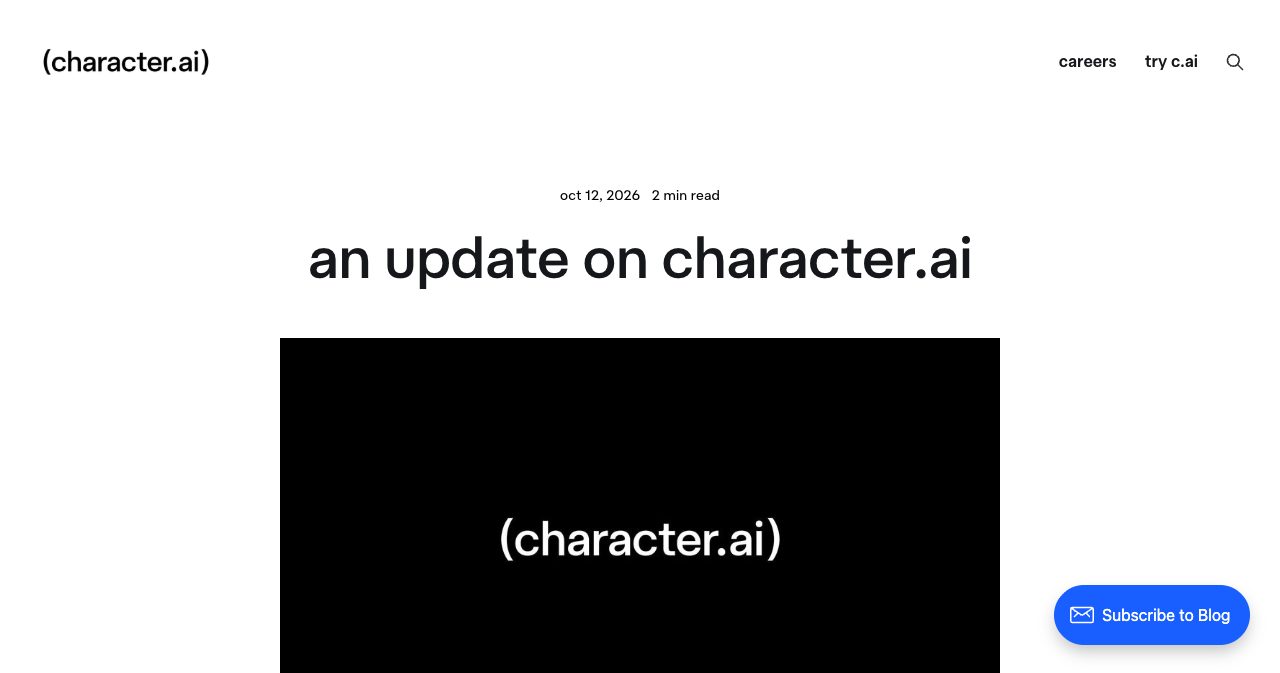
Character.ai's own blog post, dated October 12, 2026, opens by saying the company "has initiated a voluntary Chapter 11 bankruptcy process to facilitate a court-supervised sale of the company." It's careful to say the platform "remains up and running" and that users "can continue to access all services at this time," with paid subscriptions unchanged for now. The same post is blunt about the alternative: "if such a bid is unavailable, however, the platform will be wound down." The company expects the sale process to wrap by the end of November or early December 2026.
Reuters, TechCrunch, CNBC and The Verge all covered the filing on October 13, 2026, filling in the parts the company's own post left vague. TechCrunch confirms both assets and liabilities are listed in the $50 million to $100 million band, and that Disney agreed to a $20 million stalking horse bid for undisclosed assets plus a non-exclusive perpetual license to some of the company's IP, a detail TechCrunch's reporting confirms as well. Stalking horse just means Disney's bid sets the floor; the court can still take a better offer, and no sale is final yet. CNBC and The Verge both note the deal also covers transition services from former Character.ai staff Disney already hired in September 2026, alongside the company's former CEO.
Why Disney, specifically
Disney didn't show up out of nowhere. In September 2026, Disney hired a batch of former Character.ai employees along with the company's then-CEO, Karandeep Singh Anand, who became Disney's CTO. Disney had also previously sent Character.ai a cease-and-desist letter over unauthorized use of its characters on the platform. Buying the assets, including a perpetual license, is a tidier way to resolve that than litigation, and it comes with a built-in integration team that already knows the codebase.
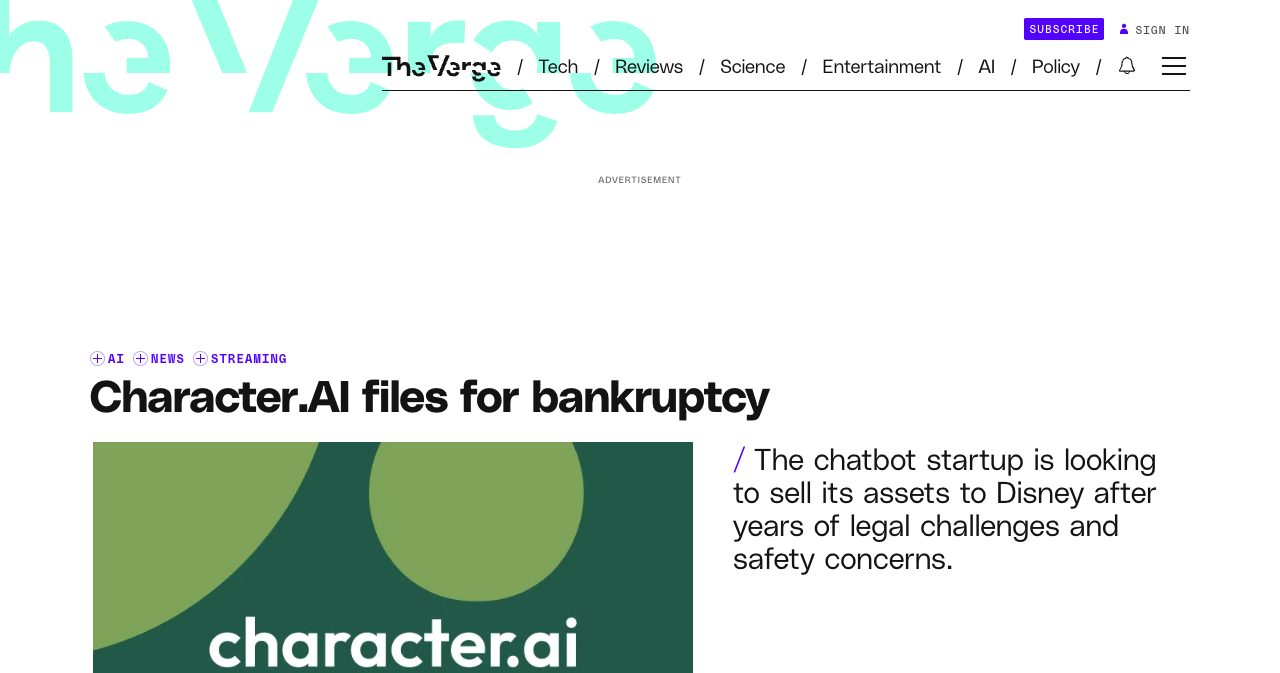
$20 million is the number worth sitting with. A company that raised a $150 million round at unicorn valuation in 2022, signed a $2.7 billion licensing deal with Google in 2024, and had 20 million monthly active users by October 2024 is now effectively worth whatever Disney will pay for the carcass, plus whatever a better bidder offers before the court date. That's not a company being acquired. That's a company being liquidated with extra steps.
The numbers that explain the whole thing
This is the part that should get forwarded around every founder Slack running an AI feature. 404 Media's October 13 report walks through the affidavit of CEO Colin Adams, and the numbers are stark enough that you don't need commentary to see the problem.
| Disclosed in the Chapter 11 affidavit (Colin Adams) | Figure |
|---|---|
| Monthly AI compute spend, 2024 | ~$13.8 million |
| Monthly AI compute spend, 2025 | ~$10 million |
| Total compute spend, Jan-Aug 2026 | $56.1 million |
| Total salaries and benefits, Jan-Aug 2026 | $19.7 million |
| Peak monthly subscription revenue | $2.8 million |
| Subscription revenue in weaker months | under $1 million |
| Peak monthly revenue, all sources (subs + ads) | $5.3 million |
| Monthly cash burn, August 2026 | ~$8-9 million |
| Total assets listed in filing | $50 million-$100 million |
| Total liabilities listed in filing | $50 million-$100 million |
| Disney's stalking-horse bid | $20 million + IP license |
Adams' affidavit doesn't dress any of this up. It says plainly that "Character's impressive technology is expensive to operate" and that "at all times, Character has struggled with profitability and its operational expenditure has been high." The filing also notes a number that won't surprise anyone who's worked at a company sliding toward this outcome: employees quit after "questioning Character's long-term viability."
Do the run-rate math yourself and it's worse than the headline numbers suggest. At its best month, subscription revenue was $2.8 million. Compute alone, in 2024, ran $13.8 million a month. Compute cost roughly five times what subscriptions brought in, at the peak, before a single salary, legal bill, or office lease. By 2025 the company had cut compute to $10 million a month, still more than three times peak subscription revenue, by moving inference to cheaper GPU capacity and switching from proprietary foundation models to post-trained open-weight models. Those cuts are exactly why the August 2026 burn of $8-9 million a month gets described in the filing as a major improvement. It was. It also wasn't enough.
From unicorn to fire sale in four years
Character.ai's trajectory makes the ending sting more. Noam Shazeer, a co-author of the original Transformer paper, and Daniel De Freitas founded the company in late 2021, both fresh out of Google. Users exchanged more than 2 billion messages with its bots in five months, and the company hit unicorn valuation in September 2022 after a $150 million round led by Andreessen Horowitz. Its apps pulled in over 1.7 million installs in their first week in May 2023. By October 2024 it had roughly 20 million monthly active users and a top-of-category ranking for time spent per user, per Sensor Tower data cited by TechCrunch.
Then came the exits. In August 2024, Google paid $2.7 billion to license Character.ai's models and rehired both founders, a deal that effectively let Google absorb the technology without buying the company outright. Shazeer left Google again in June 2026, this time for OpenAI. Karandeep Anand, who'd become CEO in June 2025 after general counsel Dominic Perella's stint as interim CEO, left for Disney in September 2026 and is now Disney's CTO. Colin Adams is the one left signing the bankruptcy affidavit.
Every exit took something real with it: the founders, the models, now the CEO. What's left is a shell with a $20 million price tag on it. That's the pattern worth naming: when a second-tier AI product's best assets are its people and its weights, the companies that own distribution, foundation models, and cash can simply hire the team and license the tech for a fraction of what the startup ever raised, leaving the startup itself to file for Chapter 11.
If that sounds familiar, it's the same category of story we covered in Bending Spoons' 90% valuation cut to Miro and in OpenAI landing $20 billion short of projected revenue: consumer and AI valuations built on growth narratives come apart fast once someone actually checks the unit economics.
The legal weight that didn't help, but wasn't the real cause
Character.ai also carried real legal exposure going into this. A lawsuit from the mother of a 14-year-old Florida boy who died by suicide after chatting with a Character.ai bot. A Texas investigation into child privacy and safety compliance. A January 2026 suit from the state of Kentucky alleging the platform "preyed on children and led them into self-harm." The company settled some of these, banned minors, and added safety features, and age-verification pressure has been building across companion apps generally.
Character.ai's own filing says legal costs contributed to the bankruptcy, but is explicit that the business was unsustainable even without them. That's worth taking at face value rather than reading as spin: the compute-versus-revenue gap shown in the table above would have sunk the company on its own timeline regardless of a single lawsuit.
What this means if you're building with AI
Here's the part that applies whether you've got 20,000 users or 20 million.
Engagement is not revenue. Character.ai had category-leading time spent per user and a chart-topping install base. None of it closed the gap between $10-13.8 million a month in compute and $2.8 million a month in subscriptions. If your product's core loop is "user sends message, model generates response," every single message has a marginal cost, and that cost doesn't care how delighted the user is.
Compute is a variable cost. Subscriptions are a flat one. This is the structural trap. A free tier or a flat monthly subscription caps what a user pays you, but says nothing about what a heavy user costs you to serve. Character.ai's own fix, moving to cheaper GPU capacity and post-trained open-weight models instead of proprietary frontier ones, is the standard playbook, and it's the right one. We go deeper on picking models by cost and task fit in our guide to model fatigue and choosing AI models for SaaS.
Price against your worst-case user, not your average one. If your heaviest 5% of users generate 40% of your inference bill, your pricing has to account for that tail, not just the mean. Cap free-tier usage in absolute terms, not just rate limits that reset.
Know your compute-to-revenue ratio and defend it. Character.ai's own filing shows the ratio improving from roughly 5:1 to roughly 3:1 between 2024 and 2025 and still wasn't enough. If you don't know your own number, you don't know how close you are to this outcome.
Renting your model, your distribution, or your platform is a real dependency risk, not a theoretical one. Character.ai's founders went to Google. Its CEO went to Disney. Its remaining enterprise value is a $20 million stalking horse bid. The lesson generalizes past AI chat apps: a product built entirely on top of someone else's model API, someone else's app store ranking, or someone else's platform policy is one deal away from being absorbed or starved out. We wrote about the same exposure from the other direction in Reddit shutting down its public API and RSS and in Lovable's $600 million ARR and the economics underneath vibe-coded platforms.
What happens to users and subscribers now
If you're one of Character.ai's subscribers, the honest answer is: nobody fully knows yet. The company's own statement says the platform stays live and subscriptions stay active "for now," which is a phrase doing a lot of work. Chapter 11 is a reorganization process aimed at selling the business as a going concern if possible; it is not, by itself, a guarantee that whatever buyer eventually takes it over keeps the product running the same way, or running at all. If no acceptable bid clears, the company's own words are that the platform "will be wound down." Anyone building a business, a community, or a habit on top of a single company's app should read that sentence twice.
The owned-distribution lesson, one more time
The founders who built real value here still ended up fine, personally: Google hired two of them, Disney hired the CEO. The company itself didn't get the same deal. That gap, between what happens to the talent and what happens to the business, is the real takeaway for anyone building a product today rather than a feature inside somebody else's roadmap.
Owning a durable discovery channel is part of the same discipline as owning your compute-to-revenue ratio. A listing on a directory that outlives any single vendor relationship, a permanent indexed page, a backlink that doesn't depend on one platform's policy, is a small but real hedge against exactly this kind of collapse. That's the whole case for getting your SaaS listed somewhere that isn't rented: a free SaaSCity page and city-map building cost nothing, the badge earns a dofollow backlink and a Monday launch slot, and Quick Pass ($19.99) or Premium ($39.99) buy speed and a written launch post if you want them. None of it replaces a sound business model. It just means your discovery doesn't disappear the day one vendor changes its mind.
Character.ai proved something uncomfortable: you can win the engagement numbers and still lose the business. The numbers in its own bankruptcy filing are the clearest public autopsy of that gap anyone's published this year. Worth reading before you ship your next AI feature, not after.
Get your SaaS in front of founders
List your product on the SaaSCity live city map - a permanent listing, real discovery, and a backlink from a high-DR directory. Free to start; upgrade for a dofollow link and a building on the map.